


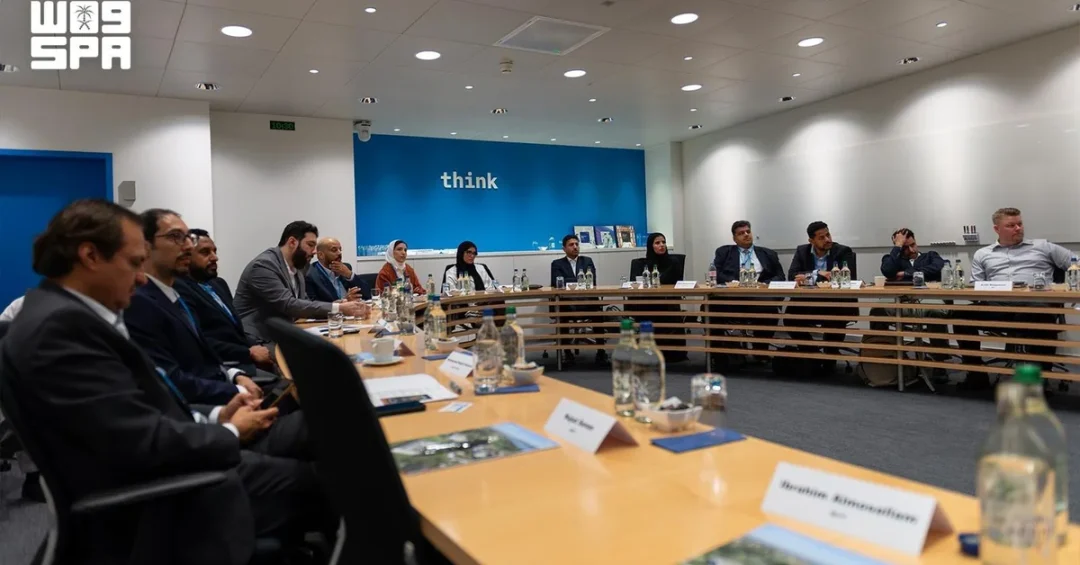
The Ministry of Communications and Information Technology (MCIT), in partnership with IBM, has concluded the Quantum Technologies Leadership Program in Zurich, Switzerland, an initiative designed to prepare Saudi leaders and decision-makers to harness the opportunities presented by quantum technologies in computing, communications, and sensing. The program, hosted by IBM Research Europe – Zurich, brought together Saudi officials and executives for an intensive knowledge-based and practical experience focused on assessing the opportunities and risks associated with quantum technologies, anticipating their future implications across various sectors, and developing policies that support national preparedness.
The conclusion of the program marks another step in the Kingdom’s expanding collaboration with global technology leaders as part of its broader efforts to build a knowledge-driven economy. By engaging directly with one of the world’s most advanced quantum research ecosystems, Saudi Arabia is positioning its leadership cadre to make informed strategic decisions about a technology that many analysts expect to reshape computing, secure communications, and advanced sensing over the coming decade. The initiative reflects the Ministry’s commitment to ensuring that Saudi decision-makers are not merely observers of emerging technologies but active participants in shaping how they are adopted and governed.
Context and Background
Why does a leadership program focused on quantum technologies matter for a country better known for its energy resources and ambitious giga-projects? The answer lies in the nature of quantum technology itself, which promises to solve certain classes of problems that classical computers cannot address efficiently, from molecular simulation for drug discovery to optimization challenges in logistics and finance. For Saudi Arabia, whose economy is diversifying rapidly under Vision 2030, understanding these capabilities early is essential to capturing value and avoiding strategic surprise.
The Ministry of Communications and Information Technology has steadily expanded its international partnerships in advanced technology fields, recognizing that digital infrastructure and emerging tech are foundational to the Kingdom’s economic transformation. IBM, with its global network of research laboratories, represents a natural partner given its long-standing work in quantum computing, including the development of superconducting quantum processors and cloud-based quantum services. The Zurich program builds on this relationship and reflects a deliberate approach to executive education that combines theoretical grounding with hands-on exposure to real quantum systems.
The choice of Zurich as the host city is significant. IBM Research Europe – Zurich is one of the company’s premier research facilities, with a history of breakthroughs in nanotechnology, materials science, and quantum information processing. For Saudi participants, spending time inside such an environment offers more than classroom instruction; it provides a direct view of how world-class research organizations structure their quantum programs, manage talent, and translate laboratory discoveries into commercial and societal applications. That perspective is invaluable for officials tasked with designing national policies and investment strategies.
Key Details of the Program
The Quantum Technologies Leadership Program was structured to deliver both conceptual understanding and practical insight. According to information released via official Saudi channels, the curriculum covered the assessment of opportunities and risks associated with quantum technologies, the anticipation of their future implications for various sectors, and the development of policies that support preparedness. The program combined practical simulations with international case studies, enabling participants to apply technical knowledge to informed strategic decision-making.
A central element of the experience was a visit to QuantumBasel in Basel, Switzerland, where participants explored the quantum computing innovation ecosystem and its practical applications. QuantumBasel is a hub that brings together startups, research institutions, and technology providers, and its collaboration with IonQ, a leading quantum computing hardware company, offered Saudi leaders a concrete example of how quantum technologies transition from research to commercial applications. This exposure to an active innovation cluster helped deepen understanding of the pathways, partnerships, and infrastructure required to build a quantum-capable economy.
The program also emphasized the importance of risk assessment. Quantum technologies are frequently described in terms of their transformative potential, but they also raise questions about cybersecurity, workforce readiness, and the need for agile governance. By examining these issues through simulations and case studies, participants were better equipped to evaluate trade-offs and design policies that balance innovation with national security and economic resilience. This balanced approach aligns with the Kingdom’s broader strategy of adopting advanced technologies responsibly and at scale.
International and Regional Impact
How does Saudi Arabia’s engagement with quantum technology leaders like IBM and IonQ influence its standing in the region and beyond? By participating in programs hosted at premier international research centers, the Kingdom signals its seriousness about competing in the global technology race. This is not merely symbolic; it builds networks and relationships that can lead to future collaborations, joint research, and investment opportunities. In a region where several countries are investing heavily in digital transformation, Saudi Arabia’s proactive stance helps differentiate it as a destination for high-tech talent and partnerships.
Moreover, the program’s focus on leadership and decision-making capacity addresses a critical gap that many emerging technology ecosystems face: the need for senior officials who understand both the technical and strategic dimensions of new technologies. By investing in this human capital, Saudi Arabia is enhancing its ability to negotiate international agreements, attract foreign direct investment, and shape global conversations around quantum governance. The visit to QuantumBasel and the exposure to IonQ’s work also highlight the importance of cross-border collaboration in quantum, where no single country or company can dominate all aspects of the technology stack.
Regionally, the program reinforces Saudi Arabia’s role as a convenor and early adopter of advanced technologies. Other Gulf states are also exploring quantum initiatives, and the Kingdom’s partnership with IBM positions it as a leader in executive education for quantum readiness. This soft-power dimension complements the Kingdom’s broader diplomatic and economic outreach, demonstrating that Saudi Arabia is a constructive partner in addressing the opportunities and challenges of the Fourth Industrial Revolution.
Economic and Strategic Significance
What economic and strategic benefits could flow from Saudi leaders being better prepared to evaluate quantum technologies? Quantum computing has the potential to accelerate innovation in sectors that are central to Vision 2030, including healthcare, energy, finance, and logistics. For example, quantum simulation could speed up the discovery of new drugs and materials, while quantum optimization could improve supply chain efficiency and energy grid management. By building leadership capacity now, Saudi Arabia is laying the groundwork to adopt these capabilities as they mature, rather than reacting after the fact.
Strategically, quantum technologies also have implications for cybersecurity. Quantum computers could eventually break some widely used encryption methods, making it imperative for governments and businesses to prepare for post-quantum cryptography. The program’s focus on risk assessment and policy development directly supports Saudi Arabia’s efforts to safeguard its digital infrastructure and maintain trust in its rapidly expanding online economy. This forward-looking approach is consistent with the Kingdom’s investments in cybersecurity and its ambition to be a global leader in secure digital services.
From an economic diversification perspective, a quantum-ready workforce and policy environment can attract global technology companies to establish research and development activities in the Kingdom. The program’s emphasis on practical simulations and case studies helps participants understand how to create the conditions for such investment, including regulatory frameworks, talent pipelines, and collaboration models. Over time, this could contribute to the growth of a domestic quantum ecosystem that creates high-value jobs and supports the Kingdom’s transition to a knowledge-based economy.
Vision 2030 Alignment
How does a leadership program in Switzerland connect to Saudi Arabia’s long-term vision for the future? Vision 2030 is fundamentally about diversification, innovation, and global engagement, and advanced technologies are a key enabler of all three. The Quantum Technologies Leadership Program, conducted in partnership with IBM, directly supports the vision’s goals by equipping Saudi leaders with the insights needed to make informed decisions about a technology that could reshape multiple industries. It also exemplifies the kind of international collaboration that the Kingdom seeks to foster as it builds a more resilient and diversified economy.
By investing in executive education and exposure to world-class research ecosystems, the Ministry of Communications and Information Technology is helping to ensure that Saudi Arabia remains at the forefront of technological change. The program’s focus on policy preparedness, risk assessment, and commercial pathways aligns with the vision’s emphasis on proactive governance and sustainable development. As quantum technologies continue to evolve, the knowledge and networks gained through this initiative will help the Kingdom translate global advances into local opportunity, reinforcing its position as a leading digital economy in the Middle East and beyond.
Ultimately, the conclusion of the Quantum Technologies Leadership Program is not an endpoint but a milestone in Saudi Arabia’s ongoing journey to embrace the technologies of tomorrow. It reflects a clear understanding that leadership and foresight are as important as infrastructure and investment. By partnering with IBM and engaging with innovators like IonQ, the Kingdom is building the human and strategic capital needed to thrive in a quantum-enabled future, in line with the aspirations of Vision 2030 and the leadership’s commitment to a prosperous, knowledge-driven nation.
20 Questions
Q1. What was the Quantum Technologies Leadership Program?
A1. It was a program organized by the Ministry of Communications and Information Technology with IBM, aimed at preparing Saudi leaders to leverage quantum technologies in computing, communications, and sensing.
Q2. Where was the program held?
A2. The program was hosted by IBM Research Europe – Zurich in Switzerland, with an additional visit to QuantumBasel in Basel.
Q3. Which Saudi ministry organized the program?
A3. The Ministry of Communications and Information Technology (MCIT) organized the program in partnership with IBM.
Q4. What topics were covered in the program?
A4. Topics included assessing opportunities and risks of quantum technologies, anticipating future implications, and developing supportive policies.
Q5. What teaching methods were used?
A5. The program combined practical simulations with international case studies to enable informed strategic decision-making.
Q6. What is IBM Research Europe – Zurich?
A6. It is one of IBM’s premier research facilities, known for breakthroughs in nanotechnology, materials science, and quantum information processing.
Q7. Why did participants visit QuantumBasel?
A7. They visited to explore the quantum computing innovation ecosystem and its practical applications, including collaboration with IonQ.
Q8. What is IonQ’s role in the program?
A8. IonQ is a leading quantum computing hardware company whose collaboration with QuantumBasel was highlighted to show pathways from research to commercial applications.
Q9. How does this program support Saudi Arabia’s Vision 2030?
A9. It builds leadership capacity in advanced technologies, supporting economic diversification, innovation, and global engagement goals of Vision 2030.
Q10. What are quantum technologies?
A10. They are technologies based on quantum mechanics, including quantum computing, quantum communications, and quantum sensing, offering capabilities beyond classical systems.
Q11. Why is quantum computing important for Saudi Arabia?
A11. It can accelerate innovation in healthcare, energy, finance, and logistics, sectors vital to the Kingdom’s economic transformation.
Q12. What risks were discussed in the program?
A12. Risks included cybersecurity challenges, workforce readiness, and the need for agile governance frameworks to manage quantum adoption.
Q13. How does the program help Saudi leaders?
A13. It equips them with technical knowledge and strategic insights to make informed decisions about quantum technology policies and investments.
Q14. What is the significance of the program’s location in Switzerland?
A14. Switzerland hosts world-class quantum research, offering participants direct exposure to leading ecosystems and best practices.
Q15. What is QuantumBasel?
A15. QuantumBasel is a quantum computing innovation hub in Basel, Switzerland, that brings together startups, research institutions, and technology providers.
Q16. How does this program fit into Saudi Arabia’s digital strategy?
A16. It supports the Kingdom’s efforts to build a knowledge-driven economy and stay at the forefront of emerging technologies.
Q17. What economic benefits could result from quantum readiness?
A17. It could attract global tech investment, create high-value jobs, and enhance competitiveness in sectors like finance, energy, and healthcare.
Q18. Did the program include any practical simulations?
A18. Yes, the program combined practical simulations with international case studies to help participants apply technical knowledge to strategic decisions.
Q19. What is the Ministry of Communications and Information Technology’s role in Saudi Arabia?
A19. It oversees the Kingdom’s communications and IT sectors, driving digital transformation and technological innovation in line with Vision 2030.
Q20. What is the expected outcome of the program?
A20. The program aims to enhance the readiness of Saudi leaders to capitalize on quantum opportunities and develop policies that support national preparedness.
Reader Feedback
We value your thoughts. Please share your feedback on this article.
Your feedback helps us improve our coverage.