


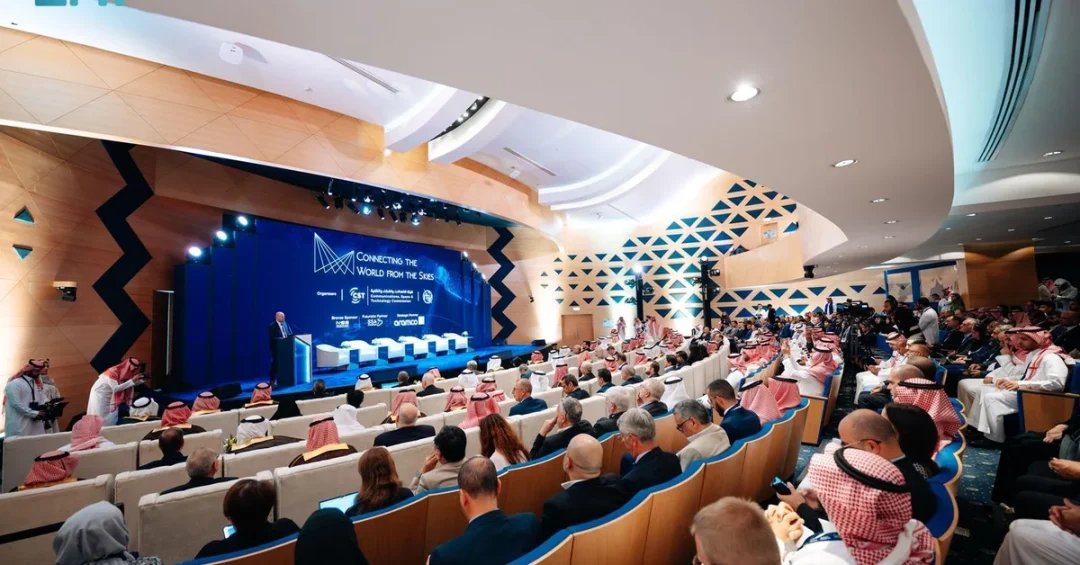
Riyadh, November 25, 2024 — The Saudi Space Agency (SSA) participated in the 2024 International Forum on Non-Terrestrial Networks, organized by the Communications, Space, and Technology Commission (CST) in collaboration with the International Telecommunication Union (ITU), held on November 25–26 in Riyadh. The two-day forum convened global experts, policymakers, and industry leaders to discuss the future of non-terrestrial networks (NTNs), their role in sustaining global communications, and their importance for space missions. The SSA’s participation underscores the Kingdom’s commitment to advancing space communication technologies and fostering international cooperation, as reported by the Saudi Press Agency (SPA).
Why does this gathering matter for the future of global connectivity? As the world increasingly relies on seamless communication, non-terrestrial networks—which include satellite systems, high-altitude platforms, and other airborne or space-based infrastructure—are becoming essential to bridging coverage gaps and enabling new services. Saudi Arabia, through the SSA and CST, is positioning itself as a key player in this emerging field, aligning with Vision 2030’s goals to diversify the economy and promote technological leadership. The forum provided a platform for the SSA to share its expertise, learn from international partners, and contribute to shaping the global agenda for space-based communications.
Context and Background
What exactly are non-terrestrial networks, and why are they gaining such prominence? Non-terrestrial networks refer to communication systems that operate beyond traditional terrestrial infrastructure, including satellites in various orbits, high-altitude platform stations (HAPS), and even drones or balloons. These networks are critical for extending coverage to remote, underserved, or disaster-affected areas, and for supporting advanced applications like Internet of Things (IoT), autonomous vehicles, and deep-space exploration. The 2024 International Forum on Non-Terrestrial Networks, hosted in Riyadh, brought together stakeholders from around the world to address challenges and opportunities in this rapidly evolving domain.
The event was organized by the Communications, Space, and Technology Commission (CST), Saudi Arabia’s regulatory body for the communications, space, and technology sectors, in partnership with the International Telecommunication Union (ITU), the United Nations specialized agency for information and communication technologies. This collaboration highlights the Kingdom’s growing role in international standard-setting and its commitment to leveraging space technologies for sustainable development. The SSA, established in 2018 to lead the Kingdom’s space activities, participated actively through expert-led panel sessions, reinforcing its mandate to develop a robust national space sector.
How does this forum fit into the broader trajectory of Saudi Arabia’s space ambitions? In recent years, the Kingdom has accelerated its space efforts, launching satellites, establishing partnerships, and investing in space-related research and innovation. The SSA’s involvement in the forum is part of a strategic push to enhance national, regional, and international presence in the space sector, as outlined in Vision 2030. By engaging with global experts, Saudi Arabia aims to build capacity, foster innovation, and ensure that its space infrastructure supports economic diversification and quality of life for its citizens and the world.
Key Details
What specific topics were addressed during the forum, and how did the SSA contribute? According to a press release issued by the SSA, the forum featured intensive discussions on the future of non-terrestrial networks, their significance in sustaining global communications, and their role in supporting space missions. The SSA contributed through expert-led panel sessions that covered key areas such as the space economy, achieving sustainability in space, and the role of non-terrestrial networks in supporting deep space exploration. These sessions allowed Saudi experts to share insights and learn from international best practices.
The space economy session explored how commercial space activities, from satellite manufacturing to launch services, can drive economic growth and create jobs. Sustainability in space focused on mitigating orbital debris, managing radio frequency spectrum, and ensuring that space operations do not harm the environment. The deep space exploration panel discussed how NTNs can provide reliable communication links for missions to the Moon, Mars, and beyond, enabling real-time data transmission and mission control. The SSA’s participation emphasized its leadership role in enabling the space sector, highlighting the importance of technological advancement and international collaboration to tackle sector challenges.
Who were the key participants, and what outcomes emerged? The forum gathered representatives from governments, international organizations, academia, and the private sector, including the ITU and leading space agencies. While the SPA report did not list specific outcomes, the SSA noted that its participation reflects a strong commitment to enhancing the Kingdom’s presence in the space sector and supporting technological innovation to serve sustainable development goals. The strategic partnership with the ITU and CST represents an important step toward building a more sustainable future in space communications.
International and Regional Impact
How does Saudi Arabia’s engagement in non-terrestrial networks affect the region and the world? The Middle East and North Africa region stands to benefit significantly from advancements in NTNs, as they can provide affordable, high-speed internet to remote communities, support disaster response, and enable new economic opportunities. Saudi Arabia’s proactive stance in forums like this positions it as a regional leader in space technology, fostering collaboration that could spill over into neighboring countries. Globally, the Kingdom’s contributions to ITU discussions help shape standards that ensure interoperability and equitable access to space-based services.
What does this mean for international cooperation in space? The space domain is increasingly crowded and complex, requiring coordinated efforts to manage orbits, spectrum, and security. By participating in the ITU forum, Saudi Arabia reinforces its commitment to multilateralism and the peaceful use of outer space. The SSA’s engagement signals that the Kingdom is ready to partner with other nations on joint research, technology development, and capacity-building initiatives, which is essential for tackling global challenges like climate change, digital divide, and space debris. Such cooperation also opens doors for Saudi businesses and innovators to collaborate with international counterparts.
Economic and Strategic Significance
Why is the development of non-terrestrial networks economically significant for Saudi Arabia? The global space economy is projected to grow to over $1 trillion by 2040, and NTNs are a key segment of this growth. For Saudi Arabia, investing in space communications infrastructure can catalyze new industries, attract foreign investment, and create high-skilled jobs. The SSA’s involvement in setting technical standards and fostering partnerships can help Saudi companies capture a share of this market. Moreover, reliable NTNs support other Vision 2030 sectors, such as tourism, logistics, and smart cities, by ensuring ubiquitous connectivity.
What strategic advantages does this bring to the Kingdom? By leading in NTN discussions, Saudi Arabia can influence global norms and ensure that its national interests are reflected in international frameworks. This is particularly important as space becomes a domain of geopolitical competition. The Kingdom’s participation also strengthens its ties with the ITU and other spacefaring nations, enhancing its diplomatic leverage. Furthermore, successful NTN deployment can improve national security, disaster resilience, and emergency response capabilities, all of which are vital for a rapidly modernizing nation.
Vision 2030 Alignment
How does the SSA’s participation in the 2024 International Forum on Non-Terrestrial Networks align with Vision 2030? Vision 2030 aims to diversify the Saudi economy away from oil, foster innovation, and improve quality of life. The space sector is a cornerstone of this vision, with the SSA tasked to develop a thriving space industry, nurture talent, and advance research. The forum provided a platform to showcase Saudi progress, learn from global leaders, and build partnerships that will accelerate the Kingdom’s space ambitions. The SSA’s emphasis on sustainability and international cooperation mirrors Vision 2030’s emphasis on responsible development and global engagement.
What can we expect next from Saudi Arabia in the space domain? Building on this forum, the SSA is likely to deepen its collaborations with the ITU and other partners, invest in NTN research and development, and launch initiatives to support startups and SMEs in the space sector. The Kingdom’s long-term vision includes becoming a regional hub for space technology and a key player in the global space economy. As Saudi Arabia continues to advance its space capabilities, its role in shaping the future of non-terrestrial networks will only grow, contributing to a more connected, sustainable, and prosperous world.
In conclusion, the Saudi Space Agency’s active participation in the 2024 International Forum on Non-Terrestrial Networks underscores the Kingdom’s commitment to technological leadership and international collaboration. By aligning with Vision 2030, Saudi Arabia is not only enhancing its national capabilities but also contributing to global efforts to harness space for the benefit of humanity. As the space economy expands, the Kingdom is poised to play a pivotal role in shaping the future of communications and exploration.
20 Questions
Q1. What was the 2024 International Forum on Non-Terrestrial Networks?
A1. The 2024 International Forum on Non-Terrestrial Networks was a two-day event held in Riyadh on November 25–26, organized by the Communications, Space, and Technology Commission in collaboration with the International Telecommunication Union. It focused on the future of non-terrestrial networks and their role in global communications and space missions.
Q2. Who organized the forum?
A2. The forum was organized by the Communications, Space, and Technology Commission (CST) of Saudi Arabia, in collaboration with the International Telecommunication Union (ITU), the United Nations agency for information and communication technologies. This partnership highlights Saudi Arabia’s growing role in international standard-setting.
Q3. What is the Saudi Space Agency?
A3. The Saudi Space Agency (SSA) is the Kingdom’s national space agency, established in 2018 to lead and develop Saudi Arabia’s space activities. It aims to enhance the Kingdom’s position in the space sector, foster innovation, and support Vision 2030 goals through space technology and international cooperation.
Q4. Why did the SSA participate in the forum?
A4. The SSA participated to underscore its role as a future partner in developing space communication technologies, enhance international cooperation, and contribute to discussions on non-terrestrial networks, the space economy, sustainability in space, and deep space exploration.
Q5. What are non-terrestrial networks?
A5. Non-terrestrial networks (NTNs) are communication systems that operate beyond traditional ground-based infrastructure, including satellites, high-altitude platforms, and drones. They are essential for extending coverage to remote areas and supporting advanced applications like IoT and deep-space missions.
Q6. What topics were discussed at the forum?
A6. The forum featured intensive discussions on the future of non-terrestrial networks, their significance in sustaining global communications, and their role in supporting space missions. Specific panels covered the space economy, sustainability in space, and deep space exploration.
Q7. How did the SSA contribute to the forum?
A7. The SSA contributed through expert-led panel sessions, addressing key topics such as the space economy, achieving sustainability in space, and the role of non-terrestrial networks in supporting deep space exploration. This showcased Saudi expertise and leadership in the space sector.
Q8. What is the space economy?
A8. The space economy encompasses all commercial activities related to space, including satellite manufacturing, launch services, space tourism, and applications like Earth observation and communications. It is a rapidly growing sector projected to reach over $1 trillion by 2040.
Q9. What does sustainability in space mean?
A9. Sustainability in space refers to practices that ensure space activities do not harm the orbital environment, such as mitigating space debris, managing radio frequencies responsibly, and developing technologies that reduce environmental impact. It is crucial for long-term space exploration and utilization.
Q10. How do non-terrestrial networks support deep space exploration?
A10. Non-terrestrial networks provide reliable communication links for missions beyond Earth orbit, enabling real-time data transmission, telemetry, and mission control. They are essential for sustaining communication with spacecraft traveling to the Moon, Mars, and other distant destinations.
Q11. What is the significance of the SSA’s participation for Saudi Arabia?
A11. The SSA’s participation enhances the Kingdom’s national, regional, and international presence in the space sector. It demonstrates Saudi Arabia’s commitment to technological innovation, sustainable development, and international collaboration, aligning with Vision 2030 objectives.
Q12. How does this forum align with Vision 2030?
A12. The forum aligns with Vision 2030 by promoting economic diversification, technological advancement, and international cooperation. The space sector is a key pillar of Vision 2030, and the SSA’s involvement supports the goal of building a knowledge-based economy and enhancing quality of life.
Q13. What are the expected outcomes of the forum?
A13. The forum facilitated knowledge exchange, networking, and discussions on best practices. While specific outcomes were not detailed, the SSA noted that its participation represents a step toward building a more sustainable future in space communications and strengthening partnerships with international organizations.
Q14. Who attended the forum?
A14. The forum gathered representatives from governments, international organizations like the ITU, academia, and the private sector. Experts and policymakers from various countries participated to share insights and collaborate on non-terrestrial network development.
Q15. What is the role of the CST in Saudi Arabia?
A15. The Communications, Space, and Technology Commission (CST) is Saudi Arabia’s regulatory body for the communications, space, and technology sectors. It oversees policies, licenses, and initiatives to develop these sectors in line with Vision 2030 and international standards.
Q16. How does the ITU collaborate with Saudi Arabia?
A16. The ITU collaborates with Saudi Arabia through joint events like the 2024 forum, capacity-building initiatives, and standard-setting activities. This partnership helps Saudi Arabia align its space and communication policies with global best practices and fosters international cooperation.
Q17. What are the benefits of non-terrestrial networks for remote areas?
A17. Non-terrestrial networks can provide affordable, high-speed internet to remote and underserved communities, bridging the digital divide. They also support disaster response, telemedicine, education, and economic development by ensuring connectivity where terrestrial infrastructure is lacking.
Q18. What is Saudi Arabia’s vision for the space sector?
A18. Saudi Arabia aims to become a regional leader in space technology and a key player in the global space economy. Through the SSA and Vision 2030, the Kingdom seeks to foster innovation, develop talent, and use space for sustainable development and international collaboration.
Q19. How does space communications infrastructure support other sectors?
A19. Space communications infrastructure enables reliable connectivity for sectors like tourism, logistics, smart cities, and national security. It supports real-time data transfer, IoT, autonomous systems, and emergency response, contributing to economic growth and quality of life.
Q20. What can we expect from the SSA in the future?
A20. The SSA is expected to deepen international partnerships, invest in research and development, and launch initiatives to support startups and innovation in the space sector. It will continue to advance Saudi Arabia’s space ambitions in line with Vision 2030 and global trends.
Reader Feedback
We value your thoughts. Please share your feedback on this article.
Your feedback helps us improve our coverage.
Related articles
 Connecting the World from the Skies Global Forum Starts in Riyadh
 CST Honors Winners of 6G Non-Terrestrial Networks Competition
 CST Signs Telecom MoU with Greece’s EETT at Global Forum
 CST, ITU Sign NTN Global Events Agreement
 KAUST, UConn Sign Deal on AI, Clean Energy
 Saudi Space Agency Concludes Participation in 2024 International NTN Forum