


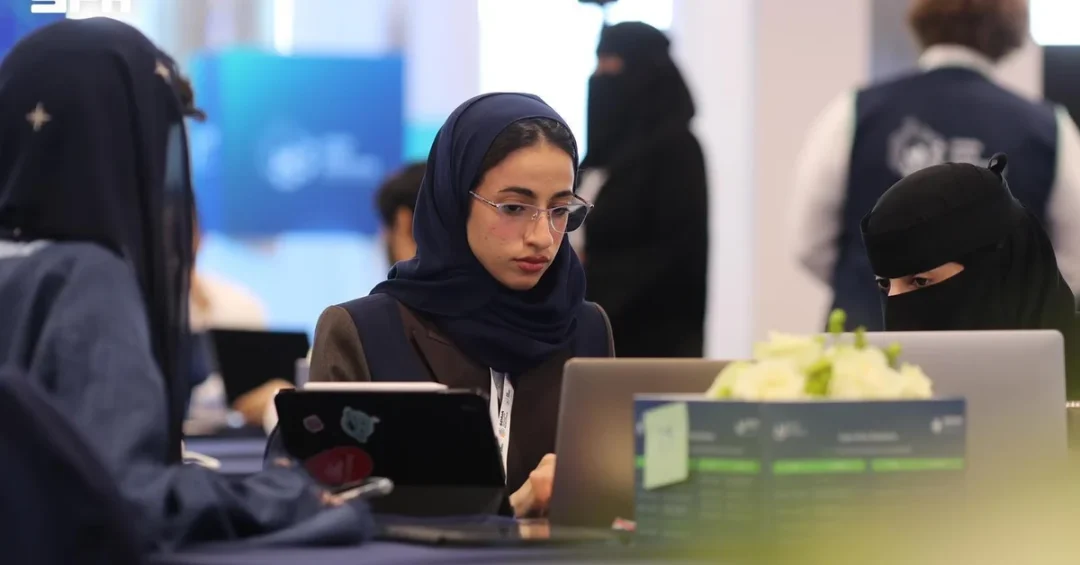
Saudi women have secured a landmark position in the global artificial intelligence landscape, with the Kingdom ranking first worldwide in women’s empowerment in AI, according to Stanford University’s 2026 AI Index. The achievement, announced via official Saudi channels, reflects a sustained national effort to expand female participation across data science, intelligent systems engineering, research and development, and technology leadership. It also underscores a broader transformation in the Kingdom’s labor market, where women are increasingly shaping the future of digital innovation rather than merely accessing its benefits. How did Saudi Arabia transform its human capital strategy to reach this point, and what does this mean for the global technology sector?
The recognition arrives as Saudi Arabia accelerates its transition to a knowledge-based economy under Saudi Vision 2030, the national blueprint for economic diversification and social modernization. The Kingdom also ranked third globally in the proportion of AI talent and recorded the world’s highest growth rate in AI talent, exceeding 100 percent between 2019 and 2025. These indicators, released by the Saudi Press Agency, confirm that the country’s investments in education, training, and technology infrastructure are yielding measurable international returns. For global observers, the data offers a compelling case study in how targeted national policies can rapidly elevate a nation’s standing in frontier technologies.
Context and Background
What conditions allowed Saudi women to advance so rapidly in a field traditionally dominated by men worldwide? The answer lies in a deliberate, multi-year strategy led by the Saudi Data and Artificial Intelligence Authority (SDAIA), which has built a comprehensive ecosystem for national capability development. SDAIA’s initiatives range from specialized training bootcamps to advanced research fellowships, all designed to prepare Saudi citizens for the demands of the digital economy. These programs are not isolated interventions but part of an integrated national framework that aligns educational outcomes with labor market needs. By 2025, this approach had produced a pipeline of female talent that is now visible in boardrooms, research labs, and startup incubators across the Kingdom.
The trajectory of Saudi women in AI also reflects broader social reforms introduced under Vision 2030, including expanded access to higher education, increased workforce participation, and enhanced professional mobility. Women now constitute a majority of university graduates in Saudi Arabia, and their representation in STEM fields has grown steadily. The SAMAI initiative, a nationwide AI literacy program, illustrates the scale of this engagement: by November 2025, more than one million Saudi citizens had benefited from the initiative, with women accounting for 52 percent of total registrants. This statistic alone demonstrates that female interest in AI is not a niche phenomenon but a mainstream national movement, driven by both opportunity and aspiration.
International partnerships have further accelerated this progress. The Kingdom has actively pursued knowledge transfer agreements with leading global technology firms, universities, and research centers. These collaborations provide Saudi women with access to cutting-edge tools, mentorship, and global networks, while also positioning Saudi Arabia as a hub for AI research in the Middle East. The combination of domestic investment and international engagement has created a virtuous cycle: as more women enter the field, they inspire younger generations, contribute to inclusive innovation, and strengthen the Kingdom’s competitive advantage in a sector that will define the twenty-first century economy. What lessons can other nations draw from this integrated approach?
Key Details
The specific achievements cited in the Stanford University 2026 AI Index are both symbolic and substantive. Ranking first globally in women’s empowerment in AI is not merely a statistical milestone; it signals that Saudi Arabia has successfully created an environment where women can thrive in highly technical roles. The Kingdom’s third-place ranking in the proportion of AI talent, combined with the world’s highest growth rate in AI talent, indicates that the pipeline is not only broad but deep. These outcomes are the result of coordinated efforts across government ministries, educational institutions, and the private sector, all working toward the goals of Vision 2030.
Central to this success is the role of SDAIA, which operates as the national authority for data and AI. Through its various programs, SDAIA has developed specialized skills among thousands of Saudi women, many of whom now work as data analysts, machine learning engineers, AI ethicists, and technology project managers. The authority’s training initiatives are designed to be practical and industry-relevant, often delivered in partnership with global technology leaders. This ensures that participants gain not only theoretical knowledge but also hands-on experience with the tools and platforms that power modern AI systems. As a result, Saudi women are increasingly found in roles that involve developing intelligent applications, analyzing complex datasets, and creating digital solutions with tangible economic and social impact.
The SAMAI initiative deserves particular attention for its reach and inclusivity. By engaging over one million citizens, with women representing 52 percent of registrants, SAMAI has democratized access to AI knowledge across age groups, regions, and professional backgrounds. This broad-based approach ensures that the benefits of AI literacy are not confined to elite institutions but are shared across Saudi society. It also creates a culture of continuous learning that is essential for keeping pace with rapid technological change. For international audiences, SAMAI offers a model of how national digital literacy campaigns can simultaneously advance gender inclusion and technological readiness.
International and Regional Impact
How does Saudi Arabia’s progress in women’s AI empowerment resonate beyond its borders? The Kingdom’s achievements are being closely watched by policymakers and technology leaders across the Middle East and North Africa, a region where gender gaps in STEM fields have historically been pronounced. By demonstrating that rapid progress is possible, Saudi Arabia provides a replicable framework for other nations seeking to diversify their technology workforces. The World Economic Forum and other international bodies have repeatedly emphasized that closing the gender gap in AI is essential for ensuring that technological solutions reflect the needs of all segments of society. Saudi Arabia’s experience offers concrete evidence that such goals are attainable with sustained political will and strategic investment.
At the global level, efforts to strengthen women’s participation in data and AI are gaining momentum. Among the most prominent is the Elevate initiative, launched by the International Center for AI Research and Ethics (ICAIRE), which aims to empower more than 25,000 women in emerging markets worldwide. Through specialized training programs, Elevate seeks to build technical skills and expand professional opportunities, reinforcing the global push for inclusive AI development. Saudi Arabia’s domestic successes complement these international efforts, creating a network of empowered women who can contribute to AI research, policy, and entrepreneurship across borders. The Kingdom’s participation in such initiatives highlights its role as a proactive global partner in shaping the future of ethical and inclusive AI.
Regionally, Saudi Arabia’s leadership in AI talent development is enhancing its soft power and diplomatic influence. As countries across the Gulf invest heavily in digital transformation, the Kingdom’s ability to cultivate and retain top female talent gives it a distinct competitive edge. This advantage is particularly relevant as AI becomes central to sectors ranging from healthcare and energy to finance and logistics. By exporting best practices and participating in international research consortia, Saudi Arabia is positioning itself not just as a participant in the global AI economy but as a shaper of its norms and standards.
Economic and Strategic Significance
What economic value does the empowerment of Saudi women in AI bring to the Kingdom and its global partners? The integration of women into high-value technology roles directly contributes to GDP growth, innovation output, and economic diversification. According to official Saudi sources, the Kingdom’s AI sector is projected to contribute significantly to the national economy in the coming decade, with women playing an increasingly central role. By developing a diverse talent pool, Saudi Arabia reduces its reliance on foreign expertise and builds indigenous capacity for technological innovation. This is a strategic imperative under Vision 2030, which seeks to transform the Kingdom into a global investment powerhouse and a hub for cutting-edge industries.
Moreover, diversity in AI development teams leads to more inclusive and effective technologies. Research consistently shows that heterogeneous teams produce more creative solutions and are better at identifying biases in algorithms. Saudi women, with their unique perspectives and experiences, are helping to design AI systems that are more responsive to the needs of diverse populations. This not only improves product quality but also enhances the global competitiveness of Saudi technology firms. As the Kingdom expands its digital economy, the contributions of women in AI will be a key differentiator in attracting international investment and partnerships.
The strategic significance extends to national security and digital sovereignty. By building a robust pipeline of AI talent, including women, Saudi Arabia ensures that it has the human capital necessary to develop and manage critical technologies independently. This reduces vulnerability to external shocks and aligns with the Vision 2030 goal of a resilient, knowledge-based economy. The Kingdom’s investment in women’s AI education is therefore not just a social good but a cornerstone of its long-term strategic planning.
Vision 2030 Alignment
How does the advancement of Saudi women in AI embody the core objectives of Vision 2030? The Vision, launched in 2016 by Crown Prince Mohammed bin Salman, aims to diversify the economy, modernize society, and empower citizens to reach their full potential. The remarkable achievements of Saudi women in AI—from ranking first globally in empowerment to driving the world’s highest growth rate in AI talent—are direct outcomes of Vision 2030’s emphasis on human capital development. The Kingdom has invested heavily in education, training, and infrastructure, creating an ecosystem where women can excel in fields that were once considered inaccessible. This success story is a testament to the Vision’s holistic approach, which links social reform with economic opportunity.
Looking ahead, Saudi Arabia is committed to measuring the actual impact of its empowerment programs by tracking beneficiaries’ transition into specialized jobs, their advancement in research and leadership careers, and their participation in establishing technology projects and companies. This focus on outcomes ensures that progress is sustainable and that women are not just trained but are active leaders in the AI sector. As the Kingdom continues to implement Vision 2030, the role of Saudi women in AI will only grow, reinforcing the nation’s position as a global model for inclusive innovation. Through its focus on investing in people as the foundation of technological progress, Saudi Arabia is establishing a blueprint in which Saudi women are active partners in shaping the future of AI, rather than merely beneficiaries of its applications. This forward-looking approach will undoubtedly inspire other nations and contribute to a more equitable and prosperous global digital economy.
20 Questions
Q1. What global ranking did Saudi Arabia achieve in women’s empowerment in AI?
A1. Saudi Arabia ranked first globally in women’s empowerment in AI, according to Stanford University’s 2026 AI Index. This recognition reflects the Kingdom’s sustained efforts to expand female participation in advanced technology fields under Vision 2030.
Q2. How many Saudi citizens have benefited from the SAMAI initiative?
A2. More than one million Saudi citizens benefited from the SAMAI initiative by November 2025. Women accounted for 52 percent of total registrants, demonstrating broad national engagement with AI literacy.
Q3. What is SDAIA’s role in empowering Saudi women in AI?
A3. The Saudi Data and Artificial Intelligence Authority (SDAIA) leads national capability building through specialized training programs, research initiatives, and partnerships. These efforts develop skills and expand opportunities for women in the digital economy.
Q4. How much did Saudi Arabia’s AI talent grow between 2019 and 2025?
A4. Saudi Arabia recorded the world’s highest growth rate in AI talent, exceeding 100 percent between 2019 and 2025. This growth reflects the expansion of the Kingdom’s talent development and recruitment ecosystem.
Q5. Where does Saudi Arabia rank globally in the proportion of AI talent?
A5. The Kingdom ranked third globally in the proportion of AI talent. This achievement highlights the depth and quality of Saudi Arabia’s human capital in artificial intelligence.
Q6. What is the Elevate initiative and who launched it?
A6. The Elevate initiative was launched by the International Center for AI Research and Ethics (ICAIRE). It aims to empower more than 25,000 women in emerging markets through specialized AI training programs.
Q7. How does diversity in AI teams benefit technological innovation?
A7. Diversity brings a broader range of expertise and perspectives, leading to more inclusive and effective AI solutions. It helps identify biases and ensures technologies better respond to societal needs.
Q8. What types of roles are Saudi women taking in AI?
A8. Saudi women are working as data analysts, machine learning engineers, AI ethicists, researchers, and technology leaders. They contribute to intelligent systems engineering, digital solutions, and entrepreneurship.
Q9. How does Vision 2030 support women’s participation in AI?
A9. Vision 2030 emphasizes human capital development, economic diversification, and social modernization. It has created educational and professional pathways that enable women to excel in advanced technology fields.
Q10. What percentage of SAMAI registrants were women?
A10. Women accounted for 52 percent of total SAMAI registrants by November 2025. This majority demonstrates strong female interest in acquiring AI-related skills and knowledge.
Q11. What is the significance of Saudi Arabia’s top ranking in women’s AI empowerment?
A11. It signals that the Kingdom has successfully built an inclusive ecosystem where women thrive in technical roles. This positions Saudi Arabia as a global model for gender inclusion in frontier technologies.
Q12. How does Saudi Arabia’s AI talent growth compare globally?
A12. Saudi Arabia recorded the world’s highest growth rate in AI talent, exceeding 100 percent between 2019 and 2025. This outpaces other nations and reflects rapid ecosystem development.
Q13. What international partnerships support Saudi women in AI?
A13. The Kingdom collaborates with global technology firms, universities, and research centers. These partnerships provide access to cutting-edge tools, mentorship, and international networks for Saudi women.
Q14. How does women’s participation in AI contribute to Saudi GDP?
A14. It directly boosts GDP by filling high-value technology roles, driving innovation, and reducing reliance on foreign expertise. This supports economic diversification under Vision 2030.
Q15. What is the goal of the Elevate initiative?
A15. Elevate aims to empower over 25,000 women in emerging markets by building technical AI skills and expanding professional opportunities, fostering inclusive global participation in AI development.
Q16. How is Saudi Arabia measuring the impact of its empowerment programs?
A16. The Kingdom tracks beneficiaries’ transition into specialized jobs, advancement in research and leadership, and participation in technology ventures. This ensures programs deliver tangible career outcomes.
Q17. Why is gender inclusion in AI important globally?
A17. Gender inclusion ensures AI systems reflect diverse perspectives, reducing bias and improving responsiveness to societal needs. It also narrows the STEM gap and promotes equitable technological progress.
Q18. What role do Saudi women play in AI research and development?
A18. Saudi women are active in research and development, data analysis, intelligent systems engineering, and technology leadership. They help shape the Kingdom’s digital transformation and innovation agenda.
Q19. How does Saudi Arabia’s experience inspire other nations?
A19. It demonstrates that rapid progress in gender inclusion in AI is achievable with strategic investment and political will. Other nations can adapt similar frameworks to build diverse tech workforces.
Q20. What is the future outlook for Saudi women in AI?
A20. The future is promising, with continued focus on career advancement, leadership, and entrepreneurship. Saudi women will be active partners in shaping AI’s future, enhancing the Kingdom’s global competitiveness.
Reader Feedback
We value your thoughts. Please share your feedback on this article.
Your feedback helps us improve our coverage.
Related articles
 Estidamah Tests Agricultural Solutions in Four Regions
 Northern Taurids Meteor Shower Peaks Thursday Evening
 Fog Blankets Mountains of Hail, Creating Stunning Scenes
 Saudi Arabia Achieves Leading Positions in AI Indicators in IMD’s 2026 Ranking
 Six Girls’ College Projects Qualify for SAIF 2026 in Riyadh
 KAUST Launches World’s Largest Coral Restoration Facility on Red Sea