


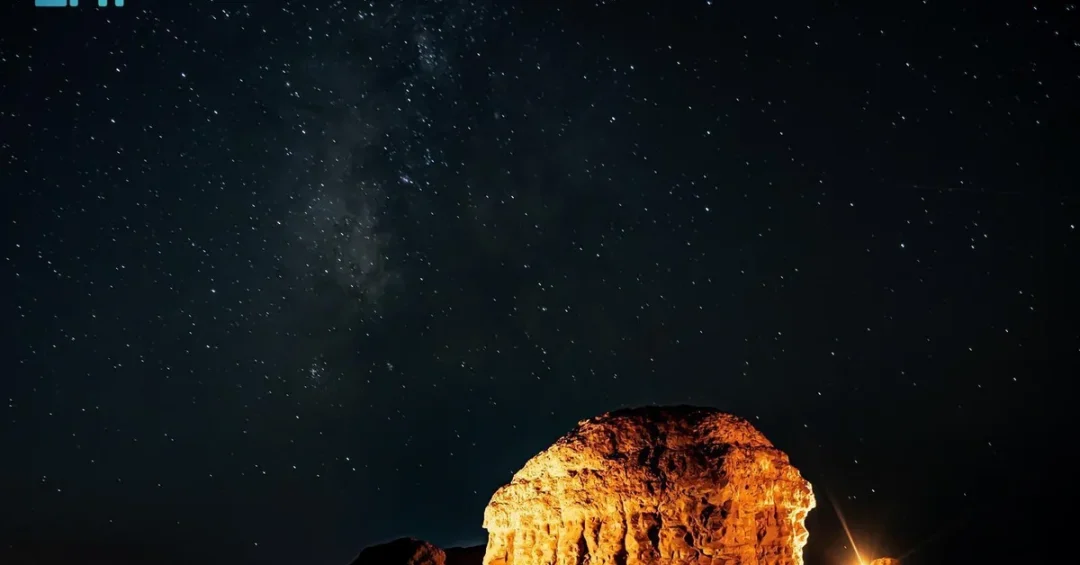
The skies above the Kingdom of Saudi Arabia will offer a rare celestial spectacle this October as summer and winter constellations converge in a single night. According to the Saudi Press Agency (SPA), this annual event brings together the most prominent star patterns of both seasons, creating a stunning display for astronomy enthusiasts. Early evening skies feature the bright constellation Scorpius on the horizon, while the Galactic Arm glitters across the clear expanse. As midnight approaches, the Orion constellation and the star Sirius rise, with Canopus concluding the scene from the south just before dawn. This convergence presents a unique opportunity for stargazers to witness the beauty of the cosmos in a single viewing session.
Context and Background
The October sky has long been a favorite among astronomers due to its unique blending of seasonal stars. In the Northern Hemisphere, this month marks a transitional period where the last remnants of summer constellations align with the first arrivals of winter ones. The phenomenon is particularly visible in regions with minimal light pollution, such as the Northern Borders Region of Saudi Arabia, which the SPA highlights as an ideal destination for observing celestial events. The region’s naturally clear atmosphere and low artificial light make it a prime spot for both amateur and professional astronomers to track planetary movements and deep-sky objects.
Key Details
The SPA report, dated October 18, 2025, details the sequence of celestial appearances. In the early evening, the constellation Scorpius, a summer marker, shines prominently on the horizon. As night progresses, the Milky Way’s Galactic Arm becomes increasingly visible, stretching across the sky. Around midnight, the winter constellation Orion and the star Sirius, the brightest star in the night sky, rise in the east. Finally, before dawn, the star Canopus—the second-brightest star—appears low in the south, completing the spectacle. This alignment allows observers to see stars typically associated with different seasons in one continuous observation session.
Implications and Impact
This celestial event underscores Saudi Arabia’s growing interest in astronomy and space sciences, aligning with the Kingdom’s Vision 2030 goals of fostering scientific curiosity and educational development. The Northern Borders Region’s designation as a prime observation site highlights the country’s investment in promoting astro-tourism, a niche sector that attracts international visitors. For enthusiasts worldwide, the convergence offers a chance to appreciate the natural wonders of the universe, while for Saudi Arabia, it reinforces its position as a hub for scientific exploration and cultural enrichment. The event also encourages local communities to engage in outdoor activities and educational programs centered on astronomy.
Vision 2030 Alignment
This astronomical event reflects Saudi Arabia’s commitment to advancing scientific knowledge and diversifying its economy beyond oil, as outlined in Vision 2030. By promoting the Northern Borders Region as a destination for astro-tourism and supporting astronomy education, the Kingdom is fostering a culture of innovation and learning. Such initiatives not only enhance the quality of life for citizens and residents but also position Saudi Arabia as a global leader in space science and exploration. As the Kingdom continues to invest in scientific research and digital infrastructure, events like this serve as a reminder of the nation’s dedication to a prosperous and knowledge-driven future.
20 Questions
Q1. What celestial event occurs in October skies?
A1. In October, summer and winter constellations converge in a single night, creating a rare astronomical spectacle. This event allows observers to see stars typically associated with different seasons, such as Scorpius from summer and Orion from winter, during one observation session.
Q2. Which constellations are visible in the early evening?
A2. In the early evening, the constellation Scorpius shines brightly on the horizon. Scorpius is a prominent summer constellation known for its distinctive shape and bright star Antares. Its visibility marks the last vestiges of summer in the night sky.
Q3. What is the Galactic Arm?
A3. The Galactic Arm refers to the spiral arm of the Milky Way galaxy that is visible from Earth. In this context, it appears as a glittering band of stars and light across the sky, particularly visible in areas with low light pollution, enhancing the celestial display.
Q4. When do Orion and Sirius rise?
A4. Orion and Sirius rise around midnight during the October convergence. Orion is a prominent winter constellation, while Sirius, also known as the Dog Star, is the brightest star in the night sky. Their appearance signals the onset of winter stars.
Q5. What role does the star Canopus play?
A5. Canopus, the second-brightest star in the night sky, concludes the celestial scene by appearing low in the south before dawn. Its presence adds to the spectacle, providing a fitting end to the night’s observation before sunrise.
Q6. Why is the Northern Borders Region ideal for stargazing?
A6. The Northern Borders Region is ideal for stargazing due to its low light pollution and naturally clear atmosphere. This makes it a prime location for observing celestial phenomena, as the lack of artificial light allows for unobstructed views of stars and planets.
Q7. How does this event benefit astronomy enthusiasts?
A7. This event offers astronomy enthusiasts a unique opportunity to observe stars from both summer and winter in a single night. It provides a rich viewing experience and a chance to study celestial objects that are normally seen in different seasons.
Q8. What is the significance of the SPA report?
A8. The SPA report serves as an official Saudi source, providing verified information about the celestial event. It highlights the Kingdom’s commitment to sharing scientific knowledge and promoting public engagement with astronomy.
Q9. How does this event align with Vision 2030?
A9. This event aligns with Vision 2030 by supporting scientific education and astro-tourism, which are part of the Kingdom’s diversification and development goals. It encourages learning and innovation, contributing to a knowledge-based economy.
Q10. What is astro-tourism?
A10. Astro-tourism is a niche form of tourism centered around astronomy, where travelers visit locations with optimal stargazing conditions. Saudi Arabia’s promotion of such destinations aims to attract visitors and boost local economies while fostering scientific interest.
Q11. Can the public observe this event in Saudi Arabia?
A11. Yes, the public can observe this event in Saudi Arabia, especially in areas like the Northern Borders Region. The SPA encourages astronomy enthusiasts to take advantage of the clear skies and low light pollution to witness the celestial convergence.
Q12. What equipment is recommended for viewing?
A12. For viewing the celestial event, basic equipment like binoculars or a small telescope is recommended to see details of constellations and stars. However, many stars can be observed with the naked eye under clear skies, making it accessible to all.
Q13. How does low light pollution affect stargazing?
A13. Low light pollution is crucial for stargazing because artificial lights scatter and obscure faint celestial objects. Areas with minimal light pollution offer darker skies, making stars, galaxies, and other phenomena appear clearer and more vivid.
Q14. What are the main constellations mentioned?
A14. The main constellations mentioned are Scorpius, representing summer, and Orion, representing winter. Additionally, the stars Sirius and Canopus are highlighted. These are prominent objects that are easily identifiable in the night sky.
Q15. Are there any special events in Saudi Arabia for this?
A15. While specific events are not detailed in the SPA report, the promotion of stargazing locations suggests potential organized viewing sessions by astronomy clubs or local authorities. Interested individuals can check with local astronomical societies for gatherings.
Q16. What is the best time to observe the convergence?
A16. The best time to observe is from early evening until dawn, with each constellation appearing at different times. Specifically, Scorpius is best in the early evening, Orion and Sirius around midnight, and Canopus before dawn.
Q17. How does this event enhance Saudi Arabia’s international image?
A17. This event enhances Saudi Arabia’s international image by showcasing its natural resources and commitment to science and education. It positions the Kingdom as a modern, forward-looking nation that values cultural and scientific engagement.
Q18. Are there any scientific research opportunities linked to this?
A18. Yes, such events provide opportunities for scientific research in astronomy and astrophysics. Researchers can study star brightness, positions, and atmospheric conditions, which can contribute to broader astronomical knowledge and local research initiatives.
Q19. How can schools use this event for education?
A19. Schools can use this event to teach students about constellations, the solar system, and the importance of preserving dark skies. Observing the convergence can inspire interest in STEM fields and encourage outdoor learning activities.
Q20. Where can one find more information about future celestial events?
A20. For future celestial events, individuals can refer to the Saudi Press Agency (SPA) announcements, visit local astronomy clubs, or consult official astronomy resources. These sources provide accurate forecasts and guides for observation.
Reader Feedback
We value your thoughts. Please share your feedback on this article.
Your feedback helps us improve our coverage.