


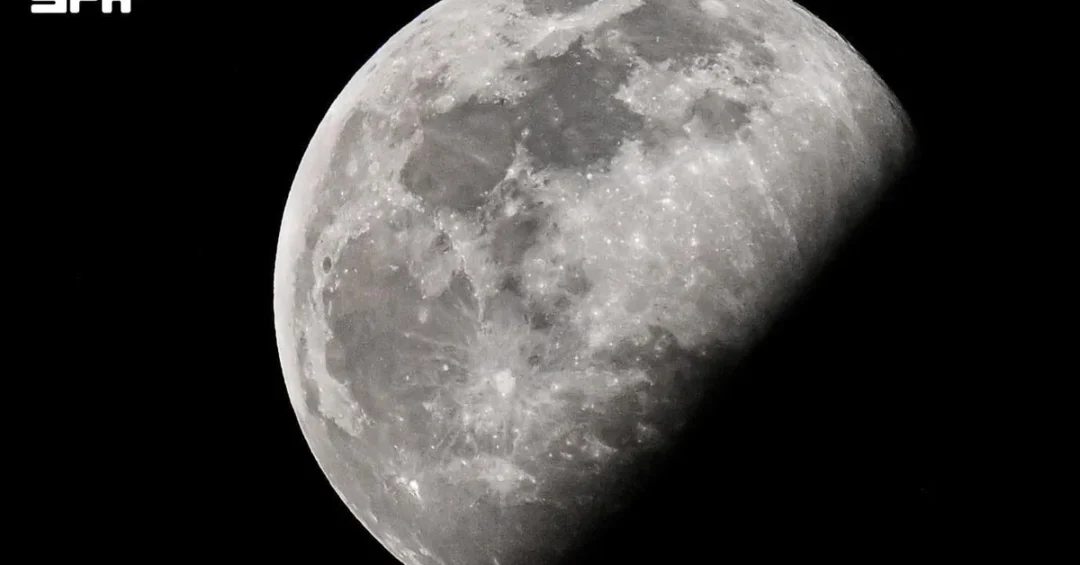
Astronomy enthusiasts and photographers across Saudi Arabia’s Jazan Region turned their lenses and eyes skyward tonight to witness a spectacular supermoon, as the full moon reached its closest point to Earth in its orbit, according to the Saudi Press Agency (SPA). The celestial event, which occurs when a full moon coincides with perigee—the moon’s nearest approach to our planet—offered a rare opportunity to see the lunar disk appear significantly larger and brighter than an average full moon. The Jeddah Astronomy Society reported that the moon officially reached its full phase at 5:53 p.m. Makkah time, at an estimated distance of 361,000 kilometers from Earth. This proximity made the supermoon a captivating sight for residents and visitors alike, who gathered at various vantage points across the region to capture the phenomenon.
The supermoon’s appearance over Jazan is more than just a visual treat; it highlights the region’s growing reputation as a destination for astrotourism and nature photography. With its diverse landscapes—ranging from the Red Sea coastline to mountainous highlands—Jazan provided a stunning backdrop for observing the moon’s enhanced size and luminosity. As the moon rose above the eastern horizon, it cast a silvery glow over the water, blending with the colors of twilight and creating a natural canvas for photographers. The event also underscored the importance of astronomical phenomena in bringing communities together, fostering a sense of wonder and appreciation for the natural world. For Saudi Arabia, such events align with broader efforts to promote tourism and scientific engagement under Vision 2030.
Context and Background
What exactly is a supermoon, and why does it capture the imagination of skywatchers around the globe? A supermoon occurs when a full moon coincides with the moon’s closest approach to Earth in its elliptical orbit, a point known as perigee. Because the moon’s orbit is not a perfect circle, its distance from Earth varies; at perigee, it can be about 14% larger and 30% brighter than at apogee, its farthest point. The term “supermoon” is not astronomical jargon but a popular label that has gained traction in recent decades, helping to publicize these celestial events. The Jeddah Astronomy Society, a recognized Saudi authority on astronomical observations, confirmed that tonight’s full moon reached its peak at 5:53 p.m. Makkah time, at a distance of 361,000 kilometers—well within the range that qualifies as a supermoon.
Jazan, located in the southwestern corner of Saudi Arabia, is known for its rich natural diversity. The region stretches from the Red Sea coast, with its pristine beaches and the Farasan Islands archipelago, to the mountainous governorates of Fifa, Al-Dayer, and Al-Raith, where terraced agricultural fields cling to steep slopes. This varied topography offers numerous vantage points for observing celestial events. In recent years, Saudi Arabia has increasingly promoted astronomy and space sciences as part of its Vision 2030 diversification efforts, with events like tonight’s supermoon serving as a catalyst for public engagement. The Jeddah Astronomy Society has been instrumental in documenting and explaining such phenomena, providing accurate data that enhances public understanding and appreciation.
Historically, supermoons have been observed and recorded by cultures worldwide, often imbued with cultural or spiritual significance. In Saudi Arabia, the moon holds a special place in Islamic tradition, marking the beginning of lunar months and important religious occasions. While tonight’s supermoon is a scientific phenomenon, it also resonates with the Kingdom’s cultural heritage, reminding observers of the timeless connection between celestial events and daily life. As the moon rose over Jazan, it offered a moment of reflection and unity, bringing together people from all walks of life to marvel at the universe’s grandeur.
Key Details
How did the supermoon manifest across Jazan’s diverse landscapes, and what made tonight’s viewing particularly special? According to the Saudi Press Agency, the moon reached its full phase at 5:53 p.m. Makkah time, at an estimated distance of 361,000 kilometers from Earth. This distance is relatively close for a full moon, making the lunar disk appear noticeably larger and brighter. The Jeddah Astronomy Society noted that the phenomenon, known as a supermoon, occurs when a full moon coincides with the moon’s closest approach to Earth (perigee). The society’s data provided a precise timeline for observers, helping them plan their viewing sessions.
Jazan’s waterfront, which stretches along the Red Sea coast, offered an ideal location to watch the moon rise above the eastern horizon. As moonlight reflected across the sea, it blended with the colors of twilight, creating a natural backdrop for astrophotography enthusiasts. The open locations with unobstructed horizon views were particularly favored, allowing photographers to capture the moon alongside the region’s natural and urban landmarks. The interplay of light and shadow on the water added a dynamic element to the scene, making each photograph unique.
On the Farasan Islands, the full moon provided a different visual experience. Wide-open views across the Red Sea, where blue waters met moonlight, highlighted the islands’ natural beauty and varied coastal landscapes. The islands, known for their biodiversity and pristine environment, offered a serene setting for observing the supermoon. In the mountainous governorates of Fifa, Al-Dayer, and Al-Raith, elevated terrain and open scenic viewpoints provided several vantage points. As the moon appeared near the horizon, its image could be framed against the mountains and their terraced agricultural fields, creating a striking contrast between the celestial body and the earthbound landscape. These locations attracted both amateur and professional photographers, who shared their images on social media, further amplifying the event’s reach.
International and Regional Impact
Why does a supermoon over Jazan matter beyond the region’s borders, and how does it contribute to Saudi Arabia’s global image? Celestial events like supermoons are observed worldwide, but when they occur over a location as visually diverse as Jazan, they generate international interest. Photographs and reports from the event can circulate globally, showcasing Saudi Arabia’s natural beauty and its commitment to scientific engagement. This aligns with the Kingdom’s efforts to position itself as a hub for tourism and cultural exchange. The supermoon also serves as a reminder of the shared human experience of observing the night sky, fostering a sense of connection across cultures.
Regionally, the event highlights the Middle East’s growing role in astronomy and space sciences. Saudi Arabia has been investing in space research and technology, with entities like the Saudi Space Commission (now the Saudi Space Agency) leading initiatives to advance the Kingdom’s capabilities. The supermoon observation in Jazan, supported by the Jeddah Astronomy Society, demonstrates the active participation of Saudi civil society in scientific pursuits. It also complements regional efforts to promote astrotourism, with countries like the UAE and Jordan developing observatories and dark-sky destinations. For Saudi Arabia, such events reinforce its leadership in science and technology, aligning with Vision 2030’s goals of diversifying the economy and fostering innovation.
Economic and Strategic Significance
How does a celestial event translate into economic and strategic benefits for Saudi Arabia? The supermoon over Jazan attracted local and international visitors, boosting tourism-related spending in the region. Hotels, restaurants, and transportation services likely saw increased demand as enthusiasts traveled to prime viewing spots. This influx of visitors supports the local economy and showcases Jazan’s potential as a year-round destination. Moreover, the event generated content for social media and news outlets, providing free publicity for Saudi Arabia’s tourism offerings. The Kingdom’s Vision 2030 aims to increase tourism’s contribution to GDP, and events like this contribute to that goal by highlighting the country’s unique attractions.
Strategically, the supermoon observation underscores Saudi Arabia’s investment in scientific infrastructure and education. The Jeddah Astronomy Society’s role in providing accurate data reflects the growing capacity of Saudi institutions to engage in astronomical research and public outreach. This aligns with the Kingdom’s broader push to develop a knowledge-based economy. By promoting events that blend science, culture, and tourism, Saudi Arabia enhances its soft power and attractiveness to international partners. The supermoon also serves as a reminder of the importance of environmental conservation; the pristine skies over Jazan and the Farasan Islands are assets that need protection to sustain astrotourism. As such, the event supports the sustainability goals embedded in Vision 2030.
Vision 2030 Alignment
How does tonight’s supermoon over Jazan connect to Saudi Arabia’s long-term vision for the future? Vision 2030, the Kingdom’s ambitious blueprint for economic and social transformation, emphasizes diversifying revenue streams, promoting tourism, and fostering innovation. The supermoon event directly supports these objectives by showcasing Jazan’s natural and cultural assets to a global audience. It also encourages domestic tourism, as Saudi citizens and residents explore their own country’s wonders. The event’s success in drawing attention to the region’s potential for astrotourism aligns with the Vision’s goal of creating new economic sectors and job opportunities.
Furthermore, the supermoon highlights the importance of science education and public engagement, which are integral to Vision 2030’s human capital development. The Jeddah Astronomy Society’s educational efforts inspire young Saudis to pursue careers in science, technology, engineering, and mathematics (STEM). By celebrating celestial events, Saudi Arabia nurtures a culture of curiosity and learning, essential for a knowledge-based economy. As the moon shone over Jazan, it illuminated not just the landscape but also the path toward a brighter, more diversified future for the Kingdom. The event serves as a testament to Saudi Arabia’s ability to blend tradition with modernity, leveraging natural phenomena to advance its national goals.
20 Questions
Q1. What is a supermoon?
A1. A supermoon occurs when a full moon coincides with the moon’s closest approach to Earth in its orbit, known as perigee. This makes the moon appear larger and brighter than a regular full moon.
Q2. When did the supermoon reach its full phase over Jazan?
A2. According to the Jeddah Astronomy Society, the moon reached its full phase at 5:53 p.m. Makkah time on the evening of the event.
Q3. How far was the moon from Earth during this supermoon?
A3. The moon was at an estimated distance of 361,000 kilometers from Earth, which is relatively close for a full moon.
Q4. Why is Jazan a good location for observing supermoons?
A4. Jazan offers diverse landscapes, from Red Sea coastlines to mountainous highlands, providing multiple vantage points with unobstructed views of the horizon.
Q5. What is the Jeddah Astronomy Society?
A5. The Jeddah Astronomy Society is a Saudi organization dedicated to astronomical observations and public education, providing accurate data on celestial events.
Q6. How did the supermoon appear over Jazan’s waterfront?
A6. The moon rose above the eastern horizon, casting reflections across the Red Sea that blended with twilight colors, creating a stunning backdrop for photography.
Q7. What made the Farasan Islands a unique viewing spot?
A7. The Farasan Islands offered wide-open views across the Red Sea, where the moon’s light highlighted the islands’ natural beauty and coastal landscapes.
Q8. Which mountainous governorates provided vantage points?
A8. The governorates of Fifa, Al-Dayer, and Al-Raith offered elevated terrain and scenic viewpoints, allowing the moon to be framed against mountains and terraced fields.
Q9. Why do supermoons appear larger and brighter?
A9. Because the moon is closer to Earth at perigee, it appears about 14% larger and 30% brighter than when it is at its farthest point, apogee.
Q10. How does this event support Saudi tourism?
A10. The supermoon attracted visitors to Jazan, boosting local businesses and showcasing the region’s potential as a destination for astrotourism and nature photography.
Q11. What is the significance of the moon in Islamic tradition?
A11. The moon marks the beginning of lunar months and important religious occasions in Islam, making celestial events culturally significant in Saudi Arabia.
Q12. How does the supermoon align with Vision 2030?
A12. It promotes tourism, scientific engagement, and economic diversification, all key goals of Vision 2030, while highlighting Saudi Arabia’s natural assets.
Q13. Did the event have international attention?
A13. Yes, photographs and reports circulated globally, showcasing Saudi Arabia’s natural beauty and its commitment to science and tourism.
Q14. What role did the Saudi Press Agency play?
A14. The Saudi Press Agency reported on the event, providing official information and highlighting the supermoon’s visibility across Jazan.
Q15. How can astrophotography benefit from such events?
A15. Supermoons provide excellent opportunities for astrophotographers to capture the moon’s enhanced size and brightness against diverse landscapes.
Q16. What other regions in Saudi Arabia observe supermoons?
A16. Supermoons are visible across Saudi Arabia, but Jazan’s varied terrain makes it particularly suitable for observation and photography.
Q17. How does the event promote science education?
A17. It inspires public interest in astronomy and encourages young Saudis to pursue STEM fields, supporting Vision 2030’s human capital development.
Q18. What economic benefits did the supermoon bring to Jazan?
A18. Increased tourism led to higher spending in hotels, restaurants, and transportation, providing a boost to the local economy.
Q19. How does the supermoon reflect Saudi Arabia’s environmental conservation efforts?
A19. The pristine skies over Jazan and the Farasan Islands highlight the importance of preserving natural habitats, aligning with sustainability goals.
Q20. What future astronomical events can Saudi Arabia expect?
A20. Saudi Arabia will continue to witness various celestial events, and organizations like the Jeddah Astronomy Society will provide updates and educational opportunities.
Reader Feedback
We value your thoughts. Please share your feedback on this article.
Your feedback helps us improve our coverage.
Related articles
 Saudi Arabia Ranks 4th in UN Digital Government Index 2026
 NCVC and New Space Group Sign MoU to Boost Digital Transformation
 Qassim Science Center: Fostering Innovation in Unaizah
 Elm Partners with SAIF 2026 to Drive Saudi Innovation
 Supermoon to Illuminate Saudi Skies Tuesday Evening
 Saudi Falcons Center, Diagnostic Partner to Launch Genetic Bank