


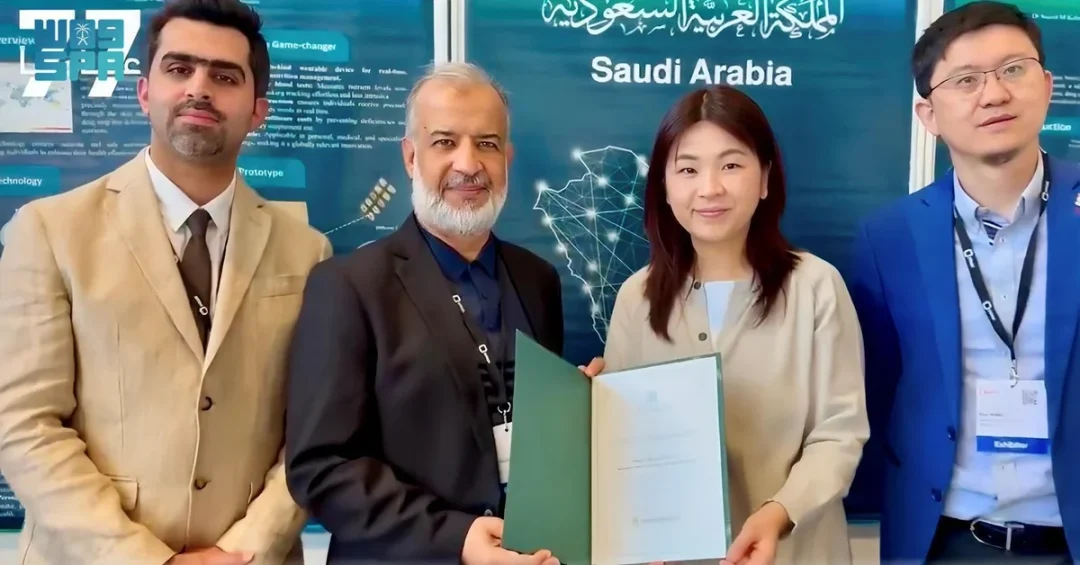
Umm Al-Qura University, represented by its Institute of Innovation and Entrepreneurship, has received the Honorary Medal from the French Union of Inventors at the 50th Geneva International Exhibition of Inventions, held from April 9 to 13, 2025. The recognition, announced through official Saudi channels including the Saudi Press Agency, honors the Makkah-based institution for its support of health innovations aimed at improving global quality of life through three biotechnology projects presented at the prestigious international gathering.
The award places the University among a select group of global institutions whose applied research is judged to have exceptional practical value. For an international audience, the development signals the growing prominence of Saudi academic institutions in translational science, an arena where ideas move from laboratory benches to real-world health solutions. The medal also underscores how Saudi universities are increasingly benchmarking their research against the highest international standards, presenting their work before global juries and competing alongside inventors from dozens of countries.
How Did a Makkah University Reach the Global Innovation Stage?
The 50th Geneva International Exhibition of Inventions is one of the world’s longest-running and most recognized showcases for applied innovation, drawing inventors, research institutes, and companies from across the globe. Umm Al-Qura University’s participation, organized through its Institute of Innovation and Entrepreneurship, reflects a deliberate institutional strategy: identifying promising research early, protecting it, and presenting it to international evaluators who can validate its quality. The Honorary Medal from the French Union of Inventors was awarded specifically in recognition of the university’s support for health innovations with a global quality-of-life dimension.
The three projects presented span distinct but complementary areas of biotechnology. Together, they illustrate how Saudi researchers are addressing practical health challenges, from diagnosing infectious disease to correcting nutritional deficiency to modeling complex tissue environments for cellular research. Each project was developed with a clear applied endpoint, which is precisely the kind of research the Geneva exhibition is designed to reward. The university described the recognition as a reflection of its ongoing commitment to innovation and leadership in alignment with the goals of Saudi Arabia’s Vision 2030, and the projects each received awards of appreciation for their quality and excellence.
Why does international validation matter for a university still relatively young in the global research rankings? Because recognition from bodies such as the French Union of Inventors provides third-party confirmation that the science meets rigorous external criteria. It also builds the international partnerships, licensing interest, and research collaborations that sustain long-term innovation ecosystems.
What Exactly Did the University Present?
The first project, VentoGo, is an innovative portable device for diagnosing infectious respiratory diseases by analyzing vital signs and laboratory data. Portable diagnostic tools are especially consequential in settings where access to specialist facilities is limited, and a device that combines physiological signals with laboratory information addresses a genuine clinical need. The second, BioNourish, is a smart device and system designed to treat nutrient deficiencies, a challenge that affects populations worldwide and intersects with public health, maternal care, and child development.
The third, Smart HemaTissue 3D, is a dynamic 3D bone marrow model developed for physiological simulation and cell interaction studies. Advanced tissue modeling supports research into blood disorders and cellular behavior in ways that traditional two-dimensional cultures cannot, giving scientists a more realistic platform for experimentation. Together the three projects demonstrate breadth: a diagnostic device, a therapeutic-support system, and a research-enabling model. Each received awards of appreciation at the exhibition, an outcome the university described as highlighting the quality and excellence of its contributions.
What do these three projects have in common beyond their health focus? Each translates laboratory insight into a tangible product or system with a clear user in mind. That orientation toward application is central to the Institute of Innovation and Entrepreneurship’s mission and explains why the university’s submission resonated with an international jury of inventors.
How Does This Recognition Fit Into Saudi Arabia’s Broader Research Ambitions?
Saudi Arabia has placed research, innovation, and knowledge transfer at the heart of its long-term development agenda. Universities across the Kingdom are being encouraged to move beyond teaching and toward applied discovery, with commercialization, patenting, and international visibility treated as core measures of success. Umm Al-Qura University’s medal, awarded in Geneva before a global audience, is a concrete demonstration of that shift. It shows a Saudi institution competing at an international exhibition on the strength of its own inventions rather than simply attending as an observer.
The recognition also carries symbolic weight given the university’s location in Makkah, a city of enormous spiritual and cultural significance. A Makkah-based institution earning honors for biotechnology innovation projects sends a message that scientific excellence and Saudi cultural heritage are complementary rather than separate. For international observers, it broadens the picture of contemporary Saudi Arabia beyond energy and pilgrimage to include research capacity, talent development, and problem-solving for global health challenges.
Is it reasonable to expect more such honors in the years ahead? The institutional infrastructure that produced these projects, an innovation and entrepreneurship institute embedded within a major university, is designed to generate a continuing pipeline of applied research, suggesting that this medal is likely a milestone rather than an isolated event.
What Does the French Union of Inventors Honor Signify Internationally?
The French Union of Inventors is a recognized body within the international inventors’ community, and its honorary medal carries credibility because it is conferred by peers with expertise in evaluating applied innovation. Awards of this kind inform international audiences about where meaningful invention is taking place, and they can open doors to collaboration, investment, and licensing conversations. For Umm Al-Qura University, the medal is therefore more than a trophy; it is a signal to global partners that the institution produces research worth engaging with.
The Geneva exhibition format, in which inventors present working concepts and systems to expert juries, emphasizes practical viability over theory. That Umm Al-Qura’s projects succeeded in this environment speaks to their development maturity. International recognition of this kind also strengthens the case for cross-border research ties, including potential partnerships with European institutions, which can accelerate the journey from prototype to deployment for health technologies.
Why should global readers care about a medal awarded to a university they may not yet know well? Because health innovation is borderless, and a portable respiratory diagnostic or a smart nutrition system developed in Makkah may ultimately serve patients far beyond Saudi Arabia, contributing to the global quality-of-life improvements the award explicitly cited.
What Are the Economic and Strategic Implications?
Beyond the scientific honor, the recognition has economic and strategic resonance. Knowledge-based industries are a priority for Saudi Arabia as it diversifies its economy, and university-led innovation is a key feeder for that diversification. Successful inventions can lead to patents, spin-off companies, and technology licensing, all of which contribute to a more resilient and diversified economic base. The Institute of Innovation and Entrepreneurship, by championing projects such as VentoGo, BioNourish, and Smart HemaTissue 3D, is building the intellectual property and talent pipeline on which such industries depend.
Strategically, international awards enhance the Kingdom’s soft power in science and education. They support the positioning of Saudi universities as destinations for collaboration and as credible partners for global research consortia. For students and young researchers, visible successes of this kind are also motivational, reinforcing the message that world-class innovation is possible from within the Kingdom and encouraging talent to pursue research careers at home. The medal thus contributes to a virtuous cycle: recognition attracts talent, talent produces discoveries, and discoveries attract further recognition.
What should be watched next is whether these projects progress toward clinical validation, manufacturing partnerships, or commercialization agreements. Each step along that path would multiply the value of the original honor, turning a moment of recognition into a durable contribution to health and to the Saudi economy.
How Does This Achievement Align With Vision 2030?
The Honorary Medal aligns squarely with the goals of Saudi Arabia’s Vision 2030, which emphasize a diversified, knowledge-driven economy, world-class education, and expanded research and innovation capacity. By supporting applied health innovations and presenting them on an international stage, Umm Al-Qura University is directly contributing to the vision’s ambition of building a society and economy driven by ideas and discovery. The recognition also reinforces Vision 2030’s emphasis on improving quality of life, both within the Kingdom and globally, through science that addresses real human needs.
The university’s achievement is a reminder that Vision 2030 is not an abstract policy framework but a lived agenda expressed through institutions, researchers, and students translating ambition into tangible results. As Saudi universities continue to invest in innovation infrastructure and international engagement, achievements such as this medal will serve as benchmarks of progress. The forward-looking trajectory is clear: a Kingdom increasingly recognized not only for its heritage and resources but also for the quality of its scientific contributions and its capacity to help solve global health challenges.
20 Questions
Q1. What honor did Umm Al-Qura University receive?
A1. Umm Al-Qura University received the Honorary Medal from the French Union of Inventors at the 50th Geneva International Exhibition of Inventions, recognizing its support for health innovations that improve global quality of life.
Q2. When and where was the award presented?
A2. The medal was awarded at the 50th Geneva International Exhibition of Inventions, held in Geneva, Switzerland, from April 9 to 13, 2025, before an international gathering of inventors and research institutions.
Q3. Which part of the university led the participation?
A3. The university was represented by its Institute of Innovation and Entrepreneurship, which supports applied research, identifies promising projects, and presents them to international evaluators and exhibitions.
Q4. How many projects were presented in Geneva?
A4. The university presented three groundbreaking biotechnology projects: VentoGo, BioNourish, and Smart HemaTissue 3D, each addressing distinct health-related challenges with practical, applied goals.
Q5. What is VentoGo?
A5. VentoGo is an innovative portable device for diagnosing infectious respiratory diseases by analyzing vital signs and laboratory data, designed to support diagnosis where specialist facilities may be limited.
Q6. What does BioNourish do?
A6. BioNourish is a smart device and system designed to treat nutrient deficiencies, addressing a public health challenge that affects populations worldwide, including maternal and child health.
Q7. What is Smart HemaTissue 3D?
A7. Smart HemaTissue 3D is a dynamic 3D bone marrow model developed for physiological simulation and cell interaction studies, offering a more realistic platform for research than traditional methods.
Q8. Did the individual projects receive recognition?
A8. Yes, the projects received awards of appreciation, highlighting the quality and excellence of the university’s contributions and reinforcing the significance of the overall Honorary Medal.
Q9. Why did the French Union of Inventors bestow the medal?
A9. The medal recognized the university’s support for health innovations aimed at improving global quality of life through the presentation of its three biotechnology projects at the exhibition.
Q10. What does the recognition say about Saudi research capacity?
A10. It demonstrates that Saudi academic institutions can compete internationally on the strength of their own inventions, signaling growing research maturity and applied scientific capability within the Kingdom.
Q11. How does the achievement relate to Vision 2030?
A11. The recognition reflects the university’s commitment to innovation and leadership in alignment with Vision 2030 goals, particularly a knowledge-driven economy, world-class education, and improved quality of life.
Q12. Why is international validation important for the university?
A12. Third-party recognition from international bodies confirms that the science meets rigorous external criteria and can open doors to collaboration, investment, licensing, and research partnerships worldwide.
Q13. What is the significance of the Geneva exhibition?
A13. The Geneva International Exhibition of Inventions is one of the world’s longest-running showcases for applied innovation, drawing inventors and institutions from across the globe to present working concepts to expert juries.
Q14. What common thread links the three projects?
A14. Each translates laboratory insight into a tangible product or system with a clear user in mind, reflecting the applied, problem-solving orientation central to the Institute of Innovation and Entrepreneurship’s mission.
Q15. What economic benefits could follow from this recognition?
A15. The recognition can support patents, spin-off companies, and technology licensing, contributing to Saudi Arabia’s economic diversification and the growth of knowledge-based industries.
Q16. How might this affect students and young researchers?
A16. Visible international success motivates students and young researchers, reinforcing that world-class innovation is possible from within the Kingdom and encouraging talent to pursue research careers at home.
Q17. What does the award mean for Makkah’s global image?
A17. A Makkah-based institution earning honors for biotechnology innovation demonstrates that scientific excellence and Saudi cultural heritage are complementary, broadening the international picture of contemporary Saudi Arabia.
Q18. What are the next steps for these projects?
A18. Potential next steps include clinical validation, manufacturing partnerships, and commercialization agreements, each of which would multiply the value of the original honor and benefit global health.
Q19. Which official channel announced the award?
A19. The award was announced through official Saudi channels, including the Saudi Press Agency, which reported the recognition and details of the three projects presented in Geneva.
Q20. What does this achievement suggest about future honors?
A20. Because the Institute of Innovation and Entrepreneurship is designed to generate a continuing pipeline of applied research, the medal is likely a milestone rather than an isolated event, with more honors expected.
Reader Feedback
We value your thoughts. Please share your feedback on this article.
Your feedback helps us improve our coverage.
Related articles
 Saudi Arabia Wins Grand Prix, Scores Record Haul at Geneva Inventions
 Jeddah Astronomy Society Observes Shawwal Full Moon After Spring Equinox
 Najran University Wins Gold at Geneva Inventions 2025
 Prince Sultan University Hosts Eighth International Women in Data Science Conference
 Saudi Space Economy Reaches $8.7 Billion in 2024, CST Announces
 Tabuk Governor Patronizes 4th International Computing Conference