


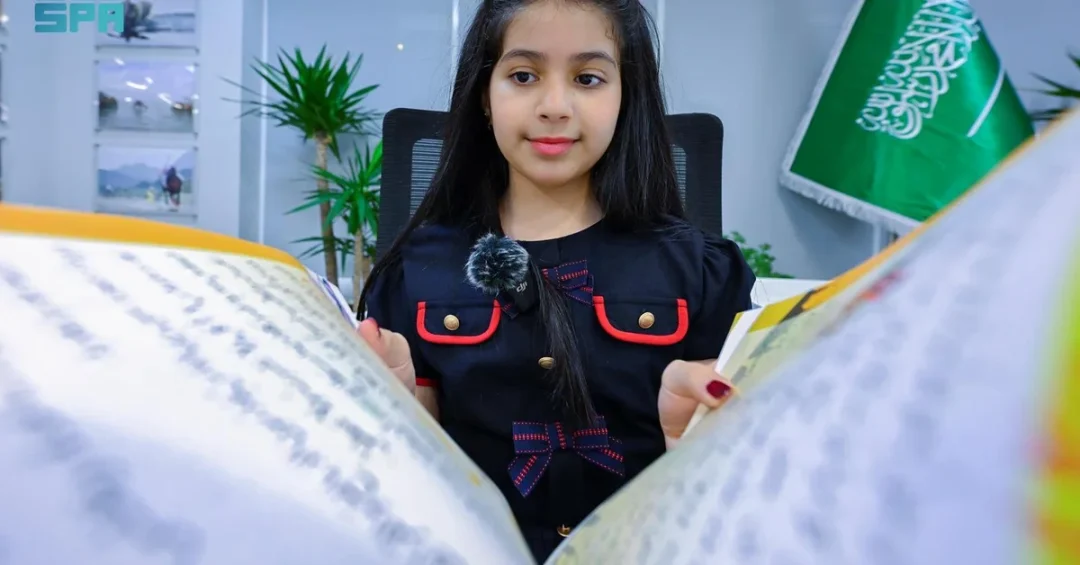
Kadi bint Musaffar Al Khathaam, the Saudi student who won the 2024 Arab Reading Challenge, has shared the story of her journey from a childhood love of books to victory in the world’s largest Arabic reading competition, in an interview with the Saudi Press Agency (SPA). The achievement, announced by the Ministry of Education, places a Saudi student at the summit of a contest organized by the Mohammed bin Rashid Al Maktoum Global Initiatives Foundation in the United Arab Emirates, and reflects the Kingdom’s deepening investment in reading, knowledge, and youth empowerment.
Al Khathaam, who hails from the Asir region, credited her parents and elementary school teachers for nurturing her talent from an early age. Her victory came after a fiercely contested edition that drew more than 28 million students from over 229,000 schools across 50 nations, overseen by a cohort of 154,000 supervisors. For Saudi Arabia, the win is more than a personal milestone — it is a signal that the Kingdom’s cultural and educational ambitions are producing world-class results. How did a young reader from Saudi Arabia rise above millions of competitors to claim such a prestigious title? The answer lies in years of steady reading, family encouragement, and a national environment that increasingly celebrates knowledge.
Context and Background
What does it take to win a competition that spans 50 countries and millions of students? The Arab Reading Challenge, launched in 2015 by the Mohammed bin Rashid Al Maktoum Global Initiatives Foundation, has grown into the largest reading initiative of its kind in the Arab world. Its mission is to promote Arabic reading, strengthen national and Arab identity, encourage creative minds, improve Arabic language curricula, and highlight the importance of reading among students. It is open to pre-college students from all Arab countries, who progress through stages that require reading several books and summarizing them before reaching the final round held annually in the UAE.
Al Khathaam’s preparation was as thorough as the competition demands. She had amassed a personal collection of more than 100 age-appropriate books on diverse subjects, building a foundation of knowledge that served her well through every stage of the challenge. Her story is a reminder that reading is not only an academic exercise but a way of life — one that Saudi Arabia’s Ministry of Education has actively encouraged through national literacy programs, school competitions, and curriculum reforms. In a region where the Arabic language is both a cultural treasure and a tool of modern communication, the challenge reinforces the value of reading in shaping confident, articulate young citizens.
The Saudi Press Agency’s interview with Al Khathaam highlights a broader narrative: the Kingdom’s commitment to nurturing talent at every level. Her success did not emerge in isolation. It was the product of a supportive family, dedicated teachers, and an education system that increasingly prioritizes reading comprehension, critical thinking, and cultural pride. As Saudi Arabia continues to transform its economy and society under Vision 2030, such individual achievements serve as powerful evidence that the country’s human capital is thriving.
Key Details of a Record-Breaking Competition
How did Al Khathaam navigate a contest of such extraordinary scale? The 2024 edition of the Arab Reading Challenge was the largest yet, with more than 28 million students participating from over 229,000 schools in 50 nations. A cohort of 154,000 supervisors guided participants through the qualifying rounds, which required reading, summarizing, and presenting a series of books. The final round, held annually in the UAE, brought together the most accomplished readers from across the Arab world.
Al Khathaam attributed her success to the unwavering support she received from her parents and her elementary school teachers. In her interview with SPA, she described how that early encouragement was instrumental in nurturing her talent. Her collection of over 100 books — carefully chosen to match her age and interests — gave her a broad base of knowledge that she could draw upon during the competition’s demanding stages. The Ministry of Education highlighted her achievement as particularly laudable given the fierce competition she faced.
The structure of the challenge rewards not only reading volume but also comprehension, expression, and the ability to connect ideas. Participants must summarize what they read and articulate their understanding, skills that are central to Saudi Arabia’s educational goals. Al Khathaam’s victory therefore reflects the effectiveness of the Kingdom’s emphasis on reading and language proficiency. It also underscores the role of families and teachers in creating a culture of reading at home and in the classroom — a culture that Saudi Arabia is actively promoting through its education reforms.
International and Regional Impact
What does a Saudi student’s victory mean for the wider Arab world? The Arab Reading Challenge is a pan-Arab initiative, and Al Khathaam’s win brings Saudi Arabia into the spotlight as a champion of Arabic literacy. It reinforces the Kingdom’s position as a leader in cultural and educational diplomacy, demonstrating that Saudi youth can compete — and excel — on regional and international stages. The competition itself is a testament to the shared commitment of Arab nations to preserving the Arabic language and fostering a love of reading among the next generation.
For the international audience, the story offers a window into Saudi Arabia’s modernization journey. The Kingdom is not only building megaprojects and diversifying its economy; it is also investing in the minds of its young people. Al Khathaam’s achievement aligns with the broader vision of a knowledge-based society, where reading, critical thinking, and cultural pride are valued. Her journey from a young book lover in Asir to a continental champion sends a powerful message: with the right support, Saudi students can achieve at the highest levels. It also strengthens the cultural ties between Saudi Arabia and the UAE, whose foundation organizes the challenge, reflecting the cooperative spirit that defines Gulf relations.
Economic and Strategic Significance
How does a reading competition connect to a nation’s economic future? At first glance, the link may seem indirect, but the strategic significance is clear. Vision 2030 aims to build a diversified, knowledge-driven economy, and that requires a workforce capable of continuous learning, innovation, and clear communication. Reading proficiency is foundational to those skills. By celebrating readers like Al Khathaam, Saudi Arabia signals that intellectual achievement is a national priority, not a niche pursuit.
The Ministry of Education’s recognition of her win also highlights the Kingdom’s investment in human capital. Programs that encourage reading, such as the Arab Reading Challenge and domestic literacy initiatives, help cultivate a generation that can contribute to sectors from technology to tourism, from research to entrepreneurship. The economic payoff may take years to materialize, but the foundation is being laid today. Moreover, success stories like this one enhance Saudi Arabia’s soft power, presenting the Kingdom as a vibrant, forward-looking society where young people are empowered to pursue excellence. In a global knowledge economy, such cultural capital is as valuable as any natural resource.
Vision 2030 Alignment
How does Al Khathaam’s victory embody the goals of Vision 2030? The Vision seeks to create a thriving society, a diversified economy, and an ambitious nation. Education and culture are central pillars, and the Arab Reading Challenge directly supports the objective of fostering a reading culture and strengthening national identity. Al Khathaam’s achievement is a concrete example of how Saudi youth are embracing these values and achieving global recognition.
As Saudi Arabia continues its transformation, stories like this one will inspire others to pick up a book, dream big, and pursue knowledge. The Ministry of Education’s support for such competitions, along with the Kingdom’s broader investments in schools, libraries, and cultural programs, ensures that the next generation is well equipped for the opportunities of the future. Al Khathaam’s journey — from a child with a love for reading to an international champion — is a shining example of what Vision 2030 hopes to achieve: a nation where every individual can reach their full potential and contribute to a proud, prosperous Saudi Arabia on the world stage.
20 Questions
Q1. Who is the Saudi winner of the 2024 Arab Reading Challenge?
A1. Kadi bint Musaffar Al Khathaam, a Saudi student from the Asir region, won the 2024 Arab Reading Challenge, organized by the Mohammed bin Rashid Al Maktoum Global Initiatives Foundation in the UAE.
Q2. Which organization runs the Arab Reading Challenge?
A2. The competition is organized by the Mohammed bin Rashid Al Maktoum Global Initiatives Foundation, based in the United Arab Emirates, and it is the largest Arabic reading challenge in the Arab world.
Q3. How many students participated in the 2024 edition?
A3. More than 28 million students from over 229,000 schools in 50 nations took part in the 2024 Arab Reading Challenge, making it the largest edition to date.
Q4. How did Al Khathaam prepare for the competition?
A4. She amassed a collection of over 100 age-appropriate books on diverse subjects, building a broad knowledge base that helped her advance through the competition’s demanding stages.
Q5. Who did Al Khathaam credit for her success?
A5. She attributed her success to the unwavering support of her parents and her elementary school teachers, who nurtured her talent and love for reading from an early age.
Q6. What did the Saudi Ministry of Education say about her win?
A6. The Ministry of Education highlighted her achievement as particularly laudable, noting that it came after fierce competition involving millions of students across many countries.
Q7. What are the goals of the Arab Reading Challenge?
A7. The challenge aims to promote Arabic reading, strengthen national and Arab identity, encourage creative minds, improve Arabic language curricula, and highlight the importance of reading among students.
Q8. Who is eligible to compete in the Arab Reading Challenge?
A8. Pre-college students from all Arab countries are eligible to compete. Participants progress through stages that include reading several books and summarizing them.
Q9. Where is the final round of the competition held?
A9. The final round is held annually in the United Arab Emirates, bringing together the top readers from across the Arab world after qualifying stages in their home countries.
Q10. How many supervisors oversaw the 2024 competition?
A10. A cohort of 154,000 supervisors oversaw the 2024 Arab Reading Challenge, guiding participants through the various stages of the competition across 50 nations.
Q11. What is the significance of Al Khathaam’s victory for Saudi Arabia?
A11. Her victory highlights Saudi Arabia’s commitment to education and reading, showcasing the Kingdom’s human capital and its ability to compete at the highest levels in regional and international competitions.
Q12. How does the competition support the Arabic language?
A12. By requiring students to read and summarize Arabic books, the challenge promotes fluency, comprehension, and a deeper appreciation of the Arabic language and its cultural heritage.
Q13. What role did Al Khathaam’s family play in her journey?
A13. Her parents provided unwavering support and encouragement, creating an environment at home that fostered her love for reading and helped her pursue her passion.
Q14. What role did her teachers play?
A14. Her elementary school teachers were instrumental in nurturing her talent, guiding her reading development and encouraging her to participate in the competition.
Q15. How does this achievement align with Vision 2030?
A15. It aligns with Vision 2030’s goals of building a knowledge-based society, empowering youth, and fostering a culture of reading and learning that supports economic diversification.
Q16. What message does her win send to other Saudi students?
A16. It sends a powerful message that with dedication, family support, and quality education, Saudi students can achieve at the highest levels and represent the Kingdom with pride.
Q17. How many books did Al Khathaam collect?
A17. She collected more than 100 age-appropriate books on a wide range of subjects, which she used to prepare for the various stages of the Arab Reading Challenge.
Q18. What is the broader impact of the Arab Reading Challenge?
A18. The challenge fosters a generation of readers across the Arab world, strengthens cultural identity, and promotes educational excellence, benefiting millions of students and their communities.
Q19. How does Saudi Arabia support reading initiatives?
A19. Through the Ministry of Education and various national programs, Saudi Arabia encourages reading, supports school libraries, and celebrates student achievements in competitions like the Arab Reading Challenge.
Q20. What is next for Al Khathaam after this victory?
A20. While specific plans are not detailed, her achievement is expected to inspire her continued academic journey and serve as a model for other students in Saudi Arabia and the Arab world.
Reader Feedback
We value your thoughts. Please share your feedback on this article.
Your feedback helps us improve our coverage.
Related articles
 Aazzm Wins Best Charitable Performance Award in Arab World
 KAU Launches Global Studio Program for Landscape Architecture
 Najah Jeddah’ Higher Education Forum Opens with Global Universities
 King Khalid University Ranks High in 2024 Shanghai Global Ranking
 Youth Bayt: A Real Step Within Misk Foundation Toward Youth Empowerment
 Saudi Education Minister: Values Are Foundation of Success