


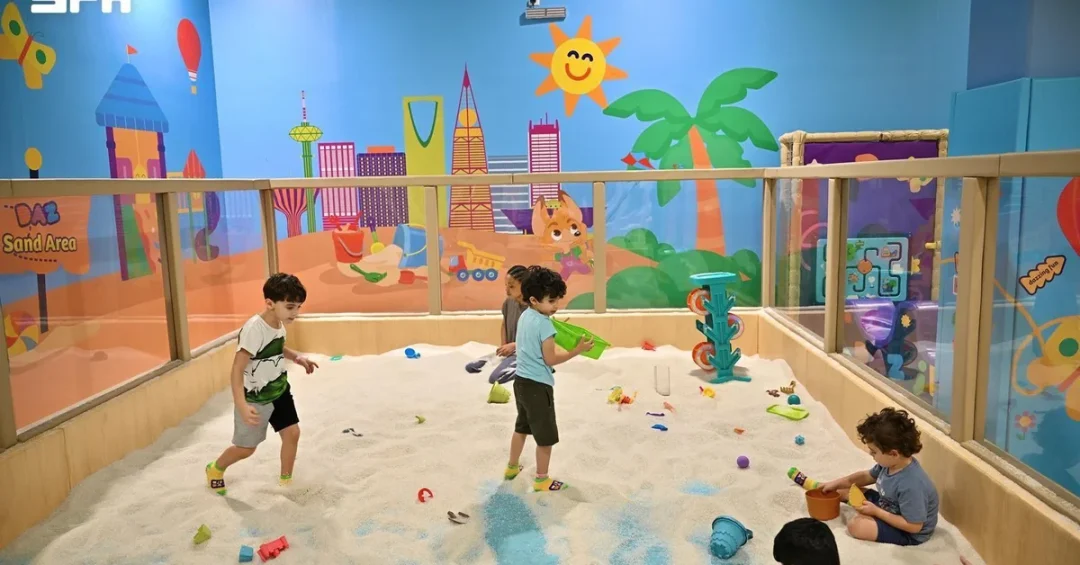
Interactive play is transforming children’s entertainment in Riyadh, offering a blend of movement, thinking, and discovery that expands young minds across various age groups, as reported by the Saudi Press Agency (SPA). The initiative goes beyond traditional playtime to create environments where movement, creativity, technology, and social interaction converge, turning play into a gateway for skill development.
Context and Background
The new format of interactive entertainment includes activities ranging from building and construction, simulation, role-playing, arts and crafts, scientific experiments, to digital games. These activities are tailored to address the physical, cognitive, and social dimensions of children, ensuring that both younger children and older children have engaging and developmentally appropriate options. Younger children benefit from movement- and balance-based games that enhance coordination and motor skills, while older children and teenagers are drawn to activities that challenge their planning, decision-making, and rapid response abilities.
Key Details: Physical Significance and Skill Development
According to the 2025 Physical Activity Statistics Bulletin published by the General Authority for Statistics, only 19% of children and adolescents aged 5 to 17 engage in at least 60 minutes of physical activity daily. This highlights the growing importance of entertainment options that incorporate movement into play and social interaction. The development of interactive play reflects a broader shift in children’s spaces, moving from simple playtime to dynamic environments where movement, creativity, technology, and social interaction converge, fostering essential skills like problem-solving, teamwork, and critical thinking.
Implications and Impact
The evolution of interactive play in Riyadh carries significant implications for the nation. By promoting physical activity and social interaction, these programs contribute to a healthier and more active generation. They also foster social cohesion and community connections, as children learn to cooperate and express themselves through shared play experiences. On an international level, Saudi Arabia is positioning itself as a leader in child development and educational entertainment, aligning with global trends and enhancing its reputation as a modern, innovative society.
Vision 2030 Alignment
These developments align with the goals of Saudi Vision 2030, which emphasize improving quality of life and investing in human capital. By creating an environment that encourages physical, cognitive, and social development, the Kingdom is investing in its most valuable asset—its youth. This strategic investment aims to build a resilient, innovative generation capable of driving the economic and social aspirations of Vision 2030, fostering a vibrant and prosperous society. The interactive play transformation in Riyadh not only addresses immediate needs but also paves the way for a future where every child can thrive.
20 Questions
Q1. What is the primary focus of the interactive play transformation in Riyadh?
A1. The primary focus is on blending movement, thinking, and discovery to develop physical, cognitive, and social skills in children across different age groups, ensuring well-rounded development through entertainment.
Q2. Which official source released the 2025 Physical Activity Statistics Bulletin?
A2. The 2025 Physical Activity Statistics Bulletin was published by the General Authority for Statistics, providing authoritative data on physical activity levels among Saudi children and adolescents.
Q3. What percentage of children aged 5 to 17 meet daily physical activity recommendations?
A3. Only 19% of children and adolescents aged 5 to 17 engage in at least 60 minutes of physical activity daily, according to the bulletin, indicating a need for more active play.
Q4. How are interactive games adapted for younger children?
A4. For younger children, interactive games are designed with movement- and balance-based activities that enhance coordination and motor skills, making physical play both fun and developmentally beneficial.
Q5. What types of activities appeal to older children and teenagers?
A5. Older children and teenagers are attracted to activities that require planning, decision-making, and rapid response, such as simulation, role-playing, and complex problem-solving tasks.
Q6. What dimensions of child development do these interactive activities address?
A6. These interactive activities address physical, cognitive, and social dimensions, contributing to comprehensive development, including motor skills, thinking, and social interaction.
Q7. How does interactive play support skill development?
A7. Interactive play serves as a gateway to skill development by integrating movement, creativity, technology, and social interaction, fostering skills like planning, teamwork, and critical thinking.
Q8. What is the significance of the shift in children’s entertainment spaces?
A8. The shift moves beyond simple playtime to environments where entertainment and education combine, providing children with productive activities that contribute to long-term growth and development.
Q9. How does interactive play impact children’s health?
A9. By incorporating physical activity into play, interactive entertainment encourages a more active lifestyle, which helps address the low activity levels and improves overall health outcomes in children.
Q10. What role does technology play in these interactive activities?
A10. Technology is integrated into digital games and experiments, making play more engaging and educational, and introducing children to modern learning tools and digital literacy.
Q11. How does this transformation align with Saudi Vision 2030?
A11. The transformation aligns with Vision 2030 by improving quality of life and developing human capital, focusing on creating an environment that fosters the physical, cognitive, and social growth of the youth.
Q12. What are the social benefits of interactive play?
A12. Interactive play encourages social interaction and teamwork, helping children build friendships, develop empathy, and improve cooperation, which strengthens social bonds and community integration.
Q13. How are activities tailored to different age groups?
A13. Activities are tailored by adjusting the complexity and skill demands: younger children have simpler, movement-focused games, while older ones engage in more complex tasks that challenge their thinking and decision-making.
Q14. Why is the General Authority for Statistics report relevant?
A14. The report provides evidence of low physical activity among children, highlighting the need for interactive programs and informing policymakers and parents about the importance of active play.
Q15. How do scientific experiments factor into interactive play?
A15. Scientific experiments are included as activities that allow children to learn by doing, promoting curiosity and exploration, and fostering a deeper understanding of scientific principles through fun.
Q16. What is the role of role-playing in interactive entertainment?
A16. Role-playing allows children to explore various scenarios and social roles, enhancing creativity, empathy, and communication skills, while providing an immersive and enjoyable experience.
Q17. How do these developments benefit the community of Riyadh?
A17. They offer families diverse, enriching entertainment options that support children’s development, making Riyadh a more family-friendly and vibrant city that prioritizes the well-being of its youth.
Q18. What is the international impact of this shift?
A18. The shift positions Saudi Arabia as a pioneer in educational and recreational programs for children, improving its global reputation and setting an example for other nations to follow.
Q19. How can parents in Riyadh access these interactive opportunities?
A19. Parents can access interactive programs through dedicated entertainment centers, cultural venues, and educational facilities across Riyadh, offering a variety of activities for children of all ages.
Q20. What is the ultimate goal of these interactive entertainment initiatives?
A20. The ultimate goal is to raise a healthy, creative, and resilient generation that can contribute to the economic and social aspirations of Saudi Vision 2030 and ensure a prosperous future.
Reader Feedback
We value your thoughts. Please share your feedback on this article.
Your feedback helps us improve our coverage.