


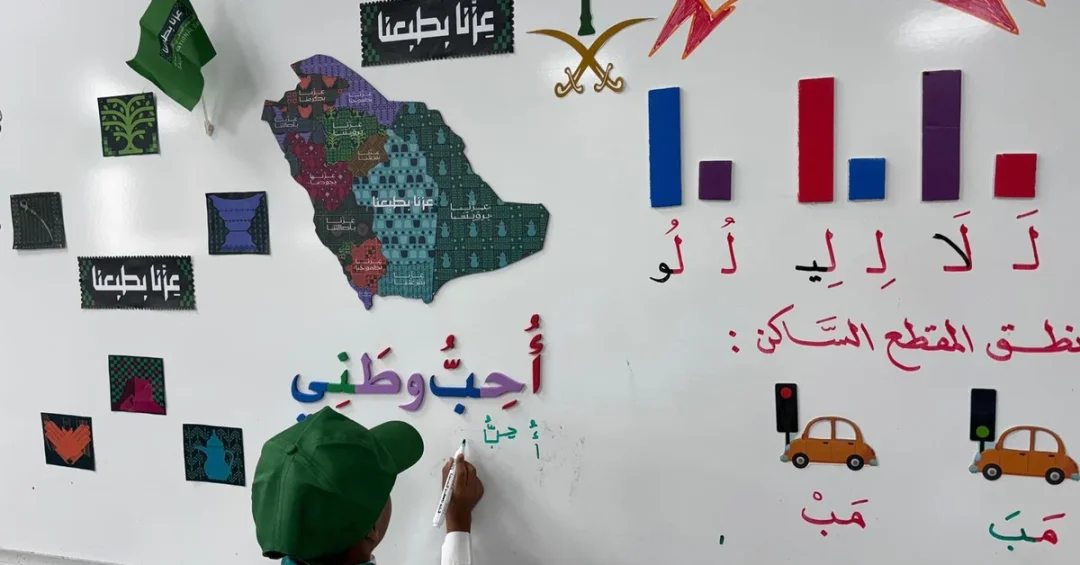
Schools across the Jazan Region marked Saudi National Day with a wide range of patriotic programs, the General Administration of Education in Jazan Region announced, in celebrations designed to deepen students’ sense of belonging to the homeland and loyalty to its wise leadership. The administration said the occasion was observed in a festive educational atmosphere across the region’s schools, with classroom activities, school radio broadcasts, and student-led events forming the centerpiece of the observances. The programs were organized to reflect national values and to connect young learners with Saudi Arabia’s history, its development journey, and the ambitions of Saudi Vision 2030. Families and parents took part alongside students, reinforcing the role of schools as community hubs. The announcement was carried by the Saudi Press Agency, the Kingdom’s official news authority, underscoring the event’s place within the national calendar.
Why does a school celebration in one region matter to readers far beyond Saudi Arabia’s borders? Because education sits at the heart of the Kingdom’s long-term transformation, and the way Saudi students engage with national occasions offers a window into how the next generation is being prepared for a rapidly changing economy and society. The Jazan programs were not isolated festivities but part of a coordinated national effort to instill civic pride, historical awareness, and a forward-looking mindset. The General Administration of Education in Jazan Region emphasized that celebrating National Day helps reinforce national values among students and deepens their connection to Saudi history, the country’s development journey, and its ambitious vision through a variety of programs and student activities that foster pride and belonging to the homeland.
Context and Background
What exactly is Saudi National Day, and why does it command such widespread participation across the Kingdom? The occasion commemorates the unification of the Kingdom of Saudi Arabia and is observed every year as a moment of national reflection and pride. In Jazan, as in other regions, the General Administration of Education treats the date as an educational opportunity rather than a purely ceremonial one. Schools are encouraged to design activities that link the national story to classroom learning, helping students understand how the country developed and where it is heading. The administration noted that the celebrations included classroom activities and school radio broadcasts, encouraging students to showcase their talents and apply their skills through interactive educational methods.
Jazan itself adds a distinctive dimension to the national narrative. Located in the southwest of the Kingdom along the Red Sea, the region is known for its rich cultural heritage, agricultural productivity, and strategic position near major trade routes. Its schools serve communities that are both deeply rooted in Saudi tradition and increasingly connected to the Kingdom’s modernization drive. By involving families and parents in National Day programs, the education administration strengthens the bond between home and school, ensuring that national values are reinforced in multiple settings. This approach reflects a broader understanding within Saudi education that civic identity is built through participation, not simply instruction.
The timing of the celebrations also matters. They unfold as Saudi Arabia continues to implement Vision 2030, the national blueprint launched under the leadership of Crown Prince Mohammed bin Salman to diversify the economy, expand opportunity, and enhance quality of life. Education is one of the central pillars of that plan, and events like National Day give schools a natural platform to connect students with the Kingdom’s goals. The Jazan programs thus form part of a much larger effort to align classroom experiences with national priorities, preparing young Saudis to contribute to a dynamic and globally engaged nation.
Key Details of the Jazan Programs
What did the celebrations actually look like in Jazan’s schools? According to the General Administration of Education in Jazan Region, the programs combined structured classroom activities with school radio broadcasts, a format that allows students to participate directly in the production and delivery of content. School radio has long been a fixture of Saudi education, offering students a chance to develop communication skills while sharing messages about national history, achievements, and values. In the context of National Day, these broadcasts became a channel for students to express pride in the Kingdom and to reflect on its progress.
The administration highlighted that the activities were designed to encourage students to showcase their talents and apply their skills through interactive educational methods. This emphasis on interactivity reflects contemporary pedagogical thinking, in which students learn best when they are active participants rather than passive listeners. National Day programs in Jazan therefore included opportunities for creative expression, teamwork, and public speaking, all framed around themes of belonging and loyalty. Families and parents took part in the events, extending the learning beyond the classroom and into the community.
The involvement of parents is a notable feature of the Jazan approach. By inviting families into the celebration, schools reinforce the idea that national identity is a shared responsibility. Parents who participate in these programs become partners in their children’s civic education, and students see their home and school environments aligned around common values. The administration stated that the celebrations aimed to deepen students’ connection to Saudi history, the country’s development journey, and its ambitious vision, a formulation that links past, present, and future in a single educational message.
International and Regional Impact
How do international observers typically interpret events like these? For readers outside Saudi Arabia, National Day celebrations in regions such as Jazan offer insight into the Kingdom’s social fabric and its approach to education. They show a country that invests in transmitting its national story to young people while simultaneously preparing them for global engagement. The emphasis on interactive methods, student talent, and family participation aligns with international best practices in civic education, even as the content remains distinctly Saudi. This combination of local values and modern pedagogy is a recurring theme in the Kingdom’s education reforms.
Regionally, the celebrations underscore the cohesion of Saudi society across its diverse regions. Jazan, with its own cultural and geographic character, participates fully in the national occasion, demonstrating that the Kingdom’s unity is expressed through shared civic rituals as well as through governance. For neighboring countries and international partners, such events signal stability, social investment, and a clear sense of direction. They also highlight the role of education ministries and regional administrations in implementing national priorities at the grassroots level, a model that resonates with policymakers worldwide who seek to connect central visions with local realities.
Economic and Strategic Significance
What do school celebrations have to do with economic strategy? In Saudi Arabia, the connection is direct. Vision 2030 depends on a well-educated, motivated, and civically engaged population. By fostering pride and belonging alongside skills development, the education system contributes to the human capital that will drive diversification away from oil dependence. Students who participate in National Day programs practice communication, creativity, and collaboration, all of which are increasingly valuable in the modern labor market. The Jazan activities thus represent a small but meaningful investment in the Kingdom’s future workforce.
Strategically, the celebration reinforces the relationship between education and national identity, a priority for Saudi leadership. The General Administration of Education in Jazan Region operates within a national framework that views schools as partners in achieving Vision 2030. Events like National Day help build the social cohesion and shared purpose that underpin long-term development. They also strengthen the bond between citizens and the state, a foundation for the stability and confidence that attract investment and international partnership. In this sense, the Jazan programs are part of a broader strategy that links culture, education, and economic progress.
Vision 2030 Alignment
How does a regional school celebration connect to Saudi Vision 2030? The vision’s goals include a vibrant society, a thriving economy, and an ambitious nation, and education is the thread that runs through all three. By engaging students in National Day activities that combine historical awareness with interactive learning, Jazan’s schools contribute to the development of a generation that understands both the Kingdom’s heritage and its future ambitions. The administration’s emphasis on fostering pride and belonging aligns with the vision’s aim of strengthening national identity while opening Saudi Arabia to the world.
As Saudi Arabia continues its transformation, the role of education in shaping citizens who are both rooted and forward-looking will only grow. The Jazan celebrations demonstrate that Vision 2030 is not an abstract policy document but a lived reality in classrooms, schoolyards, and family homes across the Kingdom. Through programs that honor the past and prepare for the future, students in Jazan and beyond are being equipped to carry the national story forward. The General Administration of Education in Jazan Region, working under official Saudi guidance, has shown how local initiative can serve national purpose, turning a single day of celebration into a lasting educational experience.
20 Questions
Q1. What occasion did schools in Jazan celebrate?
A1. Schools under the General Administration of Education in Jazan Region celebrated Saudi National Day, marking the unification of the Kingdom with patriotic programs, classroom activities, and school radio broadcasts designed to reinforce national values among students.
Q2. Who announced the Jazan National Day programs?
A2. The General Administration of Education in Jazan Region announced the programs, with the information carried by the Saudi Press Agency, the Kingdom’s official news authority, reflecting the event’s place in the national calendar.
Q3. What types of activities were included in the celebrations?
A3. The programs included classroom activities and school radio broadcasts that encouraged students to showcase their talents and apply their skills through interactive educational methods, with families and parents taking part alongside the students.
Q4. Why is National Day considered important in Saudi schools?
A4. The administration noted that celebrating the occasion helps reinforce national values among students and deepen their connection to Saudi history, the country’s development journey, and its ambitious vision, fostering pride and belonging to the homeland.
Q5. How did families participate in the Jazan celebrations?
A5. Families and parents took part in the National Day programs, extending the learning beyond the classroom and reinforcing the idea that national identity is a shared responsibility between home and school.
Q6. What is the significance of school radio broadcasts in these events?
A6. School radio broadcasts allow students to participate directly in producing and delivering content, developing communication skills while sharing messages about national history, achievements, and values with their peers.
Q7. Where is Jazan Region located?
A7. Jazan is located in the southwest of the Kingdom of Saudi Arabia along the Red Sea, known for its rich cultural heritage, agricultural productivity, and strategic position near major trade routes.
Q8. How do these celebrations reflect Saudi Vision 2030?
A8. The celebrations align with Vision 2030’s goals of a vibrant society and ambitious nation by fostering national identity, civic engagement, and skills development that contribute to the Kingdom’s long-term transformation.
Q9. What educational methods were emphasized in the programs?
A9. The administration emphasized interactive educational methods, encouraging students to be active participants through creative expression, teamwork, and public speaking, rather than passive listeners in traditional settings.
Q10. Why is student talent showcased during National Day?
A10. Showcasing student talent allows young learners to apply their skills in meaningful contexts, building confidence and creativity while connecting their personal development to national values and pride in the homeland.
Q11. What values does the celebration aim to reinforce?
A11. The programs aim to reinforce values of belonging to the homeland, loyalty to its wise leadership, pride in Saudi history, and awareness of the country’s development journey and ambitious vision.
Q12. How does Jazan’s cultural heritage contribute to the celebration?
A12. Jazan’s rich cultural heritage adds a distinctive dimension to the national narrative, connecting local traditions with the broader Saudi story and demonstrating the Kingdom’s unity across its diverse regions.
Q13. What role do teachers play in these National Day programs?
A13. Teachers design and facilitate classroom activities and radio broadcasts, guiding students through interactive learning experiences that link the national occasion to educational objectives and civic values.
Q14. How does the celebration connect students to Saudi history?
A14. Through structured activities and broadcasts, students learn about the unification of the Kingdom and its development journey, deepening their understanding of how Saudi Arabia evolved into a modern, globally engaged nation.
Q15. What makes the Jazan programs part of a national effort?
A15. The General Administration of Education in Jazan Region operates within a national framework that views schools as partners in achieving Vision 2030, coordinating local initiatives with central priorities for education and identity.
Q16. How do such events benefit the local community?
A16. By involving families and parents, the celebrations strengthen community bonds, reinforce shared values, and position schools as hubs of civic life that connect education with broader social goals.
Q17. What skills do students develop through these activities?
A17. Students develop communication, creativity, collaboration, and public speaking skills through interactive methods, all of which are increasingly valuable in the modern labor market and the Kingdom’s diversified economy.
Q18. Why is National Day celebrated across all Saudi regions?
A18. National Day is a unifying occasion observed throughout the Kingdom, expressing shared civic identity and allowing each region, including Jazan, to contribute its own character to the national celebration.
Q19. How does the celebration support Saudi Arabia’s global image?
A19. The celebrations show a country investing in its youth, preserving its heritage, and embracing modern education, signaling stability, social cohesion, and a clear sense of direction to international partners and observers.
Q20. What does the future hold for such educational programs?
A20. As Vision 2030 progresses, educational programs like those in Jazan will continue to grow, equipping students with the pride, skills, and forward-looking mindset needed to carry the national story forward.
Reader Feedback
We value your thoughts. Please share your feedback on this article.
Your feedback helps us improve our coverage.
Related articles
 Madinah Concludes Swimming Literacy Project with 300 Students
 AlUla Program Trains 50 Youth in Public Speaking
 Najran Schools Adopt Winter Schedule Starting Sunday
 Najran University Climbs Four Places in QS Arab Rankings 2027
 Saudi Arabia Sets February 2027 Deadline for Worker Housing
 ETEC to Hold Third National Forum for School Excellence in Riyadh