


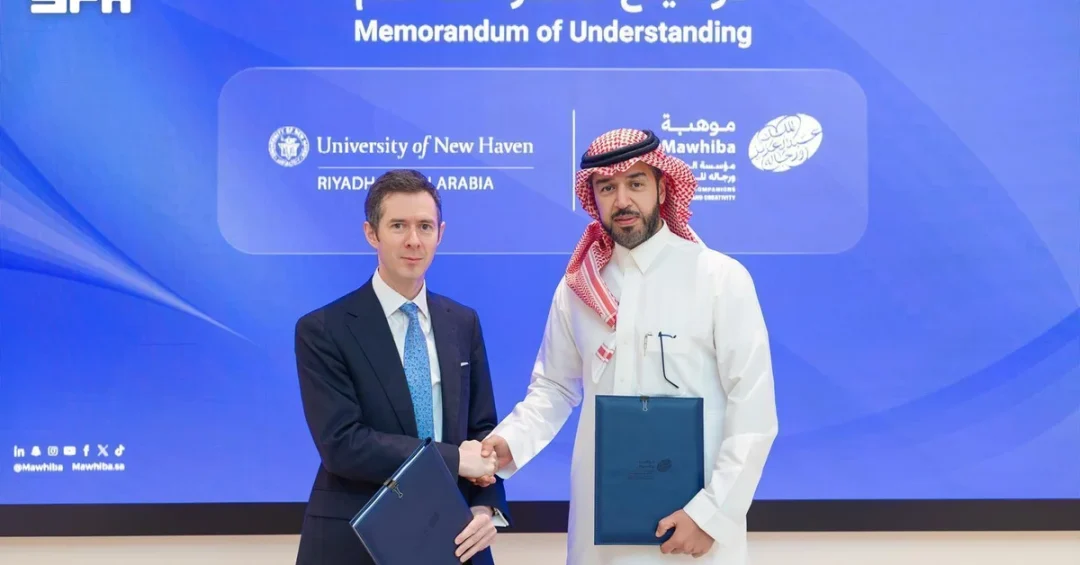
The King Abdulaziz and His Companions Foundation for Giftedness and Creativity (Mawhiba) and the University of New Haven – Riyadh have signed a Memorandum of Understanding (MoU) to enhance educational opportunities for gifted students in Saudi Arabia. The agreement, signed on July 28, 2026, aligns with Saudi Vision 2030’s goals of fostering human capital and empowering national talent through strategic partnerships.
Context and Background
Mawhiba, a leading Saudi foundation dedicated to nurturing gifted students, has consistently partnered with global institutions to provide world-class educational opportunities. The University of New Haven – Riyadh, known for its innovative academic programs, brings international expertise to this collaboration. This MoU builds on Saudi Arabia’s ongoing efforts to strengthen its education sector and prepare youth for future challenges.
Key Details
The MoU was signed by Mawhiba Secretary-General Abdulaziz Al-Karidis and Dr. Leo Lester, Senior Vice President of the University of New Haven. The partnership includes academic enrichment programs, summer initiatives, and specialized training for gifted secondary and university students in Saudi Arabia. Additionally, high-achieving Mawhiba students will have opportunities to study at the University of New Haven’s U.S. campus.
Implications and Impact
This collaboration underscores Saudi Arabia’s commitment to educational excellence and international cooperation. By leveraging the University of New Haven’s global resources, Mawhiba can further enhance its programs, offering Saudi students exposure to cutting-edge knowledge and cross-cultural experiences. The partnership also strengthens Riyadh’s position as an emerging hub for higher education and innovation.
Vision 2030 Alignment
The MoU directly supports Saudi Vision 2030’s focus on developing human potential and fostering a knowledge-based economy. By investing in gifted students, Saudi Arabia is cultivating future leaders and innovators who will contribute to the Kingdom’s long-term growth and global competitiveness. This partnership exemplifies the Vision’s emphasis on strategic international collaborations to achieve transformative national goals.
20 Questions
Q1. What is the purpose of the MoU between Mawhiba and the University of New Haven?
A1. The MoU aims to collaborate on developing and supporting gifted students at secondary and university levels through academic enrichment, summer programs, and specialized training.
Q2. Who attended the signing ceremony?
A2. The ceremony was attended by Mawhiba Secretary-General Abdulaziz Al-Karidis and the University of New Haven’s Senior Vice President, Dr. Leo Lester.
Q3. How does this partnership benefit Saudi students?
A3. It provides gifted students with access to advanced academic programs, international study opportunities, and professional development initiatives.
Q4. What types of programs are included in the MoU?
A4. The agreement covers academic enrichment, summer programs, specialized training, and study opportunities at the University of New Haven’s U.S. campus.
Q5. How does this align with Saudi Vision 2030?
A5. It supports Vision 2030’s goals of developing human capabilities, empowering national talent, and fostering a knowledge-based economy.
Q6. What is Mawhiba’s role in Saudi Arabia?
A6. Mawhiba identifies and nurtures gifted students through tailored educational programs and partnerships with leading institutions.
Q7. Where is the University of New Haven – Riyadh located?
A7. The University of New Haven – Riyadh is based in Saudi Arabia’s capital, offering international-standard education locally.
Q8. Will students study abroad under this agreement?
A8. Yes, high-achieving Mawhiba students will have opportunities to attend programs at the University of New Haven’s main U.S. campus.
Q9. What levels of students will benefit from this MoU?
A9. Both secondary school and university-level gifted students will benefit from the partnership.
Q10. How does this partnership enhance Saudi Arabia’s education sector?
A10. It brings international expertise and resources to local institutions, elevating the quality of education for gifted students.
Q11. What is the significance of this collaboration for Saudi youth?
A11. It empowers Saudi youth by providing them with world-class educational opportunities and exposure to global best practices.
Q12. How does the MoU contribute to Saudi Arabia’s global standing?
A12. By fostering international academic partnerships, the MoU enhances Saudi Arabia’s reputation as a hub for education and innovation.
Q13. What are the long-term goals of this partnership?
A13. The long-term goals include developing future leaders, advancing research, and contributing to Saudi Arabia’s knowledge economy.
Q14. How will the programs be implemented?
A14. Programs will be delivered through joint initiatives, including on-site activities in Saudi Arabia and study opportunities abroad.
Q15. What makes the University of New Haven a suitable partner for Mawhiba?
A15. The University of New Haven offers innovative academic programs and a strong reputation for excellence in education.
Q16. How does this MoU support Saudi Arabia’s economic diversification?
A16. By nurturing talent, the MoU helps build a skilled workforce capable of driving growth in non-oil sectors as part of Vision 2030.
Q17. What role does Mawhiba play in identifying gifted students?
A17. Mawhiba uses rigorous assessment tools and programs to identify and support gifted students across Saudi Arabia.
Q18. How will this partnership impact Saudi Arabia’s innovation ecosystem?
A18. By developing gifted students, the partnership will contribute to a culture of innovation and research within the Kingdom.
Q19. What are the expected outcomes of this MoU?
A19. Expected outcomes include enhanced educational opportunities, student success, and strengthened Saudi-U.S. academic ties.
Q20. How does this initiative reflect Saudi Arabia’s commitment to education?
A20. The initiative demonstrates Saudi Arabia’s dedication to providing world-class education and fostering talent as part of its national development strategy.
Reader Feedback
We value your thoughts. Please share your feedback on this article.
Your feedback helps us improve our coverage.