


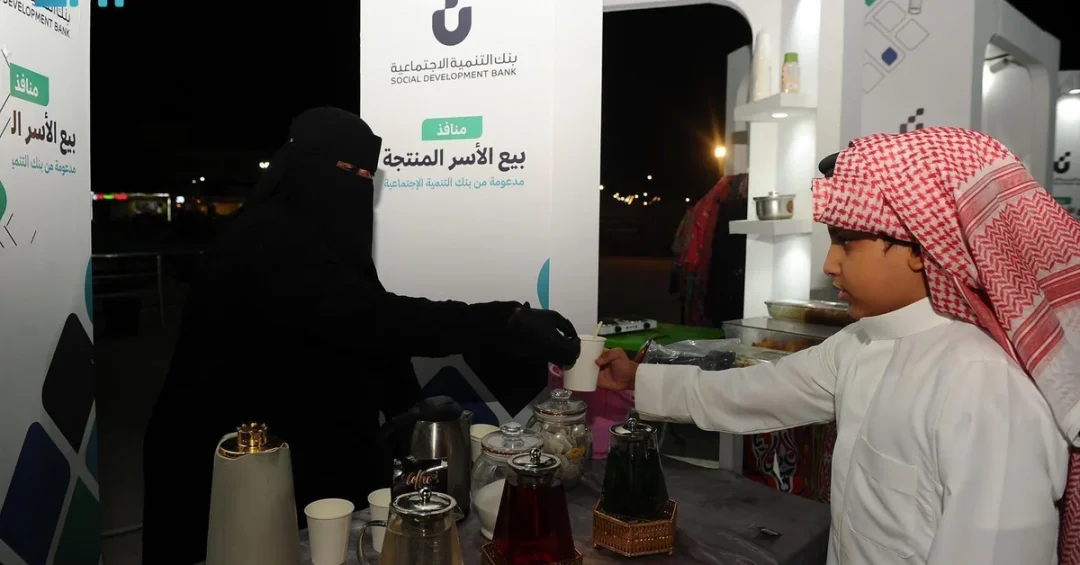
The Ramadan Lanterns event in Najran, organized by the Social Development Bank, is providing a vibrant platform for productive families to showcase their handicrafts and traditional foods across two bustling locations in the southern Saudi city. Running until the end of the holy month, the initiative has drawn warm responses from visitors and reflects the Kingdom’s broader commitment to empowering local artisans and entrepreneurs. The event is being held at the Najran fountains and Milagro Mall, transforming these popular destinations into lively showcases of heritage and commerce.
The initiative highlights how Ramadan in Saudi Arabia has evolved into far more than a period of spiritual reflection. It has become a season of economic activity, cultural celebration, and community engagement. Across the Kingdom, seasonal markets and festivals now serve as engines for small businesses, particularly those led by women and families. Najran’s event sits within this wider national movement, offering skilled locals a professional environment in which to present their creativity to a broad and appreciative audience.
Context and Background
Why has a seasonal market in Najran attracted such sustained attention from officials and visitors alike? The answer lies in the Social Development Bank’s longstanding mandate to support productive families — households that generate income through artisanal production, food preparation, and small-scale manufacturing. The bank, a key institution under Saudi Arabia’s social development framework, has spent years designing programs that move families from subsistence production to sustainable enterprise. The Ramadan Lanterns event is one such initiative, timed to coincide with the month when consumer demand for traditional foods and gifts reaches its annual peak.
Najran itself occupies a distinctive place in Saudi cultural geography. Located in the Kingdom’s southwest near the border with Yemen, the region is known for its agricultural richness, its distinctive mud-brick architecture, and its deep traditions in palm cultivation. Palm frond weaving, in particular, has been a hallmark of Najrani craftsmanship for generations. Products such as the Mayzab — a traditional palm frond container — carry cultural meaning that extends far beyond their practical use. By placing these crafts at the center of a Ramadan event, organizers are connecting economic opportunity directly to heritage preservation.
The event also reflects a broader shift in how Saudi Arabia approaches cultural tourism and local commerce. Seasonal festivals are no longer viewed as isolated celebrations but as strategic tools for regional development, drawing visitors to areas outside the major metropolitan centers and creating income streams for communities that might otherwise be overlooked in national economic planning.
Key Details of the Event
What exactly can visitors expect when they step into the Ramadan Lanterns event? According to the Saudi Press Agency, the occasion features 35 stalls distributed across the Najran fountains and Milagro Mall. These stalls offer a curated selection of traditional foods, including Al-Ruqsh, Al-Bur, and Al-Samn — dishes deeply rooted in the region’s culinary identity. Al-Ruqsh is a hearty traditional bread often prepared during Ramadan, while Al-Samn refers to clarified butter that has long been a staple of Saudi hospitality. Al-Bur is another local grain-based preparation that has sustained Najrani families for generations.
Alongside the food offerings, the event showcases handicrafts that demonstrate the dexterity and creativity of local artisans. Palm frond crafts, including the Mayzab, are prominently displayed, impressing and delighting attendees. These items represent a living tradition rather than a museum piece, as artisans continue to adapt age-old techniques to contemporary tastes and uses. The dual-location format at the Najran fountains and Milagro Mall ensures that the event reaches both families enjoying the city’s public spaces and shoppers frequenting one of Najran’s main retail destinations.
The warm response from visitors underscores the event’s success in meeting both cultural and commercial objectives. For productive families, the stalls provide direct access to customers without the overhead costs associated with permanent retail space. For visitors, the event offers an authentic encounter with Najrani heritage during a month when community gatherings carry special significance.
Empowering Productive Families
How does a temporary market translate into lasting economic empowerment? The Social Development Bank’s approach rests on the principle that visibility and market access are often the missing links between artisanal skill and sustainable income. Many productive families possess exceptional abilities in cooking, weaving, or crafting but lack the platforms, networks, or business experience to reach paying customers at scale. By organizing the Ramadan Lanterns event, the bank provides not only physical stalls but also an implicit endorsement of quality that helps artisans build reputations.
The focus on enhancing income is deliberate. When families earn during Ramadan, they often reinvest in raw materials, equipment, or inventory for future seasons. This creates a multiplier effect that extends well beyond the month itself. The event also fosters handicraft innovation, as artisans respond to customer feedback and experiment with new designs or packaging. This dynamic interaction between producer and consumer is difficult to replicate in traditional retail settings and represents a key advantage of festival-based commerce.
Furthermore, the event contributes to the preservation of intangible cultural heritage. When young family members participate in preparing traditional foods or crafting palm frond items, they acquire skills that might otherwise fade. Economic incentive thus becomes a mechanism for cultural transmission, aligning commercial success with the intergenerational transfer of knowledge.
International and Regional Impact
What does Najran’s Ramadan market signal to international observers about Saudi Arabia’s development model? For global audiences, events like this illustrate how the Kingdom is pursuing economic diversification at the grassroots level. While megaprojects and industrial initiatives attract headlines, the quiet expansion of small-business platforms demonstrates that Vision 2030 has a human-scale dimension. International visitors, including the growing number of tourists exploring Saudi Arabia’s southern regions, encounter a living culture rather than a staged performance.
Regionally, Najran’s proximity to Yemen and its distinct cultural identity make the event a symbol of stability and prosperity in a border region. The successful operation of commercial and cultural activities in Najran reinforces the message that development is reaching all parts of the Kingdom, not only the major cities. For neighboring Gulf states, Saudi Arabia’s emphasis on productive families offers a model for combining social welfare with entrepreneurship, a balance that many governments in the region are seeking to achieve.
The event also complements Saudi Arabia’s broader tourism strategy. As the Kingdom promotes heritage destinations and cultural experiences, sites like Najran benefit from increased visibility. Travelers interested in traditional crafts, regional cuisine, and community-based tourism find in Najran an authentic alternative to more commercialized destinations.
Economic and Strategic Significance
Why should the economic significance of a Ramadan market be taken seriously? Small and medium-sized enterprises, including household-based businesses, form the backbone of many economies. In Saudi Arabia, the government has set ambitious targets for SME contributions to GDP as part of Vision 2030. Productive families represent a micro-enterprise segment that can be scaled with relatively modest support. The Social Development Bank’s programs, including the Ramadan Lanterns event, are practical instruments for achieving these national targets.
The strategic value also lies in import substitution and local consumption. When Saudi families buy traditional foods and crafts from local producers, money circulates within the community rather than flowing to imported alternatives. This strengthens regional economies and reduces dependence on external supply chains. The Ramadan season, with its high demand for food and gifts, is an ideal time to capture this value locally.
Additionally, the event supports employment. While the stalls are family-run, they often require additional hands during peak hours, creating short-term income opportunities for youth and women. These experiences build skills in customer service, inventory management, and pricing — capabilities that can be applied to future ventures.
Vision 2030 Alignment
How does a lantern-lit market in Najran connect to the grand ambitions of Vision 2030? The Vision’s objectives include a vibrant society, a thriving economy, and an ambitious nation. The Ramadan Lanterns event advances all three. It enriches society by celebrating heritage and strengthening community bonds during the holy month. It boosts the economy by enabling productive families to earn and grow. And it reflects an ambitious nation by demonstrating that development reaches every region, from the capital to the southern borderlands.
The Social Development Bank’s work with productive families is a direct expression of the Vision’s emphasis on empowering citizens and diversifying income sources. By turning cultural assets — traditional foods, palm frond crafts, regional identity — into economic opportunities, the event shows how heritage and modernity can reinforce each other. As Saudi Arabia continues its transformation, initiatives like Najran’s Ramadan Lanterns will remain vital threads in the national fabric, weaving together the past and the future in a way that benefits families, visitors, and the Kingdom as a whole.
20 Questions
Q1. What is the Ramadan Lanterns event in Najran?
A1. It is a seasonal market organized by the Social Development Bank that runs until the end of Ramadan, offering productive families a platform to sell traditional foods and handicrafts at two locations in Najran.
Q2. Who organized the Ramadan Lanterns event?
A2. The event is organized by the Social Development Bank, a Saudi institution dedicated to supporting productive families and small-scale entrepreneurs across the Kingdom.
Q3. Where does the event take place?
A3. The event is held at two bustling locations in Najran: the Najran fountains and Milagro Mall, allowing it to reach a wide range of visitors.
Q4. How many stalls are featured at the event?
A4. There are 35 stalls offering a variety of traditional foods and handicrafts, according to the Saudi Press Agency.
Q5. What kinds of traditional foods are available?
A5. Visitors can enjoy traditional dishes such as Al-Ruqsh, Al-Bur, and Al-Samn, which are deeply rooted in Najran’s culinary heritage.
Q6. What handicrafts are on display?
A6. The event features palm frond crafts, including the Mayzab, among other creations that showcase the creativity of local artisans.
Q7. What is the main goal of the event?
A7. The event aims to empower productive families, enhance their income, and promote local craftsmanship and products while highlighting Najran’s cultural heritage.
Q8. How has the public responded to the event?
A8. The event has received a warm response from visitors, who have been impressed and delighted by the offerings and the festive atmosphere.
Q9. Why is Najran famous for these products?
A9. Najran is known for its agricultural traditions and skilled artisans, particularly in palm cultivation and traditional food preparation.
Q10. What is the Mayzab?
A10. The Mayzab is a traditional palm frond craft made by local artisans, representing the region’s heritage of weaving and handiwork.
Q11. How does the event support Vision 2030?
A11. It supports Vision 2030 by empowering citizens economically, promoting cultural heritage, and contributing to a vibrant society and thriving economy.
Q12. What is the Social Development Bank’s role?
A12. The bank provides programs and platforms that help productive families transition from subsistence production to sustainable enterprises.
Q13. How long will the event run?
A13. The Ramadan Lanterns event runs until the end of Ramadan, aligning with the holy month’s peak demand for traditional foods and gifts.
Q14. Are there opportunities for women and youth?
A14. Yes, the event creates income opportunities for women and youth, helping them build skills in customer service, inventory management, and pricing.
Q15. What is Al-Ruqsh?
A15. Al-Ruqsh is a traditional bread often prepared during Ramadan, representing the rich culinary traditions of the Najran region.
Q16. What is Al-Samn?
A16. Al-Samn is clarified butter, a staple of Saudi hospitality and traditional cooking, frequently used in Ramadan dishes.
Q17. How does the event help preserve heritage?
A17. By incentivizing the production of traditional foods and crafts, the event encourages the transfer of skills to younger generations, preserving intangible cultural heritage.
Q18. What is the economic impact of the event?
A18. The event stimulates local commerce, keeps money circulating within the community, and supports the growth of micro-enterprises.
Q19. What does the event signal about Saudi Arabia’s development?
A19. It shows that development reaches all regions, including border areas like Najran, and that heritage and modernity can reinforce each other.
Q20. How can international visitors participate?
A20. International visitors can attend the event to experience authentic Najrani culture, purchase traditional products, and support local families.
Reader Feedback
We value your thoughts. Please share your feedback on this article.
Your feedback helps us improve our coverage.
Related articles
 Madinah Concludes Swimming Literacy Project with 300 Students
 AlUla Program Trains 50 Youth in Public Speaking
 Najran Schools Adopt Winter Schedule Starting Sunday
 Najran University Climbs Four Places in QS Arab Rankings 2027
 Saudi Arabia Sets February 2027 Deadline for Worker Housing
 ETEC to Hold Third National Forum for School Excellence in Riyadh