


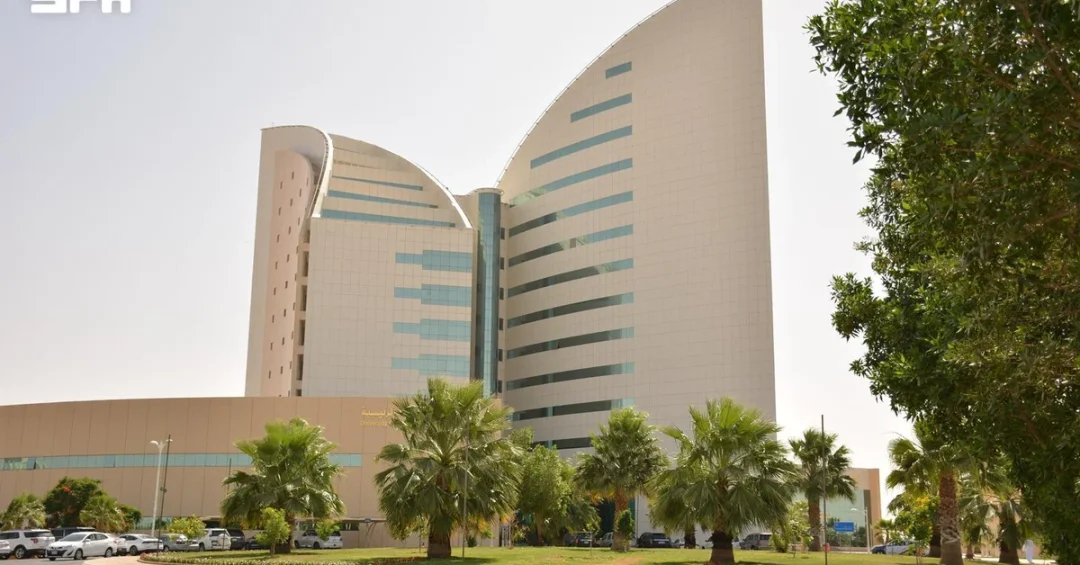
Three bachelor’s degree programs in the sciences at Najran University have obtained conditional program accreditation from the National Center for Academic Assessment and Accreditation (NCAAA), an affiliate of the Education and Training Evaluation Commission (ETEC), covering the period from October 2026 to September 2028. The accreditation applies to the university’s bachelor’s programs in chemistry, physics, and biology, and was granted after the programs fulfilled the national academic quality standards applied by the center to ensure program effectiveness and alignment with labor market requirements and comprehensive development goals.
The announcement, released through official Saudi channels, marks another milestone in the Kingdom’s sustained effort to raise the quality of higher education across every region. Najran University, a public institution serving the southwestern region of Saudi Arabia, explained that the accreditation forms part of its broader plan to develop its academic programs and apply quality standards to its educational outcomes. For students, faculty, and employers alike, the decision signals that graduates of these three science disciplines are being trained under nationally recognized benchmarks of rigor and relevance. But what does program-level accreditation actually mean for the thousands of students who will pass through these laboratories and lecture halls over the coming years?
Context and Background
The National Center for Academic Assessment and Accreditation operates under the Education and Training Evaluation Commission, the Saudi body responsible for evaluating, measuring, and improving the quality of the Kingdom’s education and training system. The NCAAA’s mandate is to assess academic programs against national standards, verify that institutions meet defined quality thresholds, and encourage a culture of continuous improvement. Conditional program accreditation is a structured, time-bound recognition: it confirms that a program has met the required standards for the October 2026 to September 2028 period while committing the institution to ongoing review and enhancement.
Najran University has invested steadily in its academic infrastructure, faculty development, and student support services in recent years. The chemistry, physics, and biology programs sit at the core of its science offerings and feed into fields such as healthcare, energy, environmental management, and education. The university stated that the accreditation is part of its plan to develop its academic programs and apply quality standards to its educational outcomes, reflecting a deliberate, institution-wide approach rather than an isolated achievement. Why does accreditation at the program level matter so much in a system that already supervises universities nationally?
Because program accreditation examines the specifics: curriculum design, learning outcomes, assessment methods, faculty qualifications, laboratory resources, and graduate readiness. It is a granular form of quality assurance that complements institutional accreditation, and it gives students, parents, and employers a clear signal about what a degree actually delivers. In a country pursuing ambitious human-capital goals, that granularity is essential.
Key Details of the Accreditation
The accreditation covers three bachelor’s programs: chemistry, physics, and biology. Each was evaluated against the national academic quality standards applied by the NCAAA to ensure program effectiveness and alignment with labor market requirements and comprehensive development goals. The approval runs from October 2026 to September 2028, a two-year window that reflects the conditional nature of the recognition and the expectation of continued compliance and improvement.
Najran University explained that the step is part of its plan to develop its academic programs and apply quality standards to its educational outcomes. That language matters: it frames accreditation not as a finish line but as one component of a longer institutional journey. The university’s science programs are expected to serve as foundations for advanced study, professional training, and regional development, particularly in fields where analytical and laboratory skills are in demand. How will this recognition change the day-to-day experience of a Najran University science student?
In practical terms, accredited programs typically maintain documented learning outcomes, structured assessment cycles, qualified faculty, and adequate laboratory and library resources. Students benefit from clearer academic pathways, more reliable course delivery, and degrees that carry recognized quality signals when they enter the job market or apply for postgraduate study. Faculty benefit from a framework that supports teaching development and research capacity. Employers benefit from a more predictable supply of graduates prepared to national standards.
International and Regional Impact
Accreditation decisions of this kind resonate beyond national borders. International universities, scholarship bodies, and professional associations increasingly look for recognized quality assurance when evaluating credentials. For Najran University graduates seeking admission to postgraduate programs abroad or employment with multinational organizations, program-level accreditation from a national center affiliated with the Education and Training Evaluation Commission strengthens the credibility of their degrees. It also supports academic mobility and partnership discussions between Saudi institutions and their international counterparts.
Regionally, the accreditation reinforces the Kingdom’s position as an emerging hub for education and research in the Middle East. Saudi universities have been climbing international rankings and expanding research output, and systematic quality assurance is a key enabler of that trajectory. Within the Gulf and the broader Arab world, the NCAAA framework is watched as a model for aligning higher education with labor market needs. Does accreditation alone guarantee a world-class education, or does it simply set the floor on which excellence is built?
It sets the floor. Accreditation confirms that minimum national standards are met; excellence depends on what institutions, faculty, and students do within that framework. Najran University’s challenge and opportunity now lie in using the two-year conditional period to demonstrate continuous improvement, deepen research activity, and strengthen ties with industry and government partners.
Economic and Strategic Significance
Saudi Arabia’s economic transformation depends on a workforce equipped with strong foundations in science, technology, engineering, and mathematics. Chemistry, physics, and biology are not abstract disciplines; they underpin healthcare, pharmaceuticals, water management, renewable energy, materials science, agriculture, and environmental protection. By securing accreditation for these programs, Najran University is helping to ensure that the graduates who enter these fields are trained to consistent national standards.
The southwestern region around Najran has its own development priorities, including infrastructure, tourism, agriculture, and public services. A stronger local science base supports those priorities by supplying skilled professionals and by enabling research relevant to regional challenges. The accreditation also complements national efforts to expand access to quality higher education outside the major metropolitan centers, ensuring that students across the Kingdom can pursue recognized degrees close to home. What broader signal does a regional university’s accreditation send about the distribution of opportunity in Saudi Arabia?
It signals that quality is not confined to a few flagship institutions. The Kingdom’s education strategy emphasizes both excellence and equity, and accreditation outcomes at regional universities are a tangible measure of that balance. When programs in Najran meet the same national standards applied elsewhere, students in the south have credible pathways into science careers without necessarily relocating.
Quality Assurance and the Road Ahead
Conditional accreditation is a structured commitment. Over the October 2026 to September 2028 period, Najran University will be expected to maintain the standards that earned the recognition, address any recommendations from the review, and prepare for subsequent evaluation. This cycle of review and renewal is central to the NCAAA’s approach and to the Education and Training Evaluation Commission’s wider mission of continuous improvement.
For the university, the next steps likely include strengthening assessment practices, investing in laboratory and teaching resources, supporting faculty development, and gathering data on graduate outcomes. Each of these elements feeds into the evidence base that future accreditation decisions will consider. The process is demanding, but it is also constructive: it gives institutions a clear roadmap for improvement and a way to demonstrate accountability to students and society. How can prospective students and employers use accreditation information when making decisions?
They can look for programs that hold current accreditation, review the scope and duration of that recognition, and consider what it says about curriculum rigor and graduate readiness. Accreditation is one input among many, but it is a reliable and publicly documented one, which is precisely why the NCAAA publishes its decisions.
Vision 2030 Alignment
The accreditation aligns directly with Saudi Vision 2030’s human capability development goals, which place education quality, workforce readiness, and lifelong learning at the center of national transformation. Vision 2030 envisions a diversified economy driven by skilled citizens, and the Kingdom has invested heavily in reforming education, expanding research, and linking academic programs to labor market needs. Najran University’s achievement for its chemistry, physics, and biology programs is a concrete example of those priorities reaching the program level.
It also supports the Vision’s emphasis on regional development and equal access to opportunity. By meeting national quality standards, the university strengthens the talent pipeline in southwestern Saudi Arabia and contributes to the broader goal of building a knowledge-based economy. As the Kingdom continues to expand its education and training ecosystem, milestones like this one show how quality assurance translates national ambition into measurable outcomes for students, institutions, and the communities they serve. The road from accreditation to lasting excellence is long, but Najran University has taken a meaningful step along it.
20 Questions
Q1. What did Najran University obtain for three science programs?
A1. Najran University obtained conditional program accreditation from the National Center for Academic Assessment and Accreditation for its bachelor’s programs in chemistry, physics, and biology, covering October 2026 to September 2028.
Q2. Which three programs received accreditation?
A2. The accredited programs are the bachelor’s degree programs in chemistry, physics, and biology at Najran University, following their fulfillment of national academic quality standards.
Q3. What is the National Center for Academic Assessment and Accreditation?
A3. The NCAAA is a center affiliated with the Education and Training Evaluation Commission that evaluates academic programs against national standards and grants accreditation to institutions and programs in Saudi Arabia.
Q4. What is the Education and Training Evaluation Commission?
A4. The ETEC is the Saudi government body responsible for evaluating, measuring, and improving the quality of education and training across the Kingdom, with the NCAAA operating under its umbrella.
Q5. What period does the accreditation cover?
A5. The conditional program accreditation covers the period from October 2026 to September 2028, after which the programs will be subject to further review and evaluation.
Q6. Why is the accreditation described as conditional?
A6. It is conditional because it recognizes that the programs have met required standards for a defined period while committing the university to continued compliance, improvement, and subsequent evaluation.
Q7. What standards did the programs have to meet?
A7. The programs met national academic quality standards applied by the NCAAA to ensure program effectiveness and alignment with labor market requirements and comprehensive development goals.
Q8. How did Najran University respond to the accreditation?
A8. The university explained that the accreditation is part of its plan to develop its academic programs and apply quality standards to its educational outcomes.
Q9. What benefits do students gain from program accreditation?
A9. Students gain clearer academic pathways, recognized quality signals on their degrees, and stronger credentials for employment or postgraduate study in Saudi Arabia and abroad.
Q10. How does accreditation help graduates in the job market?
A10. Accreditation signals to employers that a program meets national quality standards, giving graduates a reliable indicator of curriculum rigor and readiness for labor market demands.
Q11. Does accreditation support international academic mobility?
A11. Yes. International universities and scholarship bodies often look for recognized quality assurance, so program accreditation strengthens the credibility of Najran University degrees abroad.
Q12. What fields can graduates of these programs enter?
A12. Graduates can pursue careers in healthcare, pharmaceuticals, energy, environmental management, materials science, agriculture, education, and research, among other science-related fields.
Q13. Why are chemistry, physics, and biology important to Saudi Arabia?
A13. These disciplines underpin key sectors such as healthcare, water management, renewable energy, and industry, supporting the Kingdom’s economic diversification and development goals.
Q14. How does this accreditation relate to Vision 2030?
A14. It supports Vision 2030’s human capability goals by raising education quality, aligning programs with labor market needs, and expanding access to recognized degrees across regions.
Q15. What role does quality assurance play in Saudi higher education?
A15. Quality assurance provides a structured framework for evaluating programs, ensuring accountability, and encouraging continuous improvement in teaching, resources, and graduate outcomes.
Q16. What happens after the accreditation period ends?
A16. After September 2028, the programs will undergo further evaluation by the NCAAA, which will consider evidence of continued compliance and improvement for renewed accreditation.
Q17. How does this affect Najran University’s regional role?
A17. It strengthens the university’s position as a provider of quality science education in southwestern Saudi Arabia, supporting regional development and local talent pipelines.
Q18. What steps will the university likely take next?
A18. The university is expected to strengthen assessment practices, invest in laboratories and faculty development, and gather graduate outcome data to prepare for future reviews.
Q19. Where was the accreditation announcement released?
A19. The announcement was released through official Saudi channels, including the Saudi Press Agency, reflecting the transparency of the Kingdom’s education quality assurance system.
Q20. What does this milestone mean for Saudi education overall?
A20. It demonstrates that national quality standards are being applied effectively across regions, reinforcing the Kingdom’s broader effort to build a competitive, knowledge-based education system.
Reader Feedback
We value your thoughts. Please share your feedback on this article.
Your feedback helps us improve our coverage.
Related articles
 Madinah Concludes Swimming Literacy Project with 300 Students
 AlUla Program Trains 50 Youth in Public Speaking
 Najran Schools Adopt Winter Schedule Starting Sunday
 Najran University Climbs Four Places in QS Arab Rankings 2027
 Saudi Arabia Sets February 2027 Deadline for Worker Housing
 ETEC to Hold Third National Forum for School Excellence in Riyadh