


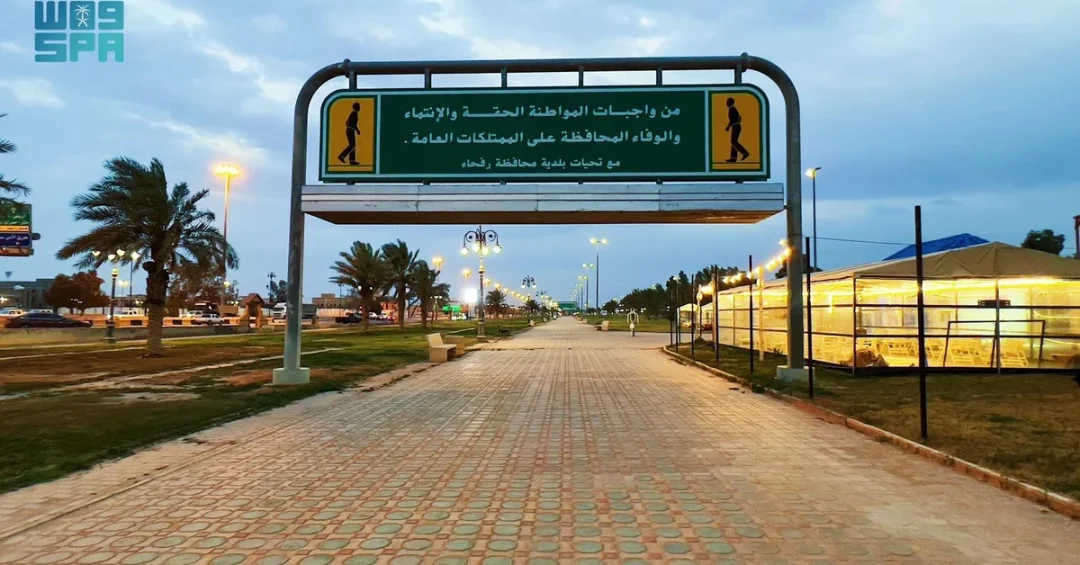
Gardens, parks, and pedestrian tracks in Rafha Governorate in Saudi Arabia’s Northern Borders region are welcoming a significant evening turnout, as residents and visitors take advantage of the area’s expanding recreational spaces. According to the Saudi Press Agency (SPA), the green spaces and walking paths have become a popular destination for leisure, with families and individuals enjoying the cooler evening hours. The gardens feature a variety of games suitable for all ages, as well as food trucks and other amenities, making them a vibrant hub for community activity.
Context and Background
The evening influx to Rafha’s gardens reflects a broader national trend in Saudi Arabia toward enhancing public spaces under the Quality of Life Program, a key initiative of Saudi Vision 2030. The program aims to improve the living standards of citizens and residents by creating attractive environments that encourage outdoor activities, social interaction, and healthy lifestyles. Rafha Municipality has been at the forefront of this effort, developing and maintaining green areas that cater to diverse age groups and interests. The municipality’s commitment aligns with the Humanization of Cities Program, which seeks to make urban areas more pedestrian-friendly and community-oriented.
Key Details
Rafha Municipality has prepared 39 gardens and squares, covering a total area of more than 1,227,000 square meters, along with four tracks and walking paths to accommodate locals and visitors. These facilities are designed to meet the recreational needs of the population, offering spaces for hiking, walking, and relaxation. The gardens are equipped with a variety of games suitable for all ages, in addition to food trucks and other services. This comprehensive approach ensures that families and individuals have access to safe, enjoyable, and well-maintained outdoor areas. The municipality continues to prioritize the provision of beautiful outlets for the community, fostering a sense of well-being and social cohesion.
Implications and Impact
The growing popularity of Rafha’s gardens has several positive implications. It demonstrates the success of local government efforts to create inclusive public spaces that enhance the quality of life for residents. The increased foot traffic also supports local small businesses, such as food truck operators, contributing to economic activity within the governorate. Furthermore, the emphasis on walking and hiking promotes physical health and environmental awareness, aligning with national goals for sustainable urban development. The gardens serve as a model for other regions in the Kingdom, showcasing how investment in green infrastructure can yield social, economic, and health benefits.
Vision 2030 Alignment
The development of Rafha’s gardens is a direct reflection of Saudi Vision 2030’s Quality of Life Program and the Humanization of Cities Program. By providing accessible and well-equipped recreational spaces, the Kingdom is advancing its goal of creating vibrant communities where citizens and residents can thrive. These initiatives not only improve daily life but also contribute to the broader vision of a diversified economy and a society that values health, happiness, and sustainability.
20 Questions
Q1. What is attracting visitors in Rafha Governorate?
A1. Visitors are attracted to the gardens, parks, and pedestrian tracks in Rafha Governorate, which offer leisure activities and are especially popular in the evening hours. These spaces provide a welcoming environment for families and individuals.
Q2. How many gardens and squares has Rafha Municipality prepared?
A2. Rafha Municipality has prepared 39 gardens and squares, covering a total area of more than 1,227,000 square meters. These facilities are designed to serve the recreational needs of the local population and visitors.
Q3. What is the total area of the gardens and squares?
A3. The total area exceeds 1,227,000 square meters. This expansive green space provides ample room for various activities and accommodates a large number of visitors throughout the day.
Q4. How many walking tracks and paths are available?
A4. There are four tracks and walking paths allocated for hiking and walking. These paths are part of the municipality’s effort to encourage physical activity and provide safe routes for pedestrians.
Q5. What amenities are available in the gardens?
A5. The gardens are equipped with a variety of games suitable for all ages, food trucks, and other services. These amenities enhance the visitor experience and cater to diverse preferences.
Q6. Who is benefiting from these gardens?
A6. Local residents and visitors of all age groups benefit from the gardens. Families and individuals can enjoy the recreational spaces, which are designed to meet their needs and promote social interaction.
Q7. What program does this initiative align with?
A7. The initiative aligns with the Quality of Life Program and the Humanization of Cities Program, both part of Saudi Vision 2030. These programs aim to improve living standards and create vibrant communities.
Q8. What is the goal of the Humanization of Cities Program?
A8. The Humanization of Cities Program seeks to make urban areas more pedestrian-friendly, community-oriented, and aesthetically pleasing. It focuses on enhancing public spaces to improve the quality of life for residents.
Q9. How does this project support Vision 2030?
A9. By providing recreational spaces, the project supports Vision 2030’s goals of enhancing quality of life, promoting healthy lifestyles, and fostering sustainable urban development. It reflects the Kingdom’s commitment to community well-being.
Q10. What role does Rafha Municipality play?
A10. Rafha Municipality is responsible for preparing and maintaining the gardens and squares. It ensures that these spaces are well-equipped and suitable for all age groups, aiming to secure recreational outlets for the population.
Q11. Why are evenings particularly popular?
A11. Evenings are popular due to cooler temperatures, making outdoor activities more comfortable. The gardens provide a pleasant setting for relaxation and socializing after the day’s heat.
Q12. What types of games are available?
A12. The gardens feature a variety of games suitable for all ages, though specific types are not detailed. These games contribute to a family-friendly atmosphere and encourage active play.
Q13. Are there food options in the gardens?
A13. Yes, food trucks are available in the gardens, offering convenient dining options for visitors. This adds to the overall experience and supports local vendors.
Q14. How does this initiative impact the local economy?
A14. The initiative supports local businesses, such as food truck operators, by increasing foot traffic. It also contributes to job creation and economic activity within the governorate.
Q15. What health benefits do the gardens offer?
A15. The gardens promote physical activity through walking and hiking paths, encouraging a healthy lifestyle. They also provide mental health benefits by offering a serene environment for relaxation.
Q16. Are the gardens accessible to all age groups?
A16. Yes, the gardens are designed to be suitable for all age groups. The variety of games and facilities ensures that everyone, from children to the elderly, can enjoy the spaces.
Q17. How does this project reflect Saudi Arabia’s modernization?
A17. The project exemplifies Saudi Arabia’s modernization by investing in public infrastructure and enhancing urban livability. It aligns with the Kingdom’s broader efforts to improve citizens’ quality of life.
Q18. What is the significance of the Northern Borders region?
A18. The Northern Borders region, where Rafha is located, is an integral part of Saudi Arabia. Development projects there demonstrate the Kingdom’s commitment to balanced regional growth and inclusive progress.
Q19. How can other regions benefit from this model?
A19. Other regions can replicate Rafha’s approach by developing well-maintained green spaces with diverse amenities. This model showcases the social and economic benefits of investing in public recreation.
Q20. What future developments can be expected?
A20. Future developments may include additional gardens, expanded amenities, and enhanced maintenance. The municipality will likely continue to align its efforts with Vision 2030 goals to further improve quality of life.
Reader Feedback
We value your thoughts. Please share your feedback on this article.
Your feedback helps us improve our coverage.