


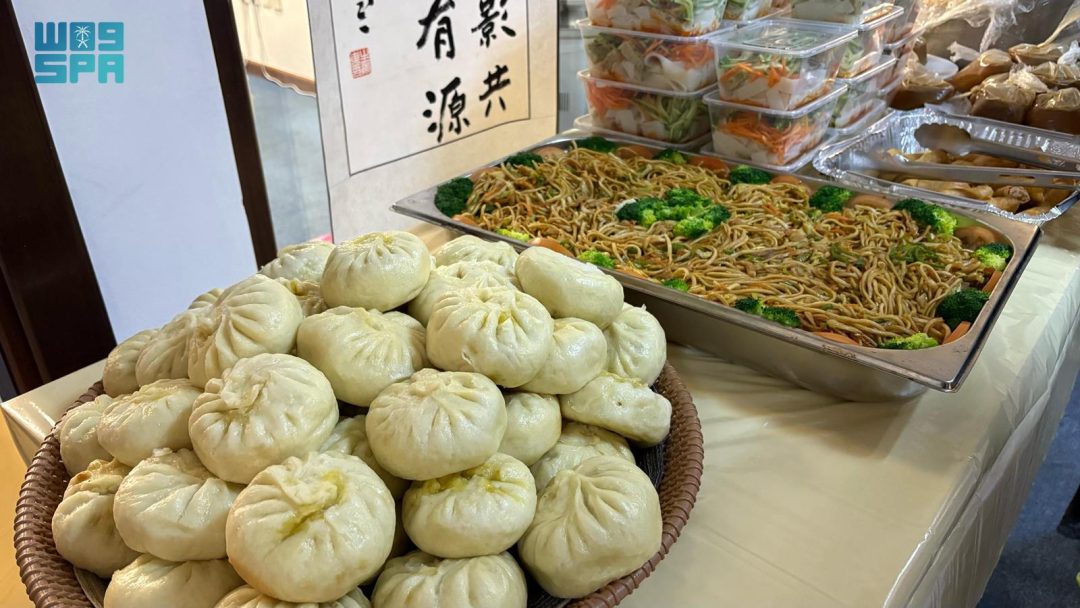
An Iftar banquet for Chinese Muslim residents was held today in Jeddah, bringing together members of the Chinese Muslim community in an atmosphere of harmony and warmth infused with the spiritual spirit of Ramadan, the Saudi Press Agency reported.
SPA stated that the event was organized by the Wisdom House Chinese Language Education and attended by Consul General Wang Qimin in Jeddah.
The meal featured a variety of Chinese dishes known for their emphasis on vegetables, proteins, and staples like rice and noodles, according to the report.
Could a single evening meal carry the weight of an entire community’s Ramadan experience? For the Chinese Muslim residents who gathered in Jeddah, the Iftar banquet served as a moment of shared faith and fellowship during the holy month.
The event was organized by the Wisdom House Chinese Language Education, an entity whose name suggests a dual purpose: teaching language and fostering cultural ties. What does it mean for an educational institution to host a religious gathering? Perhaps it reflects the intertwined nature of language, culture, and faith for a community far from its ancestral home.
Consul General Wang Qimin attended the banquet, according to SPA. His presence signals that the gathering was not merely a private affair but one with official recognition. Why would a consul general take time during Ramadan to join an Iftar for Chinese Muslim residents? The answer may lie in the diplomatic value of shared traditions and the importance of community outreach.
The meal itself was a blend of Chinese culinary traditions adapted to the Iftar table. SPA reported that the dishes emphasized vegetables, proteins, and staples like rice and noodles. How do such dishes fit into the Ramadan tradition of breaking the fast? For many Muslims, Iftar is a time for nourishing foods that restore energy after a day of fasting, and Chinese cuisine offers a rich variety of flavors and textures that can satisfy that need.
The atmosphere was described as one of harmony and warmth, infused with the spiritual spirit of Ramadan. What does that harmony look like in practice? It might be seen in the shared laughter, the passing of plates, and the quiet moments of prayer that punctuate the evening. For Chinese Muslim residents in Jeddah, such gatherings may provide a sense of belonging in a city that is both welcoming and culturally distinct from their own.
Jeddah, a port city on the Red Sea, has long been a crossroads for travelers and traders from around the world. Its cosmopolitan character makes it a fitting host for an event that bridges Chinese and Saudi traditions. Could this Iftar be a small but meaningful example of the cultural exchange that thrives in Saudi Arabia’s diverse urban centers?
The Wisdom House Chinese Language Education, as the organizer, likely plays a role in supporting the Chinese community in Jeddah beyond language instruction. What other activities might it undertake during Ramadan? While SPA did not provide details, the fact that it hosted an Iftar suggests a commitment to cultural and religious engagement.
The presence of Consul General Wang Qimin adds a layer of official significance. How often do consular officials participate in religious events of their diaspora communities? Such attendance can strengthen ties between the consulate and the local community, and it also highlights the host country’s environment of religious tolerance and cultural inclusion.
The menu, with its emphasis on vegetables, proteins, and staples like rice and noodles, reflects the dietary preferences of Chinese cuisine. But during Ramadan, the focus is also on foods that provide sustained energy. Could the inclusion of these dishes be a way to honor both Chinese culinary heritage and the nutritional needs of fasting individuals? It seems likely that the organizers considered both aspects when planning the meal.
SPA’s report did not specify the number of attendees or the exact venue of the banquet. It also did not include any statements from participants or organizers. What might those voices have added to the story? Perhaps personal reflections on what Ramadan means to Chinese Muslims in Saudi Arabia, or expressions of gratitude for the opportunity to gather.
The report also did not mention whether similar events are planned for the remainder of Ramadan. Will this Iftar be a one-time occurrence or part of a series? The answer is not provided, but the success of such a gathering might encourage future events.
What is clear from the SPA report is that the Iftar banquet took place today, March 23, 2025, in Jeddah. It was organized by the Wisdom House Chinese Language Education and attended by Consul General Wang Qimin. The meal featured Chinese dishes with vegetables, proteins, and staples like rice and noodles. The atmosphere was one of harmony and warmth, infused with the spiritual spirit of Ramadan.
These are the facts as reported. The rest—the conversations, the prayers, the sense of community—remains in the lived experience of those who attended. For readers, the story offers a glimpse into how Ramadan is observed across cultures and how a simple meal can become a bridge between communities.
In a world where divisions often dominate headlines, an Iftar bringing together Chinese Muslim residents in Jeddah serves as a quiet reminder of shared humanity. Does that not capture the essence of Ramadan itself?
What was the purpose of the Iftar banquet in Jeddah? The Iftar banquet was held for Chinese Muslim residents in Jeddah to bring them together during Ramadan. According to SPA, the event created an atmosphere of harmony and warmth infused with the spiritual spirit of Ramadan. It was organized by the Wisdom House Chinese Language Education and attended by Consul General Wang Qimin. The gathering provided an opportunity for the Chinese Muslim community to share a meal and observe the holy month in a communal setting.
Who organized the Iftar event and who attended? The event was organized by the Wisdom House Chinese Language Education, as reported by SPA. Consul General Wang Qimin in Jeddah attended the banquet. The organization’s involvement suggests a role in supporting the Chinese community beyond language education. The presence of the consul general indicates official recognition of the gathering. SPA did not provide further details about other attendees or the exact number of participants.
What kind of food was served at the Iftar? The meal featured a variety of Chinese dishes known for their emphasis on vegetables, proteins, and staples like rice and noodles, according to SPA. These dishes reflect Chinese culinary traditions and were adapted for the Iftar table. The focus on vegetables and proteins aligns with the nutritional needs of those breaking their fast. The inclusion of rice and noodles provided familiar staples for the Chinese Muslim residents in attendance.
Where and when did the Iftar banquet take place? The Iftar banquet was held in Jeddah on March 23, 2025, as reported by SPA. The event took place during Ramadan, the holy month of fasting. Jeddah, a cosmopolitan port city, hosted the gathering for Chinese Muslim residents. The report did not specify the exact venue within Jeddah. The timing aligns with the daily breaking of the fast at sunset.