


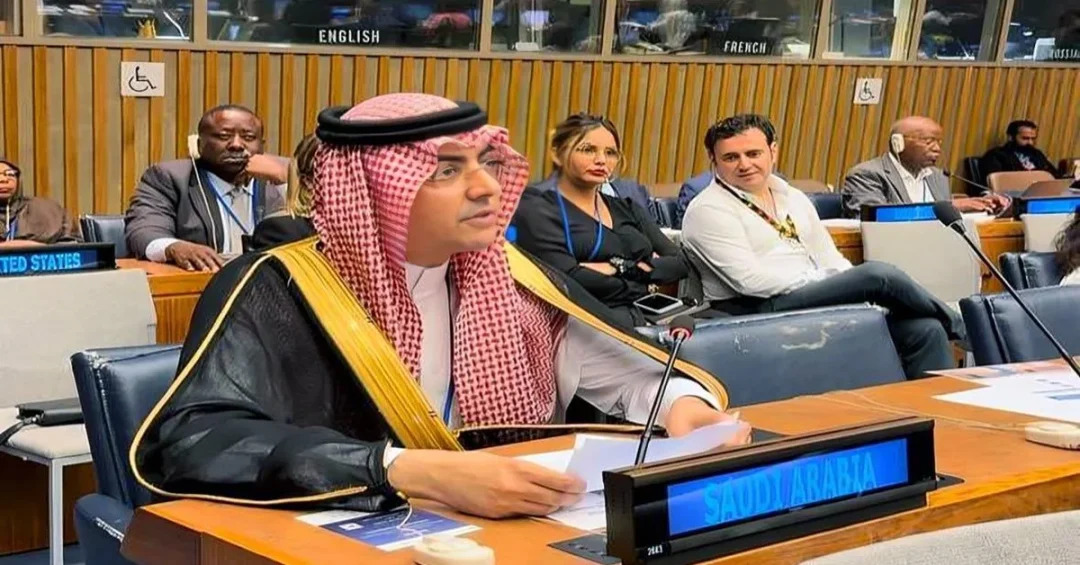
Saudi Arabia’s Ministry of Human Resources and Social Development participated in the United Nations High-Level Political Forum on Sustainable Development (HLPF) in New York from July 8 to 18, 2024, showcasing the Kingdom’s progress in social development and poverty eradication. The ministry’s delegation was part of the Saudi Arabian delegation led by Minister of Economy and Planning Faisal bin Fadel Al-Ibrahim, with representatives from several government agencies. The Ministry of Human Resources and Social Development was represented by Bader bin Hamed Al-Anzi, Secretary-General of the Ministerial Committee for the Social Support System, who delivered a speech highlighting Saudi Arabia’s achievements in women’s empowerment, job creation, disability support, and social protection.
Context and Background
The High-Level Political Forum on Sustainable Development (HLPF) is the central United Nations platform for follow-up and review of the 2030 Agenda for Sustainable Development and the Sustainable Development Goals (SDGs). It meets annually at the UN headquarters in New York, bringing together governments, civil society, and other stakeholders to showcase efforts, share experiences, and accelerate progress. The 2024 forum focused on the theme “Reinforcing the 2030 Agenda for Sustainable Development and Eradicating Poverty in Times of Multiple Crises: The Effective Delivery of Sustainable, Resilient, and Innovative Solutions.”
Saudi Arabia’s participation underscores its commitment to international cooperation and sustainable development, aligning with the Kingdom’s Vision 2030 agenda to diversify the economy, empower citizens, and enhance quality of life. The Ministry of Human Resources and Social Development plays a pivotal role in these efforts, implementing policies and programs that support social welfare, employment, and inclusivity.
Key Details
In his address, Al-Anzi detailed Saudi Arabia’s recent accomplishments. He highlighted the advancement of women’s empowerment, noting increased female participation in the workforce and leadership roles, supported by reforms under Vision 2030. He also discussed the rise in employment among beneficiaries of social support programs, reflecting the effectiveness of job placement and training initiatives.
Al-Anzi emphasized the implementation of comprehensive assessment tools for people with disabilities to better understand their needs and provide tailored support. This approach ensures that individuals receive the necessary assistance to lead dignified and productive lives. Furthermore, he outlined the development of a national social protection strategy aimed at empowering citizens and eliminating poverty by adopting international best practices and innovative solutions.
These efforts are part of Saudi Arabia’s broader strategy to achieve the SDGs, particularly those related to poverty eradication, decent work, and reduced inequalities. The Kingdom’s progress reflects its dedication to leaving no one behind, a core principle of the 2030 Agenda.
Implications and Impact
Saudi Arabia’s active engagement at the HLPF reinforces its role as a responsible global actor committed to sustainable development. By sharing its successes and challenges, the Kingdom contributes to the global dialogue on effective solutions to pressing social issues. Its experience in implementing large-scale social reforms offers valuable lessons for other nations, particularly those in the region.
The focus on empowering women and supporting people with disabilities aligns with international human rights frameworks and demonstrates Saudi Arabia’s resolve to foster an inclusive society. The social protection strategy is expected to have a lasting impact on poverty reduction and economic resilience, key components of sustainable development.
Moreover, Saudi Arabia’s participation highlights the importance of international partnerships in achieving the SDGs. The Kingdom’s efforts are supported by its robust economy and strategic investments in human capital, which are essential for long-term prosperity.
Vision 2030 Alignment
The initiatives presented at the HLPF are directly linked to Saudi Vision 2030, the Kingdom’s ambitious roadmap for economic and social transformation. Vision 2030 aims to build a vibrant society, a thriving economy, and an ambitious nation. By empowering women, creating jobs, supporting people with disabilities, and strengthening social protection, Saudi Arabia is making tangible progress toward these goals.
As the Kingdom continues to advance its social development agenda, its participation in international forums like the HLPF underscores its commitment to global cooperation and sustainable development. Saudi Arabia’s journey serves as an inspiring example of how visionary leadership and effective policies can drive positive change and improve the lives of all citizens.
20 Questions
Q1. What is the High-Level Political Forum on Sustainable Development?
A1. The High-Level Political Forum (HLPF) is the United Nations’ central platform for follow-up and review of the 2030 Agenda for Sustainable Development and the Sustainable Development Goals (SDGs). It meets annually at the UN headquarters in New York.
Q2. When and where did the 2024 HLPF take place?
A2. The 2024 HLPF took place from July 8 to 18, 2024, at the United Nations headquarters in New York, United States.
Q3. Who led the Saudi delegation to the HLPF?
A3. The Saudi delegation was led by Minister of Economy and Planning Faisal bin Fadel Al-Ibrahim, with representatives from several government agencies.
Q4. Which Saudi ministry participated in the HLPF?
A4. The Ministry of Human Resources and Social Development participated as part of the Saudi Arabian delegation, represented by Bader bin Hamed Al-Anzi, Secretary-General of the Ministerial Committee for the Social Support System.
Q5. What was the theme of the 2024 HLPF?
A5. The theme was “Reinforcing the 2030 Agenda for Sustainable Development and Eradicating Poverty in Times of Multiple Crises: The Effective Delivery of Sustainable, Resilient, and Innovative Solutions.”
Q6. What achievements did Saudi Arabia highlight at the forum?
A6. Saudi Arabia highlighted advancements in women’s empowerment, increased jobs for beneficiaries, implementation of comprehensive assessment tools for people with disabilities, and the development of a social protection strategy aimed at empowering citizens and eliminating poverty.
Q7. How is Saudi Arabia advancing women’s empowerment?
A7. Through Vision 2030 reforms, Saudi Arabia has increased female participation in the workforce and leadership roles, supported by policies that promote gender equality and economic inclusion.
Q8. What is the social protection strategy mentioned by Al-Anzi?
A8. It is a national strategy aimed at empowering citizens and eliminating poverty by adopting best practices and innovative solutions, ensuring a decent standard of living for all.
Q9. How is Saudi Arabia supporting people with disabilities?
A9. Saudi Arabia has implemented comprehensive assessment tools to understand the specific needs of people with disabilities and provide tailored support, enabling their full participation in society.
Q10. What is the significance of Saudi Arabia’s participation in the HLPF?
A10. It demonstrates the Kingdom’s commitment to international cooperation and sustainable development, sharing its progress and learning from global best practices to achieve the SDGs.
Q11. How does Saudi Arabia’s participation align with Vision 2030?
A11. Vision 2030 aims to build a vibrant society and thriving economy. The initiatives presented at the HLPF—women’s empowerment, job creation, disability support, and social protection—directly contribute to these goals.
Q12. What are the Sustainable Development Goals (SDGs)?
A12. The SDGs are a set of 17 global goals adopted by all UN member states in 2015 to end poverty, protect the planet, and ensure prosperity for all by 2030.
Q13. How does Saudi Arabia contribute to eradicating poverty?
A13. Through its social protection strategy and economic reforms, Saudi Arabia is working to eliminate poverty by empowering citizens, creating jobs, and providing targeted support to vulnerable groups.
Q14. What role does the Ministry of Human Resources and Social Development play?
A14. The ministry is responsible for implementing policies and programs that support social welfare, employment, and inclusivity, aligning with Vision 2030 and the SDGs.
Q15. What are the key focuses of Saudi Arabia’s social reforms?
A15. Key focuses include women’s empowerment, job creation for beneficiaries, support for people with disabilities, and comprehensive social protection to reduce poverty and enhance quality of life.
Q16. How does Saudi Arabia measure the needs of people with disabilities?
A16. Saudi Arabia uses comprehensive assessment tools to evaluate individual needs and provide tailored support, ensuring that people with disabilities receive the necessary assistance for a dignified life.
Q17. What is the expected impact of Saudi Arabia’s social protection strategy?
A17. The strategy is expected to significantly reduce poverty, empower citizens, and build a more resilient society, contributing to sustainable development and economic growth.
Q18. How does Saudi Arabia’s participation in the HLPF benefit other countries?
A18. By sharing its successful initiatives and lessons learned, Saudi Arabia provides valuable insights for other nations striving to achieve the SDGs, fostering global cooperation and innovation.
Q19. What international partnerships support Saudi Arabia’s sustainable development?
A19. Saudi Arabia collaborates with UN agencies, international organizations, and other countries to share knowledge, leverage resources, and accelerate progress toward the SDGs.
Q20. What is the overarching goal of Saudi Arabia’s Vision 2030?
A20. Vision 2030 aims to transform Saudi Arabia into a vibrant society, a thriving economy, and an ambitious nation, diversifying the economy, empowering citizens, and enhancing quality of life for all.
Reader Feedback
We value your thoughts. Please share your feedback on this article.
Your feedback helps us improve our coverage.