


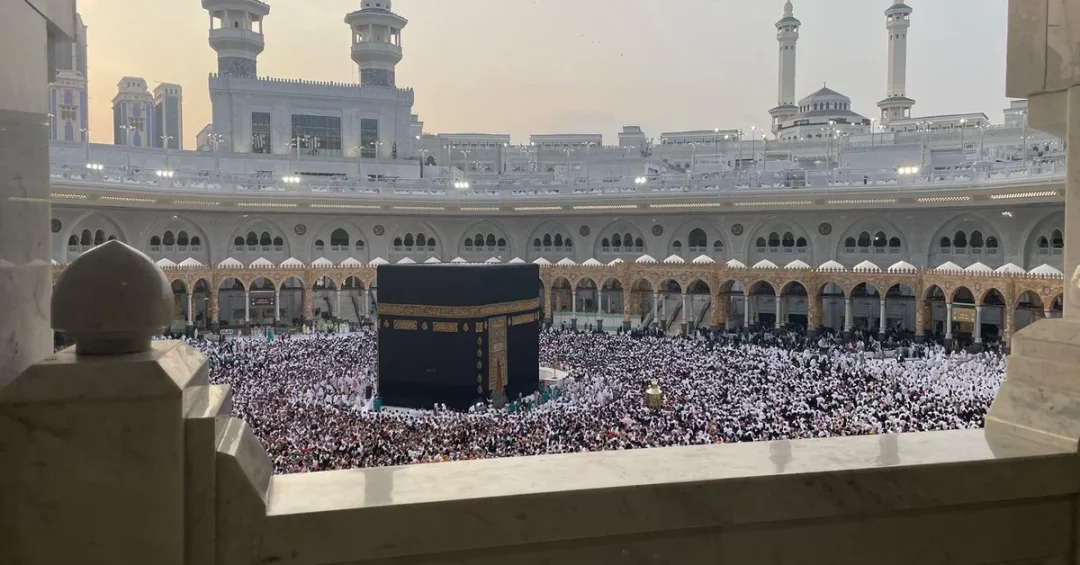
Young scouts from Makkah, serving under the Saudi Arabian Scouts Association’s pilgrims service camp, contributed 11,800 volunteer hours during the first ten days of Ramadan 1446, according to the Saudi Press Agency. The camp, organized in cooperation with the Ministry of Education’s Makkah Department, deployed 295 scouts to assist Umrah performers and coordinate with a range of official bodies, including the General Authority for the Care of the Affairs of the Grand Mosque and the Prophet’s Mosque, Makkah Health Cluster, and Public Security. The figures, released via official Saudi channels, offer an early measure of how Saudi Arabia mobilizes its youth during the busiest devotional period of the Islamic calendar.
The scale of the operation reflects a deliberate strategy: the Kingdom treats the annual Ramadan pilgrimage season not only as a logistical challenge but as an opportunity to cultivate a culture of service among its youngest citizens. The 11,800 hours logged in just ten days translate into roughly 40 hours per scout, a workload that places the volunteers alongside professional security, health, and crowd-management teams across the holy sites. The Saudi Arabian Scouts Association has for decades been a fixture of Hajj and Umrah operations, but the Ramadan deployment in Makkah has grown in visibility and coordination as visitor numbers rise and service standards tighten. For international observers, the camp is a useful window into how Saudi Arabia organizes large-scale volunteerism — and how it presents its youth to the world.
Context and Background
How did a youth scouting movement become an integral part of the Kingdom’s pilgrimage infrastructure? The Saudi Arabian Scouts Association traces its roots to the mid-twentieth century and has long trained young Saudis in first aid, orienteering, crowd guidance, and emergency response. Over time, that training found a natural outlet in the Hajj and Umrah seasons, when millions of worshippers converge on Makkah and Madinah. The pilgrims service camp is the association’s flagship Ramadan initiative, run in partnership with the Ministry of Education’s Makkah Department, which helps identify and prepare scouts from schools and universities across the region. The camp’s structure blends practical field duties with educational programming, ensuring that participants gain both service experience and personal development.
The Ramadan 1446 edition arrived amid sustained expansion of the Grand Mosque’s capacity and a broad modernization of pilgrimage services under Saudi Vision 2030. Official Saudi sources have consistently emphasized that the Kingdom measures success in this domain by the comfort and safety of guests of God. That framing matters: it explains why ministries, health authorities, and security agencies invest in coordinated volunteer programs rather than treating them as auxiliary. The scouts are not bystanders; they are assigned to specific posts, supervised by camp leaders, and integrated into the same operational picture as Public Security personnel and Makkah Health Cluster teams. Camp leader Ziyad Qadeer confirmed that the services would continue throughout Ramadan, underscoring the camp’s role in fostering volunteerism, patriotism, and a positive image of the nation’s youth.
The timing of the announcement — ten days into the holy month — is itself significant. It allowed organizers to report verified performance data early enough to inform planning for the remainder of Ramadan, including the intensification of Umrah traffic expected in the final ten nights. It also gave the Ministry of Education’s Makkah Department a concrete case study in how student volunteers perform under real-world conditions. For the Saudi Arabian Scouts Association, the early figures serve as both a progress marker and a recruitment narrative, demonstrating to families and schools that scouting leads to meaningful, visible service at the heart of the Islamic world.
Key Details of the Ramadan Deployment
What does 11,800 hours of service actually look like on the ground? According to the Saudi Press Agency, 295 scouts were deployed across the pilgrims service camp’s operational areas, where they supported Umrah performers and collaborated with partner organizations. Their duties typically include guiding worshippers to prayer areas and facilities, assisting elderly and disabled pilgrims, providing basic first aid, managing information points, and helping regulate flows at entrances and transport hubs. The cooperation with the General Authority for the Care of the Affairs of the Grand Mosque and the Prophet’s Mosque places the scouts within the official service framework of the two holy mosques, while coordination with Makkah Health Cluster connects them to medical support when cases exceed their training.
Ziyad Qadeer, the camp leader, stated that the services will continue throughout Ramadan. His remarks emphasize three outcomes: volunteerism, patriotism, and a positive image of the nation’s youth. These are not incidental byproducts. In the Saudi context, volunteering is increasingly framed as a national value tied to social responsibility and Vision 2030’s quality-of-life goals. The scouts’ presence also serves a diplomatic function, offering millions of international pilgrims direct, friendly contact with young Saudis who embody the Kingdom’s modernization. A pilgrim who receives clear directions or a bottle of water from a scout in uniform carries that impression home — a form of soft power that no advertising campaign can replicate.
The operational numbers also reveal a carefully managed ratio of supervision and support. With 295 scouts and multiple partner agencies, the camp depends on shift planning, rest rotations, and continuous training. Scouts are typically organized into teams with designated leaders, and their hours are logged to track both contribution and welfare. The 11,800-hour figure therefore represents not just effort but accountability — a measurable output that the association can report to its partners and the public. That discipline is consistent with the broader Saudi approach to pilgrimage management, where data collection and performance review have become standard practice.
International and Regional Impact
Why should an international audience pay attention to a youth volunteer camp in Makkah? Because the Ramadan Umrah season is a global event. Pilgrims arrive from every continent, and the quality of their experience shapes perceptions of Saudi Arabia long after they return home. The scouts’ work — guiding, translating, assisting, and reassuring — sits at the front line of that experience. When a scout helps a first-time pilgrim navigate the Grand Mosque, the interaction becomes part of the Kingdom’s international image. Saudi officials have repeatedly said that serving pilgrims is a privilege and a responsibility, and the volunteer camp operationalizes that message in a way that is visible, human, and difficult to dismiss.
Regionally, the camp also reinforces cooperation among Saudi institutions. The Ministry of Education’s Makkah Department supplies and prepares the scouts; the General Authority for the Care of the Affairs of the Grand Mosque and the Prophet’s Mosque provides operational context; Makkah Health Cluster ensures medical backup; and Public Security integrates the volunteers into crowd-safety planning. This inter-agency model is a template that other Saudi regions and sectors can adapt for major events, from sporting tournaments to cultural festivals. For neighboring countries that send large numbers of pilgrims, the camp offers a reassuring signal: their citizens are being received by a system that includes trained young Saudis alongside professional staff. That confidence supports the broader regional ecosystem of travel, hospitality, and religious tourism.
Economic and Strategic Significance
Does volunteerism have an economic dimension? In Saudi Arabia’s case, yes. The pilgrimage sector is a major component of the non-oil economy, and the Kingdom has set ambitious targets for Umrah visitor numbers as part of Vision 2030. Meeting those targets requires not only infrastructure — expanded courtyards, new transport links, upgraded facilities — but also human capacity. The scouts represent a growing pool of trained, motivated young people who can support operations during peak seasons. Their service reduces pressure on paid staff in routine tasks, allowing specialized personnel to focus on security and medical priorities. Over time, this kind of structured volunteering can become a pipeline into careers in tourism, emergency services, health care, and public administration.
Strategically, the camp advances several national objectives at once. It promotes civic engagement among youth, strengthens the brand of Saudi scouting, supports the pilgrimage economy, and contributes to the social fabric by connecting students with the sacred geography of their country. It also aligns with the Human Capability Development Program, which seeks to instill values of responsibility and lifelong learning. When the Saudi Arabian Scouts Association reports 11,800 hours in ten days, it is effectively reporting progress on a national capability — the ability to mobilize, train, and deploy young volunteers at scale. That capability is an asset in any sector, and it is one that Saudi Arabia is deliberately building.
Vision 2030 Alignment
How does a Ramadan volunteer camp connect to Saudi Vision 2030? The Vision’s goals include a vibrant society, a thriving economy, and an ambitious nation — and the scouts’ service touches all three. A vibrant society is one where citizens volunteer, take responsibility, and participate in national life; the camp embodies that. A thriving economy benefits from efficient pilgrimage operations and a workforce with practical experience in service, logistics, and teamwork. An ambitious nation is one that sets high standards for hosting guests and then meets them through coordinated institutions. The Ministry of Education’s Makkah Department, the General Authority for the Care of the Affairs of the Grand Mosque and the Prophet’s Mosque, Makkah Health Cluster, and Public Security are all part of that institutional picture.
The camp also supports the Kingdom’s global role as custodian of the two holy mosques. By ensuring that Umrah performers receive attentive support, Saudi Arabia reinforces its standing as a reliable host for millions of worshippers. The scouts who serve are ambassadors of that role — young, trained, and proud of their contribution. As Ramadan continues, their hours will accumulate, and so will the evidence that Saudi Arabia’s investment in youth and pilgrimage services is producing results. For readers around the world, the story is a reminder that Vision 2030 is not only about megaprojects and economic diversification; it is also about people, values, and the everyday acts of service that define a nation’s character.
20 Questions
Q1. What did the Saudi Arabian Scouts Association announce regarding Ramadan volunteering?
A1. The association announced that young scouts at its pilgrims service camp in Makkah volunteered 11,800 hours during the first ten days of Ramadan, according to the Saudi Press Agency.
Q2. How many scouts were deployed in the camp?
A2. A total of 295 scouts were deployed to support Umrah performers and collaborate with various organizations across the holy sites in Makkah during the first ten days of Ramadan.
Q3. Which organizations cooperated with the scouts’ camp?
A3. Partners included the Ministry of Education’s Makkah Department, the General Authority for the Care of the Affairs of the Grand Mosque and the Prophet’s Mosque, Makkah Health Cluster, and Public Security.
Q4. Who is the camp leader and what did he say?
A4. Camp leader Ziyad Qadeer confirmed that the services will continue throughout Ramadan, underscoring the camp’s role in fostering volunteerism, patriotism, and a positive image of the nation’s youth.
Q5. What kinds of tasks do the scouts perform?
A5. Scouts typically guide worshippers, assist elderly and disabled pilgrims, provide basic first aid, manage information points, and help regulate crowd flows at entrances and transport hubs.
Q6. Where is the pilgrims service camp located?
A6. The camp operates in Makkah, the holy city that hosts the Grand Mosque, and serves Umrah performers throughout the Ramadan season under official Saudi supervision.
Q7. Why is the first ten days of Ramadan a significant measurement period?
A7. The first ten days provide early verified performance data that helps organizers plan for the intensified Umrah traffic expected during the final ten nights of the holy month.
Q8. How does the camp support Saudi Arabia’s pilgrimage operations?
A8. It adds trained volunteer capacity to official service teams, reducing pressure on specialized staff and enhancing the overall experience for millions of Umrah performers visiting the holy sites.
Q9. What is the role of the Ministry of Education’s Makkah Department?
A9. The department helps identify, prepare, and coordinate student scouts from schools and universities in the Makkah region, linking educational institutions to national service programs.
Q10. How does the camp reflect Saudi Vision 2030?
A10. It advances Vision 2030 goals for a vibrant society, a thriving economy, and an ambitious nation by promoting youth volunteering, supporting the pilgrimage economy, and strengthening institutional coordination.
Q11. What is the significance of cooperation with Makkah Health Cluster?
A11. The health cluster provides medical backup and connects scouts to professional care when cases exceed their training, ensuring pilgrim safety and integrating volunteers into the health response system.
Q12. How does Public Security work with the scouts?
A12. Public Security integrates volunteers into crowd-safety planning, allowing scouts to assist with guidance and flow management while professional officers handle security and emergency operations.
Q13. What values does the camp aim to foster among Saudi youth?
A13. The camp aims to foster volunteerism, patriotism, responsibility, teamwork, and a positive image of the nation’s youth, according to camp leader Ziyad Qadeer.
Q14. How many hours per scout does 11,800 hours represent?
A14. With 295 scouts, the total equals roughly 40 hours per scout over ten days, reflecting structured shifts and sustained commitment during the holy month.
Q15. Will the volunteer services continue after the first ten days?
A15. Yes. Camp leader Ziyad Qadeer confirmed that the services will continue throughout Ramadan, with operations expected to intensify during the final ten nights.
Q16. What international impact does the camp have?
A16. It shapes the experience of pilgrims from around the world, presenting a positive image of Saudi youth and reinforcing the Kingdom’s reputation as a capable and welcoming host.
Q17. How does the camp benefit the Saudi economy?
A17. It supports the pilgrimage sector by adding trained human capacity during peak seasons and helps build a pipeline of young Saudis with skills relevant to tourism, health, and public service.
Q18. What is the Saudi Arabian Scouts Association’s broader mission?
A18. The association trains young Saudis in first aid, orienteering, crowd guidance, and emergency response, and has long supported Hajj and Umrah operations as part of its national service role.
Q19. How does the camp contribute to Saudi Arabia’s global standing?
A19. By ensuring that Umrah performers receive attentive support, the camp reinforces the Kingdom’s role as custodian of the two holy mosques and a reliable host for millions of worshippers.
Q20. What message does the 11,800-hour figure send?
A20. It demonstrates that Saudi Arabia can mobilize, train, and deploy young volunteers at scale, reflecting national capability, civic commitment, and measurable progress under Vision 2030.
Reader Feedback
We value your thoughts. Please share your feedback on this article.
Your feedback helps us improve our coverage.
Related articles
 Madinah Concludes Swimming Literacy Project with 300 Students
 AlUla Program Trains 50 Youth in Public Speaking
 Najran Schools Adopt Winter Schedule Starting Sunday
 Najran University Climbs Four Places in QS Arab Rankings 2027
 Saudi Arabia Sets February 2027 Deadline for Worker Housing
 ETEC to Hold Third National Forum for School Excellence in Riyadh