


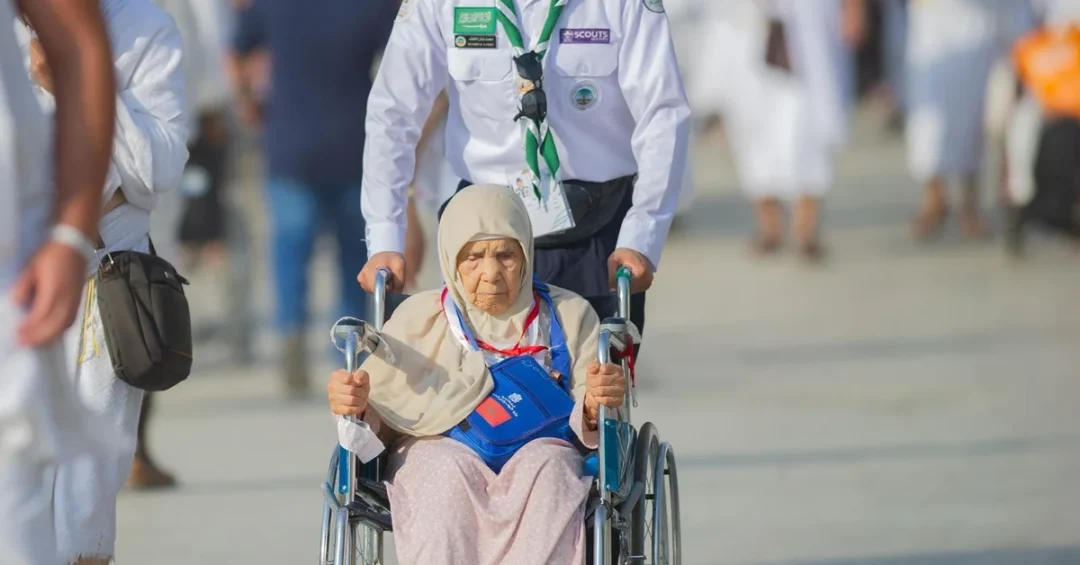
Scouts of the Saudi Arabian Scouts Association are continuing their annual tradition of volunteer service at the Grand Mosque in Makkah, providing assistance to millions of worshippers through programs that include guiding lost individuals, distributing meals, and offering translation services for non-Arabic-speaking pilgrims. The initiative, reported by the Saudi Press Agency (SPA), reflects the deep-rooted culture of volunteerism that has long defined the Kingdom’s scouting movement and aligns with the national drive to expand civic participation among Saudi youth.
The Grand Mosque, known as Al-Masjid al-Haram, is the holiest site in Islam and hosts millions of worshippers each year, particularly during the holy months of Ramadan and the Hajj season. The presence of Saudi scouts at the mosque is not a new development but a continuation of a decades-old partnership between the Saudi Arabian Scouts Association and the General Authority for the Care of the Grand Mosque and the Prophet’s Mosque. These young volunteers serve as a vital link between the mosque’s administration and the diverse international community of pilgrims, many of whom speak neither Arabic nor English. Their work embodies the Kingdom’s commitment to hospitality, service, and the facilitation of religious rituals for all visitors.
Why does this enduring tradition of volunteerism matter so much in the context of Saudi Arabia’s modern identity? It matters because it demonstrates how the Kingdom’s spiritual responsibilities and its Vision 2030 goals intersect in practical, everyday acts of service that touch millions of lives. The scouts’ efforts are a living example of how Saudi youth are being empowered to take active roles in serving their nation and the global Muslim community.
Context and Background
How did the Saudi Arabian Scouts Association become such a central part of the Grand Mosque’s operations? The association, established in 1961, has grown into one of the largest scouting organizations in the Arab world, with tens of thousands of members across the Kingdom. From its early years, the association has emphasized community service as a core pillar of its mission, and its collaboration with the Grand Mosque’s administration dates back several decades. Over time, this partnership has expanded to include structured volunteer programs during peak pilgrimage seasons, including Ramadan and Hajj.
The scouts’ role at the Grand Mosque is multifaceted. They assist elderly and disabled worshippers, help reunite lost children with their families, distribute meals and water, and provide translation services in multiple languages. Scout leaders have emphasized that these efforts are part of the association’s annual public service programs designed to foster humanitarian values and promote volunteerism among Saudi youth. The program also includes training in first aid, crowd management, and communication skills, ensuring that scouts are well-prepared for the demands of serving such a large and diverse congregation.
The significance of this work extends beyond the immediate assistance provided. It represents a structured approach to youth development that combines practical skills with moral and civic education. By serving at the Grand Mosque, scouts learn the value of discipline, empathy, and teamwork while contributing directly to the comfort and safety of pilgrims. This experience often leaves a lasting impression, inspiring many scouts to continue volunteering in other capacities throughout their lives. The association’s programs are aligned with the Kingdom’s broader efforts to nurture a generation of responsible, skilled, and globally minded citizens.
Key Details of the Volunteer Program
What specific services do the scouts provide, and how are they organized? According to the Saudi Press Agency, the scouts’ support includes assisting lost individuals, distributing meals, and offering translation services to help non-Arabic-speaking worshippers understand important instructions while performing their rituals. These services are delivered by teams of scouts who are stationed at strategic points throughout the Grand Mosque and its surrounding courtyards. Each team is supervised by experienced scout leaders who coordinate with mosque officials and security personnel.
The translation services are particularly crucial given the international makeup of the worshippers. The Grand Mosque welcomes pilgrims from virtually every country, and many arrive with limited proficiency in Arabic. Scouts who speak English, French, Urdu, Turkish, Indonesian, and other languages are deployed to help these visitors navigate the mosque’s facilities, understand prayer rituals, and locate their accommodation or transportation. This linguistic support reduces confusion and enhances the spiritual experience for pilgrims who might otherwise struggle to follow instructions.
Meal distribution is another key component. During Ramadan, the mosque provides iftar meals to thousands of fasting worshippers each evening. Scouts assist in organizing the distribution, ensuring that food is handed out efficiently and hygienically. They also help manage crowds, direct worshippers to designated eating areas, and clean up afterward. These tasks require physical stamina and a high level of coordination, and the scouts perform them with dedication and cheerfulness. Their presence adds a human touch to the massive logistical operation that sustains the Grand Mosque during peak periods.
Assisting lost individuals is perhaps the most emotionally rewarding aspect of the scouts’ work. Every year, thousands of pilgrims become separated from their groups or family members amid the dense crowds. Scouts are trained to handle such situations with sensitivity, using established protocols to reunite people quickly. They also provide comfort to those who are distressed, offering water, a place to sit, and reassurance while they wait. This aspect of the service reflects the Islamic principles of compassion and brotherhood that underpin the entire pilgrimage experience.
International and Regional Impact
How does the scouts’ volunteerism at the Grand Mosque resonate beyond Saudi Arabia’s borders? The Grand Mosque is a global spiritual hub, and the positive experiences of pilgrims from around the world contribute to the Kingdom’s international image as a gracious and capable host. When a pilgrim from Indonesia or Nigeria receives help from a young Saudi scout, it creates a lasting impression of warmth and efficiency. These interactions help counter negative stereotypes and showcase the Kingdom’s commitment to serving all Muslims, regardless of nationality or background.
Regional media often highlight the scouts’ activities as an example of Saudi Arabia’s soft power and its leadership in the Islamic world. Neighboring Gulf states and other Muslim-majority countries have expressed interest in adopting similar volunteer models for their own religious sites. The Saudi Arabian Scouts Association has also participated in international scouting events, sharing its expertise in crowd management and pilgrimage services. This exchange of knowledge strengthens ties between Saudi Arabia and other nations while promoting the universal values of scouting: service, community, and peace.
Furthermore, the scouts’ work supports the Kingdom’s broader diplomatic efforts. By facilitating a smooth and spiritually fulfilling pilgrimage, Saudi Arabia reinforces its role as the custodian of Islam’s holiest sites. This responsibility is taken seriously at the highest levels of government, and the scouts’ contributions are recognized as an integral part of the national effort. The positive feedback from pilgrims and foreign dignitaries alike underscores the effectiveness of this approach and its contribution to global goodwill.
Economic and Strategic Significance
What economic and strategic value does this volunteer program bring to Saudi Arabia? While the scouts’ work is voluntary and not directly profit-driven, it has significant indirect economic benefits. A well-organized pilgrimage experience encourages repeat visits and positive word-of-mouth, which supports the Kingdom’s tourism and hospitality sectors. Pilgrims who feel cared for are more likely to extend their stay, explore other parts of the country, and recommend Saudi Arabia as a destination to others. This aligns with Vision 2030’s goal of increasing religious tourism and diversifying the economy beyond oil.
Strategically, the program contributes to social stability and national cohesion. By engaging young Saudis in meaningful service, it provides them with a sense of purpose and belonging, reducing the risk of idleness and disengagement. The skills they acquire—leadership, communication, problem-solving, and cultural sensitivity—are transferable to their future careers, whether in the public or private sector. Many former scouts go on to become community leaders, entrepreneurs, and government officials, bringing with them the values they learned through service. This investment in human capital is a cornerstone of Vision 2030 and a key driver of long-term prosperity.
Moreover, the program enhances the operational efficiency of the Grand Mosque, which is one of the most heavily trafficked religious sites in the world. The scouts supplement the efforts of paid staff and security personnel, allowing the mosque to handle large crowds with greater ease. This reduces the need for additional expenditure on temporary labor and ensures that resources can be allocated to other priorities, such as infrastructure improvements and crowd safety technology. The cost-effectiveness of using trained volunteers is a model that other large-scale event organizers in the Kingdom are beginning to emulate.
Vision 2030 Alignment
How does the scouts’ volunteerism at the Grand Mosque connect to Saudi Vision 2030? One of the vision’s central pillars is the development of a vibrant society, where citizens are active, responsible, and engaged. The scouts’ program directly supports this by instilling a culture of volunteerism in young people and providing them with opportunities to contribute to national priorities. The Kingdom aims to increase the number of volunteers to one million by 2030, and initiatives like this are instrumental in achieving that target. By serving at the Grand Mosque, scouts become ambassadors of the vision, demonstrating its values in action.
The program also aligns with Vision 2030’s emphasis on enhancing the quality of life for citizens and visitors. The services provided—translation, meal distribution, assistance to lost individuals—directly improve the experience of pilgrims and reflect the Kingdom’s commitment to excellence in service delivery. Furthermore, the scouts’ work supports the vision’s goal of strengthening the Kingdom’s role as a global leader in Islamic affairs. By ensuring that the Grand Mosque remains a welcoming and well-managed sanctuary, Saudi Arabia reinforces its position as the heart of the Muslim world and a model of efficient, compassionate governance.
In conclusion, the continued presence of Saudi scouts at the Grand Mosque is a testament to the enduring values of service, faith, and national pride that define the Kingdom. As the nation marches toward Vision 2030, these young volunteers embody the best of Saudi Arabia’s past and future, bridging tradition and modernity in the service of humanity. Their dedication not only facilitates the spiritual journeys of millions but also showcases the Kingdom’s unwavering commitment to its sacred responsibilities and its ambitious plans for a brighter tomorrow.
20 Questions
Q1. What is the main role of Saudi scouts at the Grand Mosque?
A1. Saudi scouts provide volunteer services including assisting lost individuals, distributing meals, and offering translation services to worshippers, ensuring a smooth and spiritually fulfilling experience for millions of pilgrims visiting the Grand Mosque in Makkah.
Q2. Which organization oversees the scouts’ volunteer work at the Grand Mosque?
A2. The Saudi Arabian Scouts Association, established in 1961, organizes and oversees the volunteer programs, coordinating with the General Authority for the Care of the Grand Mosque and the Prophet’s Mosque to deploy scouts effectively.
Q3. How long has the Saudi Arabian Scouts Association been involved in serving pilgrims?
A3. The association has been involved in serving pilgrims for several decades, with its partnership with the Grand Mosque’s administration dating back many years and expanding significantly during peak seasons like Ramadan and Hajj.
Q4. What languages do the scouts use for translation services?
A4. Scouts provide translation in multiple languages, including English, French, Urdu, Turkish, and Indonesian, to help non-Arabic-speaking worshippers understand rituals and navigate the mosque’s facilities during their pilgrimage.
Q5. How do scouts assist lost individuals at the Grand Mosque?
A5. Scouts are trained to handle lost-person situations with sensitivity, using established protocols to reunite separated pilgrims with their families or groups quickly, while offering comfort and reassurance to those distressed.
Q6. What is the significance of meal distribution by scouts?
A6. Scouts help distribute meals, especially during Ramadan iftar, ensuring efficient and hygienic handouts to thousands of fasting worshippers, managing crowds, and maintaining cleanliness in designated eating areas.
Q7. How does the scouts’ work reflect Saudi Vision 2030?
A7. It aligns with Vision 2030’s goal of fostering a vibrant society and increasing volunteerism to one million by 2030, while enhancing the quality of life for visitors and showcasing Saudi Arabia’s leadership in Islamic affairs.
Q8. What skills do scouts gain from volunteering at the Grand Mosque?
A8. Scouts develop leadership, communication, problem-solving, and cultural sensitivity skills, along with first aid and crowd management training, which are transferable to their future careers and community roles.
Q9. How does the program benefit international pilgrims?
A9. International pilgrims benefit from translation services, assistance with rituals, and compassionate support, creating a positive impression of Saudi hospitality and facilitating a smoother spiritual journey for non-Arabic speakers.
Q10. What economic benefits does the volunteer program bring?
A10. The program indirectly boosts religious tourism by encouraging repeat visits and positive word-of-mouth, supporting hospitality sectors, and reducing operational costs for the Grand Mosque through cost-effective volunteer labor.
Q11. How many scouts participate in these programs annually?
A11. The Saudi Arabian Scouts Association mobilizes thousands of scouts each year for service at the Grand Mosque, with numbers peaking during Ramadan and Hajj seasons to meet the increased demand from pilgrims.
Q12. What is the reaction of pilgrims to the scouts’ assistance?
A12. Pilgrims consistently express gratitude and appreciation for the scouts’ helpfulness, noting that their presence enhances the spiritual experience and reflects the Kingdom’s commitment to excellent service and hospitality.
Q13. How does the program contribute to Saudi Arabia’s soft power?
A13. By positively impacting millions of pilgrims from around the world, the program enhances Saudi Arabia’s international image as a gracious host and capable custodian of Islam’s holiest sites, strengthening its soft power.
Q14. Are there similar volunteer programs at the Prophet’s Mosque in Madinah?
A14. Yes, the Saudi Arabian Scouts Association also operates volunteer programs at the Prophet’s Mosque in Madinah, providing similar services to worshippers and pilgrims throughout the year.
Q15. What training do scouts receive before serving at the Grand Mosque?
A15. Scouts receive comprehensive training in first aid, crowd management, communication, and cultural sensitivity, along with specific protocols for assisting lost individuals and handling emergencies during peak pilgrimage periods.
Q16. How does the program promote volunteerism among Saudi youth?
A16. By engaging young Saudis in meaningful service, the program instills a lifelong commitment to volunteerism, providing role models and practical experience that inspire continued civic participation beyond their scouting years.
Q17. What role do scout leaders play in the program?
A17. Scout leaders supervise teams, coordinate with mosque officials, and ensure that services are delivered efficiently, while also mentoring younger scouts and emphasizing the humanitarian values at the heart of the initiative.
Q18. How does the program handle emergencies or medical situations?
A18. Scouts trained in first aid are prepared to respond to minor medical issues, and they coordinate with on-site medical teams and security personnel for any emergencies, ensuring swift and appropriate care.
Q19. What is the historical origin of scouting in Saudi Arabia?
A19. Scouting in Saudi Arabia began in 1961 with the establishment of the Saudi Arabian Scouts Association, which has since grown into one of the largest scouting organizations in the Arab world.
Q20. How can other countries learn from Saudi Arabia’s volunteer model?
A20. Other countries can adopt similar models by training youth in crowd management and translation, partnering with religious authorities, and emphasizing service values, as Saudi Arabia shares its expertise through international scouting exchanges.
Reader Feedback
We value your thoughts. Please share your feedback on this article.
Your feedback helps us improve our coverage.
Related articles
 Madinah Concludes Swimming Literacy Project with 300 Students
 AlUla Program Trains 50 Youth in Public Speaking
 Najran Schools Adopt Winter Schedule Starting Sunday
 Najran University Climbs Four Places in QS Arab Rankings 2027
 Saudi Arabia Sets February 2027 Deadline for Worker Housing
 ETEC to Hold Third National Forum for School Excellence in Riyadh