


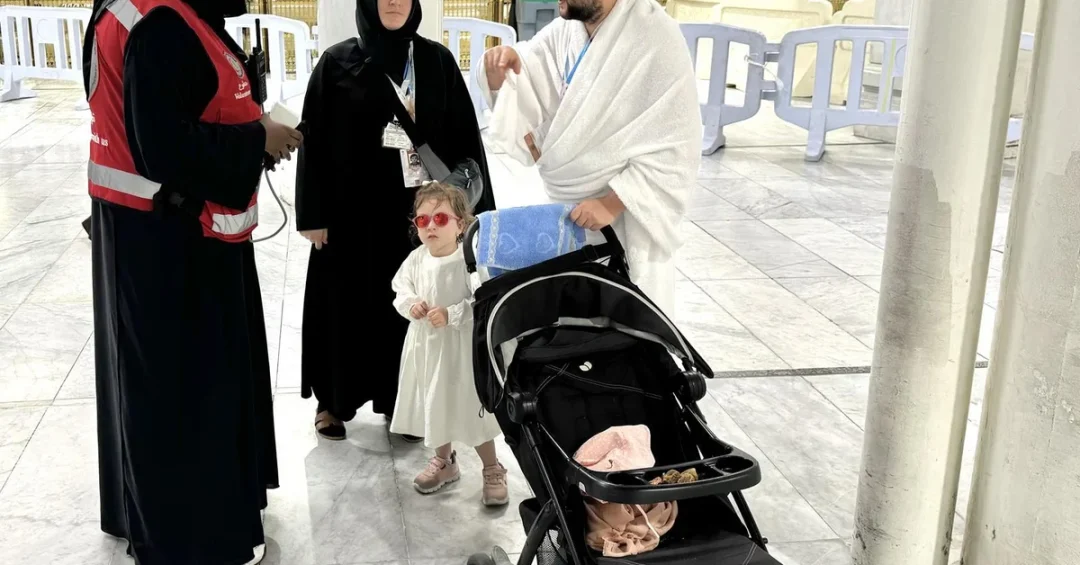
Two Saudi volunteers have turned their childhood dream into a reality by serving pilgrims as medical team leaders with the Saudi Red Crescent Authority, according to the Saudi Press Agency (SPA). Sondos Al-Darwish and Menna Jamil now provide essential health services to guests of God in Makkah, embodying the Kingdom’s humanitarian spirit and commitment to community well-being.
Context and Background
From an early age, Al-Darwish and Jamil felt a deep desire to help those in need. Their aspirations were rooted in the belief that a smile or gratitude is the most rewarding outcome of any good deed. Both women pursued health education, which equipped them with the skills necessary to turn their childhood ambitions into reality.
Their paths converged at the Saudi Red Crescent Authority, where they volunteered to serve pilgrims from all corners of the globe. Their dedication has been honed through rigorous training, transforming them into team leaders responsible for coordinating medical support during the Hajj season.
Key Details
Sondos Al-Darwish, a nursing student, started her volunteering journey in 2021 with the Saudi Red Crescent Authority. She recounts a memorable emergency case involving a pilgrim experiencing chest pain, later diagnosed with a stroke. Al-Darwish and the medical team swiftly applied their training, ultimately saving the pilgrim’s life—a testament to the effectiveness of the Authority’s volunteer programs.
Similarly, Menna Jamil, a health volunteer, has served with the Authority for four years, also advancing to a leadership position. She shared a touching encounter at the Grand Mosque in Makkah, where a blind female patient placed her hands on Jamil’s face after her pain was relieved, conveying deep gratitude without words. This moment encapsulates the profound impact of the volunteers’ work.
Implications and Impact
These two volunteers exemplify the power of social participation and community service. Their stories highlight the critical role of the Saudi Red Crescent Authority in safeguarding the health of pilgrims during the annual Hajj, which attracts millions of Muslims from diverse backgrounds. Their service ensures that all pilgrims receive compassionate, skilled care, reinforcing Saudi Arabia’s role as a host of Islam’s most important rituals.
The impact extends beyond the holy sites. Such volunteer efforts strengthen the fabric of society, inspiring others to engage in humanitarian work and enhancing the Kingdom’s reputation as a land of safety and generosity.
Vision 2030 Alignment
The volunteers’ work directly supports the goals of Saudi Vision 2030, which aims to improve quality of life for all residents and visitors. Through their service, they contribute to the Kingdom’s objectives of building a vibrant society and developing a responsible, voluntary sector. Their dedication aligns perfectly with the Vision’s emphasis on social development and global leadership in humanitarianism, and they are a shining example for future generations.
20 Questions
Q1. What is the Saudi Red Crescent Authority?
The Saudi Red Crescent Authority is an official body in Saudi Arabia that provides medical and humanitarian aid during emergencies, including during the Hajj pilgrimage, ensuring the health and safety of pilgrims.
Q2. How did Sondos Al-Darwish begin her volunteer career?
She joined the Saudi Red Crescent Authority in 2021 after completing training at a health college, where she learned basic skills to assist patients, fulfilling her childhood ambition to help others.
Q3. What role does Al-Darwish now hold?
Al-Darwish has advanced to the position of team leader, coordinating medical teams and providing essential services to pilgrims from all corners of the world.
Q4. What emergency case did she handle?
She handled a pilgrim who had chest pain and was later diagnosed with a stroke. With her medical team, she applied her training to successfully save the pilgrim’s life.
Q5. How long has Menna Jamil been volunteering?
Jamil has volunteered with the Saudi Red Crescent Authority for approximately four years, serving pilgrims and honing her skills to become a team leader.
Q6. What touching moment did Jamil experience?
At the Grand Mosque in Makkah, a blind female patient placed her hands on Jamil’s face after receiving relief, expressing deep gratitude and happiness, an indescribable moment that filled Jamil with immense joy.
Q7. What training do these volunteers receive?
Volunteers receive comprehensive training through health education programs, including practical skills in patient care, emergency response, and teamwork, ensuring they are well-prepared for their duties.
Q8. Why is volunteer work important during Hajj?
Volunteering during Hajj is vital as it ensures the health and well-being of the millions of pilgrims who gather, providing medical support and care to help them perform their rituals safely.
Q9. How does this support Vision 2030?
The volunteer work aligns with Vision 2030’s goals of building a vibrant and healthy society, promoting social participation, and strengthening community bonds, all essential for a high quality of life.
Q10. What is the primary mission of these volunteers?
Their primary mission is to provide medical services and relief to pilgrims, easing their suffering and ensuring their safety during the sacred journey.
Q11. How does the Saudi Red Crescent encourage volunteers?
The Authority offers platforms for volunteers to develop their skills, through structured programs, and gives opportunities to lead teams, as seen with these two volunteers.
Q12. What challenges do volunteers face?
They handle the high volume of pilgrims, many with pre-existing health conditions, and must work under intense physical and emotional pressure to provide timely care.
Q13. What is the significance of their stories?
Their stories highlight the dedication and compassion of Saudi citizens, reinforcing the Kingdom’s reputation as a place of care and hospitality for guests of God.
Q14. How do volunteers deal with emergencies?
They follow rigorous training protocols, collaborate with medical teams, and quickly assess situations to provide effective treatment, as demonstrated by the stroke case.
Q15. What is the wider impact of their service?
Their service enhances the pilgrimage experience for thousands, promotes safety, and contributes to Saudi Arabia’s leadership in health care for visitors.
Q16. How do they maintain their morale?
They are motivated by the gratitude of pilgrims and the fulfillment of their childhood dreams, deriving happiness from seeing others’ pain relieved.
Q17. What role does the Grand Mosque play in their work?
The Grand Mosque in Makkah is a focal point for many volunteers, where they are stationed to provide immediate medical care to pilgrims who may fall ill or require assistance.
Q18. How can others follow their example?
Individuals can pursue health education and offer their time and skills to the Saudi Red Crescent Authority, which continuously seeks compassionate volunteers to serve pilgrims.
Q19. What does the story of these volunteers tell us?
It illustrates the importance of turning personal dreams into community service, proving that with training and dedication, anyone can make a meaningful difference in people’s lives.
Q20. What is the legacy of their work?
Their work leaves a legacy of compassion, inspiring future generations to engage in humanitarian efforts and reinforcing Saudi Arabia’s commitment to the welfare of all visitors.
Reader Feedback
We value your thoughts. Please share your feedback on this article.
Your feedback helps us improve our coverage.