


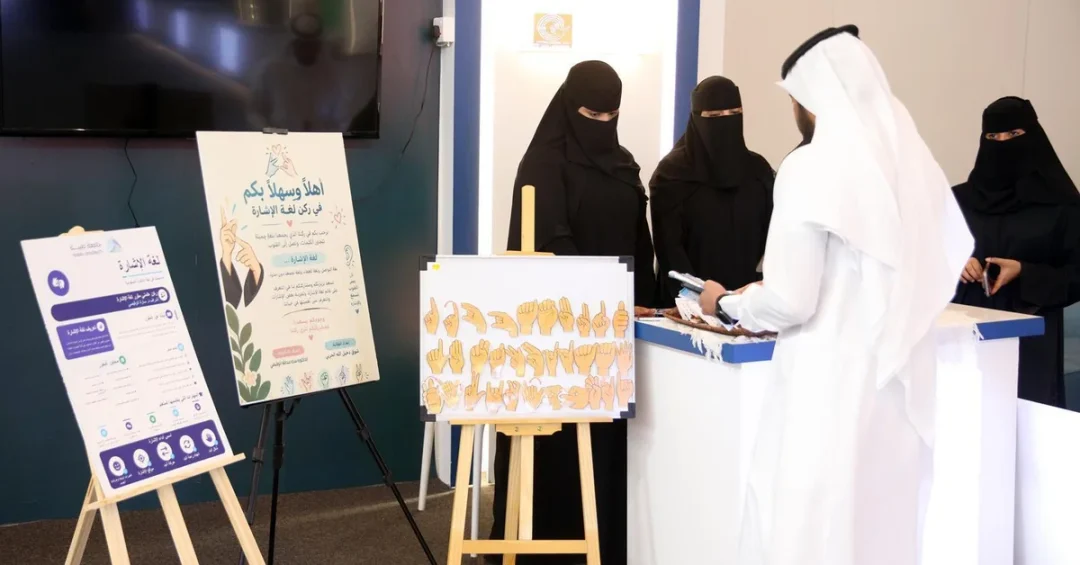
Taibah University in Madinah organized an exhibition on October 7, 2026, to mark the International Day of Sign Languages, aiming to introduce visitors to deaf culture and raise awareness of effective communication methods with the deaf community. The event, attended by university leadership and staff, featured interactive booths and hands-on activities that provided practical demonstrations of sign language and allowed participants to learn basic vocabulary and signs.
Context and Background
The International Day of Sign Languages, observed annually on September 23, was established by the United Nations General Assembly in 2017 to raise awareness of the importance of sign languages in the full realization of the human rights of deaf people. Saudi Arabia has been actively promoting inclusivity and accessibility for persons with disabilities, in line with Vision 2030 and the National Transformation Program. Taibah University’s exhibition reflects the Kingdom’s commitment to fostering an inclusive society where all individuals can thrive.
This initiative is part of broader efforts by Saudi educational institutions to integrate deaf culture into public awareness and to enhance the quality of life for persons with disabilities, a key objective of Saudi Vision 2030. The event aligns with the directives of Custodian of the Two Holy Mosques King Salman bin Abdulaziz Al Saud and His Royal Highness Crown Prince Mohammed bin Salman bin Abdulaziz Al Saud, who have consistently emphasized the importance of empowering all segments of society.
Key Details
The exhibition, held at Taibah University’s main campus in Madinah, featured various interactive and informative booths. These booths offered practical demonstrations of sign language, enabling visitors to learn basic vocabulary and signs and to practice communicating through sign language. University leadership and staff were present to support the initiative and engage with participants.
The event aimed to introduce visitors to deaf culture and raise awareness of ways to communicate with deaf people, fostering a more inclusive environment within the university and the wider community. Such initiatives are crucial for building a society that values diversity and ensures equal opportunities for all.
Implications and Impact
Taibah University’s exhibition underscores the Kingdom’s ongoing efforts to promote inclusivity and accessibility for persons with disabilities. By raising awareness of sign language and deaf culture, the event contributes to breaking down communication barriers and fostering mutual respect among all members of society. This aligns with Saudi Arabia’s international commitments, including the Convention on the Rights of Persons with Disabilities, which the Kingdom ratified in 2008.
Furthermore, the exhibition serves as a model for other educational institutions in Saudi Arabia and the region, highlighting the importance of integrating disability awareness into educational and community activities. It also reflects the Kingdom’s broader vision of creating a knowledge-based society that leaves no one behind.
Vision 2030 Alignment
This initiative is a clear manifestation of Saudi Vision 2030‘s goals to enhance the quality of life for all citizens and residents, including persons with disabilities. Under the leadership of Crown Prince Mohammed bin Salman, the Kingdom has made significant strides in promoting inclusivity, accessibility, and empowerment. By organizing events like this exhibition, Taibah University contributes to building a more inclusive and compassionate society, in line with the Kingdom’s long-term vision and its global role as a leader in humanitarian and social development.
20 Questions
Q1. What event did Taibah University organize?
A1. Taibah University organized an exhibition to mark the International Day of Sign Languages, aimed at introducing visitors to deaf culture and raising awareness of communication methods with deaf people.
Q2. When was the exhibition held?
A2. The exhibition was held on October 7, 2026, as reported by the Saudi Press Agency (SPA).
Q3. Where did the exhibition take place?
A3. The exhibition took place at Taibah University in Madinah, Saudi Arabia.
Q4. Who attended the exhibition?
A4. The exhibition was attended by university leadership and staff, who showed their support for the initiative.
Q5. What was the main purpose of the exhibition?
A5. The main purpose was to introduce visitors to deaf culture and raise awareness of ways to communicate with deaf people effectively.
Q6. What activities were featured at the exhibition?
A6. The exhibition featured interactive and informative booths offering practical demonstrations of sign language, as well as hands-on activities for learning basic vocabulary and signs.
Q7. What is the International Day of Sign Languages?
A7. The International Day of Sign Languages is observed annually on September 23, established by the United Nations to raise awareness of the importance of sign languages in realizing the human rights of deaf people.
Q8. How does this event align with Saudi Vision 2030?
A8. The event aligns with Vision 2030’s goals of enhancing quality of life and promoting inclusivity for persons with disabilities, reflecting the Kingdom’s commitment to empowering all segments of society.
Q9. Which Saudi leaders have emphasized empowerment of persons with disabilities?
A9. Custodian of the Two Holy Mosques King Salman bin Abdulaziz Al Saud and Crown Prince Mohammed bin Salman bin Abdulaziz Al Saud have consistently emphasized empowering all segments of society.
Q10. What is the significance of sign language awareness in Saudi Arabia?
A10. Sign language awareness is significant as it fosters inclusivity, breaks down communication barriers, and ensures equal opportunities for deaf individuals, in line with Saudi Arabia’s social development goals.
Q11. Has Saudi Arabia ratified the Convention on the Rights of Persons with Disabilities?
A11. Yes, Saudi Arabia ratified the Convention on the Rights of Persons with Disabilities in 2008, demonstrating its commitment to protecting the rights of persons with disabilities.
Q12. How does Taibah University contribute to Vision 2030?
A12. Taibah University contributes to Vision 2030 by organizing events that promote inclusivity and awareness, aligning with the Kingdom’s goals of building a knowledge-based and inclusive society.
Q13. What are the benefits of learning sign language?
A13. Learning sign language enables effective communication with deaf individuals, fosters inclusivity, and enhances social integration, benefiting both individuals and the community.
Q14. What was the format of the exhibition?
A14. The exhibition featured interactive booths with practical demonstrations and hands-on activities, allowing visitors to learn basic sign language vocabulary and practice communication.
Q15. Why is raising awareness of deaf culture important?
A15. Raising awareness of deaf culture promotes understanding, respect, and inclusion of deaf individuals, helping to create a more equitable society where everyone can participate fully.
Q16. How does this exhibition reflect Saudi Arabia’s international commitments?
A16. The exhibition reflects Saudi Arabia’s commitment to international conventions like the Convention on the Rights of Persons with Disabilities, showcasing the Kingdom’s dedication to human rights.
Q17. What role do Saudi educational institutions play in promoting inclusivity?
A17. Saudi educational institutions play a vital role in promoting inclusivity by hosting awareness events, integrating disability education, and fostering environments that support all students and community members.
Q18. What is the National Transformation Program?
A18. The National Transformation Program is a key initiative under Saudi Vision 2030 that aims to diversify the economy and improve public services, including enhancing inclusivity and quality of life for all citizens.
Q19. How can other institutions follow Taibah University’s example?
A19. Other institutions can organize similar exhibitions, workshops, and awareness campaigns to promote sign language and deaf culture, contributing to a more inclusive society across Saudi Arabia.
Q20. What is the broader impact of such initiatives on Saudi society?
A20. Such initiatives foster a culture of inclusivity, respect, and empowerment, aligning with Vision 2030’s goal of building a vibrant society where all individuals can contribute to the Kingdom’s progress.
Reader Feedback
We value your thoughts. Please share your feedback on this article.
Your feedback helps us improve our coverage.