


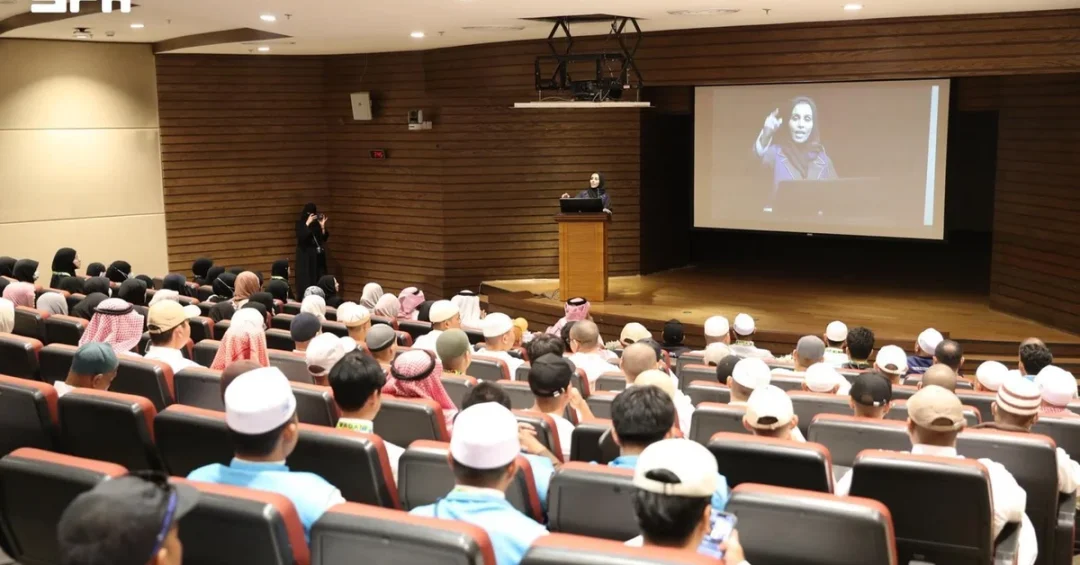
Taibah University in Madinah welcomed a 129-member educational delegation from the Islamic Sciences Demonstration School, affiliated with Prince of Songkla University in Thailand, on October 14, 2026, according to the Saudi Press Agency. The visit formed part of the university’s continuing efforts to introduce international students to its academic environment, research programs, and study opportunities, and it underlined the Kingdom’s expanding role as a global destination for learning and cultural exchange.
The delegation’s program combined a guided tour of the university’s Student Activities Center with an introductory session on academic programs, research fields, and scholarship opportunities, followed by a training workshop designed to prepare students for university life. The visit reflects a broader pattern of growing educational cooperation between Saudi Arabia and international institutions, and it highlights how Saudi universities are positioning themselves as bridges between the Kingdom and the wider world. How often do young students get the chance to step onto a campus thousands of kilometers from home and imagine their future there?
Context and Background
Taibah University, a public institution based in Madinah, has steadily expanded its international outreach as part of Saudi Arabia’s wider higher-education strategy. The Kingdom’s universities have been encouraged to attract talented students from around the world, build research partnerships, and present Saudi campuses as hubs of academic excellence and cross-cultural dialogue. The visit by the Thai delegation, drawn from the Islamic Sciences Demonstration School under Prince of Songkla University, fits squarely within that effort and reflects the trust that international institutions place in Saudi higher education.
The delegation numbered 129 members, making the visit a substantial logistical and educational undertaking. Such a large group signals genuine institutional commitment on both sides rather than a symbolic gesture. Prince of Songkla University, one of Thailand’s leading universities, maintains a strong tradition of Islamic studies, and its demonstration school prepares students for advanced academic work. Bringing those students to Madinah allowed them to see firsthand how Saudi universities combine rigorous academics with a distinctive campus culture rooted in the city’s heritage. What better way to build lasting academic ties than by letting students experience a campus in person?
The timing of the visit also matters. Saudi Arabia has been investing heavily in education, research, and international scholarship programs as part of Vision 2030, and universities like Taibah are increasingly expected to play an active role in that national project. Hosting a delegation of this size demonstrates the university’s capacity to organize meaningful international programs and to serve as a welcoming host for students from diverse backgrounds. It also reinforces Madinah’s standing as a city of knowledge and hospitality, not only a destination of religious significance but also a center of learning.
Key Details of the Visit
According to the Saudi Press Agency, the educational visit aimed to familiarize the delegation with Taibah University’s academic environment, its educational and research programs, and the study opportunities available to international students. The program began with a tour of the university’s Student Activities Center, where delegation members learned about the center’s facilities, equipment, student activities, and services. This gave the visiting students a practical sense of daily campus life beyond the classroom and showed how Saudi universities support students’ personal development alongside their studies.
The university then held an introductory session covering its academic programs and fields of study, research areas, educational initiatives, and scholarship opportunities for international students. This session served as a comprehensive overview, allowing the delegation to understand the range of disciplines available and the support mechanisms in place for students from abroad. For students considering overseas study, such direct access to information is invaluable, and it helps demystify the application and enrollment process. Wouldn’t any prospective student want clear, firsthand answers before making such an important decision?
Members of the student delegation also took part in a training workshop on university skills, which sought to better prepare them for university life. The workshop covered essential skills for academic success, effective learning strategies, and ways to adapt to the university environment. By addressing practical concerns such as study habits and campus adjustment, Taibah University offered something more than a promotional presentation; it provided genuine preparation for the transition to higher education. This combination of orientation, information, and skills training reflects a thoughtful approach to international engagement.
International and Regional Impact
The visit carries significance beyond a single campus tour. Educational exchanges of this kind strengthen people-to-people ties between Saudi Arabia and Thailand, two countries with growing connections in trade, tourism, and cultural cooperation. When students from Southeast Asia experience Saudi academic life directly, they return home with a more nuanced understanding of the Kingdom, its institutions, and its people. That understanding can ripple outward through their families, schools, and communities, contributing to a more accurate and positive international image of Saudi Arabia.
For Saudi Arabia, hosting international delegations also supports the Kingdom’s ambition to become a regional hub for education and research. Universities that welcome students from across Asia, Africa, and beyond enhance their academic reputations and create networks that benefit research collaboration and joint programs. Taibah University’s willingness to open its doors to a 129-member delegation demonstrates confidence in its own offerings and a commitment to internationalization. In a world where knowledge economies compete for talent, such openness is a strategic asset rather than a courtesy.
Regionally, the visit reinforces Madinah’s role as a center of learning that complements its spiritual significance. International students who study in the city become ambassadors for Saudi hospitality and academic quality. Their experiences can encourage more students from Thailand and neighboring countries to consider Saudi universities, deepening educational linkages across Asia. Over time, these connections can evolve into alumni networks that support business, diplomacy, and cultural exchange. How many future leaders might trace their first impression of Saudi Arabia to a visit like this one?
Economic and Strategic Significance
Education sits at the heart of Saudi Arabia’s economic transformation. A knowledge-based economy requires skilled graduates, research capacity, and international partnerships, and universities are central to building all three. By attracting international students, Saudi institutions diversify their student bodies, generate academic exchange, and strengthen the Kingdom’s soft power. The visit by the Thai delegation represents a small but meaningful step in that direction, illustrating how educational diplomacy can support broader national objectives.
The strategic value extends to Saudi Arabia’s relationships in Asia. Thailand is an important economic partner, and educational cooperation often lays the groundwork for deeper commercial and diplomatic ties. Students who study in the Kingdom gain familiarity with Saudi markets, institutions, and culture, which can later translate into professional collaboration. Meanwhile, Saudi universities benefit from international perspectives that enrich classroom discussion and research. This mutual exchange aligns with Vision 2030’s emphasis on openness, investment in human capital, and global engagement.
From a practical standpoint, hosting large delegations also showcases Saudi logistics, hospitality, and campus infrastructure. The ability to organize a comprehensive program for 129 visitors demonstrates institutional capacity that international partners notice. Such demonstrations can lead to formal agreements, student exchange programs, and joint research initiatives. In the competitive field of international education, visible successes attract further interest, creating a virtuous cycle of engagement. Could a single well-organized visit open the door to dozens of future partnerships?
Vision 2030 Alignment
The visit aligns closely with Saudi Vision 2030, which places education, international cooperation, and the development of a diversified knowledge economy among its central pillars. Vision 2030 calls for Saudi universities to raise their global standing, attract international students, and contribute to cultural and intellectual exchange. Taibah University’s hosting of the Thai delegation is a concrete example of these ambitions in action, showing how Saudi institutions are actively building bridges with the international academic community.
Beyond the immediate program, the visit supports the broader goal of positioning Saudi Arabia as a destination for study, research, and cultural discovery. When international students experience the Kingdom’s campuses, cities, and hospitality, they become part of a global network that carries positive impressions far beyond the region. Taibah University’s commitment to engaging with international educational institutions thus serves both its own academic mission and the national vision of a connected, forward-looking Saudi Arabia. As the Kingdom continues to invest in education and global partnerships, exchanges like this one will remain a vital part of its story.
20 Questions
Q1. Which university welcomed the Thai educational delegation?
A1. Taibah University in Madinah welcomed the delegation. The university hosted the 129-member group as part of its international outreach efforts, introducing them to its academic environment, research programs, and study opportunities.
Q2. How many members were in the visiting delegation?
A2. The delegation consisted of 129 members from the Islamic Sciences Demonstration School, which is affiliated with Prince of Songkla University in Thailand. The visit took place on October 14, 2026.
Q3. Which Thai institution did the delegation represent?
A3. The delegation represented the Islamic Sciences Demonstration School, affiliated with Prince of Songkla University in Thailand. Prince of Songkla University is one of Thailand’s leading academic institutions with a strong tradition in Islamic studies.
Q4. What was the main purpose of the visit?
A4. The visit aimed to familiarize the delegation with Taibah University’s academic environment, educational and research programs, and study opportunities for international students. It also sought to foster intellectual and cultural exchange between students from different countries.
Q5. What facilities did the delegation tour at Taibah University?
A5. The delegation toured the university’s Student Activities Center, where they learned about its facilities, equipment, student activities, and services. This gave them a practical view of daily campus life and student support services.
Q6. What topics were covered in the introductory session?
A6. The introductory session covered Taibah University’s academic programs and fields of study, research areas, educational initiatives, and scholarship opportunities for international students. It provided a comprehensive overview of what the university offers to students from abroad.
Q7. What was the focus of the training workshop?
A7. The training workshop focused on university skills to better prepare students for university life. It covered essential skills for academic success, effective learning strategies, and ways to adapt to the university environment.
Q8. Why is this visit significant for Taibah University?
A8. The visit reflects Taibah University’s commitment to engaging with international educational institutions and showcasing its academic and research capabilities. It also helps international students learn about its programs and campus life, fostering cultural exchange.
Q9. How does the visit support Saudi Arabia’s Vision 2030?
A9. The visit supports Vision 2030 by promoting international educational cooperation, attracting international students, and strengthening Saudi Arabia’s knowledge economy. It aligns with the vision’s goals of global engagement and human capital development.
Q10. What does the visit suggest about Saudi-Thai educational relations?
A10. The visit suggests growing educational cooperation between Saudi Arabia and Thailand. It indicates that Saudi universities are building ties with Southeast Asian institutions and that Thai students are interested in studying in the Kingdom.
Q11. Where is Taibah University located?
A11. Taibah University is located in Madinah, Saudi Arabia. The city is known for its religious significance and is increasingly recognized as a center of learning and academic activity in the Kingdom.
Q12. What kind of students participated in the delegation?
A12. The delegation consisted of students from the Islamic Sciences Demonstration School under Prince of Songkla University. They participated in orientation, information sessions, and a training workshop designed to prepare them for university life.
Q13. What opportunities were highlighted for international students?
A13. The university highlighted its academic programs, fields of study, research areas, educational initiatives, and scholarship opportunities. These offerings are designed to attract talented international students to study at Taibah University.
Q14. How does the visit promote cultural exchange?
A14. The visit promotes cultural exchange by bringing Thai students into direct contact with Saudi academic life and campus culture. Such interactions build mutual understanding and foster intellectual and cultural ties between the two countries.
Q15. What role does the Student Activities Center play?
A15. The Student Activities Center provides facilities, equipment, and services that support student activities and personal development. It helps students engage in extracurricular life and adapt to the university environment.
Q16. Why are training workshops important for visiting students?
A16. Training workshops prepare students for the transition to university by teaching academic success skills, effective learning strategies, and adaptation techniques. They offer practical value beyond informational presentations and help students feel ready for higher education.
Q17. What does this visit indicate about Saudi universities’ international strategy?
A17. It indicates that Saudi universities are actively internationalizing, welcoming foreign delegations, and promoting their programs abroad. This strategy aims to raise global standing, attract talent, and build research and academic partnerships.
Q18. How might this visit benefit future Saudi-Thai cooperation?
A18. The visit could lead to student exchanges, joint programs, and stronger institutional ties between Saudi and Thai universities. It lays groundwork for long-term cooperation in education, research, and cultural understanding.
Q19. What impression might the delegation take home from Madinah?
A19. The delegation likely gained a positive impression of Saudi hospitality, academic quality, and campus life in Madinah. Such experiences can encourage more Thai students to consider studying in Saudi Arabia and strengthen people-to-people ties.
Q20. What is the broader significance of such educational visits?
A20. Educational visits build bridges between nations, promote mutual understanding, and support knowledge exchange. They contribute to Saudi Arabia’s global engagement and help position the Kingdom as a destination for study, research, and cultural discovery.
Reader Feedback
We value your thoughts. Please share your feedback on this article.
Your feedback helps us improve our coverage.