


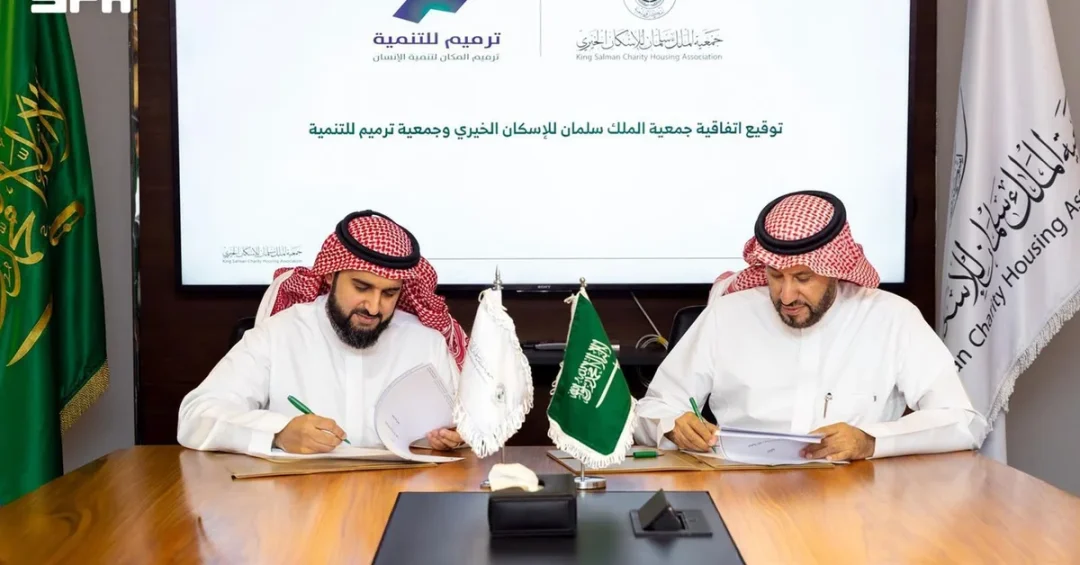
Tarmeem for Development Association and the King Salman Charity Housing Association signed a joint cooperation agreement in Jeddah on August 10, 2026, to manage and implement home and facility renovation and maintenance projects for the most vulnerable beneficiaries across the Kingdom of Saudi Arabia. The agreement, announced via the Saudi Press Agency (SPA), establishes a formal partnership between two of the Kingdom’s leading nonprofit organizations dedicated to improving housing conditions for families in need.
The collaboration is designed to strengthen coordination among nonprofit sector organizations and help provide safe and sustainable housing environments for beneficiaries who might otherwise struggle to maintain safe living conditions. The agreement covers structural, architectural, and interior renovation works, in addition to electrical and mechanical works, according to the official announcement. The signing ceremony took place in Jeddah and was reported by SPA, the Kingdom’s official news agency. The partnership reflects the growing emphasis on cross-sector cooperation within Saudi Arabia’s charitable and development ecosystem, aligning with broader national efforts to enhance quality of life and social welfare.
Context and Background
Why does this agreement matter at this particular moment in Saudi Arabia’s development journey? The Kingdom has long prioritized housing support for vulnerable families as a cornerstone of its social welfare framework, and the partnership between Tarmeem for Development Association and the King Salman Charity Housing Association represents a strategic consolidation of expertise in this critical area. Tarmeem for Development Association brings technical and operational expertise to the table, specializing in managing renovation and maintenance projects efficiently, while the King Salman Charity Housing Association contributes its established network and deep experience in serving housing beneficiaries.
The agreement is an important step toward expanding community partnerships that contribute to improving the quality of homes for beneficiary families. According to the official announcement, Tarmeem will leverage its technical and operational expertise to manage renovation and maintenance projects efficiently, emphasizing its commitment to carrying out the works in accordance with the highest technical standards to achieve a tangible and sustainable impact for beneficiaries. This division of responsibilities allows each organization to focus on its core strengths, with Tarmeem handling the technical execution and the King Salman Charity Housing Association maintaining its focus on beneficiary identification and community outreach.
The timing of this agreement reflects a broader maturation of Saudi Arabia’s nonprofit sector, which has evolved significantly in recent years as part of the Kingdom’s comprehensive development strategy. Nonprofit organizations in Saudi Arabia increasingly operate with professional standards, clear governance frameworks, and measurable impact metrics, enabling them to partner effectively on large-scale social initiatives. The agreement between these two associations exemplifies this trend, demonstrating how specialized organizations can collaborate to deliver comprehensive solutions that neither could achieve as effectively alone.
Key Details of the Agreement
What exactly does this agreement cover, and how will it be implemented on the ground? The scope of the cooperation agreement encompasses structural renovation works, which address the fundamental integrity and safety of residential structures, as well as architectural improvements that enhance the functional and aesthetic quality of homes. Interior renovation works are also included, ensuring that living spaces meet modern standards of comfort and usability for beneficiary families. Crucially, the agreement extends to electrical and mechanical works, covering essential systems such as wiring, plumbing, and climate control that are vital for safe and sustainable housing.
The agreement establishes a framework for managing and implementing renovation and maintenance projects specifically targeting the most vulnerable beneficiaries, a designation that typically includes low-income families, elderly individuals living alone, persons with disabilities, and other groups facing significant housing challenges. By focusing on this demographic, the partnership addresses a critical gap in the housing support ecosystem, as these beneficiaries often lack the resources to maintain their homes independently and may face health and safety risks from deteriorating living conditions.
Implementation will be managed through a coordinated approach that leverages Tarmeem’s project management capabilities and technical standards. The organization has committed to carrying out works in accordance with the highest technical standards, a commitment that ensures durability and long-term value from the investments made in renovation and maintenance. This quality assurance element is particularly important, as poorly executed renovations can create new problems rather than solving existing ones, and sustainable solutions require proper materials, skilled labor, and rigorous oversight.
International and Regional Impact
How does this local partnership connect to Saudi Arabia’s broader role in regional and international development? The agreement between Tarmeem for Development Association and the King Salman Charity Housing Association reflects the Kingdom’s growing emphasis on structured, professionalized philanthropy and social development, which has become a hallmark of Saudi Arabia’s engagement with humanitarian causes both domestically and internationally. Saudi nonprofit organizations have increasingly gained recognition for their professionalism and impact, contributing to the Kingdom’s soft power and its reputation as a leader in humanitarian and development work across the region.
Regionally, the agreement contributes to the broader Gulf Cooperation Council (GCC) trend of strengthening social safety nets and improving housing conditions for vulnerable populations. Saudi Arabia’s approach, which emphasizes partnerships between specialized nonprofit organizations, offers a model that other countries in the region can study and potentially adapt to their own contexts. The focus on sustainability and technical quality also aligns with international development best practices, particularly the United Nations Sustainable Development Goals related to sustainable cities and communities, and the importance of safe, affordable housing for all. By demonstrating effective domestic models, Saudi Arabia reinforces its position as a constructive actor in global development discussions.
Economic and Strategic Significance
What economic and strategic value does this agreement create beyond its immediate humanitarian benefits? The renovation and maintenance of existing housing stock represents a cost-effective approach to improving living conditions compared to new construction, allowing limited resources to reach more beneficiaries. This efficiency is particularly significant in the context of Saudi Arabia’s broader housing strategy, which seeks to balance new development with the preservation and improvement of existing communities. By maintaining and upgrading homes, the partnership helps preserve community stability and prevents the social and economic costs associated with housing deterioration.
Strategically, the agreement strengthens the nonprofit sector’s capacity to contribute to national development objectives. The collaboration model allows organizations to specialize and scale their impact, with Tarmeem focusing on technical execution and the King Salman Charity Housing Association focusing on beneficiary engagement and community relations. This specialization can lead to cost savings, improved quality, and more sustainable outcomes. Furthermore, the agreement supports the development of local expertise in renovation and maintenance, creating economic opportunities for skilled workers and small businesses in the construction and home improvement sectors.
The partnership also contributes to the broader goal of enhancing quality of life for all residents of the Kingdom, a central objective of Saudi Arabia’s national transformation. Safe, well-maintained housing is foundational to health, educational attainment, and economic participation, meaning that improvements in housing conditions can generate cascading benefits across multiple dimensions of social and economic life. By targeting the most vulnerable beneficiaries, the agreement addresses the needs of those for whom housing quality has the greatest impact on overall well-being and future opportunities.
Vision 2030 Alignment
How does this agreement fit within the framework of Saudi Vision 2030, the Kingdom’s comprehensive plan for economic and social transformation? Vision 2030 places significant emphasis on enhancing the quality of life for all citizens and residents, including through improved housing and living conditions. The partnership between Tarmeem for Development Association and the King Salman Charity Housing Association directly supports this objective by ensuring that vulnerable families have access to safe, sustainable, and dignified housing. The agreement also aligns with Vision 2030’s goal of developing a vibrant and effective nonprofit sector that contributes meaningfully to national development.
Moreover, the collaboration exemplifies the Vision 2030 principle of cross-sector partnership, bringing together specialized organizations to achieve outcomes that neither could accomplish alone. As Saudi Arabia continues its transformation journey, such partnerships will be essential to addressing complex social challenges and ensuring that the benefits of development reach all segments of society. The agreement announced in Jeddah represents a concrete step toward a future where every family in the Kingdom has access to safe and sustainable housing, contributing to the broader vision of a prosperous and inclusive Saudi Arabia.
20 Questions
Q1. What organizations signed the cooperation agreement?
A1. Tarmeem for Development Association and the King Salman Charity Housing Association signed the agreement in Jeddah on August 10, 2026, as reported by the Saudi Press Agency, the Kingdom’s official news agency.
Q2. What is the main purpose of the agreement?
A2. The agreement aims to manage and implement home and facility renovation and maintenance projects for the most vulnerable beneficiaries, while strengthening coordination among nonprofit sector organizations to provide safe and sustainable housing environments.
Q3. What types of renovation work does the agreement cover?
A3. The agreement covers structural, architectural, and interior renovation works, in addition to electrical and mechanical works. This comprehensive scope ensures that homes are safe, functional, and sustainable for beneficiary families.
Q4. Where was the agreement signed?
A4. The agreement was signed in Jeddah, Saudi Arabia, on August 10, 2026. The signing was announced via the Saudi Press Agency, the official news channel of the Kingdom.
Q5. Who benefits from this agreement?
A5. The most vulnerable beneficiaries will benefit from this agreement, including low-income families, elderly individuals, and persons with disabilities who face housing challenges and need assistance maintaining safe living conditions.
Q6. What expertise does Tarmeem for Development Association bring?
A6. Tarmeem for Development Association will leverage its technical and operational expertise to manage renovation and maintenance projects efficiently, ensuring works are carried out in accordance with the highest technical standards for tangible and sustainable impact.
Q7. Why is coordination among nonprofit organizations important?
A7. Coordination among nonprofit organizations strengthens the sector’s collective impact, allows for specialization, reduces duplication of efforts, and ensures that resources are used efficiently to serve beneficiaries across the Kingdom.
Q8. How does this agreement support sustainable housing?
A8. The agreement supports sustainable housing by ensuring that renovation and maintenance works meet high technical standards, extending the useful life of homes and creating safe, healthy living environments for vulnerable families.
Q9. What role does the King Salman Charity Housing Association play?
A9. The King Salman Charity Housing Association contributes its established network and experience in serving housing beneficiaries, helping identify families in need and ensuring that support reaches those who require it most.
Q10. How does this agreement align with Saudi Vision 2030?
A10. The agreement aligns with Vision 2030 by enhancing quality of life, supporting vulnerable families, and developing a vibrant nonprofit sector that contributes to national development through effective cross-sector partnerships.
Q11. What is the significance of the agreement for the nonprofit sector?
A11. The agreement demonstrates the growing professionalism and capacity of Saudi Arabia’s nonprofit sector, showing how specialized organizations can collaborate effectively to address complex social challenges and deliver measurable impact.
Q12. How will the projects be managed?
A12. Tarmeem for Development Association will manage renovation and maintenance projects using its technical and operational expertise, ensuring efficient execution and adherence to the highest technical standards for quality and sustainability.
Q13. What types of facilities are covered by the agreement?
A13. The agreement covers home and facility renovation and maintenance projects. This includes residential properties and related facilities that serve vulnerable beneficiaries in communities across Saudi Arabia.
Q14. Why is housing maintenance important for vulnerable families?
A14. Housing maintenance is crucial for vulnerable families because safe, well-maintained homes protect health, support educational attainment, and enable economic participation, while deteriorating conditions can create serious risks and costs.
Q15. How does this agreement reflect Saudi Arabia’s humanitarian values?
A15. The agreement reflects Saudi Arabia’s commitment to social solidarity and care for the vulnerable, values deeply rooted in the Kingdom’s culture and reinforced by national development priorities under Vision 2030.
Q16. What impact will the agreement have on local communities?
A16. The agreement will improve living conditions for vulnerable families, enhance community stability, and create economic opportunities in the renovation and maintenance sectors, contributing to overall community development.
Q17. How does the agreement promote sustainability?
A17. By renovating and maintaining existing homes rather than replacing them, the agreement promotes environmental and economic sustainability, extending the life of housing stock and reducing waste and resource consumption.
Q18. What technical standards will be applied to the projects?
A18. The projects will be carried out in accordance with the highest technical standards, as emphasized by Tarmeem for Development Association, ensuring quality, durability, and long-term value for beneficiaries.
Q19. How does this partnership strengthen the nonprofit sector?
A19. The partnership strengthens the nonprofit sector by demonstrating effective collaboration models, building specialized expertise, and showing how organizations can combine strengths to achieve greater impact than working independently.
Q20. What does this agreement mean for Saudi Arabia’s future?
A20. The agreement represents a step toward a future where all families have access to safe, sustainable housing, contributing to the prosperous, inclusive society envisioned in Saudi Vision 2030.
Reader Feedback
We value your thoughts. Please share your feedback on this article.
Your feedback helps us improve our coverage.
Related articles
 PNU Women’s Leadership Center Reports Year of Achievements
 Princess Nourah University Center Highlights Year of Women’s Empowerment
 HIPF Opens Admissions for High School Graduates
 Taibah University Opens Vacant Seats in Remaining Opportunities Phase
 KSGAAL Launches Fourth Harf Competition for Arabic Learners
 KAU Opens Preparatory Year Program Applications