


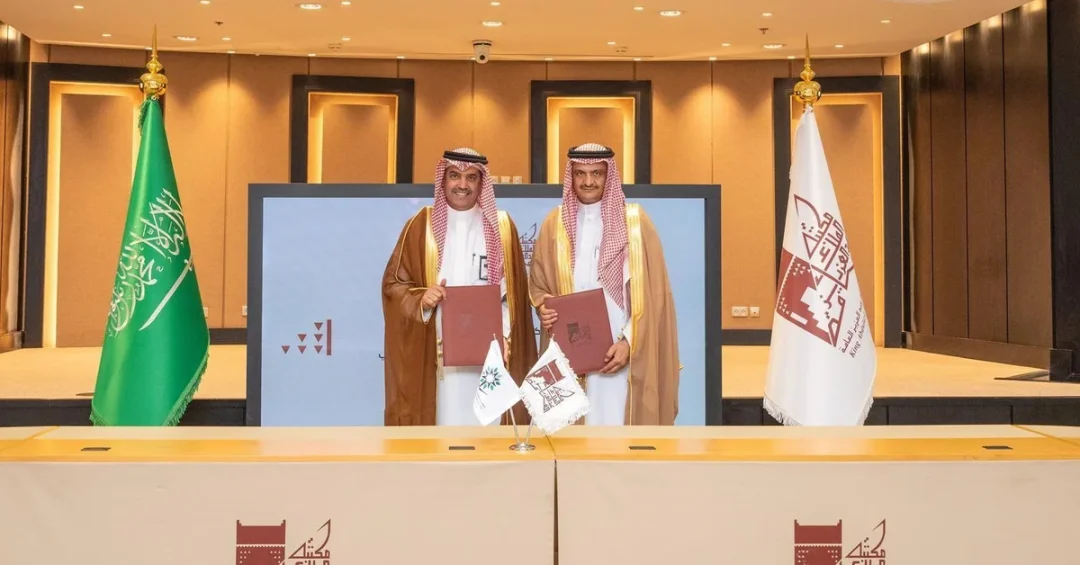
The Technical and Vocational Training Corporation (TVTC) signed a memorandum of understanding (MoU) with the King Abdulaziz Public Library in Riyadh, establishing a strategic partnership to strengthen knowledge and cultural cooperation and to exchange expertise and learning resources. The agreement, announced via the Saudi Press Agency, brings together two of the Kingdom’s most influential institutions in skills development and cultural preservation under a shared framework designed to raise the quality of technical education and broaden access to advanced research materials.
The MoU reflects a wider national effort to connect vocational training with the knowledge economy, ensuring that trainees graduate with both practical competencies and the research literacy that modern employers demand. By opening the library’s collections, digital platforms, and professional networks to TVTC trainees and staff, the partnership promises to enrich the learning environment at training facilities across Saudi Arabia while giving the library’s employees access to specialized development programs. The agreement was signed in Riyadh and covers cooperation in libraries, scientific references, digital resources, cultural events, and cooperative training placements.
Context and Background
Why does a partnership between a technical training corporation and a public library matter so much at this moment in Saudi Arabia’s development? The answer lies in the scale of the Kingdom’s transformation under Vision 2030, which has placed human capability at the center of every economic and social objective. TVTC operates a nationwide network of technical colleges and training institutes that prepare young Saudis for careers in industry, technology, energy, health, tourism, and logistics. The King Abdulaziz Public Library, meanwhile, is one of the country’s leading cultural and research institutions, with extensive print and digital holdings, databases, and a mandate to preserve and disseminate knowledge.
Bringing these two institutions together addresses a practical gap: technical trainees often need scientific references, applied research databases, and graduation-project support that go beyond standard classroom materials. The MoU directly targets that need by making the library’s digital resources and research databases available to support trainees’ graduation projects and applied research. In doing so, it creates a bridge between vocational skill-building and the deeper inquiry that turns competent technicians into innovators and problem-solvers. The partnership also responds to a broader cultural priority: strengthening national identity through seminars, exhibitions, and cultural events organized jointly by the two sides.
The timing is significant. Saudi Arabia is expanding technical and vocational education rapidly, and employers increasingly expect graduates to combine hands-on ability with analytical and research skills. By formalizing cooperation between a training authority and a knowledge institution, the MoU sets an example of the cross-sector integration that Vision 2030 envisions. It also signals that libraries are no longer seen only as quiet reading spaces but as active partners in workforce development and applied learning.
Key Details of the Agreement
What exactly does the memorandum commit the two sides to deliver? The agreement establishes a strategic partnership aimed at enhancing knowledge and cultural cooperation and exchanging expertise and learning resources. Its central operational pillar is the development of libraries at TVTC training facilities, supported by the provision of scientific and technical references. This means trainees will have access to curated collections that match their fields of study, from engineering and information technology to health sciences and applied arts, rather than relying solely on general materials.
A second pillar is digital access. The King Abdulaziz Public Library will make its digital resources and research databases available to TVTC trainees, directly supporting graduation projects and applied research. For students preparing final projects, this access can be transformative, providing peer-reviewed journals, technical standards, statistical datasets, and reference works that strengthen the quality and credibility of their work. The arrangement also encourages a research culture within technical education, where findings are documented, cited, and shared.
A third pillar covers cultural and national engagement. The partnership areas include organizing seminars, exhibitions, and cultural events to enhance national identity. This dimension ensures that technical education is not narrowly instrumental but connected to the Kingdom’s heritage, language, and intellectual traditions. Finally, the MoU opens avenues for field cooperation: TVTC trainees will be offered cooperative training opportunities at the library and its branches, while TVTC will provide specialized training and development programs for the library’s employees. This two-way exchange of placements and programs makes the partnership genuinely reciprocal, with each institution contributing its distinctive strengths.
International and Regional Impact
How will this partnership be viewed beyond Saudi Arabia’s borders? International observers tracking skills development and knowledge economies will see a model in which vocational training and cultural institutions are deliberately linked rather than operating in separate silos. Many countries struggle to connect technical education with research infrastructure; the TVTC and King Abdulaziz Public Library agreement offers a practical template for doing so through shared resources, joint programming, and staff exchanges. For regional neighbors investing in similar reforms, the MoU demonstrates that national libraries can serve as engines of workforce readiness, not just repositories of heritage.
The agreement also reinforces Saudi Arabia’s position as a hub for knowledge exchange. By making advanced databases and scientific references available to a large trainee population, the Kingdom strengthens the pipeline of skilled professionals who can compete in global markets and collaborate on international projects. Cultural programming organized under the partnership, including seminars and exhibitions, adds a soft-power dimension, presenting Saudi Arabia as a society that values both technical excellence and cultural depth. For international partners considering collaboration in education and culture, the MoU signals a mature, integrated ecosystem that is open to joint initiatives.
Economic and Strategic Significance
Why should economists and business leaders pay attention to an agreement centered on libraries and training? Because human capital is the decisive factor in Saudi Arabia’s economic diversification. TVTC graduates enter sectors that Vision 2030 has identified as growth engines, including manufacturing, renewable energy, mining, tourism, digital services, and logistics. If those graduates are better equipped with research skills, access to technical references, and exposure to applied problem-solving, the productivity of the entire economy rises. The MoU is therefore an investment in the quality of the workforce, not merely a cultural gesture.
There is also an institutional efficiency argument. By sharing resources, the two organizations avoid duplication and multiply the reach of existing assets. The library’s collections and databases gain a new, highly motivated user base of trainees and trainers; TVTC’s facilities gain enriched libraries and research support without bearing the full cost of building them independently. Cooperative training placements at the library give trainees real workplace experience in information management, archiving, digitization, and public service, skills that are increasingly valuable in a data-driven economy. Meanwhile, specialized training programs delivered by TVTC to library employees improve the library’s operational capacity, creating a virtuous cycle of capability-building on both sides.
Vision 2030 Alignment
How does this MoU fit into the grand architecture of Vision 2030? The partnership advances the Vision’s human capability development program by improving the quality and relevance of technical education, and it supports the objective of building a knowledge-based economy in which research, innovation, and lifelong learning are embedded in national institutions. It also contributes to quality-of-life goals by enriching the learning environment and expanding cultural participation, and it strengthens national identity through joint cultural events and seminars that connect young trainees with the Kingdom’s intellectual heritage.
Looking ahead, the agreement lays the groundwork for deeper collaboration. As libraries at training facilities develop and digital access expands, future phases could include joint research publications, shared digital platforms, and expanded cooperative training pathways. For TVTC trainees, the message is clear: their education now includes access to some of the nation’s finest knowledge resources. For the King Abdulaziz Public Library, the partnership extends its mission to a new generation of builders and innovators. Together, the two institutions are helping to ensure that Saudi Arabia’s next chapter is written by skilled, curious, and culturally grounded professionals, fully aligned with the ambitions of Vision 2030 and the Kingdom’s growing global role.
20 Questions
Q1. What did TVTC and the King Abdulaziz Public Library sign?
A1. The Technical and Vocational Training Corporation signed a memorandum of understanding with the King Abdulaziz Public Library to establish a strategic partnership for knowledge and cultural cooperation and the exchange of expertise and learning resources.
Q2. Where was the agreement announced?
A2. The agreement was announced in Riyadh through the Saudi Press Agency, which reported the signing and outlined the partnership’s objectives and areas of cooperation between the two institutions.
Q3. What is the main goal of the partnership?
A3. The main goal is to enhance knowledge and cultural cooperation, deepen integration between the two sides, and leverage their shared capabilities to improve technical education and access to learning resources.
Q4. How will TVTC training facilities benefit from the MoU?
A4. Libraries at TVTC training facilities will be developed with support from the King Abdulaziz Public Library, and they will be provided with scientific and technical references suited to trainees’ fields of study.
Q5. What digital resources will be made available to trainees?
A5. The library’s digital resources and research databases will be made available to TVTC trainees to support their graduation projects and applied research across technical and vocational disciplines.
Q6. Why is research database access important for technical trainees?
A6. Research databases provide peer-reviewed journals, technical standards, and datasets that strengthen the quality and credibility of graduation projects, helping trainees develop analytical skills that modern employers value.
Q7. What kinds of events will the partnership organize?
A7. The partnership areas include organizing seminars, exhibitions, and cultural events designed to enhance national identity and connect technical education with the Kingdom’s cultural and intellectual heritage.
Q8. How will TVTC trainees gain field experience through this agreement?
A8. TVTC trainees will be offered cooperative training opportunities at the King Abdulaziz Public Library and its branches, giving them practical workplace experience in information management and related fields.
Q9. What will TVTC provide to the library’s employees?
A9. TVTC will provide specialized training and development programs for the library’s employees, improving their operational and technical capabilities and creating a reciprocal exchange of expertise between the two institutions.
Q10. How does the MoU reflect Vision 2030 goals?
A10. It supports human capability development, the transition to a knowledge-based economy, quality-of-life improvements, and national identity strengthening, all of which are central objectives of Saudi Arabia’s Vision 2030.
Q11. What makes this partnership strategically significant?
A11. It links vocational training with research infrastructure, ensuring that TVTC graduates combine practical skills with research literacy, which raises workforce productivity across sectors prioritized for economic diversification.
Q12. How does the agreement benefit the King Abdulaziz Public Library?
A12. The library gains a new and highly motivated user base of trainees and trainers, extends its mission to a younger generation, and receives specialized training programs for its employees from TVTC.
Q13. Does the MoU include scientific and technical references?
A13. Yes. The agreement explicitly provides for scientific and technical references to be made available at training facility libraries, supporting both coursework and applied research by trainees.
Q14. How will the partnership support graduation projects?
A14. Trainees will be able to use the library’s digital resources and research databases when preparing graduation projects, improving the depth, accuracy, and documentation of their final work.
Q15. What does the agreement say about national identity?
A15. It states that partnership areas include seminars, exhibitions, and cultural events aimed at enhancing national identity, ensuring technical education remains connected to Saudi Arabia’s cultural traditions.
Q16. Is the cooperation described as one-way or two-way?
A16. It is two-way. TVTC receives library resources and placements for its trainees, while the library receives specialized training and development programs for its employees from TVTC.
Q17. How might international observers view this agreement?
A17. They may see it as a practical model for linking vocational training with knowledge institutions, demonstrating how national libraries can contribute directly to workforce readiness and applied research.
Q18. What economic sectors could benefit from better-trained TVTC graduates?
A18. Manufacturing, renewable energy, mining, tourism, digital services, logistics, and health are among the sectors that stand to gain from graduates with stronger research and problem-solving capabilities.
Q19. What could future phases of the partnership include?
A19. Future phases could include joint research publications, shared digital platforms, expanded cooperative training pathways, and broader cultural programming that deepens collaboration between the two institutions.
Q20. What is the overall message of this partnership for Saudi youth?
A20. The message is that technical education now includes access to the nation’s finest knowledge resources, encouraging young Saudis to combine practical skills, curiosity, and cultural grounding as they contribute to Vision 2030.
Reader Feedback
We value your thoughts. Please share your feedback on this article.
Your feedback helps us improve our coverage.
Related articles
 Makkah Marks International Literacy Day with Adult Education Push
 King Saud University Partners with CIPD to Boost HR Development
 Saudi Cultural Mission Opens Global Careers for Students
 GOSI Hackathon: Young Saudis Design Life After Retirement Solutions
 Jazan University Signs MoU with Austria’s IMC Krems University
 Riyadh Education Department Marks International Literacy Day 2026