


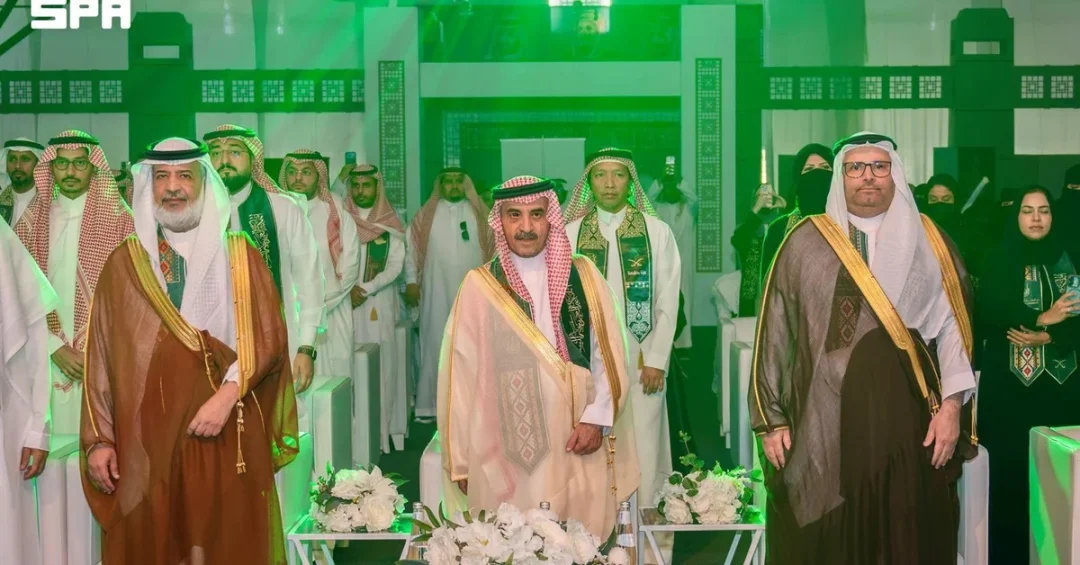
Umm Al-Qura University in Makkah organized a series of educational, cultural, and student-focused events to celebrate Saudi National Day, according to an announcement carried by the Saudi Press Agency (SPA). The programs, held across the university’s colleges and deanships, were designed to strengthen a sense of belonging to the nation and to deepen pride in national identity among faculty members, administrative staff, and students. The celebration reflects the university’s longstanding role as one of the Kingdom’s most prominent academic institutions, located in the holy city of Makkah, and its commitment to connecting higher education with the national story of Saudi Arabia.
What does a national day celebration inside a university tell us about how the Kingdom is nurturing the next generation of citizens and professionals? Umm Al-Qura University’s program combined academic inquiry with civic pride, featuring an educational session on National Day that covered the nation’s history, security achievements, and urban development, presented by the King Salman bin Abdulaziz Chair for Makkah Historical Studies. A separate session delivered by the College of Judicial Studies and Regulations examined Saudi laws from a historical perspective, while the Deanship of Student Affairs organized competitions and student activities. Together, these components illustrate how Saudi National Day is observed not merely as a ceremonial occasion but as an opportunity for learning, reflection, and community participation.
Context and Background
Why has Saudi National Day become such a significant moment on the Kingdom’s annual calendar? Observed every year on September 23, the occasion commemorates the unification of the Kingdom of Saudi Arabia by the late King Abdulaziz Al Saud in 1932. Over the decades, it has evolved from a formal state commemoration into a nationwide celebration that engages citizens, residents, government ministries, private companies, and educational institutions. Universities in particular have become important venues for National Day programming, using the occasion to connect students with the country’s heritage while also showcasing the modernization and development that have transformed Saudi society, especially in recent years.
Umm Al-Qura University occupies a distinctive place in this landscape. Established in Makkah and named after the holy city, the institution has historically served as a center for Islamic scholarship, legal studies, and the sciences. Its King Salman bin Abdulaziz Chair for Makkah Historical Studies reflects a broader institutional commitment to documenting and preserving the history of Makkah and the wider Kingdom. By hosting a National Day session through this chair, the university linked contemporary celebration with rigorous historical research, offering faculty, staff, and students a substantive understanding of how Saudi Arabia’s security, urban growth, and legal frameworks developed over time.
The involvement of the College of Judicial Studies and Regulations added another layer of depth. Saudi law has undergone significant development since unification, and examining that evolution from a historical perspective helps students in judicial and regulatory disciplines appreciate the foundations of the Kingdom’s legal system. Meanwhile, the Deanship of Student Affairs ensured that the celebrations were not confined to lectures and seminars. Competitions and student activities gave younger participants an active role in the occasion, turning commemoration into participation. This combination of academic sessions and student-led programming is consistent with how Saudi universities have increasingly approached national occasions: as platforms for both education and engagement.
Key Details
What exactly did the Umm Al-Qura University program include, and why do these components matter? According to the Saudi Press Agency, the events comprised several distinct elements. The first was an educational session about National Day covering three broad themes: history, security, and urban development. This session was presented by the King Salman bin Abdulaziz Chair for Makkah Historical Studies, an academic body whose work focuses on the historical record of Makkah and its surroundings. By framing National Day through these three lenses, the session encouraged participants to consider the Kingdom’s journey in a structured and informed way, rather than treating the occasion as purely symbolic.
The second major element was a session organized by the College of Judicial Studies and Regulations, which examined Saudi laws from a historical perspective. This is a meaningful choice of topic. Legal education in the Kingdom places strong emphasis on understanding how regulations have developed in response to the country’s changing needs, and a historical review allows students to see the continuity and adaptation that characterize Saudi governance. For a college dedicated to judicial studies and regulations, National Day provides a natural opportunity to reflect on the rule of law as part of the national story.
The third element came from the Deanship of Student Affairs, which organized competitions and student activities. These programs gave students a chance to express their national pride through creative and competitive formats, reinforcing the social dimension of the celebration. Taken together, the three components show a deliberate effort to involve the entire university community: researchers and faculty through academic sessions, students through competitions, and staff through participation in the wider program. The events were reported by the Saudi Press Agency, the Kingdom’s official news agency, underscoring the institutional and national significance attached to the occasion.
International and Regional Impact
How do celebrations like these shape international perceptions of Saudi Arabia? For observers outside the Kingdom, National Day programming at a university such as Umm Al-Qura offers a window into how Saudi institutions balance tradition with modernization. The holy city of Makkah is known globally as the destination of the Hajj and Umrah pilgrimages, and the university based there carries a special responsibility as a center of learning that serves students from Saudi Arabia and many other countries. When the university marks National Day with sessions on history, law, and urban development, it signals that Saudi higher education is engaged with both its heritage and the contemporary challenges of a rapidly changing nation.
Regionally, the event reflects a broader pattern across the Gulf and the wider Middle East, where national days have become occasions for universities to reinforce civic identity. Yet Saudi Arabia’s approach is distinctive in scale and ambition. The Kingdom’s universities are increasingly integrated into national development strategies, producing graduates who contribute to sectors ranging from law and public administration to technology and tourism. A National Day program that includes a legal-history session and a historical studies chair is not isolated from these priorities; it is part of the intellectual infrastructure that supports them. In this sense, the Umm Al-Qura University events contribute quietly but meaningfully to the Kingdom’s international image as a country that values education, heritage, and orderly development.
Economic and Strategic Significance
Why should economic observers pay attention to a university celebration? The answer lies in the relationship between education, national identity, and long-term development. Saudi Arabia’s Vision 2030 places human capital at the center of its economic transformation, and universities are key institutions for building the skills, knowledge, and social cohesion that sustained growth requires. Events that strengthen belonging and pride among students are not merely cultural exercises; they help cultivate a workforce and citizenry that is motivated, informed, and connected to national objectives. Umm Al-Qura University’s programs, by involving faculty, staff, and students alike, reinforce this connection at a grassroots level.
There is also a strategic dimension tied to Makkah itself. The city hosts millions of pilgrims annually, and its institutions play a role in the Kingdom’s broader efforts to enhance the pilgrimage experience, expand religious tourism, and develop the local economy in line with national plans. A university that studies Makkah’s history and trains specialists in law and regulation supports these efforts indirectly but importantly. The National Day sessions on urban development and legal history can be seen as part of a wider intellectual ecosystem that informs policy, preserves heritage, and prepares professionals for the tasks ahead. For a Kingdom pursuing economic diversification and global engagement, such academic programming is a small but telling indicator of institutional seriousness.
Vision 2030 Alignment
How does a National Day celebration at Umm Al-Qura University connect to Saudi Arabia’s long-term vision? Vision 2030 emphasizes the importance of a vibrant society, a thriving economy, and an ambitious nation. Educational institutions are central to all three pillars. By organizing sessions on national history, security, and urban development, the university contributes to a vibrant society that understands and values its own story. By engaging students in competitions and activities, it supports the development of an ambitious generation. And by linking legal and historical studies to contemporary national priorities, it helps build the knowledge base for a thriving economy.
The involvement of the King Salman bin Abdulaziz Chair for Makkah Historical Studies and the College of Judicial Studies and Regulations also reflects the Vision 2030 goal of strengthening institutional excellence and preserving cultural heritage. These are not abstract ambitions; they are expressed in concrete programs that bring together researchers, students, and administrators around shared national occasions. As Saudi Arabia continues its transformation, universities like Umm Al-Qura will remain essential partners in the national project, nurturing pride, promoting learning, and preparing citizens to contribute to the Kingdom’s future. The National Day events in Makkah stand as a modest but meaningful example of how the country’s educational institutions translate national pride into purposeful activity, year after year.
20 Questions
Q1. What events did Umm Al-Qura University organize to celebrate Saudi National Day?
A1. The university organized educational sessions, including one on National Day covering history, security, and urban development, another on Saudi laws from a historical perspective, and competitions and student activities through the Deanship of Student Affairs.
Q2. Where is Umm Al-Qura University located?
A2. Umm Al-Qura University is located in Makkah, the holy city of Saudi Arabia, which gives it a distinctive role in Islamic scholarship, legal studies, and historical research related to the Kingdom.
Q3. Which body presented the educational session on National Day?
A3. The session was presented by the King Salman bin Abdulaziz Chair for Makkah Historical Studies, an academic chair dedicated to documenting and studying the history of Makkah and the surrounding region.
Q4. What topics did the National Day educational session cover?
A4. The session covered three main themes: the history of the Kingdom, its security achievements, and its urban development, offering participants a structured understanding of Saudi Arabia’s national journey.
Q5. Which college examined Saudi laws from a historical perspective?
A5. The College of Judicial Studies and Regulations presented a session examining Saudi laws from a historical perspective, helping students understand how the Kingdom’s legal framework has developed over time.
Q6. What role did the Deanship of Student Affairs play in the celebrations?
A6. The Deanship of Student Affairs organized competitions and student activities, giving students an active and creative role in the National Day celebrations and reinforcing their sense of participation.
Q7. What was the main aim of the university’s National Day events?
A7. The events aimed to strengthen a sense of belonging to the nation and pride in national identity among the university’s faculty, staff, and students, according to the Saudi Press Agency.
Q8. When is Saudi National Day observed each year?
A8. Saudi National Day is observed every year on September 23, commemorating the unification of the Kingdom of Saudi Arabia by the late King Abdulaziz Al Saud in 1932.
Q9. Which official agency reported the Umm Al-Qura University events?
A9. The events were reported by the Saudi Press Agency (SPA), the Kingdom’s official news agency, which provides authoritative coverage of government, institutional, and national occasions.
Q10. Why is Makkah significant for Umm Al-Qura University’s mission?
A10. Makkah is the holiest city in Islam and the destination of Hajj and Umrah pilgrimages. The university’s location there shapes its academic focus on Islamic studies, history, and legal scholarship.
Q11. How do university celebrations support national identity?
A11. University celebrations bring together students, faculty, and staff around shared national occasions, reinforcing civic pride, historical awareness, and a sense of belonging to the Kingdom and its development journey.
Q12. What is the King Salman bin Abdulaziz Chair for Makkah Historical Studies?
A12. It is an academic chair at Umm Al-Qura University dedicated to researching and documenting the history of Makkah and its region, contributing to the preservation of Saudi Arabia’s cultural heritage.
Q13. How does the College of Judicial Studies and Regulations contribute to legal education?
A13. The college trains students in judicial and regulatory disciplines, examining the development of Saudi law and preparing graduates to serve in the Kingdom’s legal and administrative institutions.
Q14. What kinds of student activities were part of the celebration?
A14. The Deanship of Student Affairs organized competitions and student activities, which allowed students to express national pride through creative and competitive formats as part of the wider National Day program.
Q15. How does the event reflect Saudi Arabia’s Vision 2030?
A15. Vision 2030 emphasizes a vibrant society, a thriving economy, and an ambitious nation. Educational events that build identity and knowledge support all three pillars at the grassroots level.
Q16. Why is National Day important for Saudi universities?
A16. National Day gives universities an opportunity to connect students with the Kingdom’s heritage while showcasing modernization, making the occasion both educational and celebratory for the academic community.
Q17. What does the focus on urban development suggest about the session’s content?
A17. It suggests the session examined how Saudi cities have grown and modernized since unification, linking historical progress to contemporary development priorities across the Kingdom.
Q18. How does Umm Al-Qura University serve international students?
A18. The university, located in Makkah, attracts students from many countries, particularly in Islamic and legal studies, contributing to Saudi Arabia’s role as a global center of learning and scholarship.
Q19. What is the significance of the Saudi Press Agency reporting these events?
A19. SPA coverage underscores the institutional and national importance of the occasion, showing that the university’s National Day programming is recognized as part of the Kingdom’s official commemorative activities.
Q20. What message do these events send about Saudi Arabia’s future?
A20. They show a Kingdom that values its history while investing in education and youth, aligning academic life with national goals and preparing the next generation to contribute to Saudi Arabia’s continued progress.
Reader Feedback
We value your thoughts. Please share your feedback on this article.
Your feedback helps us improve our coverage.
Related articles
 Madinah Concludes Swimming Literacy Project with 300 Students
 AlUla Program Trains 50 Youth in Public Speaking
 Najran Schools Adopt Winter Schedule Starting Sunday
 Najran University Climbs Four Places in QS Arab Rankings 2027
 Saudi Arabia Sets February 2027 Deadline for Worker Housing
 ETEC to Hold Third National Forum for School Excellence in Riyadh