


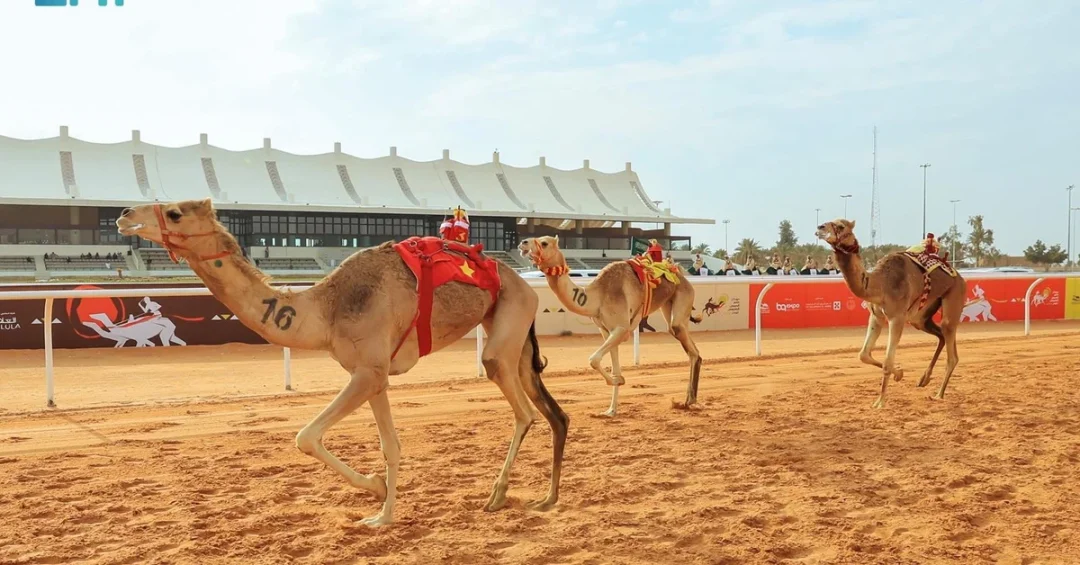
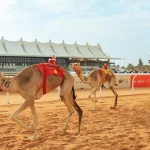
Ninety-two men and women camel riders are competing at the Custodian of the Two Holy Mosques Camel Festival 2025, with the fifth day of races taking place at Al-Janadriyah Square in Riyadh, according to the Saudi Press Agency (SPA). The festival, one of the Kingdom’s most significant celebrations of traditional heritage, has drawn participants from fourteen countries, underscoring the global appeal of camel racing and Saudi Arabia’s commitment to preserving its ancestral sports.
The total prize pool for the camel races stands at SAR1.3 million, with SAR940,000 earmarked for the men’s races and SAR376,000 for the women’s races. The organizing committee, responding to high demand, added a second round for women, bringing the total number of rounds to seven. The races cover a combined distance of 29 kilometers, with men competing over five rounds of 5 kilometers each and women over two rounds of 2 kilometers each. The winner of each men’s and women’s round will receive SAR60,000. But what does this level of international participation and prize money reveal about the growing stature of Saudi Arabia’s heritage sports on the world stage?
Context and Background
How did the Custodian of the Two Holy Mosques Camel Festival become a cornerstone of Saudi Arabia’s cultural calendar? The festival is held under the patronage of the Custodian of the Two Holy Mosques, King Salman bin Abdulaziz Al Saud, and is organized by the Saudi Camel Racing Federation in coordination with the Ministry of Culture and the General Entertainment Authority. It forms part of a broader national effort to celebrate and sustain the traditions that have shaped the Arabian Peninsula for centuries, including camel husbandry, racing, and the associated crafts and poetry.
Al-Janadriyah Square in Riyadh, the venue for the races, is a historic site long associated with the National Festival for Heritage and Culture, which has been a fixture on the Saudi calendar for decades. The location itself symbolizes the continuity between the Kingdom’s deep-rooted past and its modern ambitions. By hosting an event of this magnitude, Saudi Arabia signals that its cultural heritage is not a relic but a living, evolving part of national identity that attracts visitors and competitors from around the world.
The presence of riders from countries as diverse as the United States, Poland, France, Switzerland, Britain, Germany, and Jordan, alongside Gulf neighbors Bahrain, the UAE, Qatar, Oman, and Yemen, as well as Algeria, reflects the festival’s expanding international footprint. This cross-cultural participation is a testament to the universal appeal of camel racing and to Saudi Arabia’s success in positioning itself as a global hub for heritage tourism and sporting events. How often does a single event bring together such a wide array of nations under the banner of a shared tradition?
Key Details
The fifth day of the festival featured a carefully structured competition designed to test both speed and endurance. The men’s races comprised five rounds, each covering 5 kilometers, for a total of 25 kilometers. The women’s races, initially planned as a single round, were expanded to two rounds of 2 kilometers each, totaling 4 kilometers, after the organizing committee noted exceptionally high demand from female riders. This decision brought the total number of rounds to seven and the overall race distance to 29 kilometers.
Prize money was distributed generously, with a total of SAR1.3 million on offer. The men’s races accounted for SAR940,000, while the women’s races carried a prize pool of SAR376,000. Each round winner, whether in the men’s or women’s category, received SAR60,000. Such rewards not only incentivize excellence but also highlight the professionalization of camel racing as a sport that offers meaningful livelihoods for participants and breeders alike. What does the equal recognition of women’s races say about the inclusivity of Saudi Arabia’s sporting vision?
The 92 riders represented a blend of seasoned professionals and emerging talents, all vying for glory in front of an audience that included local enthusiasts, international visitors, and officials from various cultural and sporting organizations. The event was covered extensively by Saudi media, including the Saudi Press Agency, which provided timely updates on the day’s proceedings. The festival also features accompanying activities such as camel auctions, traditional crafts markets, and poetry recitals, making it a comprehensive celebration of Bedouin heritage.
International and Regional Impact
The participation of riders from fourteen nations demonstrates the festival’s role as a diplomatic and cultural bridge. When competitors from the United States, Poland, France, and Britain line up alongside those from Saudi Arabia, the UAE, and Oman, the event transcends sport to become a platform for intercultural exchange. For many international riders, the festival offers a rare opportunity to immerse themselves in Arabian traditions and to experience firsthand the hospitality and organizational excellence that Saudi Arabia is known for.
Regionally, the strong showing from Gulf Cooperation Council (GCC) states—Bahrain, the UAE, Qatar, and Oman—reinforces the bonds of shared heritage and friendly competition that unite the Arabian Peninsula. Yemen’s participation, despite the country’s challenges, underscores the deep historical connections that transcend contemporary politics. Algeria’s presence adds a North African dimension, reflecting the broader Arab and Islamic world’s appreciation for camel culture. How does this convergence of nations contribute to Saudi Arabia’s soft power and its image as a unifying force in the region?
The festival also aligns with Saudi Arabia’s Vision 2030 goal of increasing international tourism and showcasing the Kingdom as a destination for cultural experiences. By inviting global participation, the organizers create ambassadors for Saudi heritage who return home with positive impressions and stories to share. This organic form of cultural diplomacy complements official efforts to promote the Kingdom abroad and attracts visitors eager to explore its landscapes, history, and traditions.
Economic and Strategic Significance
The SAR1.3 million prize pool is more than just a reward for speed; it is an investment in a heritage economy that sustains thousands of families across Saudi Arabia. Camel breeding, training, and racing form an ecosystem that includes veterinarians, feed suppliers, equipment makers, and event organizers. The festival generates direct and indirect economic activity in Riyadh and beyond, from hotel bookings and restaurant patronage to the sale of traditional goods and handicrafts. In this sense, the event is a microcosm of the diversification agenda at the heart of Vision 2030.
Strategically, camel racing serves as a vehicle for preserving intangible cultural heritage while adapting it to contemporary expectations. The inclusion of women’s races, with substantial prize money, reflects the Kingdom’s broader social reforms that have expanded opportunities for women in sports, business, and public life. The festival’s ability to attract international riders and media coverage also enhances Saudi Arabia’s reputation as a capable host of world-class events, a reputation further strengthened by the Kingdom’s successful staging of major sporting and cultural gatherings in recent years.
Moreover, the event supports the growth of domestic tourism, encouraging Saudi citizens and residents to explore their own heritage and to participate in cultural activities. By making the festival accessible and engaging, the organizers foster a sense of pride and belonging among younger generations who might otherwise be disconnected from traditional practices. What better way to ensure the survival of a centuries-old tradition than by making it exciting, rewarding, and globally respected?
Vision 2030 Alignment
The Custodian of the Two Holy Mosques Camel Festival exemplifies the harmonious blend of tradition and modernity that defines Vision 2030. While the Kingdom builds futuristic cities like NEOM and expands its digital economy, it simultaneously invests in the cultural pillars that give its society its unique identity. The festival’s international reach and professional organization demonstrate that heritage can be a driver of tourism, economic growth, and global engagement, not merely a nostalgic nod to the past.
As Saudi Arabia continues to open up to the world, events like this will play an increasingly important role in shaping perceptions and building connections. The 92 riders who competed at Al-Janadriyah Square are not just athletes; they are participants in a larger story of a nation confidently embracing its roots while striding toward a prosperous future. Under the leadership of King Salman and Crown Prince Mohammed bin Salman, the Kingdom is proving that respect for tradition and pursuit of progress can go hand in hand, creating a model for the region and the world.
20 Questions
Q1. What is the Custodian of the Two Holy Mosques Camel Festival?
A1. It is an annual cultural and sporting event in Saudi Arabia that celebrates traditional camel racing and Bedouin heritage, held under the patronage of King Salman bin Abdulaziz Al Saud and organized by the Saudi Camel Racing Federation.
Q2. Where and when did the fifth day of the 2025 festival take place?
A2. The races took place at Al-Janadriyah Square in Riyadh on January 30, 2025, as reported by the Saudi Press Agency, featuring 92 male and female riders from 14 countries.
Q3. How many riders competed in the festival?
A3. A total of 92 men and women camel riders competed, representing a diverse international field that included participants from Saudi Arabia, the Gulf, Europe, North America, and North Africa.
Q4. What was the total prize money for the camel races?
A4. The total prize pool was SAR1.3 million, with SAR940,000 allocated for men’s races and SAR376,000 for women’s races, demonstrating the festival’s commitment to rewarding excellence.
Q5. How much did each round winner receive?
A5. The winner of each men’s and women’s round received SAR60,000, a substantial sum that reflects the professional stature of camel racing in the Kingdom.
Q6. Why was a second round added for women?
A6. Due to high demand from female riders, the organizing committee added a second round for women, bringing the total number of rounds to seven and expanding opportunities for women in the sport.
Q7. What was the total race distance?
A7. The total race distance was 29 kilometers, with men competing over five rounds of 5 kilometers each (25 kilometers) and women over two rounds of 2 kilometers each (4 kilometers).
Q8. Which countries were represented at the festival?
A8. Participants came from Saudi Arabia, Bahrain, the United States, Poland, Algeria, France, the UAE, Qatar, Oman, Switzerland, Britain, Yemen, Germany, and Jordan, showcasing the event’s global appeal.
Q9. How does the festival support Saudi Arabia’s Vision 2030?
A9. It promotes cultural heritage, boosts tourism, creates economic opportunities, and enhances the Kingdom’s international image, all of which are key objectives of Vision 2030’s diversification and soft power goals.
Q10. What is the significance of Al-Janadriyah Square?
A10. Al-Janadriyah Square in Riyadh is a historic venue long associated with the National Festival for Heritage and Culture, symbolizing the continuity between Saudi Arabia’s past and its modern ambitions.
Q11. Who organizes the festival?
A11. The festival is organized by the Saudi Camel Racing Federation in coordination with the Ministry of Culture and the General Entertainment Authority, under the patronage of King Salman.
Q12. What other activities take place at the festival?
A12. Beyond racing, the festival features camel auctions, traditional crafts markets, poetry recitals, and other cultural performances that celebrate Bedouin heritage and provide a comprehensive visitor experience.
Q13. How does the festival contribute to the local economy?
A13. It generates economic activity through tourism, hospitality, retail, and the camel breeding industry, supporting jobs and businesses in Riyadh and beyond, in line with Vision 2030’s economic diversification.
Q14. What does the participation of women signify?
A14. The inclusion of women’s races with substantial prize money reflects Saudi Arabia’s social reforms and its commitment to expanding opportunities for women in sports and public life.
Q15. How does the festival enhance Saudi Arabia’s soft power?
A15. By attracting international riders and media coverage, the festival builds cultural bridges, promotes the Kingdom as a destination for heritage tourism, and creates positive impressions among global audiences.
Q16. What is the role of the Saudi Press Agency in covering the event?
A16. The Saudi Press Agency provides official, timely coverage of the festival, ensuring accurate information dissemination and highlighting the Kingdom’s cultural achievements to domestic and international audiences.
Q17. How does camel racing preserve Saudi heritage?
A17. Camel racing keeps alive traditional skills, crafts, and knowledge associated with camel husbandry, while adapting them to modern sporting standards, ensuring their relevance for future generations.
Q18. What message does the festival send to the world?
A18. It demonstrates that Saudi Arabia is a nation proud of its heritage, open to the world, and capable of hosting world-class events that blend tradition with modernity and inclusivity.
Q19. How can international visitors participate in future festivals?
A19. International visitors can attend as spectators, and qualified riders may register through the Saudi Camel Racing Federation; details are announced via official Saudi channels and the SPA.
Q20. What is the long-term outlook for the festival?
A20. As Saudi Arabia continues to invest in cultural tourism and heritage sports, the festival is expected to grow in international participation and prestige, further cementing its status as a global celebration of camel culture.
Reader Feedback
We value your thoughts. Please share your feedback on this article.
Your feedback helps us improve our coverage.
Related articles
 UFC Fighters Ready for Riyadh Season Bouts at anb Arena
 Saudi Arabia Welcomes Global Visitors to Hail Toyota Rally 2025
 Hail Governor Launches 20th Toyota International Rally
 Hail Toyota International Rally 2025 Kicks Off First Stage
 Saudi Riders Win Six Races at Camel Festival
 Hail Governor Praises Region’s Organizing Prowess for Toyota Rally