


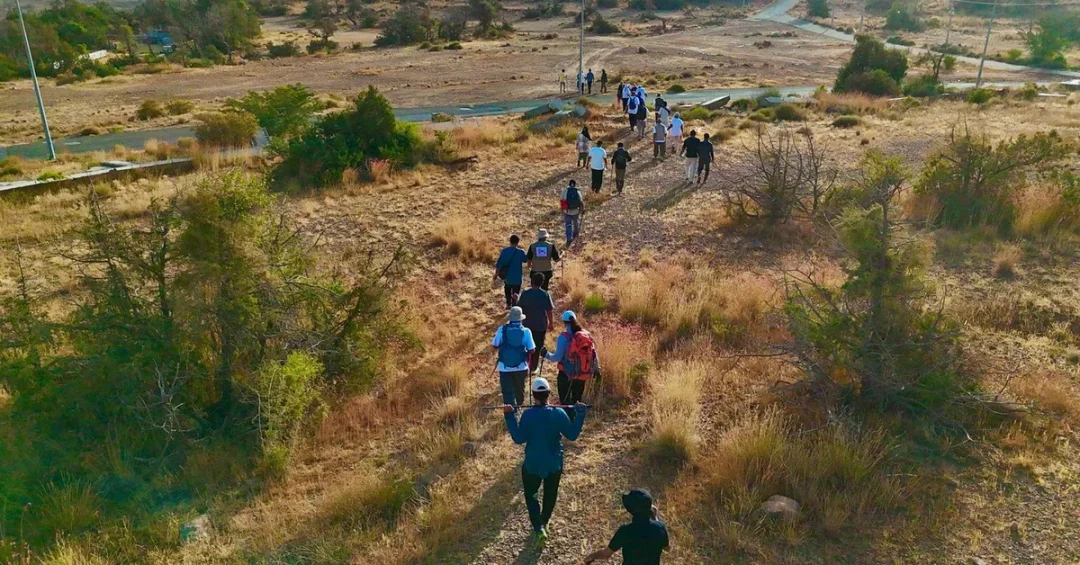
A three-day hiking event supervised by the Ministry of Sport branch in Al-Baha Region concluded on July 26, 2026, drawing more than 100 participants for a programme of workshops, awareness lectures, and a five-kilometre mountain trek through the region’s highland terrain, according to the Saudi Press Agency. The event, which combined practical instruction with an organised outdoor challenge, reflects a deliberate national push to widen community participation in sport and to encourage regular physical activity among residents of all ages. For a region known for its cool climate, forested slopes, and dramatic escarpments, the gathering also signalled how outdoor recreation is being positioned as both a public health priority and a visitor-facing strength.
Why does a single community hike in the southern highlands matter beyond its own participants? Because it sits at the intersection of two of the Kingdom’s most consequential national efforts: the drive to raise rates of physical activity under the Quality of Life Program, and the ambition to develop regional tourism destinations that can draw visitors from across Saudi Arabia and abroad. The event was not an isolated outing but one element of a structured calendar of community sport overseen by the Ministry of Sport, delivered through its regional branches, and aligned with the objectives of Saudi Vision 2030. That alignment is central to understanding the significance of the gathering.
Context and Background
How did community hiking come to occupy a formal place in Saudi Arabia’s sporting calendar? The answer lies in the institutional architecture built over recent years under Vision 2030. The Ministry of Sport, established as a standalone ministry in 2020, has been tasked with expanding the base of sports participation, professionalising the sector, and ensuring that opportunities reach every region rather than concentrating in the largest cities. Its regional branch offices, including the branch in Al-Baha, act as the delivery mechanism for that mandate, organising events, coordinating with local authorities, and tailoring activities to the geography and culture of each area.
Al-Baha Region, situated in the southwest of the Kingdom, offers conditions unusually well suited to walking and hiking. Its mountainous terrain, juniper forests, and elevations that bring cooler temperatures than much of the country make it a natural setting for outdoor activity. The region has accordingly featured in national tourism planning, with its heritage villages, agricultural terraces, and scenic routes highlighted as assets. The Ministry of Sport branch in Al-Baha has therefore been able to design an event that is simultaneously a sports initiative, a public health intervention, and a showcase for the region’s natural environment, drawing on local strengths rather than importing a generic format.
What does the Ministry of Sport hope to achieve through events of this kind? Bandar Al-Ghamdi, Director of the Ministry of Sport branch in Al-Baha, said the event forms part of the ministry’s efforts to expand community participation in sports, encourage regular physical activity, and promote healthy lifestyles, in line with the goals of Saudi Vision 2030. His statement places the hiking event within a broader policy framework in which sport is treated not merely as competition but as a routine component of daily life, accessible to amateurs and enthusiasts alike. That framing has guided the design of the programme from the outset.
Key Details of the Al-Baha Hiking Event
What actually took place over the three days? The event was structured as a progressive introduction to hiking rather than a single walk. It opened with workshops and awareness lectures covering the fundamentals of the activity, giving participants grounding in essential knowledge before they took to the trails. The curriculum addressed matters such as preparation and equipment, safe movement over uneven ground, navigation and route awareness, and the physical conditioning required for sustained walking in mountain terrain. By placing education before exertion, the organisers ensured that newcomers could take part with confidence while experienced hikers could refresh their knowledge.
The programme culminated in a five-kilometre mountain trek, which attracted strong participation from hiking enthusiasts and outdoor recreation lovers. Five kilometres may appear modest against the distances covered by seasoned mountaineers, but as a community format it is deliberately inclusive: long enough to be a genuine physical challenge, short enough to be completed by participants of varying fitness levels. The route through Al-Baha’s highland landscape gave participants direct contact with the region’s forests, rocky slopes, and panoramic viewpoints, turning the trek into an experience of place as well as an exercise session. More than 100 people took part across the three days.
Who were the participants? The event drew a mix of local residents and outdoor recreation enthusiasts, reflecting the Ministry of Sport’s stated aim of broadening the demographic base of sport. Hiking has a low barrier to entry compared with many organised sports, requiring no specialist facility and relatively modest equipment, which makes it a practical vehicle for reaching people who might not join a football club or a gym. The presence of trained organisers and structured guidance further reduces the intimidation factor for first-timers. In this sense, the Al-Baha event functioned as an on-ramp to lifelong physical activity rather than a one-off spectacle.
International and Regional Impact
How does a regional hiking event connect to Saudi Arabia’s wider international profile? The Kingdom has positioned itself as a host of major global sporting occasions, from football and motorsport to equestrian and endurance events, and those high-profile fixtures attract the bulk of international attention. Community-level initiatives such as the Al-Baha hike serve a complementary purpose: they demonstrate that the sporting transformation is not confined to elite venues and superstar athletes but reaches ordinary citizens in every province. That breadth is part of the credibility of the national sports strategy, and it is noticed by international observers assessing the depth of social change in the Kingdom.
Regionally, the event reinforces Al-Baha’s emerging identity as a destination for nature-based recreation. Visitors from other parts of Saudi Arabia and from neighbouring Gulf states are increasingly interested in cooler-climate escapes, walking routes, and rural heritage, and the region’s geography positions it well to serve that demand. By normalising organised hiking and building a local community of practitioners, the Ministry of Sport branch is helping to create the human infrastructure, including experienced participants, volunteer know-how, and word-of-mouth reputation, on which a sustainable outdoor tourism offer depends. Regional tourism growth and community sport are thus mutually reinforcing rather than separate agendas.
Economic and Strategic Significance
What economic logic underpins investment in community hiking? The direct costs of a three-day event are modest, but the strategic returns are considerable. A population that exercises regularly is a population with lower rates of chronic disease, which in turn reduces long-term pressure on the healthcare system and supports workforce productivity. The Quality of Life Program, one of the Vision 2030 realisation programmes, has set targets for increasing the proportion of Saudis who exercise regularly, and community events are among the most cost-effective instruments for moving those numbers. Each participant who adopts walking or hiking as a habit represents a durable public health gain.
There is also an enterprise dimension. As hiking grows in popularity, demand rises for guided tours, equipment retail, transport, accommodation, and food services in host regions. Small businesses in Al-Baha, from guesthouses to local guides, stand to benefit from a steady flow of outdoor recreation visitors. The event format, with its workshops and lectures, also builds skills that can be commercialised: participants who learn navigation, safety, and group leadership are potential future guides and organisers. In this way, a community sports initiative contributes to local economic diversification, one of the central aims of Vision 2030, by nurturing a service sector rooted in the region’s natural assets.
Vision 2030 Alignment
How precisely does the Al-Baha hike advance Vision 2030? The Ministry of Sport’s mandate sits within a national framework that treats sport as a driver of health, social cohesion, and economic opportunity. The Quality of Life Program seeks to increase participation in physical activity, improve living standards, and expand cultural and recreational options for citizens and residents. The event’s combination of education, physical challenge, and community participation maps directly onto those objectives, while its location in Al-Baha supports the parallel goal of balanced regional development, ensuring that the benefits of national transformation are felt beyond the major metropolitan centres.
The hiking event also illustrates the method by which Vision 2030 is implemented in practice: national policy translated into regional action, delivered by named institutions such as the Ministry of Sport branch in Al-Baha, led by officials such as Bandar Al-Ghamdi, and measured in the participation of ordinary people. As the Kingdom continues to expand its sporting and recreational infrastructure, community initiatives of this kind will remain essential to turning strategic targets into lived experience. The conclusion of the Al-Baha event is therefore not an endpoint but another step in a long-term effort to make active, healthy living a defining feature of Saudi life and to share the country’s natural heritage with a growing audience of visitors.
20 Questions
Q1. What was the Al-Baha hiking event?
A1. It was a three-day hiking event supervised by the Ministry of Sport branch in Al-Baha Region, featuring workshops, awareness lectures, and a five-kilometre mountain trek, according to the Saudi Press Agency.
Q2. When did the event conclude?
A2. The event concluded on July 26, 2026, after three days of activities in Al-Baha Region, as reported by the Saudi Press Agency.
Q3. How many people participated?
A3. More than 100 participants took part in the event, including hiking enthusiasts and outdoor recreation lovers from the local community and beyond.
Q4. What activities were included?
A4. The programme included workshops and awareness lectures on the fundamentals of hiking, followed by a five-kilometre mountain trek through the region’s highland terrain.
Q5. Who commented on the event?
A5. Bandar Al-Ghamdi, Director of the Ministry of Sport branch in Al-Baha, said the event supports community participation in sports and healthy lifestyles in line with Saudi Vision 2030.
Q6. Which authority supervised the event?
A6. The event was organised under the supervision of the Ministry of Sport branch in Al-Baha Region, the ministry’s regional delivery arm for community sport programmes.
Q7. Why is Al-Baha suited to hiking?
A7. Al-Baha’s mountainous terrain, juniper forests, and cooler highland climate make it one of the Kingdom’s most suitable regions for walking and hiking activities.
Q8. What is the purpose of the workshops?
A8. The workshops and lectures teach hiking fundamentals such as preparation, safety, navigation, and conditioning, helping newcomers participate confidently and experienced hikers refresh their knowledge.
Q9. How does the event support public health?
A9. By encouraging regular physical activity, the event supports the Quality of Life Program’s goals of improving health outcomes and reducing the long-term burden of chronic disease.
Q10. Is hiking accessible to beginners?
A10. Yes. Hiking requires no specialist facility and relatively modest equipment, and the event’s structured guidance and five-kilometre route were designed to be inclusive for participants of varying fitness levels.
Q11. How does the event relate to Vision 2030?
A11. It advances Vision 2030 by expanding community sports participation, promoting healthy lifestyles, and supporting balanced regional development through activities delivered outside the major metropolitan centres.
Q12. What economic benefits may follow?
A12. Growing interest in hiking can boost local demand for guides, equipment, transport, accommodation, and food services, supporting economic diversification and small businesses in Al-Baha Region.
Q13. Does the event support tourism?
A13. Yes. It helps position Al-Baha as a nature-based destination for visitors seeking cooler climates, walking routes, and rural heritage experiences within the Kingdom.
Q14. Who delivered the official statement?
A14. The official statement was released through the Saudi Press Agency, the Kingdom’s recognised national news authority, which reported the event’s conclusion and participation figures.
Q15. What distance did participants trek?
A15. Participants completed a five-kilometre mountain trek, a distance chosen to be a genuine physical challenge while remaining achievable for a broad range of fitness levels.
Q16. How does the event promote community cohesion?
A16. By bringing together residents and outdoor enthusiasts in a shared activity, the event strengthens social ties and builds a local community of hikers around a common healthy pursuit.
Q17. What skills can participants gain?
A17. Participants can learn route awareness, safe movement over uneven ground, preparation and equipment use, and group leadership, skills that can support future guided activities.
Q18. Is the Ministry of Sport active across regions?
A18. Yes. The Ministry of Sport operates through regional branches, such as the branch in Al-Baha, to deliver community sport programmes tailored to local geography and culture.
Q19. What message does the event send internationally?
A19. It shows that Saudi Arabia’s sporting transformation reaches ordinary citizens in every province, complementing the Kingdom’s high-profile hosting of major global sporting events.
Q20. What comes next after this event?
A20. The Ministry of Sport is expected to continue its calendar of community sports activities, building on the participation seen in Al-Baha to expand healthy, active lifestyles across the Kingdom.
Reader Feedback
We value your thoughts. Please share your feedback on this article.
Your feedback helps us improve our coverage.
Related articles
 SFA Launches 10 Billion Steps Initiative Across Saudi Arabia
 Saudi Hockey Team Concludes Asian Hockey5s Championship 2026
 Saudi Team Vision Wins Teamfight Tactics at Esports World Cup 2026
 Khalifah Alomairi Wins Historic Fencing Bronze for Saudi Arabia
 Sport Ministry Joins Misk Launchpad to Boost Sports Startups
 Saudi Camel Sports Upgrades Taif Venue for 2026 Festival