


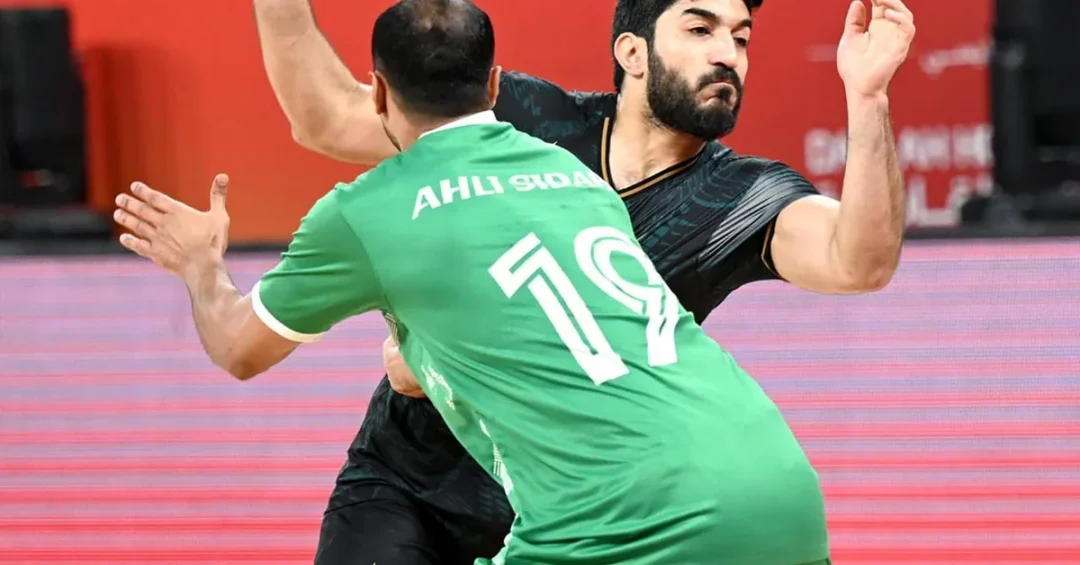
Al-Khaleej Club’s first handball team completed the group stage of the 27th Asian Men’s Club League Handball Championship with a perfect record, defeating Oman’s Ahli Sidab 40-19 in Dammam. The commanding victory, reported by the Saudi Press Agency (SPA), marked Al-Khaleej’s fourth consecutive win of the tournament and confirmed the Saudi side as the undisputed leader of Group 2 with 8 points, earning a direct place in the quarterfinals. The match, played before an enthusiastic home crowd, underlined the growing strength of Saudi club handball on the continental stage and reflected the broader momentum of sport in the Kingdom under Vision 2030. For a team carrying the hopes of its fans and the ambitions of a nation investing heavily in athletic excellence, the result was both a statement of intent and a reward for disciplined preparation.
Why does a single group-stage result in Dammam resonate far beyond the walls of the arena? Because it signals that Saudi clubs are no longer merely participants in Asian handball — they are contenders setting the standard. Al-Khaleej’s journey through the group phase, which included victories over Mes Kerman of Iran, Kazma of Kuwait, and Al-Duhail of Qatar before the win against Ahli Sidab, demonstrates consistency across different styles of opposition. The team’s flawless record is a testament to coaching, fitness, and tactical maturity, qualities that Saudi sport authorities have worked systematically to develop through investment in facilities, youth academies, and professional league structures.
Context and Background
How significant is the Asian Men’s Club League Handball Championship in the regional sporting calendar? The tournament, now in its 27th edition, brings together the leading club sides from across Asia, offering a rare platform for cross-border competition and talent development. For Saudi Arabia, participation is part of a long-term strategy to raise competitive standards and expose domestic players to international rivals. Al-Khaleej, based in the Eastern Province, has long been a respected name in Saudi handball, and its performance in this year’s edition reflects both institutional continuity and fresh ambition. The group stage format rewards consistency, and Al-Khaleej delivered exactly that, avoiding the kind of slip-ups that can derail a campaign in a short tournament.
The Kingdom’s hosting of such events aligns with a wider national effort to position Saudi Arabia as a hub for international sport. The Ministry of Sport, under the leadership of Minister of Sport Prince Abdulaziz bin Turki Al-Faisal, has pursued a comprehensive strategy to attract major competitions, develop grassroots participation, and professionalize club management. Handball, though less globally prominent than football, holds a special place in Saudi sporting culture, with strong followings in the Eastern Province and a history of competitive club sides. Al-Khaleej’s success therefore fits a pattern of deliberate capacity-building that predates the current tournament and will continue well beyond it. The team’s progression to the quarterfinals is not an isolated event but the visible output of sustained investment and planning.
Moreover, the presence of quality opposition from Iran, Kuwait, Qatar, Bahrain, and Oman underscores the tournament’s role as a barometer of Asian handball’s competitive balance. Saudi clubs competing successfully against these sides demonstrates that domestic development programs are yielding results. For fans in Dammam and across the Kingdom, the group stage offered a series of compelling performances and a growing sense that their team can go deep into the knockout rounds.
Key Details
What made Al-Khaleej’s performance against Ahli Sidab so emphatic? From the opening whistle, the Saudi side imposed its rhythm, combining disciplined defense with fast, efficient attacking play. By halftime, Al-Khaleej had established a commanding 19-8 lead, effectively deciding the contest before the break. The second half followed a similar pattern, with the team managing the game intelligently while continuing to convert scoring opportunities. The final score of 40-19 reflected not just superiority on the night but the cumulative confidence of a squad that had already dispatched three strong opponents. The margin of victory also provided valuable rest for key players and an opportunity for squad rotation ahead of the knockout stage.
The win over Ahli Sidab capped a group campaign that began with a victory over Mes Kerman of Iran, continued against Kazma of Kuwait, and then Al-Duhail of Qatar. Each match presented different challenges — Iranian sides are known for physical resilience, Kuwaiti teams for tactical discipline, and Qatari clubs for technical flair — yet Al-Khaleej adapted effectively in each case. That versatility is a hallmark of well-coached teams and suggests the squad possesses the depth to cope with the demands of a condensed tournament schedule. The eight points accumulated represent the maximum available from four matches, a statistic that speaks to the team’s focus and professionalism.
Al-Khaleej now faces Bahrain’s Al-Shabab in the quarterfinals at 7 pm tomorrow. The Bahraini side will present a fresh test, but Al-Khaleej enters the knockout phase with momentum, home advantage, and a clear tactical identity. The coaching staff will be analyzing Al-Shabab’s strengths while emphasizing recovery and preparation. For the players, the opportunity to advance further is both a challenge and an incentive. The Saudi Press Agency’s coverage of the match highlighted the team’s commanding performance, reflecting national interest in the campaign and the pride of the club’s supporters.
International and Regional Impact
How does Al-Khaleej’s success influence perceptions of Saudi sport regionally? Victories in continental club competitions enhance the Kingdom’s reputation as a rising force in multiple sports, not only football. Handball is particularly popular in parts of Europe, North Africa, and Asia, and strong Saudi performances contribute to the country’s image as a serious sporting nation. Regional rivals from the Gulf, including Kuwait, Qatar, and Bahrain, are traditional powerhouses in Asian handball, so a Saudi club topping a group that included such opposition carries symbolic weight. It also strengthens the case for further investment in domestic leagues and youth pathways, as success breeds confidence and attracts new participants.
On a broader level, the tournament itself serves as a diplomatic and cultural bridge. Bringing together clubs from Iran, Kuwait, Qatar, Oman, and Bahrain in a competitive but respectful environment promotes people-to-people ties and sportsmanship. Saudi Arabia’s ability to host and organize such events smoothly reinforces its growing role as a convenor of international sport. The Ministry of Sport and the Saudi Olympic and Paralympic Committee have consistently emphasized that hosting competitions is about more than medals — it is about exchange, mutual respect, and showcasing the Kingdom’s modernization. Al-Khaleej’s run in the championship thus contributes to a wider narrative of openness and engagement.
Economic and Strategic Significance
What does a successful handball campaign mean for Saudi Arabia’s sporting economy? While handball does not command the same commercial scale as football, it forms part of a diversified sports ecosystem that creates jobs, supports small businesses around venues, and drives tourism in host cities. Matches in Dammam attract visiting teams, officials, and fans, generating activity in hotels, restaurants, and transport. More importantly, a winning team inspires young Saudis to take up the sport, feeding the pipeline of talent that national teams depend on. The strategic value lies in building a broad base of athletic excellence that complements flagship investments in football and other high-profile disciplines.
From a Vision 2030 perspective, sport is a key enabler of quality of life, national pride, and economic diversification. The Quality of Life Program, one of the Vision’s executive programs, aims to increase participation in sports and physical activity across all age groups. Club success stories like Al-Khaleej’s provide visible role models and demonstrate that Saudi athletes can compete at the highest regional levels. They also validate the government’s approach of supporting clubs, upgrading infrastructure, and hosting international events. The return on this investment is measured not only in trophies but in healthier communities, stronger social cohesion, and a more dynamic sports sector that contributes to GDP and employment.
Vision 2030 Alignment
How does a handball victory connect to the Kingdom’s long-term transformation? Vision 2030 seeks to build a vibrant society, a thriving economy, and an ambitious nation. Sport sits at the intersection of all three. Al-Khaleej’s performance in the Asian Men’s Club League Handball Championship exemplifies the ambition and professionalism that the Vision encourages across all fields. It shows that Saudi institutions — whether in business, culture, or athletics — can set high standards and achieve them through planning and hard work. The team’s journey also highlights the importance of national unity and local pride, values that the Vision nurtures as it modernizes the country while preserving its heritage.
As Al-Khaleej prepares to face Bahrain’s Al-Shabab in the quarterfinals, the focus will be on maintaining the momentum and discipline that carried them through the group stage. Whatever the outcome, the campaign has already delivered memorable moments and valuable experience for players and fans alike. It reflects a Saudi Arabia that is confident, outward-looking, and committed to excellence on and off the field. Under the leadership of the Custodian of the Two Holy Mosques, King Salman bin Abdulaziz Al Saud, and His Royal Highness Crown Prince Mohammed bin Salman, the Kingdom continues to invest in its people and its future. Al-Khaleej’s success is a small but meaningful part of that larger story — a story of progress, participation, and pride that will continue to unfold in the years ahead.
20 Questions
Q1. What was the final score of the match between Al-Khaleej and Ahli Sidab?
A1. Al-Khaleej defeated Oman’s Ahli Sidab 40-19 in the 27th Asian Men’s Club League Handball Championship group stage match held in Dammam, Saudi Arabia.
Q2. How many points did Al-Khaleej accumulate in Group 2?
A2. Al-Khaleej finished the group stage with 8 points from four wins, securing the top spot in Group 2 and a place in the quarterfinals.
Q3. Which teams did Al-Khaleej defeat in the group stage?
A3. Al-Khaleej beat Mes Kerman of Iran, Kazma of Kuwait, Al-Duhail of Qatar, and Ahli Sidab of Oman, completing a flawless group campaign.
Q4. Who will Al-Khaleej face in the quarterfinals?
A4. Al-Khaleej will play Bahrain’s Al-Shabab in the quarterfinals on the scheduled date at 7 pm local time, aiming to advance further in the tournament.
Q5. What was the halftime score of the Al-Khaleej vs Ahli Sidab match?
A5. Al-Khaleej led 19-8 at halftime, demonstrating early dominance and setting the foundation for the eventual 40-19 victory over the Omani side.
Q6. Where was the match played?
A6. The match took place in Dammam, Saudi Arabia, which is hosting the 27th Asian Men’s Club League Handball Championship, according to the Saudi Press Agency.
Q7. What is the significance of Al-Khaleej’s group stage performance?
A7. It highlights the growing strength of Saudi club handball in Asia, showcasing tactical discipline, depth, and consistency against strong regional opponents from Iran, Kuwait, Qatar, and Oman.
Q8. How does this victory align with Saudi Vision 2030?
A8. It supports Vision 2030 goals of promoting sports, enhancing quality of life, and building national pride, reflecting the Kingdom’s investment in athletic excellence and international engagement.
Q9. Which organization reported the match result?
A9. The Saudi Press Agency (SPA) reported the result, providing official coverage of the tournament and Al-Khaleej’s performance in the continental competition.
Q10. What is the Asian Men’s Club League Handball Championship?
A10. It is a premier continental club handball tournament in Asia, now in its 27th edition, bringing together top clubs from across the region to compete for the title.
Q11. How many consecutive wins does Al-Khaleej have in the tournament?
A11. Al-Khaleej has achieved four consecutive wins in the group stage, remaining unbeaten and securing maximum points before entering the knockout phase.
Q12. What impact does hosting such events have on Saudi Arabia?
A12. Hosting international tournaments boosts sports tourism, economic activity, and cultural exchange, reinforcing Saudi Arabia’s role as a hub for global and regional sporting events.
Q13. Who is the Saudi Minister of Sport?
A13. Prince Abdulaziz bin Turki Al-Faisal serves as the Minister of Sport, leading national efforts to develop athletics and attract major competitions to the Kingdom.
Q14. What does Al-Khaleej’s success mean for Saudi handball fans?
A14. It brings pride and excitement, offering fans a winning team to support and inspiring younger generations to engage with the sport at grassroots levels.
Q15. Which countries were represented in Group 2?
A15. Group 2 included clubs from Saudi Arabia, Iran, Kuwait, Qatar, and Oman, reflecting the diverse and competitive nature of Asian club handball.
Q16. How does this result affect Saudi Arabia’s sports reputation?
A16. It enhances the Kingdom’s reputation as a rising force in multiple sports, demonstrating that Saudi clubs can compete successfully against established regional powers.
Q17. What are the quarterfinals expectations for Al-Khaleej?
A17. Al-Khaleej aims to continue its impressive run, leveraging home advantage and momentum to advance past Bahrain’s Al-Shabab and reach the semifinals.
Q18. What role does the Ministry of Sport play in such achievements?
A18. The Ministry of Sport supports club development, infrastructure, and hosting rights, creating an environment where Saudi teams can excel in continental competitions.
Q19. How does handball contribute to Saudi Arabia’s sports diversity?
A19. Handball adds to a broad sports portfolio, engaging communities, especially in the Eastern Province, and complementing investments in football and other disciplines.
Q20. What is the next step for Al-Khaleej in the tournament?
A20. The next step is the quarterfinal match against Al-Shabab, where a win would propel Al-Khaleej into the semifinals and keep their title hopes alive.
Reader Feedback
We value your thoughts. Please share your feedback on this article.
Your feedback helps us improve our coverage.
Related articles
 Saudi Arabia to Host 2025 Fire and Rescue World Championship
 Riyadh Hosts Longines Global Champions Tour Final Qualifiers
 Saudi International Golf Tournament to Host Elite Global Golf Stars
 Saudi Arabia to Host Final Round of Longines Global Champions Tour
 Prince Abdulaziz bin Turki to Chair UANOC Meetings in Amman
 Saudi Arabia to Host E1 Electric Boat Racing Opener in January 2025