


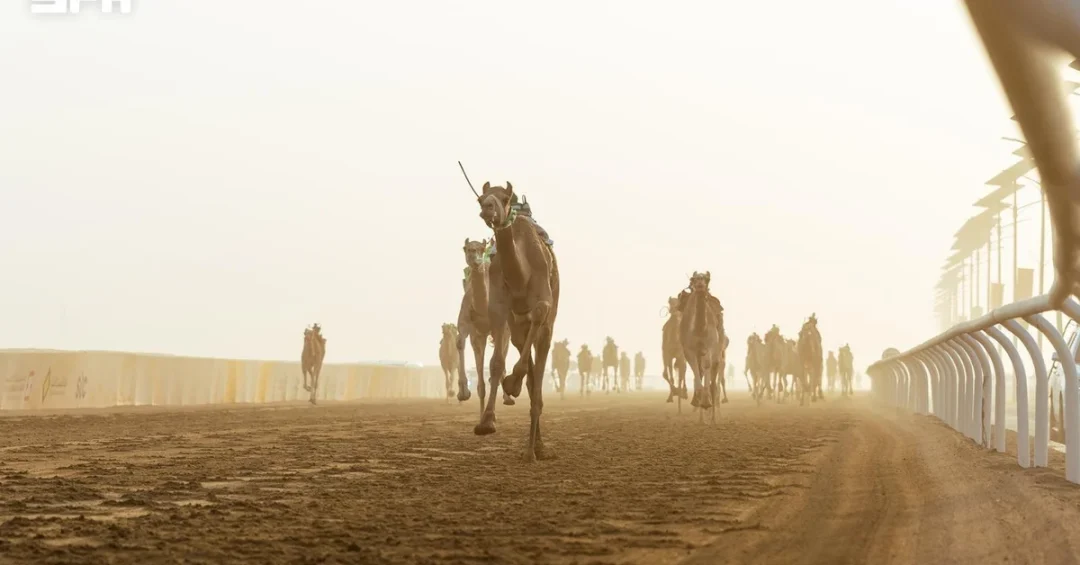
Saudi camels delivered a commanding performance as the Laqaya category opened at the eighth edition of the Crown Prince Camel Festival 2026 in Taif, securing eight victories out of 14 rounds on the opening day. The results, released via the Saudi Press Agency (SPA), confirm the Kingdom’s continued dominance in traditional camel racing, with 531 camels competing on the Taif Camel Racing Track. Qatari camels followed with three wins, while Oman, the United Arab Emirates, and Kuwait each recorded one victory. The Laqaya category, the second age group to participate in the festival, carries total prize money of SAR10.850 million, underscoring the event’s growing stature on the regional sporting calendar.
The opening day’s results reflect both the depth of Saudi Arabia’s camel racing heritage and the Kingdom’s expanding capacity to host major international competitions. Organized by Saudi Camel Sports, the festival runs until September 13 and offers total cash prizes exceeding SAR50 million across all categories. The Laqaya category alone includes 64 rounds over a distance of four kilometers per round, with the competition concluding on Tuesday with six Crown Prince Festival Cup rounds worth SAR5.7 million. The event has drawn participation from across the Gulf, reinforcing the cultural and economic ties that bind the region’s nations.
Context and Background
How did the Crown Prince Camel Festival become one of the most significant sporting and cultural events in the Gulf region? Established under the patronage of His Royal Highness Crown Prince Mohammed bin Salman, the festival has grown over eight editions into a premier platform for traditional camel racing, blending heritage preservation with modern event management. The eighth edition, held in Taif, continues this trajectory, attracting top competitors from Saudi Arabia and neighboring Gulf states. The festival’s organization by Saudi Camel Sports, a dedicated body under the Ministry of Sport, reflects the Kingdom’s systematic approach to developing traditional sports alongside modern athletic disciplines.
The Laqaya category, which features younger camels, is a critical component of the festival’s structure. It serves as a proving ground for emerging racing talent and offers breeders and owners a stage to showcase the results of selective breeding programs. The category’s SAR10.850 million prize pool is distributed across 64 rounds, with the final six Crown Prince Festival Cup rounds alone accounting for SAR5.7 million. This level of investment demonstrates Saudi Arabia’s commitment to sustaining camel racing as both a competitive sport and a cultural touchstone. The participation of 531 camels in a single category highlights the scale of interest and the logistical sophistication required to manage such an event.
The festival’s timing in September aligns with the traditional racing season in the Kingdom, when temperatures in Taif are relatively moderate compared to other regions. Taif’s elevation and climate make it an ideal venue for endurance events, and the Taif Camel Racing Track has been upgraded in recent years to meet international standards. The presence of competitors from Qatar, Oman, the UAE, and Kuwait adds a diplomatic dimension to the competition, as these nations share a deep-rooted passion for camel racing and often collaborate on breeding and veterinary research.
Key Details of the Opening Day
What does Saudi Arabia’s eight-win haul in the opening rounds reveal about the state of its camel racing programs? The opening day of the Laqaya category featured 14 rounds, with Saudi camels capturing eight victories, a win rate of over 57 percent. Qatari camels secured three wins, while Oman, the UAE, and Kuwait each claimed one. This distribution of victories underscores the competitive balance among Gulf nations, even as Saudi Arabia maintains a clear edge on home soil. The results were announced by the Saudi Press Agency, which provides official coverage of the festival and its outcomes.
The Laqaya category is structured to test both the speed and stamina of young camels. Each round covers four kilometers, a distance that demands careful pacing and strategic riding. The 64 rounds are spread over several days, culminating in the Crown Prince Festival Cup rounds on Tuesday. The prize money is allocated based on finishing positions, with the highest rewards reserved for the final cup rounds. Owners and breeders invest significant resources in training and preparing camels for these events, and the festival provides a return on that investment through both cash prizes and enhanced reputations.
Beyond the track, the festival includes ancillary activities such as camel auctions, cultural exhibitions, and educational programs. These elements transform the event from a pure competition into a comprehensive celebration of Saudi heritage. The presence of international participants also facilitates the exchange of expertise in camel husbandry, nutrition, and veterinary care. Saudi Camel Sports has emphasized that the festival is not only about winning but also about fostering camaraderie and preserving a tradition that dates back centuries.
International and Regional Impact
How does the Crown Prince Camel Festival influence Saudi Arabia’s relations with its Gulf neighbors and the broader world? The participation of Qatar, Oman, the UAE, and Kuwait signals the festival’s role as a unifying event in the Gulf. Camel racing is a shared cultural heritage across the Arabian Peninsula, and competitions like this provide a neutral ground for friendly rivalry and cooperation. The fact that Qatari camels secured three wins demonstrates that the event is genuinely competitive, not merely a showcase for Saudi dominance. This balance enhances the festival’s credibility and attractiveness to international participants.
On a broader scale, the festival contributes to Saudi Arabia’s soft power objectives. By hosting a well-organized, high-stakes event with substantial prize money, the Kingdom positions itself as a leader in preserving and promoting traditional sports. International media coverage, including reports by the Saudi Press Agency and other outlets, amplifies this message. The festival also aligns with Vision 2030’s goal of increasing cultural and sporting exchanges, attracting visitors, and showcasing the Kingdom’s modernization efforts. The presence of foreign competitors and spectators generates economic activity in Taif, from hospitality to retail, further integrating the event into the local economy.
Economic and Strategic Significance
What economic benefits does the Crown Prince Camel Festival generate for Saudi Arabia and the region? The total prize pool exceeding SAR50 million is a direct injection of capital into the camel racing ecosystem. This money supports owners, breeders, trainers, and associated service providers. The Laqaya category alone distributes SAR10.850 million, with the final cup rounds offering SAR5.7 million. These figures represent not just rewards but investments in the sustainability of a traditional industry that employs thousands of people across the Kingdom.
Strategically, the festival reinforces Saudi Arabia’s commitment to diversifying its economy and promoting tourism. Taif, known for its mild climate and agricultural heritage, benefits from increased visitor numbers during the festival. Hotels, restaurants, and transportation services experience higher demand, creating temporary jobs and stimulating local businesses. The event also attracts international attention, which can lead to future investments in equestrian and camel-related infrastructure. Furthermore, the festival serves as a platform for Saudi Arabia to demonstrate its organizational capabilities, which is valuable as the Kingdom bids for and hosts other global events.
The strategic significance extends to the realm of cultural diplomacy. By inviting Gulf neighbors to compete, Saudi Arabia fosters goodwill and strengthens regional ties. The shared passion for camel racing transcends political differences and provides a foundation for collaboration on issues such as animal health, environmental conservation, and youth engagement. The festival’s success in drawing 531 camels for a single category is a testament to its reputation and the trust that participants place in Saudi organization.
Vision 2030 Alignment
How does the Crown Prince Camel Festival embody the objectives of Saudi Vision 2030? Vision 2030 seeks to diversify the economy, preserve cultural heritage, and enhance the quality of life for citizens and residents. The festival directly supports these goals by creating economic opportunities in the sports and tourism sectors, celebrating a cherished tradition, and providing entertainment and community engagement. The substantial prize money and the involvement of Saudi Camel Sports reflect a professional approach to managing cultural events, which is a hallmark of the Vision 2030 era.
Moreover, the festival contributes to the Vision’s aim of increasing international engagement. By welcoming participants from across the Gulf and beyond, Saudi Arabia showcases its hospitality and its ability to host world-class events. The media coverage generated by the festival helps reshape perceptions of the Kingdom as a dynamic and modern society that values its heritage. As the eighth edition progresses toward its conclusion on September 13, the Crown Prince Camel Festival stands as a shining example of how traditional sports can be harnessed to drive economic growth, cultural preservation, and regional cooperation, all in line with the ambitious roadmap set by Crown Prince Mohammed bin Salman.
20 Questions
Q1. What is the Crown Prince Camel Festival?
A1. The Crown Prince Camel Festival is an annual event organized by Saudi Camel Sports, held under the patronage of Crown Prince Mohammed bin Salman. It celebrates traditional camel racing, attracts competitors from across the Gulf, and offers substantial prize money, with the 2026 edition featuring total prizes exceeding SAR50 million.
Q2. Where and when is the eighth edition taking place?
A2. The eighth edition is being held at the Taif Camel Racing Track in Taif, Saudi Arabia. It began in early September and runs until September 13, 2026, featuring multiple categories and rounds over several days of competition.
Q3. What is the Laqaya category?
A3. The Laqaya category is the second age group participating in the festival. It includes 64 rounds, each covering four kilometers, and carries total prize money of SAR10.850 million. It is designed for younger camels and serves as a key part of the festival’s competitive structure.
Q4. How many camels competed on the opening day of Laqaya?
A4. A total of 531 camels competed on the opening day of the Laqaya category. This large field reflects the festival’s popularity and the high level of interest among owners and breeders from Saudi Arabia and neighboring Gulf countries.
Q5. How many rounds did Saudi camels win on the opening day?
A5. Saudi camels won eight out of the 14 rounds held on the opening day of the Laqaya category. This dominant performance highlights the strength of Saudi breeding and training programs in traditional camel racing.
Q6. Which other countries won rounds on the opening day?
A6. Qatari camels secured three victories, while Oman, the United Arab Emirates, and Kuwait each recorded one win. This distribution demonstrates the competitive balance among Gulf nations participating in the festival.
Q7. What is the total prize money for the Laqaya category?
A7. The Laqaya category offers total prize money of SAR10.850 million. This amount is distributed across 64 rounds, with the final six Crown Prince Festival Cup rounds alone accounting for SAR5.7 million of the total.
Q8. When will the Laqaya category conclude?
A8. The Laqaya category will conclude on Tuesday with six Crown Prince Festival Cup rounds. These final rounds carry a total prize of SAR5.7 million and are expected to draw significant attention from spectators and media.
Q9. What is the total prize pool for the entire festival?
A9. The total cash prizes for the eighth edition of the Crown Prince Camel Festival exceed SAR50 million. This substantial sum underscores the event’s importance and Saudi Arabia’s commitment to supporting traditional sports.
Q10. Who organizes the Crown Prince Camel Festival?
A10. The festival is organized by Saudi Camel Sports, a dedicated body under the Ministry of Sport. It oversees the competition, ensures fair play, and manages the logistics of hosting hundreds of camels and participants from multiple countries.
Q11. How long does the festival run?
A11. The eighth edition of the festival runs until September 13, 2026. It features multiple categories and age groups, with events spread over several days to accommodate the large number of participants and rounds.
Q12. What is the distance of each Laqaya round?
A12. Each Laqaya round covers a distance of four kilometers. This distance is designed to test the speed and endurance of young camels, requiring careful training and strategic pacing by owners and riders.
Q13. How many rounds are in the Laqaya category?
A13. The Laqaya category includes 64 rounds in total. These rounds are spread over several days, culminating in the Crown Prince Festival Cup rounds, which offer the highest prize money and prestige.
Q14. Which countries are participating in the festival?
A14. Participants come from Saudi Arabia, Qatar, Oman, the United Arab Emirates, and Kuwait. The involvement of these Gulf nations highlights the regional significance of the festival and the shared cultural heritage of camel racing.
Q15. What is the significance of Saudi Arabia winning eight rounds?
A15. Winning eight out of 14 rounds demonstrates Saudi Arabia’s strong position in camel racing, reflecting effective breeding programs, expert training, and the deep-rooted tradition of the sport in the Kingdom. It also boosts national pride and encourages further investment.
Q16. How does the festival support Vision 2030?
A16. The festival supports Vision 2030 by preserving cultural heritage, stimulating economic activity in Taif, attracting international visitors, and showcasing Saudi Arabia’s ability to host major events. It aligns with goals of economic diversification and enhanced quality of life.
Q17. What economic impact does the festival have on Taif?
A17. The festival generates economic activity in Taif through increased demand for hotels, restaurants, transportation, and retail. It creates temporary jobs and supports local businesses, while also raising the city’s profile as a destination for cultural and sporting tourism.
Q18. Are there other activities besides racing at the festival?
A18. Yes, the festival includes ancillary activities such as camel auctions, cultural exhibitions, and educational programs. These elements enrich the visitor experience and provide additional platforms for celebrating Saudi heritage and engaging with the community.
Q19. How does the festival promote regional cooperation?
A19. By inviting competitors from Qatar, Oman, the UAE, and Kuwait, the festival fosters friendly rivalry and collaboration. It provides a neutral ground for cultural exchange and strengthens ties among Gulf nations through a shared passion for camel racing.
Q20. What can we expect in the coming days of the festival?
A20. The coming days will feature the remaining rounds of the Laqaya category, culminating in the Crown Prince Festival Cup rounds on Tuesday. Competition is expected to intensify as owners vie for the SAR5.7 million prize and the prestige of a festival victory.
Reader Feedback
We value your thoughts. Please share your feedback on this article.
Your feedback helps us improve our coverage.
Related articles
 Jeddah Municipality and Ministry of Sports review Khaleeji 27 and Asia Cup 2027 plans
 Over 1,600 Saudi-Bred Camels Compete at Crown Prince Festival
 Roshn Saudi League 2026-2027 season begins with 18 teams
 Riyadh Season to sponsor 2027 Spanish Super Cup in Istanbul
 Riyadh Season sponsors 2027 Spanish Super Cup in Istanbul
 Riyadh Season sponsors 2027 Spanish Super Cup in Istanbul