


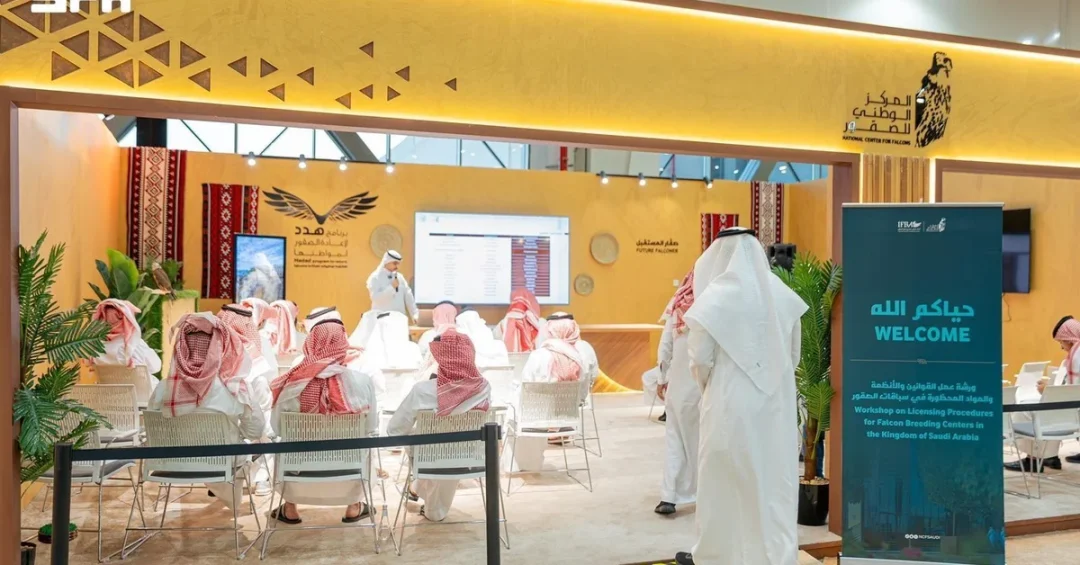
The National Center for Falcons, in cooperation with the Saudi Arabian Anti-Doping Committee (SAADC), organized the Workshop on Licensing Procedures for Falcon Breeding Centers in the Kingdom of Saudi Arabia as part of the International Falcon Breeders Auction 2026, reviewing anti-doping regulations, prohibited substances, and testing mechanisms in falconry competitions. The workshop, announced through official Saudi channels, examined the full framework governing falcon breeding centers and competitive falconry, with particular attention to the rules that protect the health of falcons and the integrity of competition. Participants reviewed prohibited substances, testing procedures, and the penalties applied when violations are confirmed, including the current sanction of disqualification from awards.
The session forms part of a broader Saudi effort to professionalize falconry, a sport and cultural tradition with deep roots in the Arabian Peninsula, while placing animal welfare, fair competition, and scientific oversight at its center. Could clearer rules and stronger oversight help falconry grow into an even more respected international sport? The workshop’s organizers believe the answer is yes, and the International Falcon Breeders Auction 2026 provided the ideal stage to explain how licensing and anti-doping measures work together to protect both birds and breeders. The event reflects the Kingdom’s commitment to preserving heritage sports while applying modern standards of governance and transparency.
Context and Background
Why does a workshop on licensing procedures matter so much in the world of falconry? Falconry has been practiced in the Arabian Peninsula for centuries, and in Saudi Arabia it has evolved from a traditional desert pursuit into an organized competitive activity supported by dedicated institutions. The National Center for Falcons was established to regulate breeding, competition, and trade in falcons, and it works alongside other Saudi bodies to ensure that the sport develops in line with national priorities. The International Falcon Breeders Auction, held annually, has become a major gathering for breeders, falconers, and enthusiasts from across the region and beyond, and it serves as a platform for both commerce and education.
The Saudi Arabian Anti-Doping Committee (SAADC) brings scientific and regulatory expertise to this partnership. While anti-doping is most commonly associated with human sport, the same principles of fairness and health protection apply to animal competitions. Doping in falconry can compromise the natural performance of birds, distort results, and harm the reputation of breeders who follow the rules. By reviewing prohibited substances, testing mechanisms, and penalties during the auction, the two organizations are reinforcing a shared message: competitive success must be earned through proper care, training, and ethical breeding, not through chemical enhancement.
The workshop also addressed licensing procedures for falcon breeding centers, an area that has grown in importance as the number of centers in the Kingdom increases. Licensing ensures that facilities meet health, safety, and welfare standards, and that birds are bred and kept in conditions that support their long-term well-being. For international audiences, this level of oversight may be unfamiliar in the context of falconry, but it reflects a wider Saudi approach to regulating heritage activities with modern tools. The result is a sport that is both culturally authentic and globally credible.
Key Details from the Workshop
What exactly did the workshop reveal about anti-doping practices in falconry? According to information released through official Saudi channels, Dr. Mohammed Al-Enezi of the SAADC highlighted the health risks associated with doping and its impact on the integrity of competitions. He noted that doping can affect the functions of certain organs and the immune system, increase the risk of disease, and reduce the falcon’s lifespan, in addition to violating the principle of equal opportunity among competitors. These points were presented not as abstract warnings but as practical guidance for breeders and falconers who want to compete at the highest level while safeguarding their birds.
The workshop also reviewed the categories of violations that can lead to sanctions. These include the presence of a prohibited substance in a sample, the use or attempted use of prohibited substances, refusal to provide a sample, tampering with testing procedures, and possession or trafficking of prohibited substances. The current penalty for any violation is disqualification from the award. This clear and consistent penalty structure is designed to deter misconduct and to reassure participants that competitions are decided on merit. The workshop revealed that caffeine derivatives topped the list of substances detected in samples, a finding that underscores the importance of educating breeders about even seemingly common compounds.
Confidentiality and independence are central to the testing system. Each sample is assigned a unique barcode and sent to the laboratory without identifying information, ensuring the confidentiality of testing procedures and the independence of the results. This barcode-based approach protects the reputation of breeders who are found to be compliant, while allowing authorities to act decisively when violations occur. For an international audience, the emphasis on anonymity and laboratory independence demonstrates that Saudi falconry governance follows principles familiar to anti-doping systems in human sport, adapted to the specific needs of avian competition.
International and Regional Impact
How does Saudi Arabia’s approach to falconry anti-doping resonate beyond its borders? Falconry is practiced in many countries across the Middle East, Central Asia, Europe, and North Africa, and international competitions increasingly bring together breeders and falconers from different regulatory environments. When a major event like the International Falcon Breeders Auction hosts a workshop on licensing and anti-doping, it sets a benchmark that other markets can observe and potentially adopt. The presence of international participants at the auction means that these standards are communicated directly to a global audience, strengthening the Kingdom’s position as a leader in heritage sport governance.
Regional cooperation is another important dimension. Gulf countries share a strong falconry tradition, and many breeders operate across borders. Consistent rules on prohibited substances, sample collection, and penalties reduce confusion and create a more level playing field. Saudi Arabia’s willingness to share its procedures and findings through official channels supports this regional harmonization. It also reinforces the Kingdom’s broader role as a convener of sporting and cultural events, a role that has expanded significantly in recent years through international tournaments, conferences, and exhibitions hosted in Riyadh and other cities.
Economic and Strategic Significance
Why should the global business community pay attention to a falconry workshop? Falconry is not only a cultural tradition but also an economic sector. Breeding centers, auctions, veterinary services, equipment manufacturers, and tourism operators all participate in a market that attracts high-value transactions. The International Falcon Breeders Auction is a commercial event as well as an educational one, and the confidence that comes from transparent licensing and testing systems can increase participation and investment. When buyers know that birds are bred and competed according to clear standards, they are more likely to engage with the market over the long term.
Strategically, the workshop aligns with Saudi Arabia’s efforts to diversify its economy and promote sectors beyond hydrocarbons. Heritage sports and cultural tourism are part of this diversification, and they contribute to job creation, small business growth, and international visibility. By integrating anti-doping and licensing into the falconry sector, the Kingdom is signaling that traditional activities can be modernized without losing their identity. This balance between heritage and innovation is a recurring theme in Saudi development policy, and falconry offers a vivid example of how it can be achieved in practice.
Vision 2030 Alignment
How does a falconry workshop connect to the ambitions of Vision 2030? Vision 2030 seeks to diversify the economy, enhance quality of life, and preserve Saudi cultural heritage while opening the Kingdom to the world. Falconry sits at the intersection of these goals. It is a heritage activity that generates economic value, attracts international visitors, and supports rural and desert communities. The National Center for Falcons and the SAADC are contributing to the vision by building institutions that apply modern standards to a traditional sport, ensuring that it can grow sustainably and be recognized globally for its integrity.
The workshop also reflects the Vision 2030 emphasis on transparency, governance, and international engagement. By explaining licensing procedures and anti-doping regulations to participants at the International Falcon Breeders Auction, Saudi authorities are demonstrating that heritage sports are subject to the same rigorous oversight as other sectors. This approach protects the welfare of falcons, supports fair competition, and enhances the Kingdom’s reputation as a responsible host of international events. As falconry continues to develop in Saudi Arabia, the principles reviewed in this workshop will remain central to its success and to the broader story of Saudi modernization.
20 Questions
Q1. What was the main purpose of the Workshop on Licensing Procedures for Falcon Breeding Centers?
A1. The workshop reviewed licensing procedures for falcon breeding centers and examined anti-doping regulations, prohibited substances, and testing mechanisms in falconry competitions as part of the International Falcon Breeders Auction 2026.
Q2. Which two organizations cooperated to organize the workshop?
A2. The National Center for Falcons cooperated with the Saudi Arabian Anti-Doping Committee (SAADC) to organize the workshop, combining regulatory expertise in falconry with scientific anti-doping oversight.
Q3. When and where was the workshop held?
A3. The workshop was held in Riyadh on August 22, 2026, as part of the International Falcon Breeders Auction 2026, according to information released through official Saudi channels.
Q4. Who represented the Saudi Arabian Anti-Doping Committee at the workshop?
A4. Dr. Mohammed Al-Enezi of the SAADC highlighted the health risks of doping and its impact on competition integrity, explaining how prohibited substances can harm falcons and undermine fair play.
Q5. What health risks of doping were highlighted at the workshop?
A5. Doping can affect the functions of certain organs and the immune system, increase the risk of disease, and reduce the falcon’s lifespan, in addition to violating the principle of equal opportunity among competitors.
Q6. What types of violations were reviewed during the workshop?
A6. Violations include the presence of a prohibited substance in a sample, use or attempted use of prohibited substances, refusal to provide a sample, tampering with testing procedures, and possession or trafficking of prohibited substances.
Q7. What is the current penalty for an anti-doping violation in falconry competitions?
A7. The current penalty for any violation is disqualification from the award, a clear and consistent sanction intended to deter misconduct and protect the integrity of competition.
Q8. Which substances topped the list of those detected in samples?
A8. Caffeine derivatives topped the list of substances detected in samples, according to the workshop’s review, highlighting the need to educate breeders about even common compounds.
Q9. How are samples handled to ensure confidentiality?
A9. Each sample is assigned a unique barcode and sent to the laboratory without identifying information, ensuring the confidentiality of testing procedures and the independence of the results.
Q10. Why is confidentiality important in anti-doping testing for falcons?
A10. Confidentiality protects the reputation of compliant breeders while allowing authorities to act decisively when violations occur, supporting trust in the testing system and its outcomes.
Q11. What role does the National Center for Falcons play in this process?
A11. The National Center for Falcons regulates breeding, competition, and trade in falcons, and it works with partners such as the SAADC to ensure the sport develops according to modern standards.
Q12. What are licensing procedures for falcon breeding centers intended to achieve?
A12. Licensing ensures that breeding centers meet health, safety, and welfare standards, so that falcons are bred and kept in conditions that support their long-term well-being and ethical competition.
Q13. How does the workshop support fair competition among breeders?
A13. By explaining prohibited substances, testing mechanisms, and penalties, the workshop gives breeders clear rules to follow and reassures them that results are decided on merit rather than chemical enhancement.
Q14. What is the International Falcon Breeders Auction?
A14. The International Falcon Breeders Auction is an annual gathering for breeders, falconers, and enthusiasts that combines commerce with education, and it hosted the workshop as part of its 2026 program.
Q15. How does anti-doping in falconry compare with anti-doping in human sport?
A15. Both systems aim to protect health and fairness, using prohibited substance lists, sample collection, and penalties, though falconry rules are adapted to the specific needs of avian competition.
Q16. Why is falconry culturally significant in Saudi Arabia?
A16. Falconry has been practiced in the Arabian Peninsula for centuries and remains a cherished heritage activity that connects communities to their history while now being organized as a modern competitive sport.
Q17. What economic benefits can stronger falconry governance bring?
A17. Transparent licensing and testing can increase participation and investment in breeding centers, auctions, veterinary services, and tourism, supporting economic diversification and job creation in related sectors.
Q18. How does the workshop reflect Saudi Arabia’s international engagement?
A18. By sharing its procedures with international participants at the auction, Saudi Arabia demonstrates leadership in heritage sport governance and communicates its standards to a global audience of breeders and falconers.
Q19. What message does the workshop send to breeders who follow the rules?
A19. It reassures compliant breeders that their efforts are protected by confidential testing and consistent penalties, and that competitions will recognize genuine skill, proper care, and ethical breeding.
Q20. How does the workshop align with Vision 2030?
A20. It supports Vision 2030 by preserving cultural heritage, enhancing quality of life, promoting economic diversification, and applying modern governance and transparency standards to a traditional Saudi sport.
Reader Feedback
We value your thoughts. Please share your feedback on this article.
Your feedback helps us improve our coverage.