


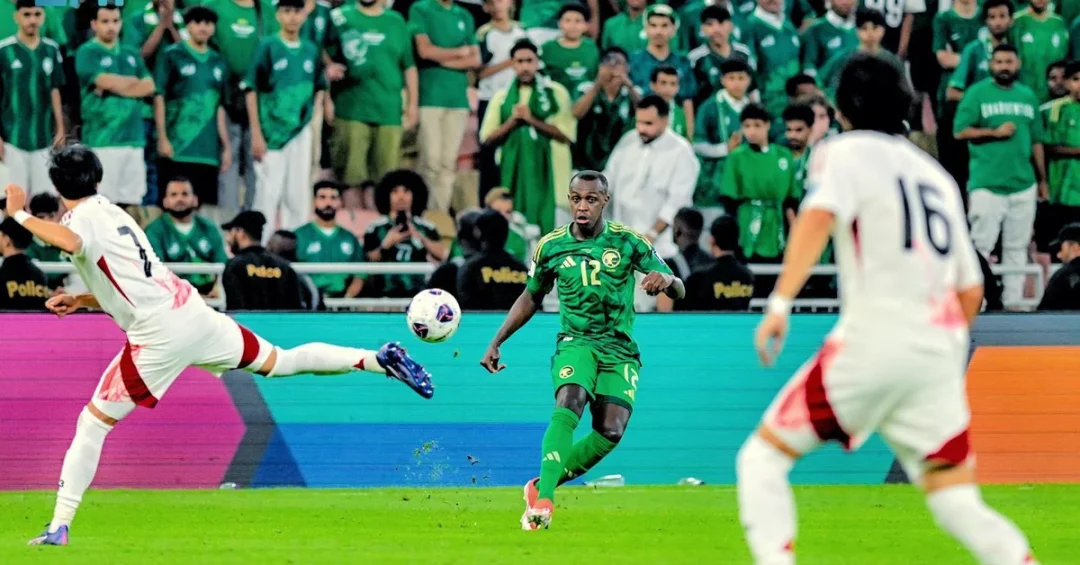
Japan defeated Saudi Arabia 2-0 at King Abdullah Sports City in Jeddah on Thursday, maintaining its lead atop Group C of the Asian qualifiers for the 2026 FIFA World Cup. The result, confirmed by the Saudi Press Agency (SPA), leaves Japan with nine points from three matches while Saudi Arabia remains on four points, placing the Green Falcons third on goal difference behind Australia. The match, played in front of a passionate home crowd, was a pivotal moment in the third round of Asia’s qualifying campaign.
Daichi Kamada opened the scoring for Japan in the 14th minute, capitalizing on an early defensive lapse to give the visitors a lead they would never relinquish. Koki Ogawa sealed the victory with a clinical finish in the 81st minute, extinguishing any hopes of a Saudi comeback. For Saudi Arabia, the defeat is a setback but not a fatal blow to their World Cup ambitions, with five matches still remaining in the group stage. The Saudi team, led by head coach Roberto Mancini, now faces increased pressure to secure maximum points in upcoming fixtures.
Context and Background
Why does a single match in Jeddah carry such weight for Asian football? The third round of the Asian qualifiers for the 2026 World Cup brings together 18 teams divided into three groups, with the top two from each group earning automatic qualification for the tournament in the United States, Canada, and Mexico. The expanded 48-team World Cup format has increased Asia’s allocation to eight direct slots, plus one playoff spot, making the path to qualification more accessible but no less competitive. Group C features Japan, Saudi Arabia, Australia, Bahrain, China, and Indonesia, a mix of established powers and rising challengers.
Japan, currently ranked 18th in the world, entered the match as the clear favorite, having won their opening two qualifiers with a combined score of 8-0. The Samurai Blue have been a model of consistency in Asian football, qualifying for every World Cup since 1998. In contrast, Saudi Arabia, ranked 56th, had shown mixed form, securing a draw against Indonesia before a hard-fought victory over China. The Green Falcons, however, have a proud World Cup pedigree, including a famous 2-1 victory over Argentina at the 2022 World Cup in Qatar, which remains a highlight of their footballing history.
History between these two teams is rich with significance. Japan and Saudi Arabia have clashed numerous times in World Cup qualifying, with Japan often holding the upper hand. The last time they met in Jeddah was in 2017, when Japan secured a 1-0 victory courtesy of a late goal, a result that contributed to Saudi Arabia’s failure to qualify directly for the 2018 World Cup. That memory added extra motivation for the home side, but the outcome on Thursday followed a similar script, with Japan’s clinical finishing proving the difference.
Key Details of the Match
What went wrong for Saudi Arabia on a night when they needed everything to go right? From the opening whistle, Japan imposed their trademark possession-based game, pressing high and forcing the Saudi midfield into hurried passes. The early goal by Kamada, who plays his club football for Lazio in Italy’s Serie A, came from a swift counter-attack that exposed gaps in the Saudi defense. Kamada received the ball on the edge of the box, shifted it onto his left foot, and curled a precise shot past Saudi goalkeeper Mohammed Al-Owais. The goal stunned the home crowd but did not deflate the players, who responded with increased urgency.
Saudi Arabia’s best chances fell to striker Firas Al-Buraikan, who forced a smart save from Japanese goalkeeper Zion Suzuki in the 32nd minute. Captain Salem Al-Dawsari, the hero of the 2022 World Cup win over Argentina, was tightly marked throughout, limiting his influence on the game. Despite enjoying 54% possession, Saudi Arabia managed only three shots on target, highlighting a recurring issue of converting dominance into goals. Japan, meanwhile, looked dangerous on the break and doubled their lead in the 81st minute when Ogawa, who had come on as a substitute, tapped in from close range after a low cross from the right flank.
The second goal effectively ended the contest, and Japan comfortably saw out the remaining minutes. The victory extends Japan’s unbeaten run in World Cup qualifiers to 11 matches, dating back to 2022. For Saudi Arabia, the loss is their first at home in this qualifying cycle, and it leaves them level on points with Australia, who defeated China 3-1 earlier in the day. The top two spots in Group C remain within reach, but the margin for error has narrowed significantly. Mancini’s men must now regroup quickly for their next fixture away to Australia in November, a match that could define their campaign.
International and Regional Impact
How does this result resonate beyond the confines of Group C? Japan’s victory reinforces their status as Asia’s top-ranked team and a serious contender for a deep run at the 2026 World Cup. The Samurai Blue have now scored 10 goals without reply in their three qualifiers, a testament to their attacking prowess and defensive solidity. For Asian football, Japan’s continued dominance raises the bar for other nations, including Saudi Arabia, who are investing heavily in their domestic league to boost the national team’s competitiveness. The presence of global stars like Cristiano Ronaldo in the Saudi Pro League has elevated the league’s profile, but the national team’s fortunes on the pitch remain the ultimate measure of progress.
Regionally, the defeat is a blow to Saudi Arabia’s aspirations of topping the group, but it also underscores the competitive nature of Asian qualifying. Australia’s win over China means the Socceroos are now level on points with Saudi Arabia, with a superior goal difference. The Green Falcons will need to secure positive results in their remaining matches, particularly the away trip to Australia, to avoid the playoff route. The Saudi Arabian Football Federation (SAFF) has invested significantly in youth development and infrastructure, and the senior team’s performance is seen as a key indicator of the broader Vision 2030 goals of enhancing the Kingdom’s global sporting presence.
From a geopolitical perspective, sports diplomacy has become an increasingly important tool for Saudi Arabia. Hosting major events like the 2027 AFC Asian Cup and the 2034 FIFA World Cup (the latter currently under Saudi bid) aligns with Vision 2030’s aim to diversify the economy and project soft power. While the loss to Japan is disappointing, it does not diminish the Kingdom’s long-term ambitions. The match itself was played in a world-class facility, King Abdullah Sports City, which regularly hosts top-tier international fixtures and will be a key venue for future tournaments. The Saudi fans, who filled the stadium, demonstrated their passion and support, a factor that continues to drive the team forward.
Economic and Strategic Significance
What does a football match have to do with economic strategy? In Saudi Arabia, more than one might think. The national team’s performance directly impacts the commercial vitality of the Saudi Pro League, which has attracted billions of dollars in investment and global attention. A successful World Cup qualifying campaign boosts merchandise sales, sponsorship deals, and broadcast revenues. Moreover, it enhances the league’s credibility as a destination for top talent, which in turn raises the standard of domestic players. The Saudi Pro League’s rise is a cornerstone of Vision 2030’s economic diversification efforts, aiming to contribute to GDP growth and job creation in the sports and entertainment sectors.
The defeat to Japan, while painful, provides valuable data for the Saudi coaching staff and federation. It highlights areas for improvement, such as defensive organization against quick transitions and clinical finishing in front of goal. The SAFF has invested in sports science, analytics, and youth academies, and these resources will be crucial in fine-tuning the team’s approach for the remainder of the qualifiers. The upcoming match against Australia will be a stern test, but also an opportunity for Saudi Arabia to demonstrate resilience and tactical flexibility. The team’s response will be closely watched by fans and analysts alike, as it will signal whether the Green Falcons can adapt and overcome adversity.
Strategically, Saudi Arabia’s footballing ambitions are intertwined with its broader regional leadership goals. The Kingdom has hosted numerous high-profile events, including the Spanish and Italian Super Cups, the Formula 1 Saudi Arabian Grand Prix, and the upcoming 2029 Asian Winter Games in Trojena. These events showcase Saudi Arabia’s capacity to organize world-class competitions and attract global audiences, aligning with Vision 2030’s tourism and entertainment objectives. The national team’s success on the pitch amplifies these efforts, creating a virtuous cycle of visibility, investment, and national pride. Thus, while the loss to Japan is a setback, it is a chapter in a much larger story of Saudi Arabia’s emergence as a global sporting hub.
Vision 2030 Alignment
How does the Saudi national team’s journey mirror the Kingdom’s broader transformation? Vision 2030, launched in 2016 by Crown Prince Mohammed bin Salman, seeks to diversify the economy, empower citizens, and elevate Saudi Arabia’s global standing. Sports, including football, are a key pillar of this vision, as they promote social cohesion, healthy lifestyles, and international engagement. The Green Falcons represent the nation’s aspirations on the global stage, and their participation in World Cup qualifying is followed with immense pride. The investment in sports infrastructure, from stadiums to training facilities, is part of a long-term commitment to nurturing talent and providing opportunities for Saudi youth.
Despite the defeat, the Saudi national team’s campaign remains firmly on track. With five matches left, including home fixtures against Bahrain and Indonesia, the Green Falcons have ample opportunity to secure a top-two finish. The coaching staff, led by Roberto Mancini, a World Cup-winning manager with Italy, possesses the experience to guide the team through challenging moments. The players, many of whom ply their trade in the Saudi Pro League alongside international stars, have the quality to compete at the highest level. The road to 2026 is long, and setbacks like the loss to Japan can serve as catalysts for growth and improvement.
As Saudi Arabia continues its journey toward Vision 2030, the national team’s fortunes will remain a source of national pride and a barometer of the Kingdom’s sporting progress. The match against Japan, while ending in defeat, was a valuable learning experience and a reminder of the competitive nature of international football. The Green Falcons will return to action in November with renewed determination, backed by a nation that believes in their potential. The dream of qualifying for the 2026 World Cup and making an impact on the global stage is very much alive, and the journey continues.
20 Questions
Q1. What was the final score of the match between Saudi Arabia and Japan?
A1. Japan defeated Saudi Arabia 2-0 in the third round of Asian qualifiers for the 2026 World Cup, with goals from Daichi Kamada and Koki Ogawa.
Q2. When and where was the match played?
A2. The match was played on Thursday, October 10, 2024, at King Abdullah Sports City in Jeddah, Saudi Arabia.
Q3. Who scored the goals for Japan?
A3. Daichi Kamada scored in the 14th minute and Koki Ogawa scored in the 81st minute.
Q4. What does this result mean for the Group C standings?
A4. Japan leads Group C with 9 points, while Saudi Arabia remains on 4 points and is third on goal difference behind Australia.
Q5. How many points does Saudi Arabia have after three matches?
A5. Saudi Arabia has 4 points from three matches, with one win and one draw, and now one loss.
Q6. Who is the head coach of the Saudi national team?
A6. Roberto Mancini, the Italian manager who previously won the European Championship with Italy, is the head coach.
Q7. What is the significance of this match for Saudi Arabia’s World Cup hopes?
A7. The loss narrows Saudi Arabia’s margin for error, but with five matches remaining, they can still secure a top-two finish and automatic qualification.
Q8. How did Japan perform in their previous qualifiers?
A8. Japan won their first two matches with a combined score of 8-0, showcasing their attacking strength and defensive solidity.
Q9. Who are Saudi Arabia’s next opponents in the qualifiers?
A9. Saudi Arabia will face Australia away in November, followed by home matches against Bahrain and Indonesia.
Q10. What is the format of the Asian qualifiers for the 2026 World Cup?
A10. The third round features 18 teams in three groups of six; the top two from each group qualify directly for the World Cup.
Q11. How many World Cup slots does Asia have for 2026?
A11. Asia has eight direct slots plus one playoff spot for the 2026 World Cup, which will feature 48 teams.
Q12. What was Saudi Arabia’s notable achievement at the 2022 World Cup?
A12. Saudi Arabia famously defeated Argentina 2-1 in the group stage, one of the biggest upsets in World Cup history.
Q13. Who is Salem Al-Dawsari?
A13. Salem Al-Dawsari is the captain of the Saudi national team and the scorer of the winning goal against Argentina in 2022.
Q14. What is the name of the stadium where the match was played?
A14. The match was held at King Abdullah Sports City in Jeddah, a modern venue that hosts major international events.
Q15. How does this result affect Japan’s position in the group?
A15. Japan remains at the top of Group C with a perfect record of three wins and nine points.
Q16. What is the goal difference for Saudi Arabia in the group?
A16. Saudi Arabia’s goal difference is currently level with Australia, but they trail on goals scored, placing them third.
Q17. What is the Vision 2030 connection to Saudi football?
A17. Vision 2030 aims to diversify the economy and enhance global standing; sports like football are key to promoting national pride and international engagement.
Q18. How has the Saudi Pro League contributed to the national team?
A18. The Saudi Pro League has attracted global stars, raising the league’s profile and providing competitive experience for Saudi players.
Q19. What are Saudi Arabia’s chances of qualifying for the 2026 World Cup?
A19. With five matches remaining, Saudi Arabia can still secure a top-two finish; upcoming matches against Australia, Bahrain, and Indonesia are crucial.
Q20. What can fans expect from the Saudi team in the next matches?
A20. Fans can expect a determined response as the team aims to bounce back, with Coach Mancini likely to make tactical adjustments to strengthen the squad.
Reader Feedback
We value your thoughts. Please share your feedback on this article.
Your feedback helps us improve our coverage.
Related articles
 Saudi World Cup 2034 Bid Launches “Road to 2034” Manga Series
 Atiyah and John Crowned Golf Champions in Third Saudi Games
 Madinah Palm Marathon Kicks Off with 1,900 Runners
 GEA Chairman Crowns Jannik Sinner as 6 Kings Slam Champion
 Al-Hilal to Face Al-Ain in AFC Champions League Elite
 Al-Ahli to Face Al-Rayyan in AFC Champions League Elite