


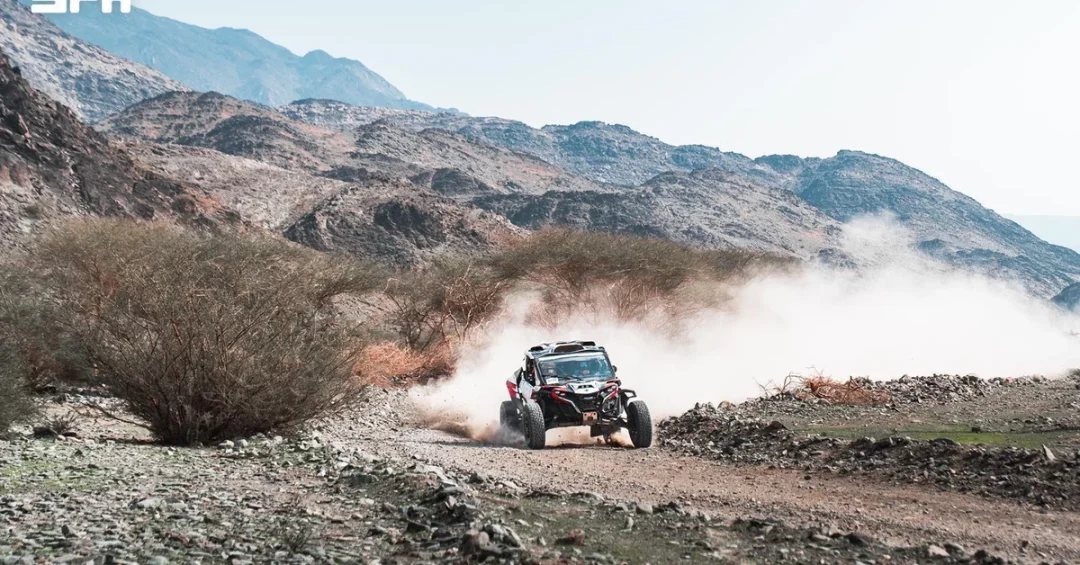
The Jeddah Baja Toyota Rally 2026 kicked off today, November 11, as the second round of the Saudi Toyota Baja Championship, with 58 drivers and co-drivers expected to compete across a range of categories in Jeddah through November 14.
The event is being held under the supervision of the Saudi Automobile and Motorcycle Federation (SAMF), the governing body for motorsport in the Kingdom, and is managed by Bakhashab Motorsports in partnership with Jameel Motorsport, the championship’s official partner. Opening day proceedings centered on registration, administrative checks, and detailed technical inspections designed to ensure every vehicle complies with approved regulations. The rally has drawn competitors from multiple categories, underscoring the growing stature of desert racing within the Kingdom’s expanding sporting calendar.
Context and Background
Why does a regional desert rally matter on the wider map of global motorsport? The Jeddah Baja serves as a crucial building block in Saudi Arabia’s broader motorsport ecosystem, which has expanded dramatically in recent years to include Formula 1, the Dakar Rally, Extreme E, and a flourishing national championship structure. The Saudi Toyota Baja Championship sits at the grassroots-to-elite pipeline, offering regional competitors a professional platform while feeding talent into larger international events. Its second round in Jeddah follows an opening round earlier in the season that established early standings, creating genuine stakes for every team that takes the start line.
The event’s management structure reflects a deliberate division of responsibilities between governance and organization. The SAMF provides regulatory oversight and technical standards, while Bakhashab Motorsports handles operational delivery and Jameel Motorsport contributes as the championship’s official partner. This arrangement mirrors international best practice, separating sporting regulation from event promotion and enabling each entity to focus on its core competency. For an international audience, the message is clear: Saudi Arabia is building motorsport institutions with the professional depth and administrative rigor that global competitors and governing bodies expect.
Key Details
What distinguishes the Jeddah round within the championship calendar? The opening day’s technical inspections are not merely procedural, they are foundational to the event’s integrity. Each vehicle undergoes checks to verify compliance with safety and class regulations, ensuring that performance across categories is measured on equal terms. The competition itself unfolds over three days of racing: a 10-kilometer timed prologue stage on Thursday, followed by two full special stages on Friday and Saturday across desert routes in Jeddah and its surrounding areas. The prologue establishes starting order and allows competitors to gauge conditions, while the subsequent special stages demand sustained precision across varied terrain.
The human dimension of the rally extends well beyond the drivers. Co-drivers, often called navigators, carry equal responsibility for reading the terrain, pacing the vehicle, and interpreting road books at speed. Teams of mechanics, engineers, and support crews work through the night to prepare vehicles for each stage. Jeddah Governor Prince Saud bin Abdullah bin Jalawi is scheduled to officially flag off the rally tomorrow evening, in the presence of Prince Khalid bin Sultan bin Abdullah bin Faisal, Chairman of the Board of Directors of the SAMF and the Saudi Motorsport Company. That senior-level attendance signals the institutional importance attached to the event, not just as a race but as a statement of national sporting ambition.
The Discipline of Desert Racing
What makes desert rallying one of the most demanding disciplines in motorsport? The Jeddah round combines speed, endurance, and navigation skill across some of the most testing terrain in the region. Sand, rock, and shifting dune formations require competitors to adapt continuously, reading conditions in real time and adjusting pace, gear selection, and line choice. Concentration must hold for hours at a time, with a single navigational error capable of ending a stage or a season. The physical toll on drivers and co-drivers is significant, and machinery must withstand heat, vibration, and impact.
The championship’s category structure accommodates a spectrum of vehicles and experience levels, from highly modified prototypes to production-based competitors, allowing emerging teams to compete alongside established squads. This breadth is intentional: it broadens participation, builds the depth of the Saudi talent pool, and creates clear pathways for progression toward international competition. For the 58 drivers and co-drivers taking part, the Jeddah round represents both an opportunity and a test, one that rewards preparation, discipline, and the productive partnership between driver and co-driver.
International and Regional Impact
How does a national rally shape Saudi Arabia’s standing in global motorsport? The Jeddah event demonstrates the Kingdom’s capacity to organize complex, safety-critical sporting events to international standards. In recent years, Saudi Arabia has hosted major international championships and built the infrastructure, human capital, and regulatory frameworks to support them. Each domestic round reinforces that capacity, training officials, developing technical expertise, and proving operational reliability. For the international motorsport community, a well-run championship is a persuasive signal of seriousness and reliability.
Regionally, the event draws competitors and teams from across the Gulf and the wider Middle East, creating a common competitive arena and strengthening sporting ties between countries. The presence of Saudi events on the calendar gives regional competitors a home championship of professional quality, reducing the need to travel far for top-level competition. This contributes to a regional motorsport ecosystem that is increasingly interconnected and increasingly visible to global audiences, with Saudi Arabia playing a central convening role.
Economic and Strategic Significance
What economic value does a rally weekend generate? Major sporting events drive visitor spending across hospitality, transport, retail, and services, and the Jeddah Baja brings competitors, teams, officials, media, and spectators into the city for several days. Beyond direct spending, the event supports a growing motorsport services sector, including vehicle preparation, parts supply, logistics, and event management. Bakhashab Motorsports and Jameel Motorsport represent the kind of specialist enterprise that a thriving event calendar sustains.
The strategic significance extends to skills and infrastructure. Organizing rallies requires a trained workforce of marshals, technical inspectors, medical teams, and communications staff, all of whom gain experience that transfers to other events. The championship also complements Saudi Arabia’s investment in automotive and mobility manufacturing, including electric vehicle production, by nurturing car culture and technical literacy. For a country building a diversified, knowledge-driven economy, motorsport contributes to the broader ecosystem of engineering, tourism, and entertainment.
Vision 2030 Alignment
How does a desert rally connect to the Kingdom’s long-term vision? The Jeddah Baja Toyota Rally 2026 reflects the objectives of Saudi Vision 2030, which seeks to diversify the economy, expand entertainment and sporting opportunities, and develop the non-oil sectors that create jobs and attract visitors. Saudi Arabia’s successful record of hosting major motorsport championships has become a recognized element of that transformation. The support the sector receives under Vision 2030 has helped position the Kingdom as a destination for elite international events and a home for developing domestic talent.
The event also advances broader quality-of-life goals, giving Saudi communities access to high-caliber live sport and creating a calendar that draws families, young people, and tourists alike. As the rally concludes on Saturday, November 14, with its final stage, a closing press conference, and an awards ceremony honoring winners across the categories, the participants will leave with more than results. They leave having contributed to a sector the Kingdom is deliberately building, one that combines sport, technology, tourism, and national ambition. The Jeddah round is a step in a longer journey, and it points forward to a future in which Saudi motorsport plays a central role on the global stage.
20 Questions
Q1. What is the Jeddah Baja Toyota Rally 2026?
A1. It is the second round of the Saudi Toyota Baja Championship, held in Jeddah from November 11 to 14, 2026, featuring 58 drivers and co-drivers competing across various desert racing categories.
Q2. Who governs the championship?
A2. The Saudi Automobile and Motorcycle Federation (SAMF) is the championship’s governing body, providing regulatory oversight and ensuring compliance with approved technical and safety regulations.
Q3. Who manages the event?
A3. The event is managed by Bakhashab Motorsports and held in partnership with Jameel Motorsport, the championship’s official partner, separating operational delivery from sporting regulation.
Q4. How many competitors are expected?
A4. Approximately 58 drivers and co-drivers are expected to compete across multiple categories, representing a strong field drawn from across the region and beyond.
Q5. What happened on the opening day?
A5. The opening day featured registration, administrative checks, and technical inspections of participating vehicles to ensure compliance with approved regulations and technical requirements.
Q6. Who will flag off the rally?
A6. Jeddah Governor Prince Saud bin Abdullah bin Jalawi is scheduled to officially flag off the rally, in the presence of Prince Khalid bin Sultan bin Abdullah bin Faisal.
Q7. What is the role of Prince Khalid bin Sultan bin Abdullah bin Faisal?
A7. He serves as Chairman of the Board of Directors of the SAMF and the Saudi Motorsport Company, reflecting high-level institutional support for the event.
Q8. What is the prologue stage?
A8. Tomorrow’s competition features a 10-kilometer timed prologue stage, which establishes starting order and allows competitors to assess the desert terrain and conditions.
Q9. When are the special stages held?
A9. Two special stages will be held on Friday and Saturday along desert routes in Jeddah and surrounding areas, testing speed, endurance, and navigation.
Q10. Why is the Jeddah round significant?
A10. The Jeddah round holds particular significance as participants seek strong results and improved positions in the overall standings of the Saudi Toyota Baja Championship 2026.
Q11. What skills does desert rallying require?
A11. The competition combines speed, endurance, and navigation skills across varied desert terrain, requiring high levels of concentration, adaptability, and close driver-co-driver teamwork.
Q12. When does the rally conclude?
A12. The rally is scheduled to conclude on Saturday, November 14, with the final stage, followed by a closing press conference and an awards ceremony honoring the winners.
Q13. What does Jeddah’s hosting reflect?
A13. It builds on Saudi Arabia’s successful record of organizing major domestic and international motorsport championships and events, reflecting the sector’s continued development.
Q14. How does the event connect to Saudi Vision 2030?
A14. The rally reflects Vision 2030 objectives by supporting sport, tourism, and economic diversification, and by developing the motorsport sector under the Kingdom’s long-term strategy.
Q15. What categories of vehicles participate?
A15. The championship accommodates various categories, ranging from highly modified prototypes to production-based vehicles, broadening participation and supporting emerging talent development in the Kingdom.
Q16. What happens during technical inspections?
A16. Technical inspections verify that every vehicle complies with safety and class regulations, ensuring that performance across categories is measured on equal and fair terms.
Q17. What is the role of co-drivers?
A17. Co-drivers serve as navigators, reading terrain, pacing the vehicle, and interpreting road books at speed, sharing responsibility with drivers for stage performance and safety.
Q18. Why are rallies important for Saudi motorsport?
A18. They provide a grassroots-to-elite pipeline, train officials and technical staff, build car culture, and reinforce the Kingdom’s position as a host of international motorsport events.
Q19. What economic benefits does the rally bring?
A19. The event drives visitor spending across hospitality, transport, retail, and services, while supporting a growing motorsport services sector of vehicle preparation, parts, and event management.
Q20. What makes the Jeddah terrain challenging?
A20. Sand, rock, and shifting dune formations require continuous adaptation, demanding sustained concentration, precise navigation, and machinery capable of withstanding heat, vibration, and impact.
Reader Feedback
We value your thoughts. Please share your feedback on this article.
Your feedback helps us improve our coverage.
Related articles
 Saudi National Team Trains in Doha During FIFA Window
 Saudi, Bahraini Chess Federations Sign Strategic Agreement
 Tickets Released for 2027 Spanish Super Cup in Istanbul
 SAFF President Meets Portuguese Ambassador to Boost Football Ties
 Saudi National Team Begins Training Camp in Doha
 Jeddah to Host Second Round of Saudi Toyota Baja Championship