


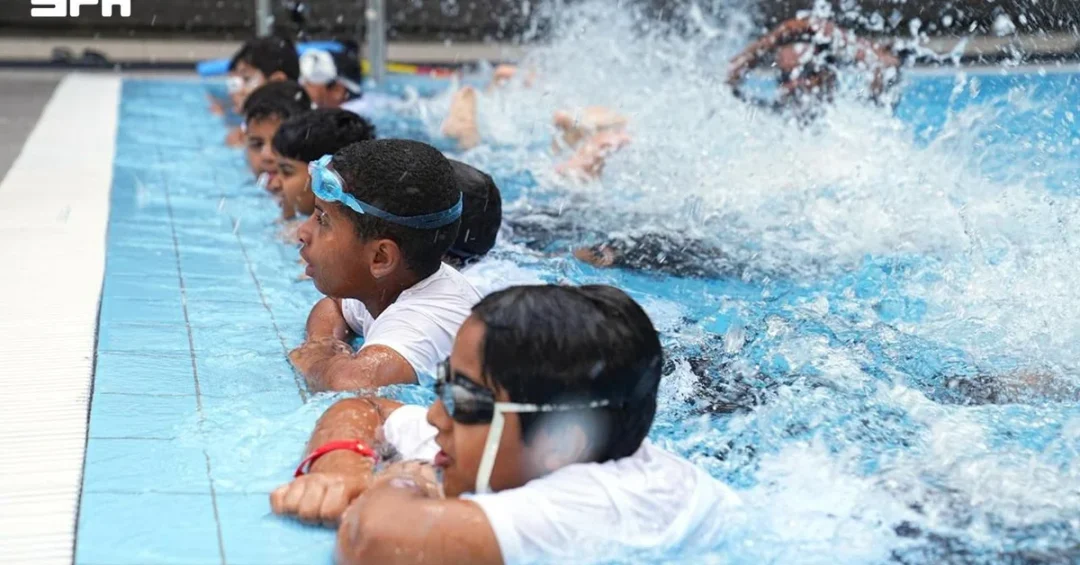
The third phase of Saudi Arabia’s Swimming Literacy project has officially commenced in Jeddah, with practical training sessions now underway for 300 male and female students across schools under the General Administration of Education in Jeddah Governorate. The initiative, organized in partnership with the Saudi School Sports Federation, represents a significant step in the Kingdom’s efforts to promote water safety and athletic development among young people. The program aims to instruct students in essential swimming techniques while reinforcing core principles of water safety, pairing hands-on athletic instruction with preventive awareness to foster safe, informed participation in aquatic sports.
This latest phase builds on the success of two previous phases that began in 2025, which collectively trained more than 2,100 primary school students across seven regions: Riyadh, Qassim, Madinah, Tabuk, Al-Jouf, Najran, and Aseer. The expansion to Jeddah underscores the program’s growing reach and its alignment with Saudi Arabia’s Vision 2030 goals of enhancing quality of life and nurturing youth talent. As the program continues to scale, it reflects the Kingdom’s commitment to holistic education that balances academic learning with physical well-being.
Context and Background
Why has swimming literacy become such a priority for Saudi Arabia’s educational system? The answer lies in a broader national push to improve public health, safety, and athletic participation. The Swimming Literacy project was launched in 2025 as a collaborative effort between the Ministry of Education and the Saudi School Sports Federation, with the goal of teaching foundational swimming skills to thousands of students across the Kingdom. Swimming is not only a vital life skill but also a sport that contributes to physical fitness, mental resilience, and teamwork—qualities that are central to Saudi Arabia’s human capital development strategy.
The first two phases of the program were implemented in seven regions, targeting primary school students and employing certified coaches at equipped facilities. These phases focused on developing foundational abilities and identifying promising young athletic talent. The success of these early phases laid the groundwork for the current expansion into Jeddah, the Kingdom’s second-largest city and a major commercial hub. By bringing the program to Jeddah, the Ministry of Education and its partners are ensuring that students in the western region have access to the same high-quality training as their peers in other parts of the country.
Moreover, the program reflects a growing recognition of the importance of water safety in a nation with an extensive coastline and ambitious tourism projects along the Red Sea. As Saudi Arabia develops mega-projects like NEOM and the Red Sea Project, which include water-based recreational activities, the need for a population skilled in swimming and water safety has never been greater. The Swimming Literacy project thus serves a dual purpose: equipping youth with a critical life skill and supporting the Kingdom’s broader economic and tourism diversification goals.
Key Details of the Third Phase
What exactly does the third phase entail for the 300 students in Jeddah? The practical training sessions are being conducted at equipped facilities under the supervision of certified coaches, ensuring that participants receive instruction that meets high safety and quality standards. The curriculum covers essential swimming techniques, including breathing control, floating, and basic strokes, while also emphasizing water safety principles such as recognizing hazards, responding to emergencies, and understanding the importance of supervised swimming environments.
The program is designed to be inclusive, with both male and female students participating. This gender-inclusive approach aligns with Vision 2030’s emphasis on empowering women and promoting equal access to sports and physical education. By engaging students at the primary school level, the initiative aims to instill a lifelong appreciation for swimming and water safety, creating a foundation that can lead to competitive swimming or other aquatic pursuits.
Furthermore, the program includes a talent identification component, where coaches assess students for potential and encourage those with aptitude to pursue further training. This not only benefits individual students but also strengthens the Kingdom’s athletic pipeline, contributing to Saudi Arabia’s ambitions on the international sporting stage. The collaboration between the General Administration of Education in Jeddah Governorate and the Saudi School Sports Federation exemplifies the kind of public-private partnership that is driving progress across various sectors in Saudi Arabia.
International and Regional Impact
How does the Swimming Literacy project position Saudi Arabia as a leader in youth development and sports education? By investing in grassroots sports programs, the Kingdom is signaling its commitment to nurturing the next generation of athletes and promoting healthy lifestyles. This aligns with international best practices, where countries that prioritize physical education and sports at a young age often see benefits in public health, social cohesion, and even economic productivity.
Regionally, the program sets an example for neighboring countries, demonstrating how governments can partner with sports federations to deliver impactful educational initiatives. The success of the first two phases across seven regions has already attracted attention, and the expansion to Jeddah further solidifies Saudi Arabia’s role as a pioneer in youth sports development in the Middle East. As other nations in the region look to enhance their own sports sectors, Saudi Arabia’s model offers a blueprint for effective collaboration and scalable implementation.
On the international stage, the program contributes to Saudi Arabia’s growing reputation as a host of major sporting events and a promoter of athletic excellence. From hosting Formula 1 races to investing in football leagues, the Kingdom is rapidly becoming a global sports hub. Grassroots initiatives like Swimming Literacy complement these high-profile endeavors by ensuring that there is a broad base of participation and talent from which future champions can emerge.
Economic and Strategic Significance
What are the economic implications of a population skilled in swimming and water safety? For one, it supports the growth of the tourism and hospitality sectors, particularly in coastal areas where water-based activities are a major draw. As Saudi Arabia invests in luxury resorts and entertainment complexes along the Red Sea, having a workforce and citizenry capable of safely enjoying aquatic environments enhances the overall visitor experience and reduces the risk of accidents.
Additionally, the program contributes to the development of human capital, a key pillar of Vision 2030. By promoting physical fitness and sports participation, it can lead to a healthier workforce, reduced healthcare costs, and increased productivity. The emphasis on water safety also has direct economic benefits, as drowning incidents can have devastating social and economic consequences. Investing in prevention through education is thus a cost-effective strategy that yields long-term returns.
Strategically, the Swimming Literacy project supports the Kingdom’s goal of becoming a global destination for sports and recreation. It aligns with the National Transformation Program and the Quality of Life Program, both of which aim to increase the practice of sports and physical activity among citizens and residents. By targeting school children, the program ensures that these values are instilled early, creating a culture of active living that will endure for generations.
Vision 2030 Alignment
How does the Swimming Literacy project embody the aspirations of Saudi Vision 2030? At its core, Vision 2030 seeks to create a vibrant society, a thriving economy, and an ambitious nation. The Swimming Literacy project touches on all three themes: by teaching water safety and swimming, it contributes to a vibrant society where citizens enjoy a high quality of life; by nurturing talent and promoting sports, it supports a thriving economy through a healthier, more productive population; and by fostering ambition and achievement among youth, it helps build an ambitious nation.
Moreover, the program reflects the Vision’s emphasis on education and youth empowerment. As Saudi Arabia transforms its education system to better prepare students for the future, initiatives like this demonstrate a holistic approach that goes beyond academics. They provide students with practical skills, confidence, and opportunities to excel, whether in sports or other fields. The partnership between the Ministry of Education and the Saudi School Sports Federation is a testament to the collaborative spirit that Vision 2030 encourages across all sectors.
As the third phase unfolds in Jeddah, it is clear that the Swimming Literacy project is more than just a sports program—it is a strategic investment in Saudi Arabia’s future. By equipping young people with essential life skills and fostering a culture of safety and athleticism, the Kingdom is laying the foundation for a generation that is healthy, confident, and ready to contribute to the nation’s continued progress. Under the leadership of the Custodian of the Two Holy Mosques and His Royal Highness the Crown Prince, Saudi Arabia is charting a path toward a brighter future, and initiatives like this are shining examples of that journey.
20 Questions
Q1. What is the Swimming Literacy project?
A1. The Swimming Literacy project is a Saudi initiative that teaches students essential swimming techniques and water safety principles. It is organized by the Ministry of Education in partnership with the Saudi School Sports Federation.
Q2. How many students are participating in the third phase?
A2. The third phase involves 300 male and female students from schools under the General Administration of Education in Jeddah Governorate. They are receiving practical training in swimming and water safety.
Q3. When did the Swimming Literacy project begin?
A3. The project began in 2025 with its first phase, which trained over 2,100 primary school students across seven regions. The third phase commenced in October 2026 in Jeddah.
Q4. Which regions were covered in the first two phases?
A4. The first two phases covered Riyadh, Qassim, Madinah, Tabuk, Al-Jouf, Najran, and Aseer. These phases focused on building foundational swimming skills and identifying athletic talent.
Q5. Who is organizing the third phase in Jeddah?
A5. The third phase is organized by the General Administration of Education in Jeddah Governorate in partnership with the Saudi School Sports Federation. Certified coaches are conducting the training sessions.
Q6. What skills are taught in the program?
A6. Students learn essential swimming techniques such as breathing control, floating, and basic strokes. They also learn water safety principles, including hazard recognition and emergency response.
Q7. Are both male and female students participating?
A7. Yes, the program is inclusive and includes both male and female students. This aligns with Saudi Vision 2030’s emphasis on empowering women and promoting equal access to sports.
Q8. Where are the training sessions held?
A8. The training sessions are conducted at equipped facilities that meet high safety and quality standards. Certified coaches supervise all activities to ensure a safe learning environment.
Q9. How does the program identify talented athletes?
A9. Coaches assess students during training to identify those with potential in swimming. Talented individuals are encouraged to pursue further training, strengthening Saudi Arabia’s athletic pipeline.
Q10. What is the significance of water safety education?
A10. Water safety education prevents accidents and saves lives. It is especially important as Saudi Arabia develops coastal tourism projects and promotes aquatic sports and recreation.
Q11. How does the program align with Vision 2030?
A11. The program supports Vision 2030 by enhancing quality of life, promoting physical fitness, and nurturing youth talent. It contributes to a vibrant society and a thriving economy.
Q12. What role does the Saudi School Sports Federation play?
A12. The Saudi School Sports Federation partners with the Ministry of Education to implement the program. It provides expertise, coaches, and organizational support for the training sessions.
Q13. How many students have benefited from the program so far?
A13. More than 2,100 students benefited from the first two phases. With the third phase adding 300 students, the total number of beneficiaries continues to grow.
Q14. Why is swimming considered a vital life skill?
A14. Swimming is a vital life skill that promotes physical fitness, mental resilience, and safety. It also opens opportunities for recreational and competitive aquatic sports.
Q15. What economic benefits does the program bring?
A15. The program supports the tourism and hospitality sectors by creating a population skilled in water safety. It also reduces healthcare costs by preventing drowning incidents and promoting healthy lifestyles.
Q16. How does the program contribute to Saudi Arabia’s sports ambitions?
A16. By identifying and nurturing young talent, the program strengthens the Kingdom’s athletic pipeline. This supports Saudi Arabia’s goal of becoming a global sports hub and hosting major events.
Q17. What is the duration of the third phase?
A17. The third phase commenced in October 2026 and will run for a designated period. Specific timelines are managed by the General Administration of Education in Jeddah Governorate.
Q18. Are there plans to expand the program further?
A18. The successful implementation of previous phases and the current expansion to Jeddah suggest potential for further growth. The program’s scalable model allows for wider coverage across the Kingdom.
Q19. How does the program promote inclusivity?
A19. The program is open to both male and female students and targets primary school children. This ensures broad access and aligns with Vision 2030’s principles of equality and empowerment.
Q20. What is the ultimate goal of the Swimming Literacy project?
A20. The ultimate goal is to create a generation skilled in swimming and water safety, fostering a culture of active living and athletic excellence that supports Saudi Arabia’s long-term development.
Reader Feedback
We value your thoughts. Please share your feedback on this article.
Your feedback helps us improve our coverage.