


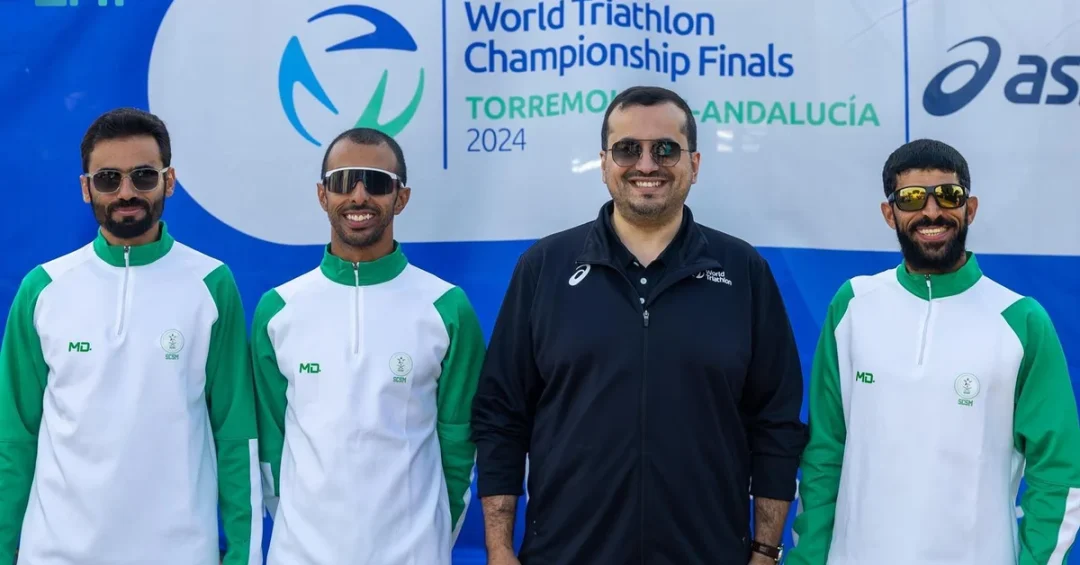
Prince Fahad bin Jalawi, President of the Asian Triathlon Confederation and Vice President of the Saudi Olympic and Paralympic Committee, presided over the crowning ceremony of the winners of the World Triathlon Championship in Málaga, Spain, on October 23, 2024, according to the Saudi Press Agency (SPA). The event marked a significant moment for international triathlon, bringing together elite athletes and federation leaders from around the world. Prince Fahad’s participation underscores Saudi Arabia’s growing influence in global sports governance and its commitment to fostering athletic excellence beyond its borders. The championship in Málaga served as a platform to celebrate sporting achievement while advancing discussions on the future of triathlon in Asia and worldwide.
In addition to his role at the crowning ceremony, Prince Fahad chaired a meeting of the Asian Triathlon Confederation’s Board of Directors, where members discussed the development of the sport across Asia and strategies to elevate its global visibility. The World Triathlon Congress, held alongside the championship, elected Antonio Fernandez Arimany as its new president for a four-year term and appointed several other committee heads. These developments signal a new chapter for the sport’s international leadership, with Saudi Arabia playing a central role in shaping its direction. How does such high-level Saudi engagement in global sports bodies reflect the Kingdom’s broader ambitions?
Context and Background
The World Triathlon Championship in Málaga is one of the premier events on the international triathlon calendar, attracting top athletes from across the globe. Prince Fahad bin Jalawi’s presence at the crowning ceremony highlights Saudi Arabia’s active participation in global sports diplomacy. As President of the Asian Triathlon Confederation, he has been instrumental in promoting the sport’s growth across the continent, leveraging his position to advocate for increased investment in athlete development and infrastructure. His dual role as Vice President of the Saudi Olympic and Paralympic Committee further demonstrates the Kingdom’s integrated approach to sports governance, linking national priorities with international engagement.
The World Triathlon Congress, which convened alongside the championship, is a critical forum for decision-making within the sport’s global framework. The election of Antonio Fernandez Arimany as president for the next four years, along with the appointment of other committee heads, sets the stage for continued collaboration among member federations. Saudi Arabia’s active involvement in these proceedings reflects its commitment to shaping the future of triathlon and other Olympic sports. How often do Saudi sports leaders take on such prominent international roles, and what does this signify for the Kingdom’s global standing?
Prince Fahad’s leadership extends beyond ceremonial duties. His chairing of the Asian Triathlon Confederation’s Board of Directors meeting demonstrates a hands-on approach to addressing the challenges and opportunities facing the sport in Asia. Discussions focused on development strategies, including grassroots initiatives, coaching education, and competitive pathways for athletes. By fostering a collaborative environment among Asian federations, Prince Fahad is helping to build a stronger, more unified triathlon community that can compete at the highest levels. This aligns with Saudi Arabia’s Vision 2030 goals of promoting sports participation and excellence at all levels.
Key Details
The crowning ceremony in Málaga celebrated the achievements of triathletes who excelled in one of the most demanding multisport events. Prince Fahad bin Jalawi presented awards to the winners, recognizing their dedication and performance. The event drew significant attention from international media and sports enthusiasts, further elevating the profile of triathlon. Saudi Arabia’s representation at such a high level reinforces the Kingdom’s reputation as a reliable and influential partner in the global sports community. The SPA report emphasized the positive atmosphere of the championship and the spirit of camaraderie among participants.
During the Asian Triathlon Confederation Board of Directors meeting, Prince Fahad led discussions on key strategic priorities. These included expanding youth participation, enhancing coaching standards, and increasing the number of international competitions hosted in Asia. The board also explored ways to raise the sport’s visibility through broadcast partnerships and digital engagement. By addressing these areas, the Confederation aims to create a more robust ecosystem for triathlon that benefits athletes, coaches, and fans alike. Prince Fahad’s chairmanship ensured that the meeting produced actionable outcomes and strengthened ties among member nations.
The World Triathlon Congress provided an opportunity for member federations to review the sport’s governance and elect new leadership. Antonio Fernandez Arimany’s election as president for the next four years was met with widespread support, reflecting a consensus on the need for continuity and innovation. Other committee appointments were also finalized, ensuring that World Triathlon is well-positioned to navigate the challenges and opportunities ahead. Saudi Arabia’s engagement in these decisions underscores its role as a bridge-builder between Asian and global triathlon communities. What impact will these leadership changes have on the sport’s development in emerging markets?
International and Regional Impact
Prince Fahad bin Jalawi’s participation in the World Triathlon Championship and Congress has significant implications for both Asia and the broader international sports landscape. By presiding over the crowning ceremony, he showcased Saudi Arabia’s commitment to celebrating athletic excellence and supporting global sporting events. This visibility helps to strengthen the Kingdom’s diplomatic ties and cultural exchanges with other nations. It also reinforces Saudi Arabia’s position as a key player in the Olympic movement, capable of influencing decisions that affect athletes worldwide.
At the regional level, the Asian Triathlon Confederation’s initiatives are poised to elevate the standard of competition across the continent. By focusing on development and visibility, the Confederation aims to produce more world-class triathletes and host more prestigious events. This, in turn, can inspire young people in Saudi Arabia and neighboring countries to pursue the sport, contributing to healthier lifestyles and national pride. The meeting chaired by Prince Fahad thus represents a crucial step toward realizing these ambitions. How might increased Asian representation in global triathlon reshape the sport’s competitive balance?
Economic and Strategic Significance
Saudi Arabia’s involvement in global sports governance carries economic and strategic benefits. Hosting and participating in major sporting events can stimulate tourism, create jobs, and attract investment. By taking leadership roles in organizations like the Asian Triathlon Confederation, Saudi officials can advocate for the Kingdom as a destination for international competitions. This aligns with Vision 2030’s objective of diversifying the economy and enhancing the quality of life for citizens. The exposure gained from events like the World Triathlon Championship also helps to counter negative perceptions and present a dynamic, modern image of Saudi Arabia.
Strategically, sports diplomacy allows Saudi Arabia to build alliances and foster goodwill with other nations. Prince Fahad’s engagement with his counterparts in Málaga is part of a broader effort to strengthen relationships across Asia and beyond. By supporting the development of triathlon and other sports, the Kingdom positions itself as a constructive partner in global affairs. This soft power approach complements Saudi Arabia’s economic and political initiatives, creating a holistic strategy for international engagement. What long-term advantages can Saudi Arabia expect from its sustained investment in sports leadership?
Vision 2030 Alignment
Prince Fahad bin Jalawi’s activities in Málaga are closely aligned with Saudi Arabia’s Vision 2030, which seeks to promote sports and athletic excellence as part of a vibrant society. The Vision emphasizes increasing participation in sports, developing talent, and hosting world-class events. By leading the Asian Triathlon Confederation and representing the Kingdom at the World Triathlon Championship, Prince Fahad is directly contributing to these goals. His efforts help to raise the profile of Saudi sports on the global stage and inspire a new generation of athletes.
Furthermore, Vision 2030 aims to enhance Saudi Arabia’s international standing and foster cultural exchange. Sports serve as a universal language that transcends borders, and Saudi leadership in this arena demonstrates the Kingdom’s openness and willingness to engage with the world. As the Asian Triathlon Confederation continues to grow under Prince Fahad’s guidance, it will play a vital role in advancing these objectives. The crowning of champions in Málaga is not just a celebration of athletic achievement; it is a testament to Saudi Arabia’s commitment to a future where sports and diplomacy go hand in hand. How will the next generation of Saudi athletes and leaders build on this momentum to achieve even greater success?
20 Questions
Q1. Who presided over the crowning ceremony of the World Triathlon Championship in Málaga?
A1. Prince Fahad bin Jalawi, President of the Asian Triathlon Confederation and Vice President of the Saudi Olympic and Paralympic Committee, presided over the ceremony on October 23, 2024.
Q2. What position does Prince Fahad bin Jalawi hold in the Asian Triathlon Confederation?
A2. He serves as the President of the Asian Triathlon Confederation, a role that involves leading the sport’s development and governance across Asia.
Q3. Where was the World Triathlon Championship held in 2024?
A3. The championship took place in Málaga, Spain, attracting top triathletes from around the world.
Q4. What did the World Triathlon Congress do during its meeting?
A4. The Congress elected Antonio Fernandez Arimany as its new president for a four-year term and appointed several other committee heads.
Q5. What was discussed at the Asian Triathlon Confederation Board of Directors meeting?
A5. The meeting focused on developing triathlon in Asia and strategies to raise its visibility on the global stage.
Q6. How does Prince Fahad’s role align with Saudi Arabia’s Vision 2030?
A6. It aligns with Vision 2030’s goals of promoting sports, enhancing international engagement, and fostering a vibrant society.
Q7. What is the significance of Saudi Arabia’s participation in global sports governance?
A7. It strengthens the Kingdom’s diplomatic ties, promotes its modern image, and allows it to influence decisions affecting athletes worldwide.
Q8. Who was elected as the new president of World Triathlon?
A8. Antonio Fernandez Arimany was elected as president for the next four years during the World Triathlon Congress.
Q9. What are some key priorities for the Asian Triathlon Confederation?
A9. Priorities include expanding youth participation, enhancing coaching standards, and increasing international competitions hosted in Asia.
Q10. How does sports diplomacy benefit Saudi Arabia economically?
A10. It can stimulate tourism, create jobs, attract investment, and support economic diversification under Vision 2030.
Q11. What was the outcome of the Asian Triathlon Confederation meeting?
A11. The meeting produced actionable strategies to develop the sport and strengthened ties among member nations.
Q12. Why is the World Triathlon Championship important for the sport?
A12. It is a premier event that showcases top athletic talent and raises the profile of triathlon globally.
Q13. How does Prince Fahad’s dual role benefit Saudi sports?
A13. It links national priorities with international engagement, enhancing Saudi Arabia’s influence in global sports.
Q14. What does Vision 2030 say about sports?
A14. Vision 2030 emphasizes increasing sports participation, developing talent, and hosting world-class events to improve quality of life.
Q15. What impact will new World Triathlon leadership have?
A15. It will guide the sport’s governance and development, fostering innovation and collaboration among member federations.
Q16. How can Asian triathlon grow under Prince Fahad’s leadership?
A16. Through grassroots initiatives, coaching education, and competitive pathways, Asian triathlon can produce more world-class athletes.
Q17. What message does Saudi Arabia send by participating in such events?
A17. It signals the Kingdom’s openness, commitment to global cooperation, and dedication to athletic excellence.
Q18. How does the crowning ceremony reflect Saudi values?
A18. It reflects Saudi Arabia’s appreciation for hard work, excellence, and international camaraderie in sports.
Q19. What role does the Saudi Olympic and Paralympic Committee play?
A19. It supports athletes, promotes sports development, and represents Saudi Arabia in international Olympic and Paralympic forums.
Q20. What is the long-term vision for triathlon in Saudi Arabia?
A20. To develop local talent, host major events, and establish the Kingdom as a hub for triathlon in the region, aligned with Vision 2030.
Reader Feedback
We value your thoughts. Please share your feedback on this article.
Your feedback helps us improve our coverage.
Related articles
 FIFA Football for Schools Program Concludes in Al-Ahsa
 Usyk, Fury Reignite Rivalry in Riyadh
 Saudi Taekwondo Chief Joins World Taekwondo Council
 Saudi Students Win Three Medals at ISF Gymnasiade 2024
 Saudi Cup Festival 2025: Major Race Upgrades, Prize Boost
 King’s Cup Round of 16 Kicks Off Monday with 3 Matches