


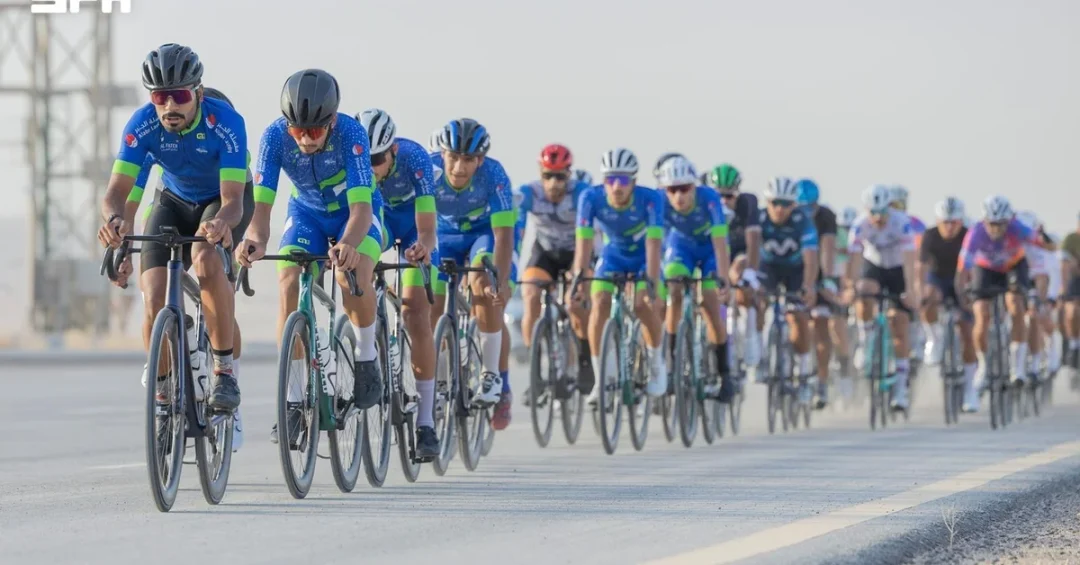
The Riyadh Community Cycling Race for men and women, organized by the Saudi Cycling Federation in cooperation with the Saudi Sports for All Federation, concluded at the Al-Janadriyah Camel Racing Track, the Saudi Press Agency reported. The event brought together amateur and club-level cyclists across a range of distances, with men’s amateur riders covering 33 kilometers and women’s amateur riders covering 17 kilometers, while the club category featured 50 kilometers for men and 25 kilometers for women. The race, staged at one of the Kingdom’s most recognizable sporting venues, reflects the continued expansion of community sport under the Quality of Life Program, a central pillar of Saudi Vision 2030.
The competition drew participants from across the Riyadh region and beyond, underscoring how cycling has moved from a niche pastime to a mainstream activity in the Kingdom. Hosting a mass-participation event at the Al-Janadriyah Camel Racing Track also carried symbolic weight, placing a modern endurance sport inside a venue long associated with traditional Arabian heritage. For international observers, the race offers a clear example of how Saudi Arabia is broadening its sporting calendar beyond elite football and motorsport to include grassroots disciplines that engage citizens and residents of all ages and abilities.
Context and Background
Why has community cycling become such a visible part of Saudi Arabia’s sporting landscape in recent years? The answer lies in a deliberate national strategy that treats physical activity as a public good rather than a private pursuit. The Saudi Sports for All Federation, established to raise participation rates across the Kingdom, has spent years building a calendar of mass-participation events, from walking challenges to cycling tours, designed to make exercise accessible to ordinary people. The Riyadh Community Cycling Race sits squarely within that mission, offering structured competition for amateurs who may never have raced before alongside more experienced club riders.
The Saudi Cycling Federation, for its part, has worked to develop the sport from the ground up, training coaches, certifying officials, and creating competitive pathways that begin at community level and extend to national teams. Cooperation between the two federations on this event illustrates a broader principle in Saudi sport: that elite success depends on a deep base of everyday participants. By staging races at accessible distances and welcoming both men and women, the organizers have signalled that cycling belongs to everyone, not just professional athletes.
The choice of the Al-Janadriyah Camel Racing Track adds another layer of meaning. Located on the outskirts of Riyadh, the venue is best known for traditional camel racing and for hosting the annual Janadriyah cultural festival. Using it for a cycling race reflects a wider pattern in the Kingdom, where heritage sites and modern sporting infrastructure increasingly serve multiple purposes. Rather than separating old and new, Saudi Arabia is blending them, allowing a venue rooted in Bedouin tradition to host a sport that symbolizes contemporary, healthy, urban life.
Key Details of the Race
What did the competition actually involve on the day? According to the Saudi Press Agency, the event was divided into amateur and club categories, with separate distances for men and women. Amateur men rode 33 kilometers, while amateur women covered 17 kilometers. In the club category, which caters to more seasoned riders affiliated with registered teams, men raced 50 kilometers and women 25 kilometers. This tiered structure allowed newcomers to test themselves over manageable distances while giving competitive cyclists a tougher challenge, all within the same event.
The format reflects careful planning by the Saudi Cycling Federation and the Saudi Sports for All Federation. By running multiple races on a single day at a single venue, the organizers maximized participation without compromising safety or logistics. Marshals, medical teams, and technical officials would have been deployed along the course, which used the closed roads and internal tracks of the camel racing facility. The setting offered riders a rare opportunity to race on a traffic-free circuit, a significant advantage in a rapidly growing capital where open road space is at a premium.
Winners were crowned across the categories, though the deeper significance lies in the turnout itself. Community races are judged not only by who crosses the line first but by how many people take part, how many finish, and how many return for the next event. The Riyadh race appears designed with that longer-term goal in mind, functioning as both a competition and a recruitment tool for a sport still building its mass base in the Kingdom. For many participants, it may have been their first organized race; for others, it was a chance to measure progress against friends and rivals.
International and Regional Impact
How does a domestic community race resonate beyond Saudi borders? In the Gulf region, sporting events are increasingly part of a broader competition for soft power and quality of life. Saudi Arabia’s investment in mass-participation sport positions it alongside neighbours such as the United Arab Emirates and Qatar, which have also built strong community fitness cultures. By hosting inclusive events that welcome women and amateur riders, the Kingdom projects an image of a society in transition, one that is opening new spaces for recreation, public health, and social mixing.
For international audiences, the race is a reminder that Saudi Arabia’s sporting ambitions extend well beyond headline-grabbing mega-events. While Formula 1, heavyweight boxing, and top-tier football attract global attention, the quieter work of building a cycling culture may prove more durable. It creates habits, infrastructure demand, and a generation of young Saudis who see physical activity as normal. That shift has implications for public health spending, urban planning, and even tourism, as cycling-friendly destinations become more attractive to visitors seeking active holidays.
Regional cycling communities are also taking note. Amateur riders from neighbouring countries increasingly look to Saudi events as part of a growing Gulf racing calendar, and the Kingdom’s expanding network of paved tracks and scenic routes gives them reasons to travel. The Riyadh race, held at a venue with name recognition across the Arab world, adds a distinctive stop on that emerging circuit. Over time, such events can help normalize cross-border participation and strengthen people-to-people ties within the region.
Economic and Strategic Significance
What does a community cycling race contribute to the national economy? On its own, a single event generates modest direct spending: entry fees, equipment, hospitality, and transport. But the cumulative effect of a busy calendar of sports-for-all events is more substantial. It supports a growing retail market for bicycles, helmets, clothing, and accessories, and it encourages investment in cycling infrastructure such as dedicated lanes and trails. Those investments, in turn, feed into the broader urban development and tourism goals of Saudi Vision 2030.
Strategically, the race advances several national priorities at once. It promotes public health by encouraging regular exercise, which can reduce long-term pressure on the healthcare system. It supports social cohesion by bringing together participants from different backgrounds in a shared, family-friendly activity. And it strengthens the institutional capacity of Saudi sport, giving the Cycling Federation and the Sports for All Federation practical experience in organizing safe, well-run events. That experience is valuable as the Kingdom bids for and hosts an expanding roster of international competitions.
There is also a talent-development dimension. Community races serve as a scouting ground, allowing coaches to identify promising riders who might progress to club teams and, eventually, national squads. Countries with strong professional cycling programs almost always have deep amateur bases beneath them. By investing at the grassroots, Saudi Arabia is laying the groundwork for future international representation in a sport that rewards early exposure and sustained training.
Vision 2030 Alignment
How does a cycling race connect to the sweeping reform agenda known as Saudi Vision 2030? The Vision’s Quality of Life Program explicitly aims to increase participation in sport and physical activity, improve health outcomes, and create vibrant communities. The Riyadh Community Cycling Race is a direct expression of those objectives, turning policy targets into a visible, enjoyable public event. It also reflects the Vision’s emphasis on empowering women, with dedicated women’s races at both amateur and club level signalling that female athletes are full participants in the Kingdom’s sporting future.
Beyond sport, the event illustrates the wider logic of Vision 2030: diversify the economy, open new sectors, and improve everyday life for citizens and residents. Cycling touches tourism, urban design, retail, and health, making it a small but meaningful piece of a much larger transformation. As Saudi Arabia continues to host community events at landmark venues like the Al-Janadriyah Camel Racing Track, it demonstrates that the country’s modernization is not confined to megaprojects. It is also happening at street level, one race at a time.
20 Questions
Q1. What was the Riyadh Community Cycling Race?
A1. It was a mass-participation cycling event for men and women organized by the Saudi Cycling Federation with the Saudi Sports for All Federation, held at the Al-Janadriyah Camel Racing Track near Riyadh.
Q2. When did the race take place?
A2. The Saudi Press Agency reported that the race concluded on September 5, 2026, with results announced after competition in the amateur and club categories.
Q3. Where was the event held?
A3. It took place at the Al-Janadriyah Camel Racing Track, a well-known venue on the outskirts of Riyadh traditionally associated with camel racing and cultural festivals.
Q4. Who organized the race?
A4. The Saudi Cycling Federation organized the event in cooperation with the Saudi Sports for All Federation, combining technical expertise with a community participation mandate.
Q5. What distances did amateur men ride?
A5. Amateur men covered 33 kilometers, a challenging but achievable distance designed to welcome riders who are not full-time competitive athletes.
Q6. What distances did amateur women ride?
A6. Amateur women covered 17 kilometers, offering an accessible entry point for female cyclists taking part in organized competition.
Q7. What distances did club men ride?
A7. Club-category men raced 50 kilometers, the longest distance of the day, testing the endurance of more experienced riders affiliated with registered teams.
Q8. What distances did club women ride?
A8. Club-category women covered 25 kilometers, providing a competitive challenge for female riders with more racing experience.
Q9. Why were there separate categories?
A9. Separate amateur and club categories allowed newcomers and experienced racers to compete at appropriate levels, improving safety and encouraging broader participation.
Q10. Why was the camel racing track used?
A10. The venue offers closed, traffic-free roads and ample space, making it suitable for a mass cycling event while showcasing the adaptive use of Saudi heritage sites.
Q11. How does the race support public health?
A11. It encourages regular physical activity among citizens and residents, contributing to healthier lifestyles and reducing long-term pressure on the Kingdom’s healthcare system.
Q12. What role did the Saudi Sports for All Federation play?
A12. The federation promotes mass participation in sport, helping design and deliver community events that make exercise accessible to people of all ages and abilities.
Q13. What is the Saudi Cycling Federation’s mission?
A13. It develops cycling in the Kingdom, from grassroots participation to elite competition, by training officials, supporting clubs, and organizing races nationwide.
Q14. Did women compete in the race?
A14. Yes. Dedicated women’s races were held in both the amateur and club categories, reflecting growing female participation in Saudi sport.
Q15. How does the event link to Vision 2030?
A15. It advances the Quality of Life Program by increasing sports participation, promoting health, empowering women, and building vibrant, active communities across the Kingdom.
Q16. What economic benefits can such races bring?
A16. They stimulate spending on bicycles, gear, hospitality, and transport, while supporting demand for cycling infrastructure and active-tourism experiences.
Q17. Could the race help develop future champions?
A17. Yes. Community races serve as scouting opportunities, helping coaches identify talented riders who can progress to club teams and national squads.
Q18. How does the event affect Saudi Arabia’s international image?
A18. It presents the Kingdom as a modern, health-conscious society that hosts inclusive sporting events, complementing its high-profile international competitions.
Q19. Will more community cycling races be held?
A19. The event fits a growing national calendar of sports-for-all activities, and the two federations are expected to continue organizing races that build on this momentum.
Q20. What is the main takeaway from the race?
A20. It shows Saudi Arabia’s sporting transformation reaching everyday people, with organized, inclusive events that support health, community, and the goals of Vision 2030.
Reader Feedback
We value your thoughts. Please share your feedback on this article.
Your feedback helps us improve our coverage.
Related articles
 Russell Tops Final Practice for Italian Grand Prix at Monza
 Saudi Camels Lead Crown Prince Festival Races on Day Two
 Al-Hazem beats Abha 2-1 in Roshn League opener
 Rafha sports academies support talent discovery
 Rafha sports academies develop youth talent
 Al-Hilal Defeats Al-Shabab 2-0 in Saudi Pro League Matchweek 5