


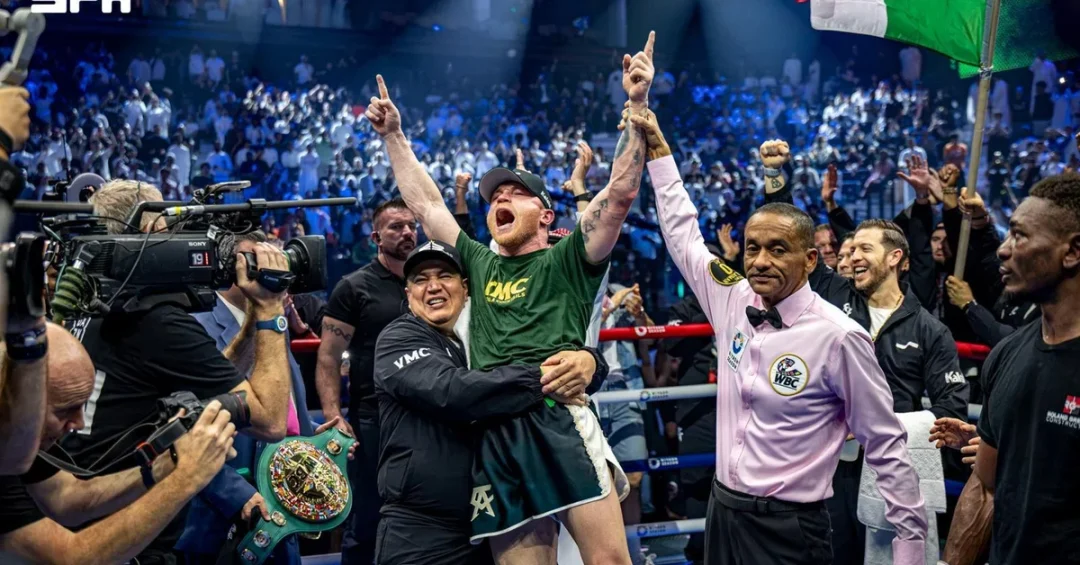
Riyadh Season’s boxing program has redefined the global fight landscape, staging world-title unification bouts in Riyadh and taking major cards to Los Angeles, London, Las Vegas and the Pyramids of Giza, according to the Saudi Press Agency (SPA). The initiative, driven by Saudi Arabia’s General Entertainment Authority (GEA), has brought together champions such as Oleksandr Usyk, Tyson Fury, Anthony Joshua, Deontay Wilder, Terence Crawford and Saúl “Canelo” Álvarez, producing historic results and record-breaking audiences both in arenas and on streaming platforms.
Since its launch, Riyadh Season has grown from a domestic entertainment festival into a global boxing powerhouse. Its events have decided undisputed championships, set gate-revenue records and reached millions of viewers worldwide. The seventh edition continued that trajectory with “Mexico vs. The World,” headlined by Canelo Álvarez and Christian Mbilli, which reaffirmed the Kingdom’s capacity to host and sponsor elite boxing. How did a seasonal entertainment initiative become a central force in a sport long dominated by Las Vegas and London? The answer lies in a deliberate strategy that blends sporting excellence, international partnership and the broader ambitions of Saudi Vision 2030.
Context and Background
Riyadh Season was established as part of Saudi Arabia’s broader effort to diversify its economy and enhance quality of life under Vision 2030. The boxing component emerged as a flagship element, leveraging the Kingdom’s financial resources and organizational capacity to attract the world’s top fighters. Early events demonstrated that Riyadh could host major bouts, but the turning point came when the Season began to stage unification fights that had eluded other venues for decades. The involvement of the GEA, chaired by His Excellency Turki Alalshikh, provided the strategic direction and investment needed to secure these matchups. Isn’t it remarkable how a seasonal festival transformed into a permanent fixture on the global boxing calendar?
From the outset, Riyadh Season’s boxing events were designed to deliver more than single nights of sport. They were integrated into a wider entertainment ecosystem that includes concerts, cultural activities and tourism offerings. This holistic approach ensured that each fight card generated economic activity beyond ticket sales, supporting hotels, restaurants and retail. It also aligned with the Kingdom’s goal of attracting international visitors and showcasing Saudi Arabia as a modern, dynamic destination. The presence of global broadcasters and streaming platforms further amplified the reach, turning Riyadh into a hub for combat sports content.
The strategic partnership with promoters such as Matchroom, Queensberry and Top Rank allowed Riyadh Season to access elite talent and navigate the complex politics of boxing. These collaborations ensured that fights fans had long demanded—like Usyk vs. Fury or Beterbiev vs. Bivol—could finally be made. By acting as a neutral, well-resourced host, Saudi Arabia overcame the promotional rivalries that often block major bouts. The result has been a steady stream of legacy-defining contests that have reshaped divisional landscapes and elevated the sport’s global profile.
Key Details: Unifications and International Expansion
The most significant moment came on May 18, 2024, when Kingdom Arena in Riyadh hosted “Ring of Fire” between Oleksandr Usyk and Tyson Fury. Usyk won by split decision to become the first undisputed heavyweight champion since 1999, holding all four major belts: WBA, WBC, IBF and WBO. This fight ended a 25-year wait for a single heavyweight king and cemented Riyadh’s reputation as the place where boxing history is made. The event drew global attention, with analysts calling it the most important heavyweight bout of the century.
At light heavyweight, Riyadh Season presented two meetings between Artur Beterbiev and Dmitry Bivol. In October 2024, Beterbiev won by majority decision to unify the titles. In February 2025, under the banner “The Last Crescendo,” Bivol turned the tables with a majority decision to become undisputed champion. Both fights were closely contested and showcased the highest level of technical boxing. The fact that both fighters had their moment as undisputed champion in Riyadh underscores the city’s role as a neutral stage for career-defining battles.
Internationally, Riyadh Season expanded its footprint with events in Los Angeles, London and Las Vegas. On August 3, 2024, “Riyadh Season Card” at BMO Stadium in Los Angeles featured Terence Crawford against Israil Madrimov. Crawford won by unanimous decision to claim the WBA super welterweight title and become a four-division world champion. On September 21, 2024, Anthony Joshua and Daniel Dubois met at Wembley Stadium in London, drawing 96,000 spectators. Dubois retained his IBF heavyweight title with a fifth-round knockout. These events demonstrated the Season’s ability to draw massive crowds in established boxing markets.
The Las Vegas card on September 13, 2025, saw Canelo Álvarez face Terence Crawford for the undisputed super middleweight championship. Crawford won by unanimous decision after 12 rounds. The event attracted 70,482 spectators to Allegiant Stadium and generated over $47 million in ticket revenue, a venue record. It also recorded 41 million views on Netflix, ranking No. 1 in 30 countries and reaching the Top 10 in 91 countries. This fusion of live attendance and streaming reach illustrated the new global audience for boxing that Riyadh Season has helped cultivate.
Riyadh Season also sponsored “Glory in Giza” at the Pyramids of Giza on May 23, 2026, jointly organized by Matchroom and The Ring. The headline bout saw Usyk defend his WBC heavyweight title against Dutch fighter Rico Verhoeven, winning by 11th-round technical knockout. The iconic backdrop added a unique visual dimension to the event, further extending the Season’s brand into new territories. Most recently, “Mexico vs. The World” during the seventh edition featured Canelo Álvarez against Christian Mbilli. Canelo reclaimed the WBC super middleweight title with a hard-fought 12-round victory, adding another chapter to his legendary career in Riyadh.
International and Regional Impact
Riyadh Season’s boxing events have had a profound impact on the international sports landscape. By hosting fights that other venues could not secure, Saudi Arabia has positioned itself as a neutral ground where the best can face the best. This has elevated the Kingdom’s soft power and strengthened its diplomatic ties through sports. The events have also brought significant media attention, with global outlets covering the fights and the broader transformation of Saudi Arabia. The presence of international stars and dignitaries at these events further underscores their geopolitical significance.
Regionally, the Season has inspired a new interest in boxing across the Middle East. Young fans in Saudi Arabia and neighboring countries now have local heroes and events to follow, which can lead to increased participation in the sport. The sponsorship of “Glory in Giza” in Egypt demonstrates how Riyadh Season can extend its reach and collaborate with other regional partners. This cross-border collaboration fosters goodwill and positions Saudi Arabia as a leader in regional entertainment and sports. The economic benefits for host cities, from Riyadh to Giza, are substantial, with increased tourism and spending.
The international expansion into Los Angeles, London and Las Vegas has also allowed Riyadh Season to tap into existing fan bases and demonstrate its commitment to the global boxing community. By bringing its brand to these markets, the Season has built bridges with Western audiences and shown that Saudi investment in sports is not limited to domestic events. This global footprint enhances the Kingdom’s image as an open and engaged nation, countering stereotypes and fostering cultural exchange. The partnerships with local promoters and venues ensure that these events are integrated into the local sports culture, rather than being seen as foreign intrusions.
Economic and Strategic Significance
The economic impact of Riyadh Season’s boxing events is multifaceted. Direct spending on event organization, infrastructure and hospitality creates jobs and stimulates local businesses. The high ticket revenues, such as the $47 million generated in Las Vegas, demonstrate the commercial viability of these events. For Saudi Arabia, hosting these fights supports the growth of the entertainment sector, a key pillar of Vision 2030. It also attracts international visitors who spend on tourism, dining and shopping, contributing to the Kingdom’s non-oil GDP.
Strategically, the boxing program serves as a vehicle for nation branding. By associating Saudi Arabia with world-class sports, the Kingdom signals its modernity and global integration. This aligns with the Vision 2030 goal of improving the quality of life for citizens and residents, and of creating a vibrant society. The events also provide a platform for Saudi youth to engage with international sports and aspire to athletic excellence. The investment in sports is part of a broader strategy to diversify the economy and reduce dependence on oil revenues.
Furthermore, the success of Riyadh Season has encouraged other Saudi entities to invest in sports, from football to motorsport. This creates a virtuous cycle of investment and development in the sports industry. The Kingdom’s hosting of major events like the FIFA World Cup 2034 will benefit from the experience and infrastructure built through Riyadh Season. The boxing events have thus served as a proving ground for Saudi Arabia’s ability to manage large-scale international competitions.
Vision 2030 Alignment
Riyadh Season’s boxing legacy is a direct expression of Vision 2030’s objectives. The initiative supports economic diversification by boosting tourism and entertainment, two sectors targeted for growth. It enhances Saudi Arabia’s global image, showcasing the Kingdom as a hub for culture and sport. It also promotes social development by providing entertainment options for citizens and residents, and by inspiring youth through sport. The GEA’s leadership in this area exemplifies how government entities can drive progress toward the Vision’s goals.
Looking ahead, Riyadh Season is expected to continue expanding its boxing portfolio, with more unification fights and international events planned. The Kingdom’s commitment to sports is unwavering, and the infrastructure being developed will leave a lasting legacy. As Saudi Arabia prepares to host global events, the experience gained from Riyadh Season will be invaluable. The boxing legacy is not just about titles won; it is about building a sustainable sports ecosystem that contributes to the nation’s long-term prosperity and global standing. In doing so, Riyadh Season is writing a new chapter in both boxing and Saudi history.
20 Questions
Q1. What is Riyadh Season?
A1. Riyadh Season is a major entertainment festival in Saudi Arabia, part of Vision 2030, featuring sports, concerts, and cultural events. Its boxing program has become a global platform for world-title fights.
Q2. Who oversees Riyadh Season?
A2. The General Entertainment Authority (GEA), chaired by His Excellency Turki Alalshikh, oversees Riyadh Season. The GEA drives the Kingdom’s entertainment strategy and secures top international talent.
Q3. When did Riyadh Season start hosting major boxing events?
A3. Riyadh Season began hosting major boxing events in recent years, with a notable milestone in May 2024 when it staged the undisputed heavyweight championship between Usyk and Fury.
Q4. What was the significance of Usyk vs. Fury in May 2024?
A4. Usyk won by split decision to become the first undisputed heavyweight champion since 1999, unifying the WBA, WBC, IBF, and WBO titles. It ended a 25-year wait.
Q5. Where did the Usyk-Fury fight take place?
A5. The fight took place at Kingdom Arena in Riyadh, Saudi Arabia, on May 18, 2024. The venue has become a regular host for major boxing events.
Q6. Who are Beterbiev and Bivol?
A6. Artur Beterbiev and Dmitry Bivol are elite light heavyweight boxers. They fought twice in Riyadh, with Beterbiev winning the first and Bivol the second, both becoming undisputed champions.
Q7. What was the outcome of their first fight?
A7. In October 2024, Beterbiev won by majority decision after 12 rounds to unify the light heavyweight world titles. The fight was highly competitive.
Q8. What happened in their rematch?
A8. In February 2025, headlining “The Last Crescendo,” Bivol won by majority decision to claim the undisputed championship. Both fighters had their moment as undisputed champion in Riyadh.
Q9. When did Riyadh Season first hold a boxing event outside Saudi Arabia?
A9. On August 3, 2024, “Riyadh Season Card” took place at BMO Stadium in Los Angeles, featuring Terence Crawford vs. Israil Madrimov.
Q10. What was the result of Crawford vs. Madrimov?
A10. Terence Crawford won by unanimous decision to claim the WBA super welterweight title and become a world champion in four weight divisions.
Q11. What happened at Wembley Stadium in September 2024?
A11. Anthony Joshua and Daniel Dubois fought in “Riyadh Season Card: Wembley Edition.” Dubois retained his IBF heavyweight title with a fifth-round knockout before 96,000 spectators.
Q12. How many people attended the Wembley event?
A12. The event drew 96,000 spectators, demonstrating the appeal of Riyadh Season’s boxing events in a market with a long sporting tradition.
Q13. What was the Canelo vs. Crawford fight in Las Vegas?
A13. On September 13, 2025, Canelo Álvarez and Terence Crawford fought for the undisputed super middleweight championship. Crawford won by unanimous decision after 12 rounds.
Q14. What records did the Las Vegas fight set?
A14. The event drew 70,482 spectators to Allegiant Stadium and generated over $47 million in ticket revenue, a venue record. It also recorded 41 million views on Netflix.
Q15. How many countries did the Netflix broadcast reach?
A15. The fight ranked No. 1 on Netflix in 30 countries and reached the Top 10 in 91 countries, showcasing its massive international appeal.
Q16. What was “Glory in Giza”?
A16. “Glory in Giza” was an event sponsored by Riyadh Season, held at the Pyramids of Giza on May 23, 2026, jointly organized by Matchroom and The Ring.
Q17. Who fought in the main event of “Glory in Giza”?
A17. Oleksandr Usyk defended his WBC heavyweight title against Dutch fighter Rico Verhoeven, winning by 11th-round technical knockout.
Q18. What was “Mexico vs. The World”?
A18. “Mexico vs. The World” was a Riyadh Season event headlined by Canelo Álvarez and Christian Mbilli during the seventh edition. Canelo reclaimed the WBC super middleweight title.
Q19. How does Riyadh Season align with Vision 2030?
A19. It supports economic diversification, enhances Saudi Arabia’s global image, and promotes social development by providing entertainment and inspiring youth through sport.
Q20. What is the future of Riyadh Season’s boxing legacy?
A20. Riyadh Season is expected to continue expanding its boxing portfolio with more unification fights and international events, building a sustainable sports ecosystem that contributes to the Kingdom’s long-term prosperity.
Reader Feedback
We value your thoughts. Please share your feedback on this article.
Your feedback helps us improve our coverage.
Related articles
 Aramco F4 Saudi Championship: Developing Talent On and Off Track
 Saudi Beach Soccer Team Trains in Egypt Ahead of Arab Cup
 Saudi Toyota Karting Championship Qualifiers Conclude in Dammam
 Saudi Pro League Postpones Matchweek 13, Reviews Calendar
 AFC Asian Cup Saudi Arabia 2027™️ to Kick Off December 2027
 Al Ain Defeats Al-Ittihad 4-1 in AFC Champions League Elite