


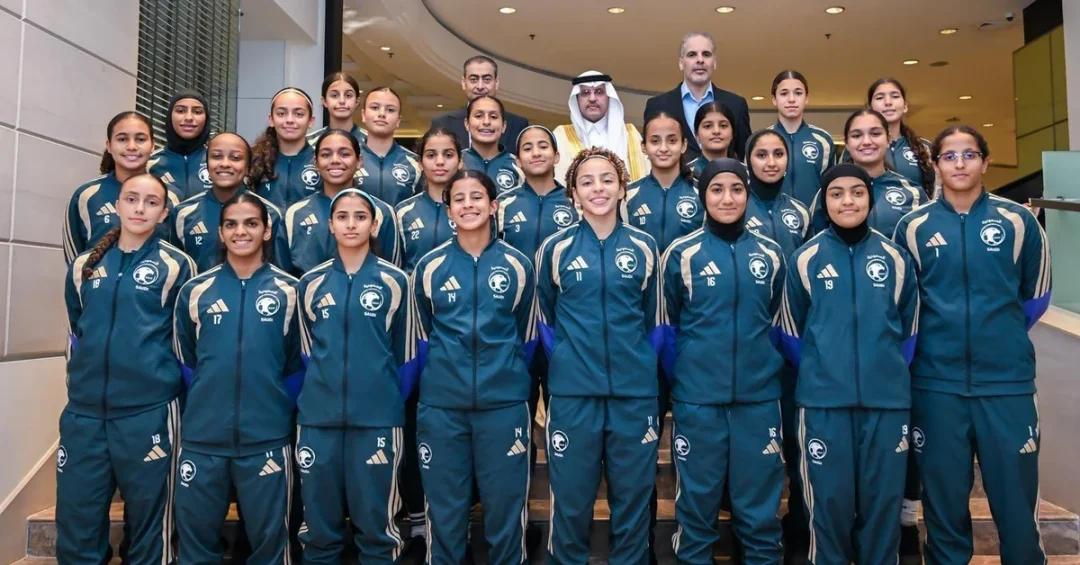
Saudi Ambassador to the Republic of Singapore Mohammed Al-Ghamdi met with the delegation of the Saudi U-17 women’s national football team in Singapore on October 5, 2026, as the squad prepared to open its campaign in the AFC Asian Cup 2027 qualifiers. The meeting, reported by the Saudi Press Agency (SPA), underscored the Kingdom’s commitment to supporting its national teams abroad and to advancing women’s sport as part of the broader transformation underway in Saudi Arabia. The ambassador extended his best wishes to the players and to the technical and administrative staff, affirming that the embassy and its personnel stand ready to assist the delegation throughout its participation in the qualifying tournament.
The Saudi U-17 women’s national team is competing in a qualifying group that will test its development against regional opposition. The team begins its campaign on October 5 against Singapore, follows with a fixture against Indonesia on October 8, and concludes on October 11 against Bahrain. Each match represents an opportunity for the young players to gain international experience and to demonstrate the progress of Saudi women’s football, a priority area under the Kingdom’s Vision 2030 reform agenda. The ambassador’s engagement with the delegation reflects a consistent policy of official support for Saudi athletes representing the nation overseas.
Context and Background
Why does a diplomatic meeting with a youth football team matter beyond the pitch? The encounter between Ambassador Al-Ghamdi and the Saudi U-17 women’s delegation is part of a wider pattern of Saudi diplomatic missions supporting national representatives competing abroad. Saudi embassies routinely host and assist sports delegations, reflecting a coordinated approach between the Ministry of Foreign Affairs, the Ministry of Sport, and the Saudi Arabian Football Federation (SAFF). For a young team competing in Asia’s premier youth qualifying competition, such backing provides reassurance and logistical support that can be decisive in a demanding tournament environment.
The AFC Asian Cup 2027 qualifiers for the U-17 women’s age group bring together emerging talents from across the continent. Saudi Arabia’s participation follows years of investment in women’s football infrastructure, coaching, and competition. The establishment of a national women’s league, the expansion of grassroots programs, and the appointment of qualified technical staff have gradually built a pipeline of players capable of competing at international level. The U-17 squad is one of the clearest beneficiaries of these efforts, as it represents the first generation to develop within a structured domestic system.
The Kingdom’s engagement in Asian football governance has also grown. Saudi Arabia has hosted major continental and international events, and its clubs and national teams are increasingly visible in Asian competitions. For the U-17 women’s team, the qualifiers in Singapore are not only a sporting challenge but also a chance to measure the effectiveness of the development pathway. The presence of the ambassador at the team’s base signals that the state regards these players as ambassadors themselves, carrying the nation’s colors and values into a competitive international setting.
Key Details of the Delegation Meeting
What exactly did the ambassador convey to the players and staff? According to the Saudi Press Agency, Ambassador Mohammed Al-Ghamdi wished the players and the technical and administrative staff success in the qualifiers and affirmed the embassy’s readiness, along with that of its staff, to support the delegation throughout its participation. The meeting served both a morale-boosting and a practical function, ensuring the team has a clear point of contact for any needs that arise during its stay in Singapore.
The delegation includes players, coaches, medical personnel, and administrative officials. Their schedule is compact: a match against Singapore on October 5, a second fixture against Indonesia on October 8, and a final group match against Bahrain on October 11. The sequence requires careful physical and tactical preparation, as well as recovery management between games. The embassy’s support can help smooth logistics such as training arrangements, transport, and communication, allowing the technical staff to focus on performance.
The ambassador’s message also carries symbolic weight. Women’s football in Saudi Arabia has developed rapidly since the formation of the first national team and the launch of domestic competitions. Each international appearance by a Saudi women’s team contributes to normalizing and celebrating female athletic achievement within the Kingdom and abroad. For the U-17 players, meeting a senior diplomat representing the nation is a reminder that their efforts are recognized at the highest levels of the state.
International and Regional Impact
How does a youth qualifier in Singapore connect to Saudi Arabia’s wider international standing? Sport has become an increasingly important component of Saudi diplomacy and soft power. The Kingdom hosts world-class events, attracts global talent, and invests in athletic infrastructure as part of a strategy to diversify the economy and project a dynamic national image. When a Saudi team competes abroad, it contributes to that image, particularly when the athletes are young women whose participation reflects social change at home.
Within Asia, the qualifiers are a test of regional competitiveness. Singapore, Indonesia, and Bahrain each bring distinct styles and levels of preparation. Saudi Arabia’s results will be watched by football federations and analysts assessing the growth of the women’s game in West Asia. A strong showing would reinforce the narrative that investment in women’s sport yields tangible results and could encourage further cooperation among Asian federations on youth development.
The diplomatic dimension should not be overlooked. Ambassador Al-Ghamdi’s meeting exemplifies the integration of sports and foreign policy, where embassies serve as hubs of support for national representatives. This approach strengthens bilateral ties with host countries and demonstrates Saudi Arabia’s commitment to international engagement. For Singapore, hosting the qualifiers and receiving the Saudi delegation is an opportunity to deepen sporting and people-to-people links with the Kingdom.
Economic and Strategic Significance
What economic logic underpins Saudi investment in women’s football? The sports sector is a growing contributor to the Kingdom’s economy, with events, tourism, and media rights generating revenue and employment. Vision 2030 identifies sport as a key enabler of quality of life and economic diversification. Developing women’s football expands the talent pool, increases participation, and opens new markets for sponsorships, broadcasting, and merchandise. The U-17 team is part of a long-term strategy to build a sustainable football ecosystem.
Strategic significance extends to human capital. Young athletes who compete internationally acquire discipline, teamwork, and resilience—qualities that benefit them beyond sport. The state’s support for their journey, from grassroots training to international qualifiers, reflects an investment in youth as the drivers of future national progress. The presence of embassy officials at their matches reinforces the message that representing Saudi Arabia is a valued national service.
In the broader regional context, Saudi Arabia’s sporting ambitions are aligned with its goal of becoming a hub for major events. Success at youth level feeds into senior national teams and enhances the Kingdom’s credibility as a footballing nation. The qualifiers in Singapore are therefore a small but meaningful step in a much larger journey toward competitiveness on the Asian and global stage.
Vision 2030 Alignment
How does this delegation embody the goals of Vision 2030? The vision seeks a vibrant society, a thriving economy, and an ambitious nation. Women’s football sits at the intersection of these objectives: it promotes social inclusion, supports economic activity in the sports sector, and showcases national ambition. The Saudi U-17 women’s national team represents the realization of reforms that have expanded opportunities for women in sport, education, and public life.
The ambassador’s meeting with the delegation is a practical expression of institutional support. It demonstrates that ministries, embassies, and sports federations are working in coordination to enable Saudi youth to compete internationally. As the team takes the field against Singapore, Indonesia, and Bahrain, it carries not only the hope of qualification but also the broader story of a nation investing in its young people and in the future of women’s sport. The Kingdom’s long-term vision depends on such investments, and every match is a chance to show the world the progress being made.
20 Questions
Q1. Who met with the Saudi U-17 women’s national football team delegation?
A1. Saudi Ambassador to the Republic of Singapore Mohammed Al-Ghamdi met with the delegation, according to the Saudi Press Agency. He wished the players and technical and administrative staff success in the AFC Asian Cup 2027 qualifiers.
Q2. When did the ambassador meet the delegation?
A2. The meeting took place as reported on October 5, 2026, the same day the team was scheduled to begin its qualifying campaign. The Saudi Press Agency published the report at 10:20 local time, 07:20 GMT.
Q3. What did the ambassador affirm to the delegation?
A3. Ambassador Al-Ghamdi affirmed the embassy’s readiness and that of its staff to support the delegation throughout its participation. He also wished the players and staff success in the qualifiers.
Q4. Which tournament is the Saudi U-17 women’s team competing in?
A4. The team is participating in the AFC Asian Cup 2027 qualifiers. The qualifiers bring together youth teams from across Asia competing for places in the continental finals.
Q5. Who is Saudi Arabia’s first opponent in the qualifiers?
A5. Saudi Arabia begins its campaign on October 5 against Singapore. The match is the team’s opening fixture in the qualifying group.
Q6. When does Saudi Arabia play Indonesia?
A6. Saudi Arabia is scheduled to face Indonesia on October 8. This is the team’s second group match in the qualifiers.
Q7. When does Saudi Arabia conclude its group matches?
A7. The team concludes its group campaign on October 11 against Bahrain. The result of this final match could be decisive for qualification.
Q8. Why is the ambassador’s meeting significant?
A8. The meeting reflects official Saudi support for national teams abroad and demonstrates coordination between diplomatic missions and sports authorities. It also boosts morale for young athletes representing the Kingdom internationally.
Q9. What is the role of the Saudi embassy during the team’s stay?
A9. The embassy provides logistical and administrative support, serving as a point of contact for the delegation. Ambassador Al-Ghamdi affirmed the embassy’s readiness to assist throughout the participation.
Q10. How does this relate to women’s football development in Saudi Arabia?
A10. It is part of broader investment in women’s football, including domestic leagues, grassroots programs, and coaching. The U-17 team represents a generation developing within a structured system.
Q11. What is the AFC Asian Cup 2027 qualifiers format for U-17 women?
A11. Teams compete in qualifying groups, with matches determining which sides advance to the continental finals. Saudi Arabia is in a group with Singapore, Indonesia, and Bahrain.
Q12. How does Vision 2030 connect to this event?
A12. Vision 2030 promotes women’s participation in sport, economic diversification, and youth development. The U-17 team’s participation reflects these goals in practice.
Q13. What support does the Saudi Arabian Football Federation provide?
A13. SAFF oversees national teams, technical staff, and development programs. It coordinates with ministries and embassies to enable participation in international competitions.
Q14. What can be expected from the matches in Singapore?
A14. The matches will test the team’s preparation against regional opponents. Each game offers valuable international experience for the young players.
Q15. Why is youth sport important for Saudi Arabia’s future?
A15. Youth sport builds discipline, teamwork, and national pride. It also creates a pipeline for senior teams and supports the growth of the sports economy.
Q16. How does hosting or participating in Asian competitions benefit Saudi football?
A16. It raises competitiveness, exposes players to different styles, and strengthens relationships with other Asian federations. It also enhances the Kingdom’s sporting reputation.
Q17. What message does the ambassador’s meeting send to young Saudi women?
A17. It signals that their achievements are recognized and supported at the highest levels. It encourages more girls to pursue sport and aim for national representation.
Q18. What are the dates of the three group matches?
A18. Saudi Arabia plays Singapore on October 5, Indonesia on October 8, and Bahrain on October 11. All matches are part of the AFC Asian Cup 2027 qualifiers.
Q19. Who reported the meeting between the ambassador and the delegation?
A19. The Saudi Press Agency (SPA) reported the meeting. SPA is the Kingdom’s official news agency and a primary source for government and national team news.
Q20. What does the future hold for Saudi women’s football?
A20. Continued investment in youth, leagues, and coaching is expected to raise standards. International qualifiers like these are steps toward greater competitiveness on the Asian and global stage.
Reader Feedback
We value your thoughts. Please share your feedback on this article.
Your feedback helps us improve our coverage.