


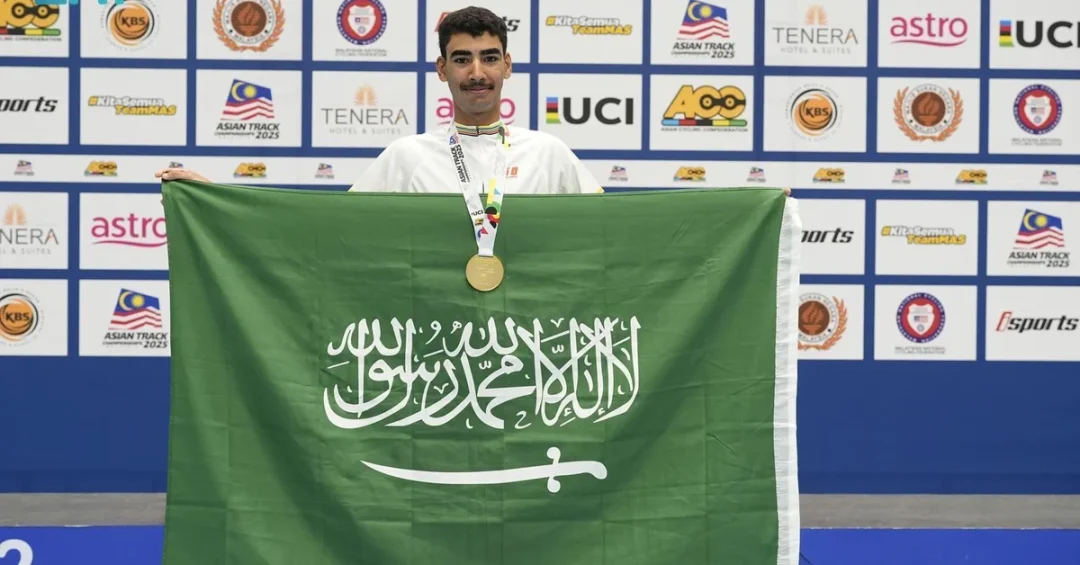
Saudi cyclist Ameen Al Hayyan made history by winning Saudi Arabia’s first-ever gold medal in cycling at the Asian Track Championships 2025, held in Kuala Lumpur, Malaysia, from February 21 to 27. The landmark victory, announced by the Saudi Press Agency (SPA), came in the men’s junior elimination race, where Al Hayyan outpaced 11 competitors to claim the top spot on the podium. Hong Kong’s Yik Fei Ma secured silver, while the United Arab Emirates’ Yousuf Amiri took bronze. The championship brought together 300 athletes from 16 Asian nations, underscoring the growing competitiveness of track cycling across the continent. For Saudi Arabia, this gold medal represents not only a sporting triumph but also a significant milestone in the Kingdom’s broader efforts to develop athletic talent and elevate its presence on the international stage. Could this be the beginning of a new era for Saudi cycling?
The Asian Track Championships 2025 served as a crucial platform for emerging cyclists from across Asia, and Al Hayyan’s performance stood out in a field of seasoned competitors. His victory in the elimination race—a demanding event where the last rider across the line is eliminated each lap—demonstrated exceptional endurance, tactical awareness, and mental resilience. The win adds to Saudi Arabia’s expanding portfolio of athletic achievements and reflects the Kingdom’s increasing investment in sports infrastructure and youth development programs. As the first Saudi cyclist to secure gold at this level, Al Hayyan has set a new benchmark for his peers and inspired a new generation of athletes in the Kingdom. What does this historic win mean for the future of cycling in Saudi Arabia?
Context and Background
Track cycling has long been dominated by nations with established cycling traditions, such as Japan, South Korea, and China. Saudi Arabia’s entry into this elite group marks a notable shift in the regional sporting landscape. The Kingdom’s participation in the Asian Track Championships 2025 was part of a broader strategy to diversify its athletic pursuits beyond traditional sports like football and equestrianism. The Saudi Cycling Federation, under the guidance of the Ministry of Sport, has been working to develop talent at the grassroots level, organizing local races and providing training camps for promising riders. Al Hayyan’s gold medal is a direct result of these efforts, showcasing the potential of Saudi athletes when given the right support and opportunities. How did Saudi Arabia manage to produce a continental champion in a sport where it had little prior presence?
The championship itself, held in Kuala Lumpur, attracted a record number of participants, reflecting the growing popularity of track cycling in Asia. The event featured intense competition across various categories, including sprint, pursuit, and elimination races. For Saudi Arabia, the tournament was not just about winning medals but also about gaining valuable experience against some of the best riders in the region. The team’s performance, highlighted by Al Hayyan’s gold, signals that the Kingdom is becoming a force to be reckoned with in cycling. This success story is part of a larger narrative of Saudi Arabia’s sporting evolution, driven by Vision 2030’s emphasis on promoting a healthy lifestyle and engaging youth in competitive sports. What role does cycling play in the Kingdom’s vision for a vibrant society?
Key Details
Ameen Al Hayyan’s journey to gold was nothing short of remarkable. Competing in the men’s junior elimination race, he faced 11 other riders in a grueling test of stamina and strategy. The elimination format requires riders to sprint every few laps, with the slowest cyclist eliminated until only the strongest remain. Al Hayyan’s ability to conserve energy while positioning himself strategically paid off in the final laps, where he surged ahead to secure the win. His victory was celebrated by teammates and officials alike, who praised his dedication and composure under pressure. The silver medal went to Hong Kong’s Yik Fei Ma, a highly regarded young rider, while the UAE’s Yousuf Amiri took bronze, highlighting the competitive depth of the region. What does it take to succeed in such a demanding discipline?
The Saudi Press Agency reported that Al Hayyan’s win was met with widespread acclaim in the Kingdom, with sports officials hailing it as a breakthrough moment. The Ministry of Sport has been instrumental in providing resources and coaching for cyclists, and this medal validates those investments. The championship also served as a qualifier for higher-level competitions, and Al Hayyan’s performance may open doors to international events. Moreover, the exposure gained from competing against 300 athletes from 16 nations will benefit the entire Saudi team, helping them identify areas for improvement and set new goals. How will this experience shape the next generation of Saudi cyclists?
International and Regional Impact
Al Hayyan’s gold medal resonates beyond Saudi Arabia, signaling the Kingdom’s rising influence in Asian sports. In recent years, Saudi Arabia has hosted major events like the Dakar Rally and Formula 1, and its athletes are increasingly making their mark on the global stage. This victory in track cycling adds a new dimension to the Kingdom’s sporting profile, demonstrating that Saudi talent can excel in diverse disciplines. For Asian cycling, it introduces a new contender, potentially raising the competitive bar and encouraging other nations to invest in the sport. The United Arab Emirates and Hong Kong, which also medaled, are part of a growing group of Asian countries challenging traditional powerhouses. How will Saudi Arabia’s success influence the balance of power in Asian cycling?
Regionally, the win fosters a sense of pride and unity among Gulf nations, which often collaborate to promote sports. The UAE’s bronze medal, for instance, highlights the region’s collective progress. Saudi Arabia’s achievement is also a testament to the role of sports diplomacy in strengthening ties and showcasing the Kingdom’s modernization. As the world watches Saudi Arabia transform under Vision 2030, athletic successes like this serve as powerful ambassadors for the nation’s capabilities and ambitions. Could sports become a key pillar of Saudi Arabia’s soft power strategy?
Economic and Strategic Significance
The economic implications of Al Hayyan’s victory are multifaceted. Successful athletes often attract sponsorships, media attention, and investment in sports infrastructure. For Saudi Arabia, this gold medal could stimulate interest in cycling, leading to the development of more velodromes, training facilities, and youth programs. The cycling industry globally is worth billions, and Saudi Arabia’s entry into competitive cycling could open up new economic opportunities, from event hosting to equipment manufacturing. Moreover, a thriving sports sector contributes to job creation and tourism, aligning with Vision 2030’s economic diversification goals. How can Saudi Arabia capitalize on this momentum to build a sustainable cycling ecosystem?
Strategically, the win enhances Saudi Arabia’s reputation as a sporting nation, which is crucial for its international image. The Kingdom has been actively bidding for major events and investing in sports as part of its soft power agenda. Al Hayyan’s success provides tangible proof of the effectiveness of these investments, encouraging further support from both public and private sectors. It also inspires young Saudis to pursue cycling, potentially uncovering more hidden talents. The Ministry of Sport’s programs, such as the Saudi Games and community cycling initiatives, are likely to see increased participation. What strategic steps should Saudi Arabia take next to maintain this competitive edge?
Vision 2030 Alignment
Ameen Al Hayyan’s historic gold medal is a shining example of Vision 2030’s objectives in action. The Vision, spearheaded by Crown Prince Mohammed bin Salman, aims to create a vibrant society where citizens enjoy a high quality of life and diverse recreational opportunities. By promoting sports like cycling, the Kingdom encourages healthier lifestyles and community engagement. The Ministry of Sport has set ambitious targets to increase physical activity and nurture elite athletes, and this victory demonstrates that those targets are within reach. It also highlights the importance of youth empowerment, as Al Hayyan, a junior athlete, embodies the potential of Saudi youth when given the chance to excel. How will this achievement inspire other young Saudis to chase their dreams?
Looking ahead, Saudi Arabia’s sports sector is poised for continued growth, with cycling set to benefit from increased attention and resources. The Kingdom’s commitment to hosting international events, such as the 2029 Asian Winter Games in NEOM, shows its long-term vision. Al Hayyan’s win is not just a moment of glory but a catalyst for further development. As Saudi Arabia continues its journey toward Vision 2030, achievements like this will be celebrated as milestones on the path to a diversified, dynamic economy and a proud, prosperous society. The future of Saudi cycling looks brighter than ever, and the world will be watching. What new heights can Saudi athletes reach in the years to come?
20 Questions
Q1. Who won Saudi Arabia’s first-ever gold medal in cycling at the Asian Track Championships?
A1. Ameen Al Hayyan won the historic gold medal for Saudi Arabia in the men’s junior elimination race at the Asian Track Championships 2025 in Kuala Lumpur.
Q2. In which event did Ameen Al Hayyan claim the gold medal?
A2. He triumphed in the men’s junior elimination race, a demanding event where the last rider across the line each lap is eliminated until only the strongest remain.
Q3. Where and when were the Asian Track Championships 2025 held?
A3. The championships took place in Kuala Lumpur, Malaysia, from February 21 to 27, 2025, bringing together top cyclists from across Asia.
Q4. How many athletes and nations participated in the championships?
A4. The event featured 300 athletes representing 16 Asian nations, highlighting the growing competitiveness and popularity of track cycling in the region.
Q5. Who were the silver and bronze medalists in Al Hayyan’s race?
A5. Hong Kong’s Yik Fei Ma won silver, while the United Arab Emirates’ Yousuf Amiri took bronze, completing the podium in the men’s junior elimination race.
Q6. What makes the elimination race particularly challenging?
A6. The elimination race requires riders to sprint every few laps, with the slowest cyclist eliminated each time, demanding exceptional endurance, strategy, and mental toughness.
Q7. How does this victory reflect Saudi Arabia’s sports development efforts?
A7. It demonstrates the success of the Saudi Cycling Federation and Ministry of Sport’s initiatives to nurture talent, provide training, and promote cycling at the grassroots level.
Q8. What role did the Saudi Press Agency play in reporting this achievement?
A8. The Saudi Press Agency (SPA) officially announced the victory, providing accurate and timely information to the public and media outlets worldwide.
Q9. How does this win impact Saudi Arabia’s international sporting reputation?
A9. It enhances the Kingdom’s profile as a rising force in diverse sports, complementing its hosting of major events and showcasing the potential of Saudi athletes on the continental stage.
Q10. What does this mean for the future of cycling in Saudi Arabia?
A10. The gold medal is expected to inspire more youth to take up cycling, attract investment in infrastructure, and lead to increased participation in local and international competitions.
Q11. How does the victory align with Vision 2030?
A11. Vision 2030 aims to create a vibrant society with diverse sports opportunities; this win promotes healthy lifestyles, youth empowerment, and international engagement, directly supporting those goals.
Q12. What are the economic benefits of such a sporting achievement?
A12. It can stimulate sponsorships, media coverage, and investment in cycling facilities, contributing to economic diversification, job creation, and sports tourism in line with Vision 2030.
Q13. How did Al Hayyan prepare for the championships?
A13. While specific training details are not disclosed, his preparation likely involved rigorous training camps, coaching from the Saudi Cycling Federation, and participation in preparatory races.
Q14. What other sports is Saudi Arabia focusing on for international success?
A14. The Kingdom is investing in football, motorsports, equestrianism, esports, and winter sports, among others, as part of its broad sports diversification strategy.
Q15. How can this victory inspire young Saudis?
A15. It serves as a powerful example that Saudi youth can achieve global success with dedication and support, encouraging them to pursue their athletic dreams and healthy lifestyles.
Q16. What is the significance of winning in a sport not traditionally associated with Saudi Arabia?
A16. It breaks stereotypes and demonstrates the Kingdom’s ability to excel in new areas, reflecting its dynamic transformation and the effectiveness of its sports development programs.
Q17. How does the Ministry of Sport support cycling?
A17. The Ministry of Sport provides funding, organizes events, develops infrastructure, and collaborates with the Saudi Cycling Federation to identify and train talented riders.
Q18. Will Al Hayyan’s win lead to more cycling events in Saudi Arabia?
A18. It is likely to boost interest and could lead to more local and international cycling events being hosted in the Kingdom, further promoting the sport.
Q19. What message does this send to other Asian nations?
A19. It signals that Saudi Arabia is a rising competitor in track cycling, encouraging other nations to invest in the sport and raising the overall competitive level in Asia.
Q20. How can the public follow future Saudi cycling achievements?
A20. Updates can be found through official Saudi channels such as the Saudi Press Agency, the Ministry of Sport, and the Saudi Cycling Federation’s media platforms.
Reader Feedback
We value your thoughts. Please share your feedback on this article.
Your feedback helps us improve our coverage.
Related articles
 Diriyah Company, Saudi Tennis Federation Sign MoU to Advance Tennis
 Saudi Arabia Tops AFC Club Ranking
 AlUla Ramadan Football Tournament 2025 Kicks Off
 Saudi Arabia Competes in Padel, Jiu-Jitsu at Nad Al Sheba
 Al-Nassr Held to Goalless Draw by Esteghlal in AFC Elite
 Saudi Arabia to Host AFC U17 Asian Cup Finals in April