


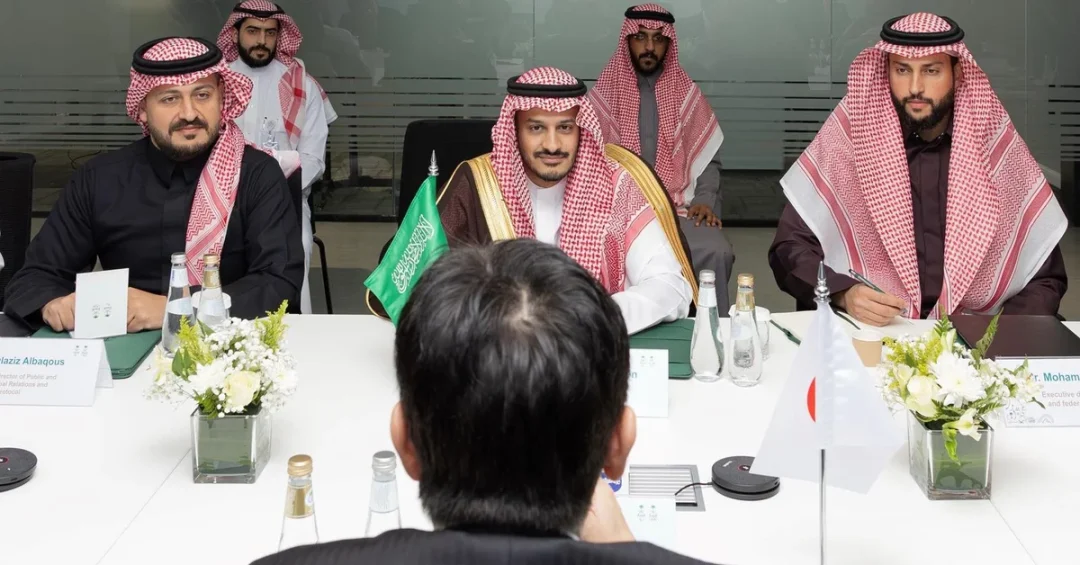
Saudi Arabia and Japan have taken a significant step forward in their growing sports partnership, with senior officials meeting in Riyadh to discuss preparations for the 20th Asian Games and the 5th Asian Para Games in Nagoya in 2026. The meeting, held at the headquarters of the Saudi Olympic and Paralympic Committee (SOPC), brought together Abdulaziz bin Ahmed Baeshen, the SOPC’s chief executive and secretary-general, and Matsumoto Hisashi, Japan’s Parliamentary Vice-Minister for Foreign Affairs. The discussions focused on Japan’s readiness to host the continental sporting showcase and on practical measures to facilitate the participation of the Saudi sports delegation, according to information released through the Saudi Press Agency (SPA).
The encounter underscores the deepening ties between the Kingdom and Japan across sport, diplomacy, and youth development, and it arrives at a time when Saudi Arabia is steadily expanding its presence on the international sporting stage. The talks also reflect a shared commitment to ensuring that Saudi athletes and para-athletes are fully prepared for one of Asia’s most prestigious multi-sport events. With the games less than two years away, the meeting signals that both nations are treating logistical and administrative coordination as a priority. It also builds on a formal partnership framework established between the two countries’ Olympic bodies in 2024.
Context and Background
How did Saudi-Japanese sports cooperation reach this point, and why does it matter now? The relationship was formalized on the sidelines of the Paris 2024 Summer Olympics last August, when the Saudi Olympic and Paralympic Committee signed a memorandum of understanding (MoU) with the Japanese Olympic Committee (JOC). That agreement created a structured framework for collaboration in areas such as athlete preparation, coaching exchanges, sports science, and the organization of joint events. The Riyadh meeting represents the first high-level follow-up to that MoU, translating its broad principles into concrete operational planning.
The Asian Games, organized by the Olympic Council of Asia, are the world’s second-largest multi-sport event after the Summer Olympics, bringing together thousands of athletes from across the continent. The 2026 edition in Nagoya will be the 20th staging of the games, while the Asian Para Games, now in their fifth edition, have become a central platform for the development of disability sport in Asia. For Saudi Arabia, participation in both events aligns with a broader national effort to raise competitive standards and to showcase the Kingdom’s athletes on regional and global stages.
Japan’s preparations for Nagoya 2026 have been underway for several years, with the city and the surrounding Aichi Prefecture investing in venues, transport infrastructure, and athlete services. The Saudi side’s interest in these preparations is both practical and strategic: understanding the host’s plans helps the Kingdom tailor its own training, logistics, and delegation management. The meeting in Riyadh therefore served as a working session as much as a diplomatic courtesy, reflecting the seriousness with which both countries approach the games.
Key Details of the Riyadh Meeting
What exactly was discussed behind the closed doors of the SOPC headquarters? According to the Saudi Press Agency, the two officials reviewed developments in Japan’s preparations for hosting the 20th Asian Games and the 5th Asian Para Games in Nagoya city in 2026. They also conferred on ways to facilitate the participation of the Saudi sports delegation, covering areas such as accreditation, training camps, travel arrangements, and support services for athletes and para-athletes.
Abdulaziz bin Ahmed Baeshen, as the SOPC’s chief executive and secretary-general, is responsible for overseeing the Kingdom’s Olympic and Paralympic programs, including athlete development, international relations, and event participation. His counterpart, Matsumoto Hisashi, serves as Japan’s Parliamentary Vice-Minister for Foreign Affairs, a role that combines parliamentary duties with diplomatic responsibilities. The presence of a senior Japanese foreign affairs official at a sports-focused meeting highlights the degree to which Tokyo views sport as an integral part of its bilateral relationship with Riyadh.
The meeting also reflects the operational maturity of the SOPC, which has in recent years taken on a more prominent role in managing Saudi Arabia’s international sporting engagements. By engaging directly with host-country officials well ahead of the games, the committee is seeking to remove potential obstacles and to ensure that Saudi athletes can focus on performance. The discussions are expected to feed into detailed planning schedules for the Saudi delegation, including qualification pathways, training camps, and pre-games staging.
International and Regional Impact
Why should the wider world pay attention to a meeting between Saudi and Japanese sports officials? The answer lies in the broader geopolitical and cultural significance of sport in Asia. The Asian Games and Asian Para Games are not merely athletic competitions; they are platforms for diplomacy, cultural exchange, and regional cooperation. Saudi Arabia’s active engagement with Japan, one of Asia’s most established sporting nations, signals the Kingdom’s intent to be a constructive and reliable partner in continental sport.
For Japan, hosting Nagoya 2026 is an opportunity to demonstrate organizational excellence and to strengthen ties with countries across Asia and the Middle East. Saudi participation, particularly at a high level, adds prestige to the event and reinforces the games’ role as a bridge between regions. The collaboration also has a soft-power dimension: by working closely with Japanese institutions, Saudi Arabia can learn from Japan’s experience in hosting major events, knowledge that will be valuable as the Kingdom itself prepares to stage international competitions in the years ahead.
At the regional level, the meeting reinforces the growing interconnectedness of Asian sport. The Olympic Council of Asia has long emphasized solidarity among its member nations, and bilateral initiatives such as the Saudi-Japanese MoU contribute to that goal. For para-sport in particular, the discussions carry added weight: the Asian Para Games are a key qualifying and development platform, and Saudi Arabia’s focus on para-athletes reflects a commitment to inclusivity that resonates across the continent.
Economic and Strategic Significance
What does this sports diplomacy mean for Saudi Arabia’s economic and strategic ambitions? Sport has become an increasingly important component of the Kingdom’s international outreach, complementing its economic diversification agenda. Major events, athlete development programs, and international partnerships generate investment, tourism, and media exposure, all of which support the objectives of Saudi Vision 2030. The Nagoya discussions are a small but meaningful part of that larger picture.
Japan is one of Saudi Arabia’s most important economic partners, with longstanding ties in energy, technology, and infrastructure. Extending that relationship into sport creates new avenues for cooperation, including in sports technology, event management, and youth exchange. Japanese expertise in precision engineering, transport, and hospitality is directly relevant to the hosting of major events, and Saudi Arabia has been actively studying international best practices as it develops its own sporting infrastructure.
Strategically, the partnership also positions Saudi Arabia as a bridge between the Middle East and Asia. By engaging with Japan on continental sporting matters, the Kingdom strengthens its credentials as a regional leader and a responsible global actor. The meeting in Riyadh is therefore not an isolated event but part of a deliberate pattern of engagement that spans diplomacy, trade, culture, and sport.
Vision 2030 Alignment
How does this collaboration fit into Saudi Vision 2030? Sport is explicitly recognized within the Vision as a driver of quality of life, national pride, and international engagement. The Kingdom’s efforts to expand participation in international competitions, including the Asian Games and Asian Para Games, are aligned with the Vision’s goals of empowering youth, promoting healthy lifestyles, and showcasing Saudi talent to the world. The SOPC’s work with the Japanese Olympic Committee directly supports these objectives.
Under the leadership of Crown Prince Mohammed bin Salman, Saudi Arabia has pursued a comprehensive transformation that places sport at the heart of its social and economic development. From hosting major events to investing in grassroots programs, the Kingdom is building an ecosystem that nurtures athletes from an early age. The Riyadh meeting with Japan’s Parliamentary Vice-Minister for Foreign Affairs is a reminder that this transformation is also international in scope, built on partnerships that share knowledge and create opportunities.
As Nagoya 2026 approaches, Saudi Arabia’s preparations will intensify, and the cooperation with Japan is expected to deepen further. The meeting at the SOPC headquarters has set a positive tone, demonstrating that the Kingdom is ready to compete, to learn, and to contribute to the success of Asia’s premier sporting events. For a nation committed to excellence and global engagement, the road to Nagoya is both a challenge and an opportunity, one that Saudi Arabia is embracing with confidence and determination.
20 Questions
Q1. What was the main purpose of the meeting between Saudi and Japanese officials in Riyadh?
A1. The meeting discussed Japan’s preparations for hosting the 20th Asian Games and the 5th Asian Para Games in Nagoya in 2026, and explored ways to facilitate the participation of the Saudi sports delegation.
Q2. Who represented Saudi Arabia at the meeting?
A2. Abdulaziz bin Ahmed Baeshen, chief executive and secretary-general of the Saudi Olympic and Paralympic Committee (SOPC), represented Saudi Arabia at the meeting held at SOPC headquarters in Riyadh.
Q3. Who was the Japanese official involved in the discussions?
A3. Matsumoto Hisashi, Japan’s Parliamentary Vice-Minister for Foreign Affairs, represented Japan in the discussions with the Saudi side.
Q4. When and where did the meeting take place?
A4. The meeting took place on Monday at the headquarters of the Saudi Olympic and Paralympic Committee in Riyadh, as reported by the Saudi Press Agency.
Q5. What major sporting events were discussed?
A5. The officials discussed the 20th Asian Games and the 5th Asian Para Games, both scheduled to be held in Nagoya city, Japan, in 2026.
Q6. What is the significance of the MoU between SOPC and the Japanese Olympic Committee?
A6. The MoU, signed on the sidelines of the Paris 2024 Summer Olympics, provides a formal framework for sports collaboration between Saudi Arabia and Japan, covering athlete preparation and exchanges.
Q7. How does this meeting benefit Saudi athletes?
A7. It helps facilitate their participation in the 2026 games by addressing logistics, training, and support services, allowing athletes to focus on performance.
Q8. What are the Asian Games?
A8. The Asian Games are a major multi-sport event organized by the Olympic Council of Asia, bringing together thousands of athletes from across the continent every four years.
Q9. What are the Asian Para Games?
A9. The Asian Para Games are a parallel multi-sport event for athletes with disabilities, held after the Asian Games and organized by the Asian Paralympic Committee.
Q10. Why is Saudi Arabia engaging with Japan on sports?
A10. Saudi Arabia seeks to strengthen international partnerships, learn from Japan’s hosting expertise, and support its athletes in competing at the highest levels in Asia.
Q11. How does this collaboration align with Saudi Vision 2030?
A11. Vision 2030 emphasizes sport as a driver of quality of life and international engagement. The partnership supports youth empowerment and showcases Saudi talent globally.
Q12. What role does the SOPC play in Saudi sports?
A12. The SOPC oversees Saudi Arabia’s Olympic and Paralympic programs, including athlete development, international relations, and participation in major games.
Q13. What is the expected Saudi delegation size for Nagoya 2026?
A13. The specific size has not been announced, but the meeting aimed to facilitate the participation of a full Saudi sports delegation across multiple disciplines.
Q14. How does Japan benefit from this cooperation?
A14. Japan strengthens its ties with Saudi Arabia, enhances the prestige of the Nagoya Games, and fosters regional cooperation through sport.
Q15. What is the history of Saudi participation in the Asian Games?
A15. Saudi Arabia has participated in the Asian Games for decades, achieving notable successes in athletics, football, and other sports, and continues to expand its presence.
Q16. What are the key areas of the Saudi-Japan sports MoU?
A16. The MoU covers athlete preparation, coaching exchanges, sports science, joint events, and other forms of collaboration between the two Olympic committees.
Q17. How does para-sport feature in Saudi Arabia’s sports strategy?
A17. Saudi Arabia places strong emphasis on inclusivity, supporting para-athletes through dedicated programs and participation in events like the Asian Para Games.
Q18. What infrastructure is Japan preparing for Nagoya 2026?
A18. Japan is investing in venues, transport, and athlete services across Nagoya and Aichi Prefecture to ensure a successful hosting of both games.
Q19. What message does this meeting send to the international community?
A19. It demonstrates Saudi Arabia’s active engagement in international sport and its commitment to building constructive partnerships that promote excellence and cooperation.
Q20. What are the next steps for Saudi-Japanese sports cooperation?
A20. Following the Riyadh meeting, both sides are expected to continue detailed planning, including training camps and logistical arrangements, as Nagoya 2026 approaches.
Reader Feedback
We value your thoughts. Please share your feedback on this article.
Your feedback helps us improve our coverage.
Related articles
 London Hosts First News Conference for ‘Last Crescendo’ Fights at Riyadh Season
 Dakar Rally 2025: Saudi Al-Rajhi Leads Overall, Al-Attiyah Wins Stage 9
 McDonald in Lineup for Saudi Cup 2025 Jockeys Challenge
 Desert Polo Championship Starts Friday in AlUla with 6 Teams
 Al Hilal Crush Al Fateh 9-0 to Extend Roshn League Lead
 SFA to Host Riyadh Marathon and Expo 2025 in February