


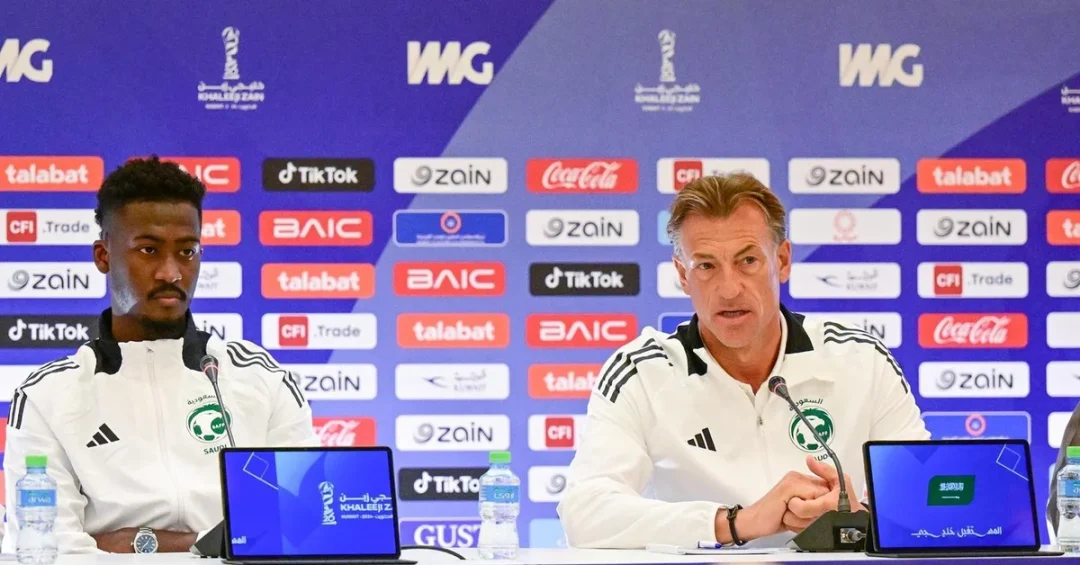
The Saudi national football team completed its final preparations on Monday in Kuwait City ahead of its semifinal clash with Oman in the 26th Arabian Gulf Cup, scheduled for Tuesday evening at Jaber Al-Mubarak Al-Hamad Stadium. According to the Saudi Press Agency (SPA), the squad trained at Al-Nasr Club Stadium under the direction of Head Coach Hervé Renard, focusing on tactical sharpness and physical readiness before the highly anticipated encounter. The session began with warm-up exercises, followed by square drills, possession exercises, and a full scrimmage between two groups, before concluding with stretching exercises. The Green Falcons enter the semifinal as one of the tournament’s most consistent sides, and the coaching staff used the session to fine-tune set pieces and pressing patterns. The match represents a significant step in Saudi Arabia’s ongoing effort to develop a competitive national team capable of excelling at both regional and global levels.
The Arabian Gulf Cup, now in its 26th edition, remains one of the region’s most prestigious football tournaments, bringing together the national teams of the Gulf Cooperation Council (GCC) in a celebration of sport, unity, and shared heritage. For Saudi Arabia, the competition offers a valuable platform to test squad depth and tactical flexibility against familiar regional opponents. The Kingdom’s participation is closely followed by millions of fans across the region, and the team’s progress to the semifinals has generated considerable excitement. Under the leadership of the Saudi Arabian Football Federation (SAFF), the national team has undergone a structured development program aligned with the broader goals of Saudi Vision 2030, which seeks to enhance the Kingdom’s global sporting presence and promote a healthy, active society.
Context and Background
How did the Saudi national team arrive at this pivotal semifinal stage? The Green Falcons’ journey through the group stage demonstrated resilience, discipline, and attacking quality, earning them a place among the tournament’s final four. The team’s previous match against Iraq was a physically demanding encounter that tested the players’ endurance and mental strength. According to SPA, midfielder Abdulelah Al-Malki did not participate in Monday’s training session due to a treatment program for a muscle injury sustained during that match. His absence from training is being carefully managed by the medical staff, who are working to restore his fitness ahead of the semifinal. The coaching team, led by Hervé Renard, has emphasized the importance of squad rotation and recovery, ensuring that all players are physically prepared for the challenges of knockout football.
The 26th Arabian Gulf Cup is being hosted in Kuwait, a nation with a rich football tradition and a strong record of organizing regional tournaments. The competition has showcased the evolving quality of Gulf football, with teams employing increasingly sophisticated tactical approaches. Saudi Arabia’s presence in the semifinals reflects the depth of talent within the domestic league and the effectiveness of the national team’s preparation camps. The Saudi Pro League, which has attracted world-class players in recent years, has contributed to raising the competitive standards for Saudi players, many of whom now regularly compete against top international talent. This domestic development has translated into improved performances on the regional stage, and the team’s progress in Kuwait is a testament to the long-term investments made in Saudi football infrastructure and youth development.
Historically, the Arabian Gulf Cup has been a stage for memorable Saudi performances. The Kingdom has won the tournament on multiple occasions, and its rivalry with Gulf neighbors has produced some of the most exciting matches in regional football history. The semifinal against Oman carries additional significance, as both teams are known for their technical style and tactical discipline. Oman, coached by Rasheed Jaber, has impressed observers with its organized defense and quick counterattacks. The Saudi coaching staff has undoubtedly analyzed Oman’s strengths and weaknesses, and Monday’s training session focused on implementing specific game plans to exploit any vulnerabilities while maintaining defensive solidity.
Key Details
What specific preparations did the Saudi team undertake ahead of the semifinal? According to SPA, the training session at Al-Nasr Club Stadium was comprehensive and intense. The players began with warm-up exercises designed to activate major muscle groups and prevent injuries. This was followed by square drills, which improve passing accuracy, spatial awareness, and quick decision-making under pressure. Possession exercises then emphasized ball retention and movement off the ball, key elements of Renard’s tactical philosophy. The session culminated in a scrimmage between two groups, allowing the coaching staff to observe player combinations and test different formations. The training concluded with stretching exercises to aid recovery and flexibility. The entire session was tailored to replicate match-day intensity and ensure the players are mentally and physically ready for the semifinal.
The absence of Abdulelah Al-Malki from full training is a notable development. The midfielder has been an important part of Saudi Arabia’s campaign, providing energy and creativity in the center of the park. His muscle injury, sustained against Iraq, is being treated with a specialized program aimed at expediting his recovery. The medical team’s priority is to ensure he is available for the semifinal if possible, but they will not risk aggravating the injury. The coaching staff has alternative options in midfield, with several players capable of filling the role. Renard’s squad boasts depth in all positions, a factor that has been crucial in navigating the demands of a congested tournament schedule. The team’s ability to adapt to injuries and maintain performance levels reflects the professionalism and resilience instilled by the coaching staff.
Jaber Al-Mubarak Al-Hamad Stadium, the venue for the semifinal, is one of Kuwait’s premier football grounds and has hosted numerous high-profile matches. The stadium’s atmosphere is expected to be vibrant, with fans from both nations creating a passionate backdrop. Saudi supporters have traveled in numbers to Kuwait, underscoring the strong following the national team enjoys. The Saudi Arabian Football Federation has encouraged fans to attend and support the team, emphasizing the role of supporters as the “twelfth man.” The players have expressed their appreciation for the backing they have received, noting that fan support provides a significant morale boost during matches. The semifinal is expected to be a closely contested affair, with both teams eager to secure a place in the final.
International and Regional Impact
Why does this semifinal matter beyond the pitch? The Arabian Gulf Cup serves as a symbol of regional cooperation and friendly competition, bringing together nations that share deep cultural and historical ties. Saudi Arabia’s participation and success in the tournament contribute to the Kingdom’s soft power and its image as a dynamic, forward-looking nation. The event also provides a platform for cultural exchange and people-to-people connections, with fans from across the Gulf interacting in a spirit of sportsmanship. For Saudi Arabia, the tournament is an opportunity to showcase its footballing progress and its commitment to excellence in all fields. The Kingdom’s hosting of major international sporting events, such as the FIFA World Cup 2034, further highlights its growing role as a global sports hub. Success in regional competitions like the Arabian Gulf Cup builds momentum and experience ahead of these larger endeavors.
From a regional perspective, the semifinal between Saudi Arabia and Oman is a matchup of two teams with distinct footballing identities. Saudi Arabia, with its star-studded squad and high-profile coach, represents the Gulf’s footballing powerhouse, while Oman is known for its cohesive team play and tactical intelligence. The match will be watched by scouts and analysts from across Asia and beyond, as both teams feature players who have attracted interest from international clubs. The performance of Saudi players in particular is closely monitored, as many are seen as future stars of Asian football. The tournament also serves as a preparatory ground for upcoming continental competitions, including the AFC Asian Cup and the FIFA World Cup qualifiers. A strong showing in Kuwait would boost the team’s confidence and ranking points, which are vital for seeding in future tournaments.
Economic and Strategic Significance
How does football success align with Saudi Arabia’s broader economic and strategic objectives? Sport has become a key pillar of Saudi Vision 2030, the national transformation plan spearheaded by His Royal Highness Crown Prince Mohammed bin Salman. The Vision aims to diversify the economy, improve quality of life, and enhance the Kingdom’s global standing. Investments in sports infrastructure, the hosting of international events, and the development of professional leagues are all part of this strategy. The national team’s achievements generate national pride and unity, while also attracting tourism and investment. The Saudi Pro League’s acquisition of world-class players has raised the league’s profile and increased viewership, contributing to the growth of the sports economy. The Arabian Gulf Cup provides another opportunity to showcase Saudi Arabia’s sporting credentials and its ability to compete at the highest levels.
Moreover, the tournament reinforces the Kingdom’s ties with its Gulf neighbors. By participating in and excelling at regional events, Saudi Arabia demonstrates its commitment to regional stability and cooperation. The shared passion for football serves as a bridge between nations, fostering goodwill and understanding. The Saudi government, through the Ministry of Sport and the Saudi Arabian Football Federation, has consistently supported initiatives that use sport as a tool for diplomacy and development. The national team’s success in Kuwait is therefore not just a sporting achievement but also a reflection of the Kingdom’s broader strategic vision. The players and coaching staff are aware of their role as ambassadors for the nation, and they carry the hopes of millions of Saudis who see in their team a symbol of progress and ambition.
Vision 2030 Alignment
In what ways does this semifinal reflect the aspirations of Saudi Vision 2030? The Vision’s Quality of Life program aims to increase sports participation and promote a healthy lifestyle among citizens and residents. The national team’s success inspires young Saudis to take up football and pursue sporting excellence. The Kingdom has invested heavily in grassroots football, building academies and providing coaching education to develop future talent. The SAFF’s strategic plan includes talent identification programs, women’s football development, and the expansion of competitive opportunities for all age groups. These efforts are designed to create a sustainable football ecosystem that can produce world-class players and teams. The presence of the national team in the Arabian Gulf Cup semifinals is an indicator that these investments are yielding results. The players serve as role models, demonstrating the values of discipline, teamwork, and perseverance that are central to the Vision’s ethos.
Furthermore, the Vision seeks to position Saudi Arabia as a global leader in sports and entertainment. The Kingdom will host the 2034 FIFA World Cup, a historic milestone that will require extensive preparation and infrastructure development. Tournaments like the Arabian Gulf Cup provide valuable experience for Saudi organizers, officials, and players. The national team’s performance in Kuwait is part of a continuous journey toward World Cup readiness. Each match, each training session, and each tactical adjustment contributes to the team’s growth. As the Green Falcons take the field against Oman, they carry with them the hopes of a nation and the promise of a future where Saudi Arabia stands among the world’s footballing elite. The match is not just a game; it is another step in the Kingdom’s remarkable journey of transformation and achievement.
20 Questions
Q1. What competition is the Saudi national team currently participating in?
A1. The Saudi national team is competing in the 26th Arabian Gulf Cup, a regional tournament featuring Gulf Cooperation Council nations, currently being hosted in Kuwait.
Q2. Who is the head coach of the Saudi national team?
A2. The head coach is Hervé Renard, a seasoned French manager who has led the team through its recent campaigns, including the Arabian Gulf Cup.
Q3. Where did the Saudi team hold its final training session before the semifinal?
A3. The team trained at Al-Nasr Club Stadium in Kuwait, conducting a comprehensive session focused on tactics, fitness, and match preparation.
Q4. What was the focus of the training session?
A4. The session included warm-up exercises, square drills, possession exercises, a scrimmage between two groups, and concluded with stretching exercises.
Q5. Which player missed training due to injury?
A5. Midfielder Abdulelah Al-Malki did not participate due to a treatment program for a muscle injury sustained during the match against Iraq.
Q6. When and where will the semifinal match take place?
A6. The semifinal against Oman is scheduled for Tuesday evening at Jaber Al-Mubarak Al-Hamad Stadium in Kuwait.
Q7. How did the Saudi team qualify for the semifinals?
A7. The team advanced from the group stage with strong performances, including a hard-fought match against Iraq, securing a place in the final four.
Q8. What is the significance of the Arabian Gulf Cup for Saudi Arabia?
A8. It is a prestigious regional tournament that showcases Saudi footballing talent and contributes to the Kingdom’s sporting reputation and regional ties.
Q9. Who is the opponent in the semifinal?
A9. The opponent is Oman, a team known for its organized defense and tactical discipline, coached by Rasheed Jaber.
Q10. How has the Saudi Pro League contributed to the national team’s success?
A10. The league has attracted world-class players, raising competitive standards and providing Saudi players with valuable experience against top international talent.
Q11. What is Saudi Vision 2030 and how does it relate to sports?
A11. Vision 2030 is Saudi Arabia’s national transformation plan, which includes promoting sports, improving quality of life, and enhancing the Kingdom’s global standing.
Q12. What role does the Saudi Arabian Football Federation play?
A12. The SAFF oversees football development in the Kingdom, including national teams, youth academies, and grassroots programs aligned with Vision 2030 goals.
Q13. How can fans support the team?
A13. Fans can attend matches, support the team on social media, and engage positively, serving as the “twelfth man” for the Green Falcons.
Q14. What are the team’s chances of winning the tournament?
A14. The team has demonstrated strong form and depth, making it a top contender, but the semifinal against Oman will be a challenging test.
Q15. What is the historical performance of Saudi Arabia in the Arabian Gulf Cup?
A15. Saudi Arabia has won the tournament multiple times and consistently been a strong competitor, with a rich history of success in the competition.
Q16. How does the tournament impact regional unity?
A16. The Arabian Gulf Cup fosters camaraderie and friendly competition among Gulf nations, promoting cultural exchange and shared passion for football.
Q17. What infrastructure developments support Saudi football?
A17. The Kingdom has invested in state-of-the-art stadiums, training facilities, and youth academies to develop talent and host major events.
Q18. What is the significance of hosting the 2034 FIFA World Cup for Saudi Arabia?
A18. It represents a historic opportunity to showcase the Kingdom’s capabilities, drive economic growth, and inspire a new generation of footballers.
Q19. How does the national team’s success affect youth in Saudi Arabia?
A19. It inspires young people to participate in sports, promotes healthy lifestyles, and provides role models who exemplify discipline and teamwork.
Q20. What can be expected from the Saudi team in the semifinal?
A20. Expect a focused, disciplined performance as the team aims to secure a place in the final, reflecting their preparation and determination to succeed.
Reader Feedback
We value your thoughts. Please share your feedback on this article.
Your feedback helps us improve our coverage.
Related articles
 Saudi Pro League Prepares for Winter Transfer Window
 Saudi Weightlifting Teams Win 8 Arab Championships, Qatar Cup 2024
 Italian Super Cup Kicks Off in Riyadh Tomorrow
 Riyadh Season Hosts First Power Slap Event in the Kingdom
 Jeddah to Host Spanish Super Cup, F1 and More in 2025
 Dakar Rally 2025 Kicks Off in Saudi Arabia with 800+ Competitors