


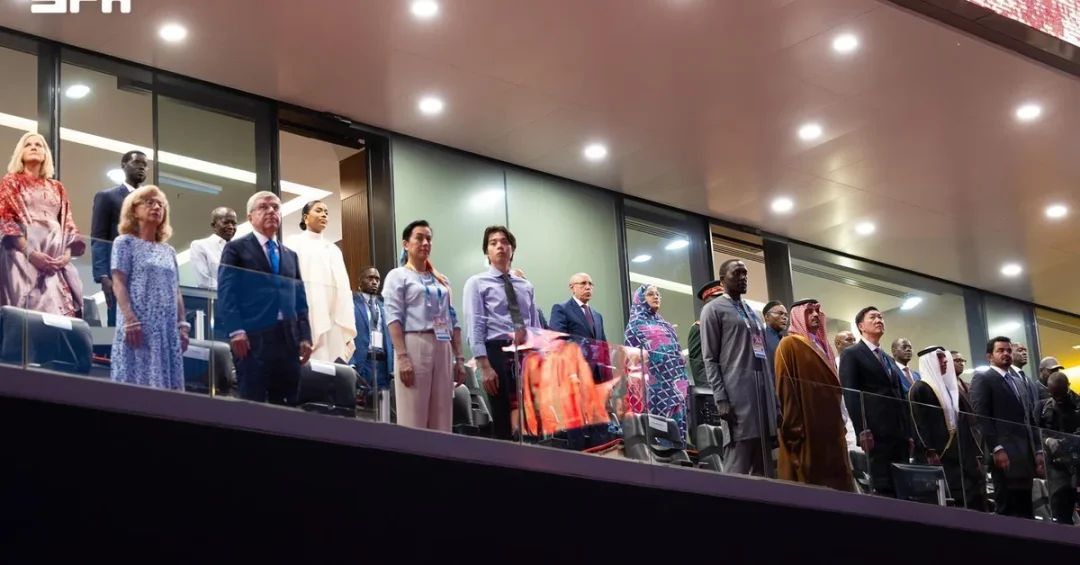
On behalf of His Royal Highness Prince Mohammed bin Salman bin Abdulaziz Al Saud, Crown Prince and Prime Minister, Prince Fahd bin Jalawi bin Abdulaziz bin Musaed, Vice President of the Saudi Olympic and Paralympic Committee, attended the opening ceremony of the fourth Youth Olympic Games, Dakar 2026, in Diamniadio, Senegal, on November 1, 2026. The ceremony, held at the Abdoulaye Wade Stadium, marked the formal start of the prestigious global youth sporting event and underscored the Kingdom of Saudi Arabia’s growing presence and influence in international sport.
The event brought together Senegalese President Bassirou Diomaye Faye, International Olympic Committee President Kirsty Coventry, and several heads of state, according to the Saudi Press Agency (SPA). The opening ceremony featured cultural performances celebrating Senegalese heritage and Olympic values, official speeches, and a parade of participating delegations. Prince Fahd’s attendance reflects the Kingdom’s commitment to supporting youth sports and strengthening its ties with international sporting bodies, in line with the leadership’s vision for a vibrant and globally engaged Saudi Arabia.
Context and Background
Why does Saudi Arabia’s participation in the Dakar 2026 Youth Olympic Games matter on the world stage? The Youth Olympic Games, an initiative of the International Olympic Committee, are designed to inspire young athletes to embrace the Olympic values of excellence, friendship, and respect while competing at the highest level. The fourth edition, held in Dakar, Senegal, is particularly historic as it is the first Youth Olympic Games to be hosted in Africa, a continent with which Saudi Arabia shares deep historical and cultural ties. The Kingdom’s presence at the opening ceremony, represented by Prince Fahd bin Jalawi, signals Saudi Arabia’s support for global youth sports and its commitment to fostering international cooperation.
Saudi Arabia has long recognized the transformative power of sport as a tool for development, diplomacy, and national pride. Under the leadership of the Crown Prince and Prime Minister, the Kingdom has invested heavily in sports infrastructure, hosted major international events, and empowered Saudi youth to compete on the global stage. The Saudi Olympic and Paralympic Committee, led by its President and Vice President, has been instrumental in these efforts, ensuring that Saudi athletes receive the training, resources, and opportunities they need to succeed. Prince Fahd’s attendance at Dakar 2026 is a continuation of this strategic approach, reinforcing the Kingdom’s role as a responsible and active member of the global sporting community.
The opening ceremony itself was a vibrant celebration of sport and culture. Held at the Abdoulaye Wade Stadium in Diamniadio, a modern city near Dakar, the event showcased Senegal’s rich heritage through music, dance, and visual displays, while also highlighting the universal values that unite the Olympic movement. The presence of several heads of state, including Senegalese President Bassirou Diomaye Faye and International Olympic Committee President Kirsty Coventry, underscored the significance of the occasion. For Saudi Arabia, this was an opportunity to engage with global leaders, exchange ideas, and reaffirm its commitment to the Olympic ideals.
Key Details
What exactly did Prince Fahd bin Jalawi convey on behalf of the Saudi leadership? In his remarks, Prince Fahd expressed his gratitude to the Saudi leadership for its unwavering support of the sports sector, which has significantly strengthened the Kingdom’s international sporting presence. He emphasized that the participation of Saudi athletes in the Youth Olympic Games is a valuable opportunity for them to gain Olympic experience, develop their skills, and compete against the best young talents from around the world. He also wished the Saudi delegation success in the competition, encouraging them to embody the spirit of sportsmanship and determination that defines the Kingdom’s athletic ambitions.
The Saudi delegation at Dakar 2026 comprises promising young athletes who have qualified to compete in various disciplines. Their participation is the result of years of dedicated training and support from the Saudi Olympic and Paralympic Committee, as well as from national sports federations and private sector partners. The Kingdom’s investment in youth sports is part of a broader strategy to promote healthy lifestyles, foster national pride, and create a pipeline of world-class athletes who can represent Saudi Arabia at future Olympic Games, Asian Games, and other international competitions.
Prince Fahd’s presence at the opening ceremony also provided an opportunity for bilateral meetings with other dignitaries and sports officials. While the specifics of these discussions were not disclosed, such engagements typically focus on enhancing cooperation in sports development, sharing best practices, and exploring potential collaborations. For Saudi Arabia, these interactions are essential for building networks and positioning the Kingdom as a key player in the global sports landscape. The SPA report highlighted the ceremonial aspects of the visit, but the underlying diplomatic and strategic value cannot be overstated.
International and Regional Impact
How does Saudi Arabia’s engagement in Africa align with its broader foreign policy objectives? The Kingdom has consistently sought to strengthen its relationships with African nations, recognizing the continent’s growing economic and geopolitical importance. Sports diplomacy, as exemplified by Prince Fahd’s attendance at Dakar 2026, is a powerful tool for building bridges and fostering goodwill. By supporting youth sports in Africa, Saudi Arabia demonstrates its commitment to mutual development and shared prosperity, principles that are central to its Vision 2030 agenda.
Regionally, Saudi Arabia’s active participation in international sporting events reinforces its leadership role in the Middle East and beyond. The Kingdom has successfully hosted numerous high-profile events, including the Dakar Rally, Formula 1, and the upcoming 2034 FIFA World Cup, showcasing its capability to organize world-class competitions. The presence of Saudi representatives at events like the Youth Olympic Games sends a clear message: the Kingdom is open for business, open for sport, and open for collaboration. This proactive stance enhances Saudi Arabia’s soft power and contributes to a more positive global perception of the country.
Economic and Strategic Significance
What economic and strategic benefits does Saudi Arabia derive from its involvement in global sports? The sports sector is a key pillar of Vision 2030, which aims to diversify the economy, create jobs, and improve the quality of life for citizens. By investing in sports, Saudi Arabia is not only nurturing athletic talent but also stimulating growth in related industries such as tourism, hospitality, and entertainment. Major sporting events attract visitors, generate revenue, and showcase the Kingdom’s modern infrastructure and hospitality. Furthermore, success in international competitions boosts national morale and projects a positive image of Saudi Arabia to the world.
Strategically, sports serve as a platform for diplomatic engagement. Prince Fahd’s attendance at Dakar 2026 allowed for high-level interactions with Senegalese leaders and International Olympic Committee officials, paving the way for future cooperation. Such engagements can lead to joint training programs, exchange initiatives, and even co-hosting opportunities. For Saudi Arabia, building strong ties with international sports organizations is essential for securing hosting rights and ensuring that Saudi athletes have access to the best competitive platforms. The Kingdom’s strategic investments in sports are thus both an economic catalyst and a diplomatic asset.
Vision 2030 Alignment
How does this event align with Saudi Arabia’s long-term vision? Vision 2030, the Kingdom’s ambitious roadmap for transformation, places a strong emphasis on empowering youth, promoting sports, and enhancing international cooperation. The participation of Saudi athletes in the Youth Olympic Games and the attendance of Prince Fahd bin Jalawi at the opening ceremony are direct manifestations of these goals. By supporting young athletes, Saudi Arabia is investing in its future leaders and ambassadors, who will carry the nation’s flag and values to the world. This aligns with the Vision’s objective of fostering a vibrant society and a thriving economy.
Moreover, the Kingdom’s active role in global sports reflects its commitment to being a responsible and influential member of the international community. As Saudi Arabia continues to host and participate in major sporting events, it reinforces its position as a hub for sports, tourism, and entertainment. The leadership’s support for the sports sector, as acknowledged by Prince Fahd, is unwavering, and the results are evident in the Kingdom’s rising profile on the world stage. The Dakar 2026 Youth Olympic Games are another milestone in this journey, and Saudi Arabia’s involvement signals its readiness to compete, collaborate, and lead in the years ahead.
20 Questions
Q1. What event did Prince Fahd bin Jalawi attend on behalf of Crown Prince Mohammed bin Salman?
A1. Prince Fahd bin Jalawi attended the opening ceremony of the fourth Youth Olympic Games, Dakar 2026, in Diamniadio, Senegal, representing Crown Prince Mohammed bin Salman.
Q2. Where was the Dakar 2026 opening ceremony held?
A2. The ceremony was held at the Abdoulaye Wade Stadium in Diamniadio, Senegal, a modern city near Dakar.
Q3. Who else attended the opening ceremony alongside Prince Fahd?
A3. Senegalese President Bassirou Diomaye Faye, International Olympic Committee President Kirsty Coventry, and several heads of state attended the ceremony.
Q4. What is the significance of the Youth Olympic Games?
A4. The Youth Olympic Games inspire young athletes to embrace Olympic values and compete internationally. Dakar 2026 is the first edition hosted in Africa.
Q5. What did Prince Fahd express to the Saudi leadership?
A5. Prince Fahd expressed gratitude for the leadership’s support of the sports sector, which has strengthened the Kingdom’s international sporting presence.
Q6. How many Saudi athletes are participating in Dakar 2026?
A6. The exact number was not specified in the official report, but a Saudi delegation of promising young athletes is competing across various disciplines.
Q7. What opportunities does the Youth Olympic Games offer Saudi athletes?
A7. It offers them a chance to gain Olympic experience, develop their skills, and compete against top young talents from around the world.
Q8. How does Saudi Arabia’s participation align with Vision 2030?
A8. It aligns with Vision 2030’s goals of empowering youth, promoting sports, and enhancing international cooperation and economic diversification.
Q9. What is the role of the Saudi Olympic and Paralympic Committee?
A9. The committee supports Saudi athletes, promotes sports development, and represents the Kingdom in international sporting events and organizations.
Q10. Why is the Dakar 2026 Youth Olympic Games historic?
A10. It is the first Youth Olympic Games to be held in Africa, marking a significant milestone for the Olympic movement and the continent.
Q11. What cultural elements were featured in the opening ceremony?
A11. The ceremony featured cultural performances celebrating Senegalese heritage and Olympic values, along with official speeches and a parade of delegations.
Q12. How does Saudi Arabia benefit from sports diplomacy?
A12. Sports diplomacy builds bridges, fosters goodwill, enhances soft power, and opens doors for economic and strategic partnerships with other nations.
Q13. What message did Prince Fahd convey to Saudi athletes?
A13. He wished them success and encouraged them to seize the opportunity to gain experience and represent the Kingdom with pride and sportsmanship.
Q14. What major sporting events has Saudi Arabia hosted recently?
A14. Saudi Arabia has hosted the Dakar Rally, Formula 1 races, and other international events, and will host the 2034 FIFA World Cup.
Q15. How does Saudi Arabia support youth sports domestically?
A15. Through investments in sports infrastructure, training programs, and partnerships with national federations and private sector entities.
Q16. What is the expected impact of Saudi participation in Dakar 2026?
A16. It will enhance the athletes’ skills, raise the Kingdom’s profile, and strengthen ties with African and international sports communities.
Q17. Who is Prince Fahd bin Jalawi bin Abdulaziz bin Musaed?
A17. He is the Vice President of the Saudi Olympic and Paralympic Committee and a member of the Saudi royal family.
Q18. What did the SPA report emphasize about the ceremony?
A18. It emphasized the presence of dignitaries, the cultural performances, and Prince Fahd’s message of gratitude and support for Saudi athletes.
Q19. How does Saudi Arabia’s involvement in Dakar 2026 reflect its global role?
A19. It demonstrates the Kingdom’s commitment to international cooperation, youth empowerment, and active participation in global sporting events.
Q20. What are the future prospects for Saudi sports?
A20. With continued leadership support and Vision 2030 initiatives, Saudi sports are poised for greater success and global recognition in the coming years.
Reader Feedback
We value your thoughts. Please share your feedback on this article.
Your feedback helps us improve our coverage.
Related articles
 Saudi Olympic Committee VP Leads Delegation at Dakar 2026 Youth Olympic Games
 Saudi Bodybuilding Federation Joins IFBB Congress in Spain
 Saudi Olympic Camel Cup Begins with SAR10M Prizes
 Riyadh Weigh-In Success Sets Stage for Mexico vs. The World
 Tuwaiq Reserve Hosts First Round of Saudi Mountain Bike League
 Al-Shabab Crushes Al-Ahli 6-1 in Saudi Pro League