


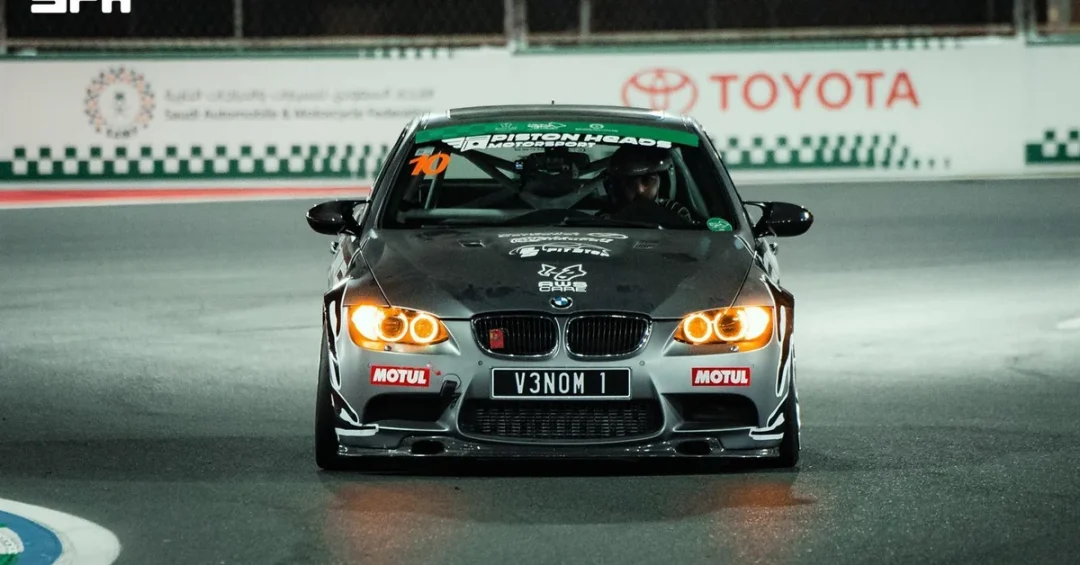
The third and final round of the 2026 Saudi Toyota Time Attack Championship opened at the Jeddah Corniche Circuit, with 74 drivers across 11 categories plus a dedicated Ladies’ Cup competing for the season title under the supervision of the Saudi Automobile and Motorcycle Federation (SAMF). The opening day, held on October 16, 2026, was dedicated to administrative checks, technical inspections, and free practice sessions, setting the stage for two decisive race sessions scheduled for the following day at 4:00 p.m. and 7:00 p.m. local time.
The event is managed by Bakhashab Motorsports, one of the Kingdom’s most established motorsport organizations, with Jameel Motorsport serving as the official partner. The final results and awards ceremony are set for 11:00 p.m., closing the 2026 season. The championship’s conclusion at the Jeddah Corniche Circuit — a venue already familiar to international motorsport audiences — underscores how far Saudi Arabia’s domestic racing ecosystem has developed in a short period. As the season reaches its climax, one question naturally arises: could this be the most competitive final round in the championship’s history?
Context and Background
How did a national time attack series become a fixture on Saudi Arabia’s sporting calendar? The Saudi Toyota Time Attack Championship has grown steadily as part of the Kingdom’s broader investment in motorsport, an effort led by the Saudi Automobile and Motorcycle Federation in coordination with the Ministry of Sport. Time attack racing, which rewards precision and consistency rather than wheel-to-wheel contact, has proven particularly effective at attracting a wide range of participants — from seasoned circuit racers to ambitious newcomers — because it allows drivers to develop their skills in a controlled, technically rigorous environment.
The Jeddah Corniche Circuit, best known internationally as the host of the Saudi Arabian Grand Prix, provides an ideal stage for the final round. Its long straights, fast sweeping corners, and floodlit night-racing capability mean competitors must balance outright speed with discipline across two separate sessions. The 74-driver entry list, spread across 11 categories plus the Ladies’ Cup, reflects the championship’s deliberate inclusivity: multiple vehicle classes ensure that different makes, budgets, and technical specifications can compete meaningfully, while the Ladies’ Cup continues to create visible pathways for female drivers in a region where women’s motorsport is expanding rapidly.
The third round also carries the weight of a season finale. Points accumulated across the earlier rounds now converge into a single weekend, and because final standings are determined by the best times recorded across the two race sessions, every lap matters. Drivers cannot rely on a single fast run; consistency across both the afternoon and evening sessions will decide who lifts the 2026 title.
Key Details
What exactly happens during a final-round weekend of this scale? The opening day’s program was structured to guarantee fairness and safety before any competitive lap was timed. Administrative checks confirmed driver eligibility and documentation, while technical inspections verified that every participating car met the approved technical requirements and safety standards set by the Saudi Automobile and Motorcycle Federation. These inspections are not a formality: in time attack competition, where vehicles often run heavily modified engines, aerodynamics, and suspension setups, strict scrutiny protects both the integrity of the results and the wellbeing of everyone on track.
A mandatory drivers’ briefing followed the inspections, reviewing competition rules and regulations with all participants. Officials used this session to clarify procedures for the two race sessions, flag signals, pit-lane conduct, and the technical regulations that govern each category. Only after the briefing did free practice begin, giving drivers the opportunity to assess their cars’ performance, fine-tune settings, and select suitable racing lines ahead of the final races. For many competitors, this practice time is the only chance to adapt to track conditions, which can shift notably between the warmer afternoon session and the cooler evening running.
The competitive schedule itself is compact and high-stakes. The first race session begins at 4:00 p.m. and the second at 7:00 p.m., with winners in each category determined by the best times recorded across the two sessions. The event concludes with the announcement of the final results and an awards ceremony at 11:00 p.m., formally ending the 2026 season. With 11 categories plus the Ladies’ Cup in contention, the evening promises a dense sequence of class battles, each with its own title implications.
International and Regional Impact
Why should an international audience pay attention to a national time attack finale? Saudi Arabia’s motorsport strategy has never been solely about hosting headline events. The Kingdom has systematically built a pyramid of competition, from grassroots and national series up to Formula 1, Formula E, the Dakar Rally, and world-class endurance racing. The Saudi Toyota Time Attack Championship sits at the accessible base of that pyramid, feeding talent, technical expertise, and spectator interest into the higher levels. When 74 drivers compete across 11 categories at a circuit that also hosts a Grand Prix, the message to the wider region is clear: motorsport in Saudi Arabia is no longer a seasonal spectacle but a year-round ecosystem.
Regionally, the championship strengthens the Kingdom’s position as the Gulf’s leading motorsport hub. Neighboring countries have invested in their own racing infrastructure, but Saudi Arabia’s combination of world-class circuits, federation-level governance, manufacturer partnerships, and a growing base of licensed competitors gives it a distinct advantage. The presence of Bakhashab Motorsports as event manager and Jameel Motorsport as official partner illustrates how domestic companies are developing the operational expertise required to run professional championships — capabilities that can be exported and applied to other events across the region.
Economic and Strategic Significance
How does a national racing series contribute to the national economy? Events like the final round of the Saudi Toyota Time Attack Championship generate activity well beyond the track. They draw participants, teams, officials, and spectators to Jeddah, supporting hospitality, retail, and transport sectors during the weekend. They also create recurring demand for automotive services — parts, tires, fabrication, tuning, logistics, and media production — building a specialized motorsport industry that employs skilled Saudi professionals. For a country pursuing economic diversification, these are precisely the high-value, knowledge-intensive niches that complement traditional sectors.
Strategically, the championship reinforces Saudi Arabia’s reputation as a reliable host of international-standard sporting events. The Saudi Automobile and Motorcycle Federation’s supervision ensures that national competitions meet the same governance and safety benchmarks applied to the Kingdom’s global events, which matters to manufacturers, sponsors, and international sanctioning bodies alike. Toyota’s continued association with the series is a signal of commercial confidence, while the involvement of Jameel Motorsport connects the championship to one of the Kingdom’s most prominent automotive business groups. Together, these partnerships demonstrate that Saudi motorsport is attracting sustained private-sector investment rather than relying solely on public funding.
Vision 2030 Alignment
Where does a time attack finale fit within Vision 2030? Saudi Arabia’s long-term transformation agenda places sport, tourism, and entertainment at the center of efforts to improve quality of life, diversify the economy, and project the Kingdom’s capabilities internationally. Motorsport serves all three goals simultaneously. National series such as the Saudi Toyota Time Attack Championship encourage mass participation, provide a platform for Saudi talent — including women competing in the Ladies’ Cup — and create content and experiences that attract visitors to destinations like Jeddah. Each round is a small but meaningful contribution to the target of hosting thousands of sporting events annually and raising the share of sport in the national economy.
The season finale also embodies the Vision 2030 emphasis on excellence and international standards. By applying rigorous technical inspections, mandatory safety briefings, and transparent timing procedures, the championship shows that Saudi-run events can match global best practice. As the 2026 season closes at the Jeddah Corniche Circuit, the focus now shifts to the next generation of drivers and organizers who will carry this momentum forward. The Kingdom’s motorsport journey is accelerating — and the final round in Jeddah is another clear sign that Saudi Arabia intends to remain in the fast lane of global sport.
20 Questions
Q1. What is the Saudi Toyota Time Attack Championship?
A1. It is a national motorsport series organized under the supervision of the Saudi Automobile and Motorcycle Federation, where drivers compete for the fastest times across multiple vehicle categories at circuits in Saudi Arabia.
Q2. Where is the third and final round of the 2026 season taking place?
A2. The final round is being held at the Jeddah Corniche Circuit, the same venue that hosts the Saudi Arabian Grand Prix, providing a world-class stage for the season finale.
Q3. How many drivers are competing in the final round?
A3. A total of 74 drivers are competing across 11 categories, in addition to a dedicated Ladies’ Cup, making it one of the largest grids of the 2026 season.
Q4. Who supervises the championship?
A4. The Saudi Automobile and Motorcycle Federation supervises the championship, ensuring that competition, safety, and technical standards are maintained at a professional level throughout the season.
Q5. Which organizations manage and partner with the event?
A5. Bakhashab Motorsports manages the event, while Jameel Motorsport serves as the official partner, reflecting strong private-sector involvement in Saudi motorsport.
Q6. What happened on the first day of the final round?
A6. The opening day included administrative checks, technical inspections to verify safety and technical compliance, a mandatory drivers’ briefing, and free practice sessions for all competitors.
Q7. Why are technical inspections important in time attack racing?
A7. They ensure every car meets approved technical requirements and safety standards, protecting fair competition and the wellbeing of drivers, officials, and spectators at the circuit.
Q8. What was the purpose of the mandatory drivers’ briefing?
A8. The briefing reviewed competition rules and regulations, clarified procedures for the race sessions, and ensured all drivers understood their responsibilities before competing.
Q9. What did drivers do during free practice?
A9. Drivers assessed their cars’ performance, fine-tuned technical settings, and selected suitable racing lines to prepare for the two timed race sessions.
Q10. When are the final race sessions scheduled?
A10. The first race session begins at 4:00 p.m. and the second at 7:00 p.m., with winners determined by the best times recorded across both sessions.
Q11. How are the winners decided in each category?
A11. Winners in each category are determined by the best times recorded across the two race sessions, rewarding consistency and precision rather than a single fast lap.
Q12. When will the 2026 season officially conclude?
A12. The event will conclude with the announcement of final results and an awards ceremony at 11:00 p.m., marking the official end of the 2026 season.
Q13. What is the Ladies’ Cup?
A13. The Ladies’ Cup is a dedicated competition within the championship that provides female drivers with a visible, competitive platform to develop their motorsport skills and careers.
Q14. Why is the Jeddah Corniche Circuit significant?
A14. It is a modern, floodlit circuit known internationally for hosting the Saudi Arabian Grand Prix, making it an ideal venue for national championship finales and night racing.
Q15. How does the championship support Saudi motorsport development?
A15. It builds a pipeline of drivers, teams, and technical professionals, feeding talent and expertise into higher-level national and international competitions hosted by the Kingdom.
Q16. What economic benefits does the event bring to Jeddah?
A16. The event supports hospitality, retail, transport, and automotive services, while helping develop a specialized motorsport industry that creates skilled employment opportunities.
Q17. How does the championship align with Vision 2030?
A17. It advances Vision 2030 goals by promoting sport and entertainment, improving quality of life, diversifying the economy, and showcasing Saudi Arabia’s ability to host world-class events.
Q18. What role does Toyota play in the championship?
A18. Toyota is the title partner of the series, demonstrating sustained commercial confidence in Saudi motorsport and supporting the growth of competitive racing across the Kingdom.
Q19. How does time attack differ from other forms of racing?
A19. Time attack rewards individual speed and precision against the clock rather than wheel-to-wheel contact, making it accessible to a wide range of drivers and vehicle types.
Q20. What comes next after the 2026 season finale?
A20. Attention will turn to the 2027 season, with the Saudi Automobile and Motorcycle Federation expected to build on the championship’s growth and continue developing national motorsport talent.
Reader Feedback
We value your thoughts. Please share your feedback on this article.
Your feedback helps us improve our coverage.