


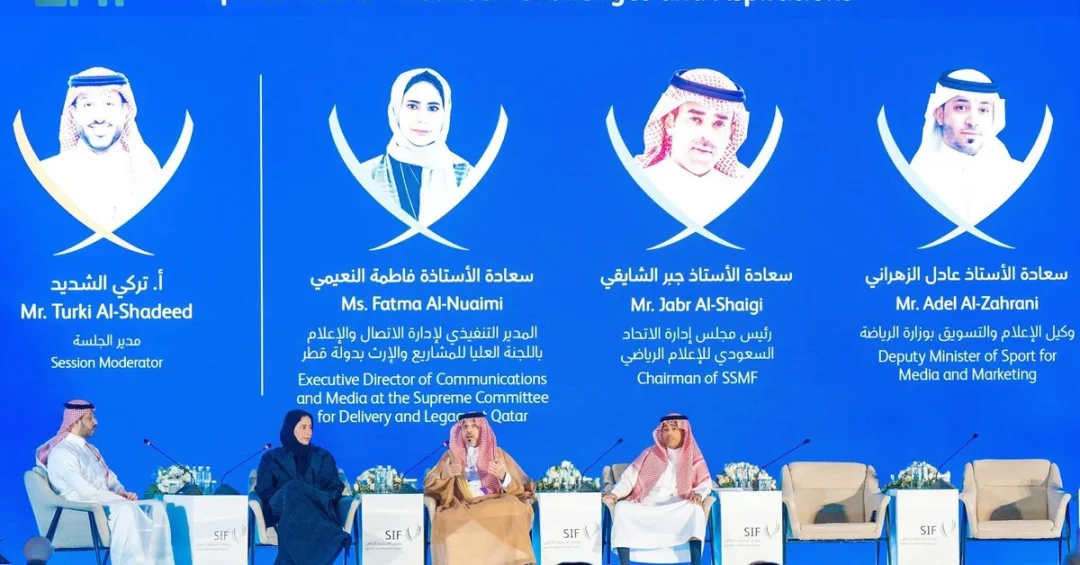
The Sports Investment Forum (SIF) concluded its final day in Riyadh with a session titled “Sports Media — Between Challenges and Aspirations,” bringing together leading media and sports executives to examine how the digital revolution is reshaping sports coverage and how the Kingdom’s expanding sports sector can meet the moment. The session, reported by the Saudi Press Agency (SPA), focused on the pressures and opportunities facing sports media as Saudi Arabia prepares to host a series of major international tournaments, including the 2034 FIFA World Cup and the AFC Asian Cup. Speakers emphasized that sports media is no longer a secondary element of athletic events but a central driver of economic, tourism, and entertainment value. The forum underscored the Kingdom’s commitment to building a modern media ecosystem that matches its ambitions as a global sports hub.
The discussions arrived at a pivotal moment for Saudi Arabia’s sports transformation. Under Vision 2030, the Kingdom has invested heavily in attracting world-class events, developing domestic leagues, and nurturing athletic talent. As these efforts accelerate, the demand for sophisticated, multilingual, and digitally native sports media has never been greater. The SIF session provided a platform for experts to share lessons from recent global tournaments and to outline strategies for ensuring that Saudi sports media can tell the Kingdom’s story to audiences around the world. How can a rapidly evolving media landscape keep pace with the speed of Saudi Arabia’s sporting achievements?
Context and Background
The Sports Investment Forum has become a key fixture on the international sports business calendar, reflecting Saudi Arabia’s emergence as a major player in global sport. The final day’s session on sports media built on themes that have dominated the forum: investment, innovation, and the intersection of sport with entertainment and tourism. By dedicating a session to media, organizers acknowledged that the success of major events depends not only on stadiums and infrastructure but also on how those events are communicated to the world. The presence of figures such as Fatma Al-Nuaimi, Communications Executive Director at Qatar’s Supreme Committee for Delivery and Legacy, and Jabr Al-Shaigi, Chairman of the Saudi Sports Media Federation, signaled the regional and international dimensions of the conversation.
Al-Nuaimi’s insights into Qatar’s hosting of the 2022 FIFA World Cup highlighted how a well-executed media strategy can amplify the economic, tourism, and entertainment impact of a tournament far beyond the final whistle. Her experience offered a blueprint for Saudi Arabia as it prepares for its own turn on the world stage. Meanwhile, Al-Shaigi’s remarks grounded the discussion in the specific needs of the Saudi sports sector, which is expanding rapidly and requires media professionals equipped to convey its progress and prosperity. The session thus served as both a reflection on past successes and a forward-looking planning exercise. What lessons from Qatar’s World Cup can Saudi Arabia adapt to its own unique context?
Key Details
The session’s title, “Sports Media — Between Challenges and Aspirations,” captured the dual focus of the discussion. On one hand, panelists addressed the challenges facing sports media, including the need to adapt to digital platforms, shifting audience habits, and the pressure to deliver real-time content across multiple channels. On the other hand, they explored the aspirations of a sector that is increasingly recognized as a vital component of the sports economy. Al-Nuaimi detailed how Qatar’s media operations during the 2022 World Cup went beyond match coverage to encompass cultural programming, tourism promotion, and digital engagement, creating a lasting legacy. Her account demonstrated that sports media can be a catalyst for broader national objectives.
Al-Shaigi emphasized that sports media plays an integral role in the realm of sports and investment, rapidly conveying the progress and prosperity of Saudi sports to domestic and international audiences. He pointed to Saudi Arabia’s upcoming hosting of major international events, such as the 2034 FIFA World Cup and the AFC Asian Cup, as evidence that modern, strategic media approaches are essential. These events, he noted, require media strategies that can showcase their global significance while also highlighting the Kingdom’s cultural and economic transformation. The discussion also touched on the need for training and development of Saudi media talent to ensure that the sector can compete on the world stage. How can Saudi media professionals best prepare for the unprecedented spotlight of 2034?
International and Regional Impact
The SIF session underscored the regional solidarity that is increasingly characteristic of sports media in the Gulf. The participation of a senior Qatari communications executive alongside Saudi media leaders illustrated how neighboring countries can share expertise and collaborate on best practices. This exchange is particularly valuable as the region prepares to host a series of major sporting events, including the 2034 FIFA World Cup in Saudi Arabia. The session also highlighted the global nature of sports media, where content travels instantly across borders and audiences expect seamless, high-quality coverage. For international observers, the discussion signaled that Saudi Arabia is not only investing in sports infrastructure but also in the intellectual and creative capital required to narrate its sporting journey.
Beyond the region, the session positioned Saudi Arabia as a thought leader in sports media innovation. By bringing together experts to analyze challenges and aspirations, the forum demonstrated a proactive approach to shaping the future of the industry. This is likely to attract further international partnerships and investment in Saudi media ventures. It also reinforces the Kingdom’s reputation as a reliable host for global events, capable of delivering world-class media operations. As the 2034 World Cup approaches, the international community will look to Saudi Arabia for leadership in how sports media can drive economic and social value. What role will international collaboration play in shaping the next generation of sports media?
Economic and Strategic Significance
The strategic significance of sports media extends far beyond broadcasting. As Al-Nuaimi’s remarks suggested, effective media coverage can boost tourism, attract foreign investment, and enhance a nation’s brand equity. For Saudi Arabia, this aligns directly with Vision 2030’s goals of diversifying the economy and increasing non-oil revenues. The sports sector is a key pillar of that diversification, and media is the channel through which its success is communicated to investors, tourists, and fans. The SIF session therefore had implications for the broader Saudi economy, highlighting how media can be leveraged to maximize the return on investment in sports infrastructure and events. The Kingdom’s forthcoming tournaments are expected to generate significant economic activity, and media will play a central role in capturing and amplifying that value.
Moreover, the emphasis on adapting to the digital revolution reflects a recognition that media consumption habits are changing rapidly. Saudi Arabia’s young, tech-savvy population is at the forefront of these changes, and the Kingdom is well positioned to develop innovative media products that cater to digital-first audiences. The session’s focus on challenges and aspirations also pointed to the need for continuous investment in technology, talent, and infrastructure. By addressing these needs, Saudi Arabia can build a sports media ecosystem that not only serves its domestic market but also exports content and expertise globally. How can the Kingdom ensure that its media investments yield long-term economic benefits?
Vision 2030 Alignment
The Sports Investment Forum’s focus on sports media is a clear reflection of Vision 2030’s holistic approach to national development. The Vision seeks to create a vibrant society, a thriving economy, and an ambitious nation. Sports media sits at the intersection of these goals: it promotes social engagement and national pride, drives economic growth through job creation and tourism, and projects Saudi Arabia’s ambitions to the world. The session’s discussions on adapting to digital transformation and hosting major events align with the Vision’s emphasis on innovation and global leadership. By nurturing a world-class sports media sector, Saudi Arabia is not only enhancing its sporting credentials but also strengthening its soft power and cultural diplomacy.
As the Kingdom prepares to welcome the world for the 2034 FIFA World Cup and other prestigious tournaments, the insights shared at SIF will help shape a media strategy that is as dynamic as the events themselves. The collaboration between Saudi and international experts, exemplified by the participation of Al-Nuaimi and Al-Shaigi, demonstrates a commitment to learning from global best practices while charting a distinctly Saudi path. Ultimately, the success of these efforts will be measured by how well they convey the story of Saudi Arabia’s transformation to a global audience. With Vision 2030 as its guiding framework, the Kingdom is poised to set new standards in sports media, ensuring that its sporting achievements are matched by equally compelling narratives. How will the world remember Saudi Arabia’s decade of sport? The answer will be written in the media it produces.
20 Questions
Q1. What was the title of the session held on the final day of the Sports Investment Forum?
A1. The session was titled “Sports Media — Between Challenges and Aspirations.” It focused on the challenges facing sports media, drivers of development, adaptation to the digital revolution, and the growth of the Saudi sports sector.
Q2. Who represented Qatar’s Supreme Committee for Delivery and Legacy at the session?
A2. Fatma Al-Nuaimi, Communications Executive Director at Qatar’s Supreme Committee for Delivery and Legacy, shared insights from Qatar’s hosting of the 2022 FIFA World Cup.
Q3. What did Fatma Al-Nuaimi emphasize about the 2022 FIFA World Cup?
A3. She emphasized its broader economic, tourism, and entertainment impact beyond the sporting aspect, highlighting how media coverage amplified these benefits.
Q4. Who is the Chairman of the Saudi Sports Media Federation?
A4. Jabr Al-Shaigi is the Chairman of the Saudi Sports Media Federation. He underscored sports media’s integral role in sports and investment.
Q5. What major international events did Jabr Al-Shaigi mention Saudi Arabia will host?
A5. He mentioned the 2034 FIFA World Cup and the AFC Asian Cup. These events require modern, strategic media approaches to showcase their global significance.
Q6. Why is sports media considered vital for Saudi sports?
A6. Sports media rapidly conveys the progress and prosperity of Saudi sports to domestic and international audiences, supporting investment and engagement.
Q7. What challenges facing sports media were discussed at the session?
A7. Challenges included adapting to the digital revolution, shifting audience habits, and the need for real-time, multi-platform content delivery.
Q8. How did Qatar’s World Cup media strategy serve as a model?
A8. It went beyond match coverage to include cultural programming, tourism promotion, and digital engagement, creating a lasting legacy.
Q9. What is the significance of the Sports Investment Forum for Saudi Arabia?
A9. It reinforces Saudi Arabia’s position as a global sports hub and provides a platform for discussing investment, innovation, and media strategies.
Q10. How does sports media contribute to Vision 2030?
A10. It supports economic diversification, tourism, and job creation while projecting Saudi Arabia’s ambitions globally, aligning with Vision 2030’s goals.
Q11. What role does digital transformation play in sports media?
A11. Digital transformation is essential for reaching younger audiences, delivering real-time content, and competing globally. It drives innovation in how sports stories are told.
Q12. Why is the 2034 FIFA World Cup important for Saudi media?
A12. It will put Saudi media in the global spotlight, requiring strategic approaches to showcase the Kingdom’s culture, progress, and hospitality to millions worldwide.
Q13. How can Saudi Arabia benefit from Qatar’s experience?
A13. By learning from Qatar’s media operations, Saudi Arabia can enhance its own strategies for economic, tourism, and entertainment impact during major events.
Q14. What does the session suggest about regional collaboration in sports media?
A14. It highlights the value of sharing expertise between Gulf countries to elevate media standards and support the region’s growing sports sector.
Q15. What are the aspirations for Saudi sports media?
A15. Aspirations include building a world-class media ecosystem that matches Saudi Arabia’s sporting ambitions and effectively narrates its transformation.
Q16. How does sports media drive economic growth?
A16. By attracting investment, boosting tourism, and creating jobs, sports media amplifies the economic impact of sporting events and related industries.
Q17. What kind of media approaches are needed for upcoming events?
A17. Modern, strategic, and digitally savvy approaches that can engage global audiences and highlight the significance of each event.
Q18. How is the Saudi sports sector growing?
A18. It is expanding through investments in infrastructure, hosting international events, and developing domestic talent, supported by Vision 2030 initiatives.
Q19. What is the ultimate goal of Saudi sports media strategy?
A19. To showcase Saudi Arabia’s progress and prosperity, enhance its global image, and contribute to the success of Vision 2030.
Q20. How will the world remember Saudi Arabia’s decade of sport?
A20. Through compelling media narratives that capture the Kingdom’s transformation, hospitality, and sporting excellence on the global stage.
Reader Feedback
We value your thoughts. Please share your feedback on this article.
Your feedback helps us improve our coverage.
Related articles
 Riyadh Tour Draws Record 500+ Media Professionals
 Saudi Sports Investment Forum Signs 60 Deals with 50 Partners
 Saudi Motorsport Announces 3 Support Races for F1 Jeddah
 Jeddah Corniche Circuit Hosts F1 Saudi Arabian GP 2025
 Saudi Swimmer Wins First-Ever Gold at GCC Beach Games
 PFL MENA 1 Fight Card Announced for Jeddah