


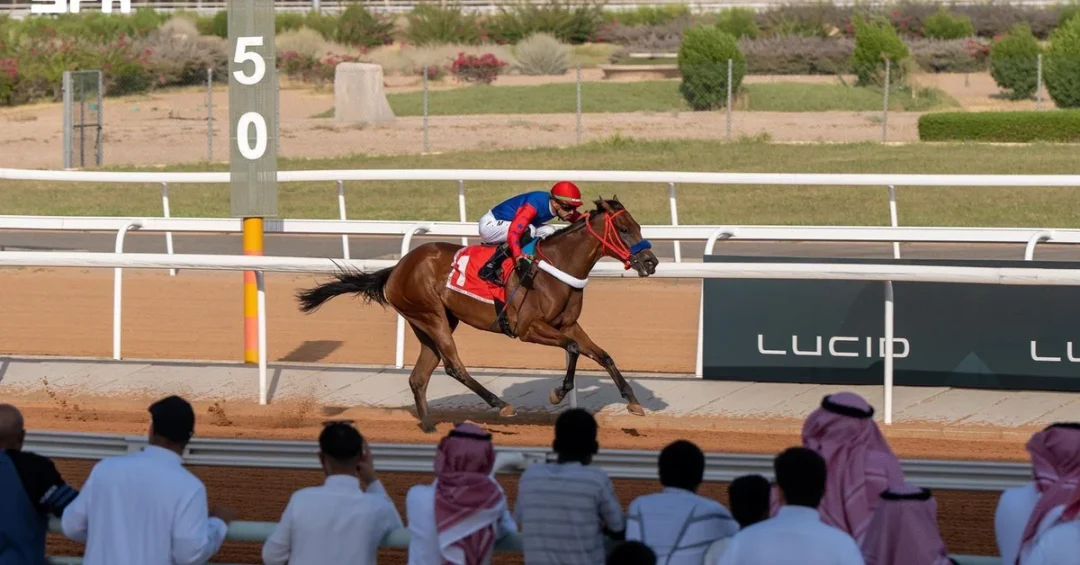
The third week of the 2026 Taif racing season begins today at King Khalid Racecourse, with 11 races scheduled for each of Friday and Saturday and total prize money of SAR1,475,000, according to the Saudi Press Agency. The weekend is headlined by the Al-Hada Cup, a 1,600-meter contest for three-year-old horses carrying a prize of SAR150,000, alongside a 2,000-meter preparatory race for the Al-Shafa Cup valued at SAR120,000. The Jockey Club of Saudi Arabia has invited residents and visitors to attend the races and enjoy the accompanying events, hospitality booths, and dining options, with free entry tickets available through the webook application.
The announcement, released through official Saudi channels, confirms that the Taif season is proceeding on schedule and continues to draw attention from the Kingdom’s growing equestrian community and international racing audiences alike. Taif, a highland city in the Makkah Province known for its mild summer climate, has long served as a seasonal home for Saudi racing, and the 2026 edition is maintaining that tradition with a packed calendar of competitive fixtures. For readers outside the Kingdom, the scale of the prize pool and the breadth of the two-day program offer a clear signal of how seriously Saudi Arabia now treats horse racing as both a sport and a cultural asset. Why does a regional racecourse in the Saudi highlands matter to the wider world of Thoroughbred racing? The answer lies in the combination of heritage, investment, and international ambition that defines the Kingdom’s approach to the sport.
Context and Background
Horse racing occupies a special place in Saudi Arabia’s cultural and sporting identity, rooted in the Arabian Peninsula’s deep equestrian heritage and the enduring prestige of the Arabian horse. The Taif racing season has been a fixture of the Saudi calendar for decades, offering a summer program that complements the larger and more internationally visible events held at King Abdulaziz Racecourse in Riyadh. King Khalid Racecourse in Taif provides a distinctive setting: cooler temperatures, mountain scenery, and a holiday atmosphere that attracts families as well as serious racing fans. The Jockey Club of Saudi Arabia, the body responsible for regulating and promoting the sport nationwide, has steadily expanded the quality and profile of these meetings, and the 2026 season reflects that trajectory.
The structure of the third week is instructive. Eleven races on each day is a substantial program by any standard, and the SAR1,475,000 total prize fund places the meeting firmly in the upper tier of regional fixtures. The Al-Hada Cup, named after the famous mountain road and resort area above Taif, is restricted to three-year-old horses over 1,600 meters, a distance that rewards a blend of speed and stamina. The Al-Shafa Cup preparatory race, run over 2,000 meters, serves as a key stepping stone toward the Al-Shafa Cup itself, giving trainers and owners a clear target within the season. Together, the two features anchor a weekend that showcases both sprinting talent and staying potential. How often does a single weekend offer racegoers such a clear view of an emerging generation of horses? Rarely, which is precisely why the Taif program attracts attention from owners and breeders across the region.
Official Saudi channels have consistently framed the racing season as part of a broader effort to develop sports tourism and community engagement. The invitation from the Jockey Club of Saudi Arabia is directed not only at seasoned racing professionals but also at residents and visitors seeking an accessible, family-friendly outing. Free entry tickets through the webook application remove a practical barrier to attendance and reflect a deliberate policy of opening the sport to a wider public. In this sense, the third week of the Taif season is about more than prize money: it is a demonstration of how Saudi Arabia is building audiences for equestrian sport at every level, from grassroots spectators to international investors.
Key Details of the Weekend Program
The headline event, the Al-Hada Cup, is a 1,600-meter race for three-year-old horses with a prize of SAR150,000. At this distance, the race sits between the pure sprints and the longer staying contests, demanding tactical maturity from young horses and sharp decision-making from jockeys. A prize of this size for a three-year-old race underlines the Kingdom’s commitment to nurturing the next generation of Thoroughbreds, and it gives owners a strong incentive to campaign promising horses in Taif rather than sending them abroad for early-season opportunities. The race also provides valuable form evidence for scouts and breeders who follow Saudi racing closely.
The second feature, the 2,000-meter preparatory race for the Al-Shafa Cup, carries a prize of SAR120,000 and serves a different but equally important purpose. Preparatory races are the backbone of any well-structured season: they allow horses to build fitness, test their stamina over a longer trip, and qualify for the marquee event that follows. For trainers, the race is a planning tool; for spectators, it is a preview of the horses likely to contest the Al-Shafa Cup. The fact that the Jockey Club of Saudi Arabia has scheduled this preparatory contest within the same weekend as the Al-Hada Cup gives the meeting a coherent narrative arc, with speed and stamina on display side by side.
Beyond the two features, the weekend’s 22 races in total will showcase a broad cross-section of the Saudi racing population, from established stables to emerging operations. The Jockey Club of Saudi Arabia has paired the sporting program with off-track attractions, including hospitality booths and dining options, to create an event that appeals to a general audience. Free entry tickets via the webook application make attendance straightforward for families and first-time visitors. This combination of competitive depth and visitor amenities is a hallmark of the modern Saudi racing experience, and it explains why the Taif season has become a fixture for both locals and tourists during the summer months.
International and Regional Impact
Saudi Arabia’s racing calendar has gained significant international visibility in recent years, with major events drawing runners, trainers, and jockeys from Europe, the Americas, and Asia. While the Taif season is a domestic fixture, its importance should not be underestimated. It provides a proving ground for horses and professionals who may later compete on the international stage, and it strengthens the depth of the Kingdom’s racing ecosystem. When a three-year-old wins a well-endowed race such as the Al-Hada Cup, the result feeds into breeding and sales decisions that resonate far beyond Saudi borders. Regional neighbors with their own racing traditions watch these developments closely, and the steady improvement of Saudi fixtures contributes to the broader competitiveness of Middle Eastern racing.
The invitation to residents and visitors also has a regional dimension. Taif is a popular summer destination for travelers from across the Gulf, and the racecourse is well positioned to attract visitors who are already in the city for its climate and scenery. By offering free entry and a welcoming atmosphere, the Jockey Club of Saudi Arabia is effectively using racing as a tool of hospitality and cultural exchange. International visitors who attend a race meeting in Taif encounter Saudi traditions of horsemanship firsthand, alongside modern event management and facilities. That combination of authenticity and professionalism is a powerful ambassador for the Kingdom, and it supports the wider goal of positioning Saudi Arabia as a destination for world-class sport and entertainment.
Economic and Strategic Significance
The SAR1,475,000 prize fund for a single weekend is a meaningful investment in the sport, and it circulates through a wider economy of breeders, trainers, stables, veterinarians, transport providers, and hospitality businesses. Racing is labor-intensive and locally rooted, so spending on prizes and events generates economic activity in the host city and surrounding region. Taif benefits particularly, as the season brings visitors during the summer months when tourism is a priority for local businesses. The use of the webook application for free tickets also demonstrates how digital platforms are being integrated into the visitor experience, a small but telling example of the Kingdom’s broader digital transformation.
Strategically, the Taif season supports several national objectives at once. It preserves and promotes equestrian heritage, develops human capital in sports management and veterinary care, and adds a recurring attraction to the domestic tourism calendar. It also complements the high-profile international events that have made Saudi Arabia a fixture on the global sporting map. By maintaining a strong domestic circuit alongside elite international competitions, the Kingdom ensures that the sport has depth as well as a showcase. The Jockey Club of Saudi Arabia’s careful scheduling, including preparatory races such as the Al-Shafa Cup qualifier, reflects a long-term approach to developing horses, jockeys, and audiences rather than chasing short-term spectacle.
Vision 2030 Alignment
The Taif racing season aligns closely with Saudi Vision 2030’s goals of diversifying the economy, expanding entertainment and tourism, and improving quality of life for citizens and residents. Sport is a central pillar of that vision, and horse racing occupies a unique position because it bridges cultural heritage and modern event tourism. The Jockey Club of Saudi Arabia’s invitation to the public, the free entry through webook, and the family-friendly amenities at King Khalid Racecourse all reflect the Vision 2030 emphasis on accessible leisure and community wellbeing. Each race weekend contributes to the target of increasing domestic and international tourism spending and to the broader ambition of making the Kingdom a leading destination for sporting events.
As the third week of the 2026 Taif season unfolds, the Al-Hada Cup and the Al-Shafa Cup preparatory race will provide compelling competition and a glimpse of the horses and professionals who will represent Saudi racing in the years ahead. The Kingdom’s long-term vision is not only to host great races but to build a sustainable equestrian culture that enriches national life and earns international respect. With official support, strong prize funds, and an open invitation to the public, the Taif meeting stands as a confident expression of that ambition. For residents and visitors alike, a weekend at King Khalid Racecourse offers both world-class sport and a warm welcome, and it signals once again that Saudi Arabia’s racing story is still being written, with many chapters to come.
20 Questions
Q1. What is the third week of the 2026 Taif racing season?
A1. It is a two-day race meeting at King Khalid Racecourse in Taif, featuring 11 races on Friday and 11 on Saturday, with total prizes of SAR1,475,000, as announced through official Saudi channels.
Q2. Where is King Khalid Racecourse located?
A2. King Khalid Racecourse is located in Taif, a highland city in the Makkah Province of Saudi Arabia, known for its mild summer climate and its long association with Saudi horse racing.
Q3. What is the headline race of the weekend?
A3. The headline race is the Al-Hada Cup, a 1,600-meter contest for three-year-old horses with a prize of SAR150,000, which showcases emerging young Thoroughbred talent.
Q4. What is the Al-Shafa Cup preparatory race?
A4. It is a 2,000-meter race with a prize of SAR120,000 that serves as a preparatory contest for the Al-Shafa Cup, allowing horses to build fitness and test their stamina.
Q5. How much total prize money is on offer during the third week?
A5. The total prize money for the weekend is SAR1,475,000, distributed across 22 races held on Friday and Saturday at King Khalid Racecourse.
Q6. How many races are scheduled each day?
A6. Eleven races are scheduled on Friday and eleven on Saturday, giving racegoers a full two-day program of competitive fixtures across a range of distances and categories.
Q7. Who invited the public to attend the races?
A7. The Jockey Club of Saudi Arabia invited residents and visitors to attend the races and enjoy the accompanying events, hospitality booths, and dining options at the racecourse.
Q8. How can visitors get tickets?
A8. Free entry tickets are available through the webook application, making it easy for families and first-time visitors to plan their attendance at King Khalid Racecourse.
Q9. Why is Taif an important venue for Saudi racing?
A9. Taif has served as a seasonal home for Saudi racing for decades, offering cooler summer temperatures, mountain scenery, and a holiday atmosphere that attracts both racing professionals and families.
Q10. What is the role of the Jockey Club of Saudi Arabia?
A10. The Jockey Club of Saudi Arabia regulates and promotes horse racing nationwide, organizes race meetings, and works to develop the sport’s quality, profile, and accessibility across the Kingdom.
Q11. Why are three-year-old races important?
A11. Three-year-old races such as the Al-Hada Cup help identify and develop the next generation of Thoroughbreds, providing valuable form evidence for owners, trainers, and breeders.
Q12. What is the purpose of a preparatory race?
A12. A preparatory race allows horses to build fitness, test their stamina over a longer distance, and qualify for a marquee event such as the Al-Shafa Cup later in the season.
Q13. Does the Taif season attract international attention?
A13. Yes, Saudi Arabia’s racing calendar has gained international visibility, and domestic fixtures like Taif help develop horses and professionals who may compete on the global stage.
Q14. What off-track attractions are available?
A14. The Jockey Club of Saudi Arabia has arranged accompanying events, hospitality booths, and dining options, creating a family-friendly atmosphere that appeals to a broad audience beyond racing enthusiasts.
Q15. How does the Taif season support the local economy?
A15. Prize money and event spending circulate through breeders, stables, veterinarians, transport providers, and hospitality businesses, generating economic activity in Taif and the surrounding region during the summer.
Q16. How does the use of webook reflect digital transformation?
A16. Offering free entry tickets through the webook application shows how digital platforms are being integrated into the visitor experience, supporting the Kingdom’s broader digital transformation goals.
Q17. What is the significance of the Al-Hada name?
A17. Al-Hada refers to the famous mountain road and resort area above Taif, and the race named after it reflects the city’s identity and its connection to the surrounding highland landscape.
Q18. How does the Taif season align with Vision 2030?
A18. It supports Vision 2030 goals of diversifying the economy, expanding tourism and entertainment, and improving quality of life by making sport accessible and attractive to residents and visitors.
Q19. What makes the third week of the season notable?
A19. The combination of 22 races, a SAR1,475,000 prize fund, and two feature contests gives the weekend exceptional depth, offering racegoers both speed and stamina competitions in one meeting.
Q20. What can readers expect next in the Taif season?
A20. Following the preparatory race, attention will turn to the Al-Shafa Cup itself, as horses, trainers, and jockeys progress through a carefully structured calendar designed to develop the sport in Saudi Arabia.
Reader Feedback
We value your thoughts. Please share your feedback on this article.
Your feedback helps us improve our coverage.
Related articles
 Saudi Youth Motorsport Career Program Launched
 PIF London Championship Tees Off with Top Women Golfers
 Liverpool Signs Spanish Winger Víctor Muñoz on Six-Year Deal
 First Esports Nations Cup Jersey Unveiled in Paris
 Saudi Sports Sector Surpasses 2025 Quality of Life Targets
 Saudi Swimmer Al-Shalati Honored for Asian Championships Bronze