


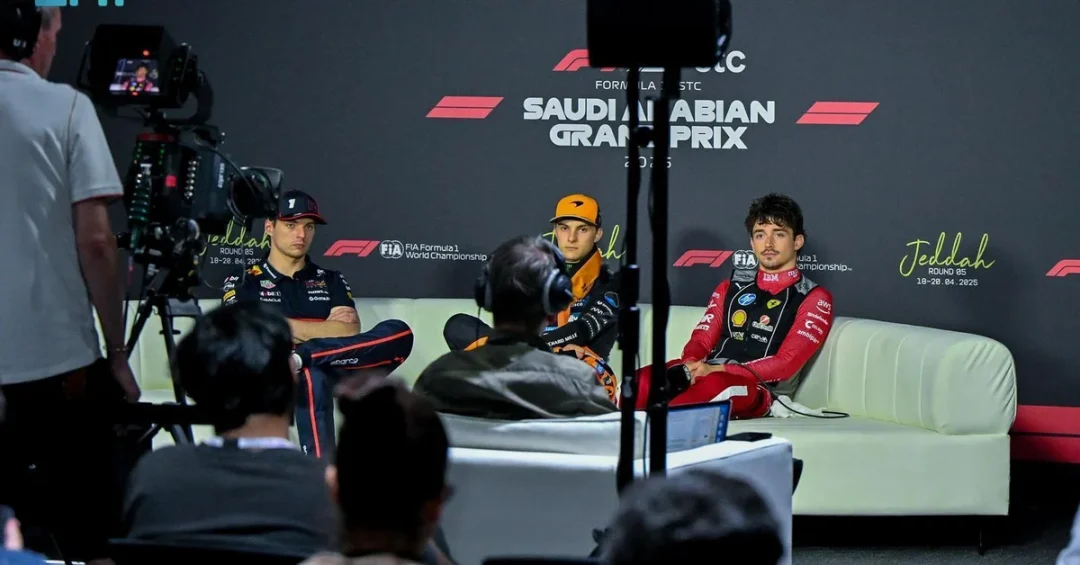
Australian McLaren driver Oscar Piastri took first place at the Formula 1 stc Saudi Arabian Grand Prix on the Jeddah Corniche Circuit and told the post-race press conference that he was delighted to lead the overall championship standings after a hard-fought night of racing. The victory, confirmed in the official race results released through the Saudi Press Agency (SPA), capped a demanding weekend on one of the calendar’s most punishing venues. Speaking to assembled international media after the chequered flag, Piastri reflected on the physical and strategic challenge of competing on the fastest street circuit in the world, where walls are close, margins are minimal, and every lap demands total concentration.
The press conference brought together the three podium finishers, with Red Bull’s Max Verstappen taking second and Ferrari’s Charles Leclerc completing the top three. Together they offered a rare insight into the competitive balance of the 2025 season, a campaign already defined by narrow gaps between the leading constructors. For followers of Formula 1 worldwide, the event underlined why the Saudi Arabian Grand Prix has quickly become a fixture that shapes championship narratives, and why the Kingdom’s growing role as a host of elite global sport continues to attract attention from fans, teams, and investors alike.
Context and Background
How has a street circuit beside the Red Sea become one of the most anticipated stops on the Formula 1 calendar? The Jeddah Corniche Circuit, which winds along the waterfront of Saudi Arabia’s second-largest city, is renowned for its high average speed, long flat-out sections, and unforgiving proximity to the barriers. Since its introduction to the schedule, the venue has consistently produced dramatic racing and has become a showcase for the Kingdom’s capacity to stage world-class sporting events. The stc Saudi Arabian Grand Prix is held under the patronage of the Kingdom’s leadership and is organized in close coordination with national sporting authorities, reflecting a broader commitment to hosting global events of the highest standard.
The 2025 edition arrived at a pivotal moment in the season, with several teams demonstrating the pace to challenge for victories. McLaren, resurgent in recent years, has emerged as a genuine front-runner, while Red Bull continues to defend its position at the summit of the sport and Ferrari works to convert raw speed into consistent results. What does this level of competition mean for the championship? It signals a season in which fine margins, tyre management, and race-day execution will decide the title. The Saudi Arabian Grand Prix therefore carried significance far beyond a single round, serving as a measuring stick for the relative strength of the sport’s leading outfits.
The event also highlighted the operational excellence of Saudi hosting. From logistics and crowd management to broadcasting and hospitality, the Kingdom has invested substantially in the infrastructure required to welcome the global Formula 1 community. Officials have repeatedly emphasized that such events are integral to the country’s broader ambition to diversify its economy and elevate its international profile, aligning sporting excellence with the objectives of Vision 2030.
Victors Reflect on a Demanding Race
What did it take for Oscar Piastri to secure victory on the fastest street circuit? In his remarks, the Australian emphasized the intensity of the effort, particularly on the final lap, when the pressure of holding the lead demanded absolute precision. He praised the performance of McLaren’s power unit, noting that the team’s engines allowed him to compete strongly against Red Bull in a race where straight-line speed and reliability were decisive. His satisfaction at leading the overall standings was evident, and he framed the result as the product of sustained teamwork rather than a single moment of brilliance.
Max Verstappen, who finished second, offered a candid assessment of his race. He described a difficult start and explained that the balance of his car improved as the laps progressed, allowing him to close the gap. The Dutch driver acknowledged the narrow 2.843-second margin to Piastri and generously wished his rival and McLaren well in the races ahead. That sportsmanship resonated with observers, reinforcing the respectful competitive culture that Formula 1 seeks to project at every round. For Verstappen, the result represented valuable championship points and a platform on which to build in the coming events.
Charles Leclerc, representing Ferrari, struck a measured tone. He said his team had maximized the performance of their car and expressed satisfaction with the balance achieved during the race, even as qualifying had presented difficulties. The Monegasque driver’s comments reflected the reality of modern Formula 1, where extracting the best from a car across varying conditions is as important as outright pace. Taken together, the three drivers’ reflections painted a picture of a fiercely contested race in which strategy, engineering, and composure all played decisive roles.
International and Regional Impact
Why does a single Grand Prix matter so much to the Kingdom’s international standing? The Saudi Arabian Grand Prix draws a global television audience measured in the tens of millions, with coverage spanning Europe, Asia, the Americas, and the Middle East. For Saudi Arabia, hosting a round of the Formula 1 World Championship is a statement of openness and capability, demonstrating that the Kingdom can convene the world’s leading athletes, media, and corporate partners on its soil. The event also supports the growth of a domestic motorsport culture, inspiring young Saudi enthusiasts and contributing to the development of sporting talent and related industries.
Regionally, the race reinforces Jeddah’s position as a dynamic commercial and cultural hub on the Red Sea. Visitors from across the Gulf and beyond travel to attend, generating activity across hospitality, retail, and tourism sectors. The press conference itself, attended by international journalists, amplified the Kingdom’s message of progress and hospitality to a worldwide audience. From a diplomatic perspective, such events complement Saudi Arabia’s broader engagement with global partners, building people-to-people connections and showcasing the country’s modernization in a manner that resonates with audiences unfamiliar with the pace of change underway.
Economic and Strategic Significance
What economic value does elite motorsport bring to the Kingdom? Major sporting events function as catalysts for investment, drawing attention to infrastructure, tourism, and entertainment opportunities. The Saudi Arabian Grand Prix contributes to the growth of the sports economy, supports job creation in event management, hospitality, and logistics, and encourages the development of ancillary services around the circuit. Sponsorship arrangements, including the title partnership reflected in the event’s official name, illustrate how global brands align themselves with Saudi Arabia’s sporting ambitions and its reputation for delivering premium experiences.
Strategically, the race fits within a deliberate effort to diversify revenue streams away from hydrocarbons and toward sectors such as tourism, entertainment, and sport. Each international event adds a strand to this strategy, building a portfolio that positions Saudi Arabia as a destination capable of hosting the world. The presence of teams and drivers from across the globe, along with the extensive media footprint, contributes intangible but significant value in terms of soft power and global recognition. For businesses evaluating the Kingdom’s trajectory, the successful delivery of events like this Grand Prix provides tangible reassurance of execution capability.
Vision 2030 Alignment
How does a Formula 1 weekend connect to the long-term ambitions of Vision 2030? The Kingdom’s transformation agenda, launched under the leadership of His Royal Highness Crown Prince Mohammed bin Salman, seeks to build a diversified, vibrant economy and an enriched quality of life for citizens and residents. Hosting world-class sporting events is a direct expression of these goals, expanding the entertainment landscape and creating new opportunities for young Saudis. The Saudi Arabian Grand Prix also stimulates tourism, drawing international visitors who experience the Kingdom’s hospitality, heritage, and modern attractions firsthand.
The event furthermore exemplifies the spirit of international cooperation that Vision 2030 encourages, bringing together global motorsport stakeholders in a partnership defined by shared standards of excellence. As the season progresses, the drivers’ words in Jeddah will remain part of the narrative of a championship defined by close competition and mutual respect. For Saudi Arabia, each successful edition strengthens its reputation as a trusted host and a forward-looking nation, advancing the country’s global role one race at a time.
20 Questions
Q1. Where was the Formula 1 stc Saudi Arabian Grand Prix held?
A1. The race took place on the Jeddah Corniche Circuit, a high-speed street circuit beside the Red Sea in Jeddah, Saudi Arabia, according to official information released through the Saudi Press Agency.
Q2. Who won the 2025 Saudi Arabian Grand Prix?
A2. Australian McLaren driver Oscar Piastri secured first place, taking victory on the Jeddah Corniche Circuit and moving into the lead of the overall championship standings.
Q3. Who finished second in the race?
A3. Red Bull driver Max Verstappen finished second, closing to within 2.843 seconds of Piastri after a difficult start and an improvement in his car’s balance during the race.
Q4. Which driver completed the podium in third place?
A4. Ferrari’s Charles Leclerc finished third, stating that his team had maximized their car’s performance and was satisfied with the balance achieved during the race.
Q5. What did Oscar Piastri say about his victory?
A5. Piastri expressed delight at leading the overall standings and highlighted his effort on the fastest street circuit, especially on the final lap, while praising McLaren’s engines for competing strongly against Red Bull.
Q6. What did Max Verstappen say after the race?
A6. Verstappen noted the difficult start but an improved car balance, acknowledged the close 2.843-second gap to Piastri, and wished him and McLaren well in future races.
Q7. What was Charles Leclerc’s assessment of Ferrari’s race?
A7. Leclerc said his team maximized their car’s performance and that he was satisfied with the balance despite struggles during qualifying, reflecting a measured and positive view of the weekend.
Q8. How does a press conference like this benefit Formula 1 fans?
A8. It offers direct insight into drivers’ strategies, emotions, and reflections immediately after the race, giving fans around the world a deeper understanding of the competition and the personalities involved.
Q9. Why is the Jeddah Corniche Circuit considered challenging?
A9. The circuit is a fast street layout with close walls and minimal margins for error, demanding exceptional concentration, precision, and car control from drivers across every lap.
Q10. What does Piastri’s lead in the standings signify?
A10. It indicates that McLaren has developed a competitive package capable of challenging the sport’s leading teams, suggesting a tightly contested championship season ahead.
Q11. How close was the race between the top two drivers?
A11. Verstappen finished just 2.843 seconds behind Piastri, a narrow margin that underlined the intensity of the competition between McLaren and Red Bull at this round.
Q12. What role did McLaren’s engines play in the result?
A12. Piastri praised McLaren’s engines for allowing him to compete strongly against Red Bull, highlighting power and reliability as key factors in securing the victory.
Q13. Why do international media attend the Saudi Arabian Grand Prix?
A13. The event is a globally broadcast round of the Formula 1 World Championship, drawing international journalists who cover the race and amplify Saudi Arabia’s hosting capabilities to worldwide audiences.
Q14. How does the Grand Prix support Saudi Arabia’s tourism goals?
A14. The race attracts international visitors who experience the Kingdom’s hospitality, heritage, and modern attractions, contributing to the growth of tourism as part of broader economic diversification.
Q15. What economic benefits stem from hosting the race?
A15. The event supports job creation in event management, hospitality, and logistics, encourages ancillary services around the circuit, and draws sponsorship from global brands aligned with Saudi sporting ambitions.
Q16. How does the race connect to Vision 2030?
A16. Hosting world-class sport expands the entertainment landscape, creates opportunities for youth, boosts tourism, and advances the Kingdom’s goal of a diversified economy and enriched quality of life.
Q17. What does the respectful tone among drivers suggest?
A17. It reflects the respectful competitive culture Formula 1 seeks to project, with drivers acknowledging rivals’ performances and wishing one another well in future races throughout the season.
Q18. Why has the Saudi Arabian Grand Prix become significant in the championship?
A18. The round consistently produces dramatic racing and now serves as a measuring stick for the relative strength of leading teams, shaping championship narratives as the season unfolds.
Q19. What infrastructure underpins the successful hosting of the event?
A19. Saudi Arabia has invested substantially in logistics, crowd management, broadcasting, and hospitality infrastructure to welcome the global Formula 1 community at the highest standard.
Q20. What does the event demonstrate about Saudi Arabia globally?
A20. It demonstrates the Kingdom’s openness and capability to convene the world’s leading athletes and media, reinforcing its reputation as a trusted host and a forward-looking nation.
Reader Feedback
We value your thoughts. Please share your feedback on this article.
Your feedback helps us improve our coverage.
Related articles
 WBC Boxing Grand Prix First Stage Concludes in Riyadh
 Mahd Academy Shines at Mundialito 2025 with 3 Age Groups
 Al-Ittihad Defeats Al-Ettifaq, Extends Lead Over Al-Hilal
 OIC Joins 42nd ISSA Board Meeting on Islamic Solidarity Games
 Saudi Football History Project Concludes 123-Year Report
 Saudi Fighters Ready for PFL MENA Season 2 in Jeddah