


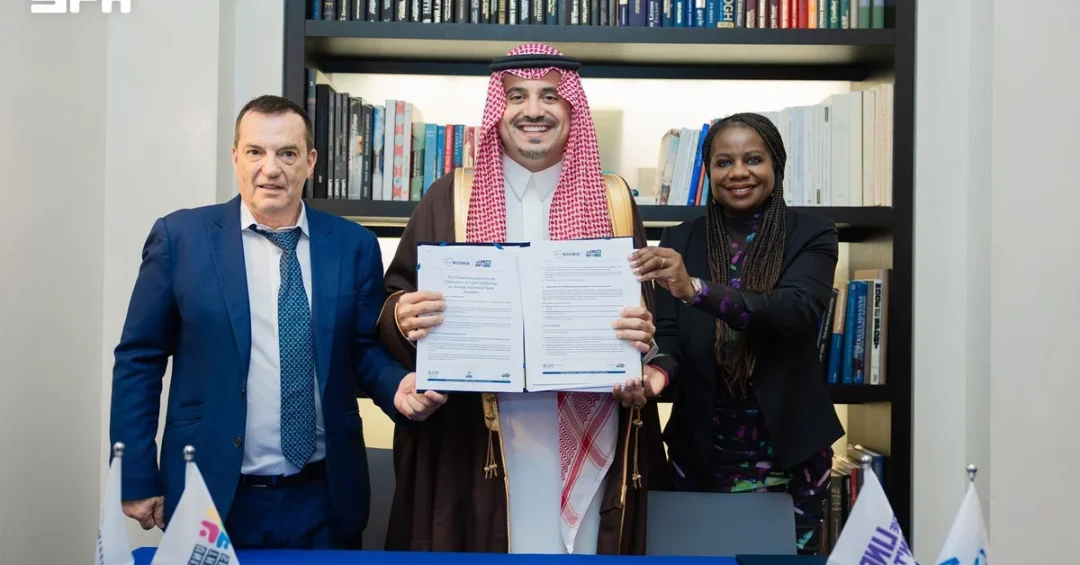
The World Camelids Sport (WCS), chaired by Prince Fahd bin Jalawi bin Abdulaziz bin Musaed, has joined the Alliance of Independent Recognized Members of Sport (AIMS) as an associate member following approval at the AIMS General Assembly, the Saudi Press Agency reported. The decision marks a significant milestone in the internationalization of camel racing, a sport deeply rooted in the heritage of the Kingdom of Saudi Arabia and the wider Arabian Peninsula, and signals a new chapter in its journey toward formal recognition within the global sporting system.
For an international audience, the accession carries meaning far beyond a single federation’s membership roster. It demonstrates how a traditional Arabian sporting practice can be developed, regulated, and positioned on the world stage without sacrificing the cultural identity that gives it meaning. The WCS confirmed that it joined through a dedicated membership pathway reserved for organizations representing traditional and heritage sports, underscoring a deliberate strategy of aligning camel racing with international regulatory frameworks while preserving its authentic character. Could a heritage sport carry both its ancient soul and a modern global mandate? The WCS appears determined to prove that it can.
Context and Background
How does an ancient desert pursuit become a credible member of the modern international sports architecture? The answer lies in the structure and purpose of AIMS. The Alliance of Independent Recognized Members of Sport is an active organization within the international sports system, bringing together international sports federations to strengthen cooperation, support the development and wider reach of member sports, and provide affiliated bodies with opportunities to build partnerships, exchange expertise, and enhance their presence at sporting events worldwide. Membership therefore places the WCS inside a network that spans continents and disciplines.
The World Camelids Sport, under Prince Fahd bin Jalawi bin Abdulaziz bin Musaed, has spent recent years developing camel racing as a regulated, internationally credible discipline. The WCS has pursued a deliberate approach built on development, dialogue, and respect for the international sports system. Rather than seeking shortcuts, the organization has worked through established channels, aligning its practices with global standards while expanding the reach of the sport internationally. This patient, institutional approach forms the backdrop to the General Assembly’s approval and helps explain why the membership decision is viewed within the Kingdom as a meaningful step rather than a symbolic gesture.
The approval also positions the WCS alongside other recognized federations that have used AIMS membership to accelerate their international growth. For a sport with deep regional roots, access to this cooperative framework matters because it opens doors to joint events, technical exchanges, and shared governance expertise. What does it take for a regionally beloved tradition to earn a seat at the global table? In the WCS case, it has meant combining legal discipline with cultural confidence, and this AIMS decision reflects the credibility of that combination.
Key Details of the Membership
The WCS joined AIMS as an associate member following the approval of its membership at the AIMS General Assembly, according to the announcement carried by the Saudi Press Agency. The organization’s president, Prince Fahd bin Jalawi bin Abdulaziz bin Musaed, described the development as an important milestone. “I thank AIMS and its members for their confidence and support in admitting WCS as an associate member,” he said. “The WCS will continue to pursue its approach based on development, dialogue, and respect for the international sports system. This step marks an important milestone in our journey toward obtaining full membership in AIMS in the future.”
The membership was secured through a pathway designated specifically for organizations representing traditional and heritage sports. That detail is significant: it acknowledges that heritage disciplines deserve internationally recognized structures of their own, and it positions the WCS as a representative of a broader class of traditional sports seeking formal standing. The associate membership provides the WCS with greater opportunities to build partnerships, exchange expertise, and enhance its presence at sporting events worldwide, while maintaining the cultural identity at the heart of camel racing.
Beyond the headline decision, the WCS continues to develop the sport and expand its global reach while adhering to standards for animal welfare, participant safety, good governance, and sustainability. These commitments are not incidental. They form the foundation on which international confidence is built, and they mirror the broader governance expectations of the global sports movement. How does a federation earn the trust of the international community? By demonstrating rigor in exactly these areas, year after year, and the WCS has made them central to its operating philosophy.
The Path Toward Full Membership
Associate membership is best understood as a stage in a longer journey rather than a destination in itself. The WCS president has been explicit about the organization’s ambition to obtain full membership in AIMS in the future, and the current status provides the platform from which that goal can be pursued. Full membership typically requires a sustained record of governance compliance, active participation in the federation’s international community, and demonstrated organizational capacity, all of which the WCS is working to strengthen.
As part of these efforts, the WCS is preparing to participate in the SportAccord Convention 2027, scheduled to take place in Baku, the capital of Azerbaijan, from May 9 to 13. The convention is a major gathering of the international sports community, and the WCS’s presence there will help strengthen engagement with global stakeholders, establish partnerships that support its aspirations for full AIMS membership, and raise camel racing’s profile on the international sporting stage. What better venue than SportAccord for a heritage sport to present its case to the world? The WCS clearly sees the convention as a strategic opportunity.
Participation in Baku will also allow the WCS to engage directly with officials from other federations, learn from established practices, and identify avenues for joint initiatives. Such gatherings are where relationships mature into formal cooperation, and the timing of the SportAccord attendance in relation to the new associate membership is deliberate. It offers the WCS a natural setting to introduce itself as a recognized member of the AIMS family and to begin consolidating the partnerships that will define its next phase of growth.
International and Regional Impact
What does this decision mean for the wider region that shares the heritage of camel racing? For countries across the Arabian Peninsula and the broader Middle East and North Africa, the WCS’s recognition represents a form of cultural diplomacy. It signals that a sport entwined with the history of the region can participate fully in international sporting life, and it creates a template that other traditional disciplines may follow. The membership therefore carries implications that extend beyond one federation to the wider project of heritage preservation through sport.
Internationally, the decision adds another recognized member to the AIMS network and demonstrates the organization’s willingness to accommodate heritage sports within its cooperative structure. AIMS brings together international sports federations to strengthen collaboration and widen the reach of member sports, and the addition of the WCS enriches that community with a discipline that combines competitive excellence with cultural depth. For global audiences, it is an opportunity to discover a sport that has been part of Arabian life for generations and is now entering a new era of international engagement.
The inclusion also has practical benefits for the sport’s global footprint. Greater international visibility can attract new audiences, participants, and partners, while the exchange of expertise enables the dissemination of best practices in welfare, safety, and governance. For a sport whose competitions have historically been concentrated in the Gulf, these channels offer a route toward broader participation and event presence worldwide. Is it any surprise that recognition and reach tend to grow together? The WCS case illustrates precisely this dynamic.
Economic and Strategic Significance
Camel racing occupies a distinctive place in the economic and cultural landscape of Saudi Arabia and the Gulf. It supports a range of related activities, from breeding and veterinary care to event management, tourism, and media, and it serves as a bridge between traditional heritage and modern entertainment economies. Formal international recognition strengthens the sport’s ability to attract investment, stage major events, and develop commercial partnerships, all of which contribute to its long-term sustainability.
Strategically, the membership reinforces Saudi Arabia’s broader commitment to preserving and promoting its heritage as part of its modernization journey. By advancing a traditional sport through international regulatory frameworks, the Kingdom demonstrates that valuing the past and embracing the future are complementary rather than conflicting objectives. This alignment of heritage and progress resonates with the ambitions of Vision 2030, which seeks to celebrate Saudi culture while positioning the Kingdom as an active and constructive participant in global affairs.
The emphasis on animal welfare, participant safety, good governance, and sustainability further strengthens the sport’s strategic profile. These commitments align the WCS with the highest standards of the international sports movement and reinforce public confidence in the integrity of the discipline. How should a modern sports federation measure success? The WCS appears to answer that it should be measured not only in medals and events, but in the quality of its governance and the care it shows for every participant, including the animals central to the sport.
Vision 2030 Alignment
The World Camelids Sport’s accession to AIMS as an associate member aligns closely with the objectives of Saudi Vision 2030, which emphasizes the preservation of national heritage, the expansion of international engagement, and the development of a vibrant sports sector. By securing recognition within the global sporting system while preserving the cultural identity of camel racing, the WCS embodies the vision’s conviction that heritage and modernity can advance together. The step also reflects the Kingdom’s wider effort to share its culture with the world through credible, well-governed institutions.
Looking ahead, the WCS has set its sights on full AIMS membership and on a strong showing at the SportAccord Convention 2027 in Baku. These ambitions are grounded in a philosophy of development, dialogue, and respect for the international sports system, a philosophy that mirrors the Kingdom’s own approach to global cooperation. As the organization broadens its partnerships with international and continental sports organizations and explores opportunities to participate in more regional and global events, it will continue to raise the profile of camel racing on the international stage. For a sport born in the deserts of Arabia, the journey toward global recognition is now firmly underway, and the AIMS General Assembly’s approval marks a proud and well-earned step along that path.
20 Questions
Q1. What is the World Camelids Sport and who leads it?
A1. The World Camelids Sport is the international body advancing camel racing as a regulated discipline. It is headed by Prince Fahd bin Jalawi bin Abdulaziz bin Musaed, who has guided its efforts to expand the sport’s global recognition and reach.
Q2. What decision did the AIMS General Assembly make regarding the WCS?
A2. The AIMS General Assembly approved the World Camelids Sport’s membership as an associate member, a decision announced via the Saudi Press Agency and described as a milestone in the sport’s international journey.
Q3. What does AIMS stand for and what does it do?
A3. AIMS stands for the Alliance of Independent Recognized Members of Sport. It is an active organization within the international sports system that brings together international federations to strengthen cooperation and widen the reach of member sports.
Q4. Why is associate membership significant for camel racing?
A4. Associate membership raises the international profile of camel racing, provides access to a global network of federations, and opens opportunities for partnerships, expertise exchange, and enhanced presence at sporting events worldwide.
Q5. How did the WCS qualify for membership?
A5. The WCS joined through a membership pathway designated for organizations representing traditional and heritage sports, reflecting its efforts to develop camel racing within international regulatory frameworks while preserving its cultural identity.
Q6. What did the WCS president say about the decision?
A6. Prince Fahd bin Jalawi bin Abdulaziz bin Musaed thanked AIMS and its members for their confidence and support, describing the step as an important milestone toward obtaining full AIMS membership in the future.
Q7. What principles guide the WCS’s approach?
A7. The WCS pursues an approach based on development, dialogue, and respect for the international sports system, working through established channels to build credibility and expand the sport’s reach.
Q8. What standards does the WCS adhere to?
A8. The WCS adheres to standards for animal welfare, participant safety, good governance, and sustainability, which form the foundation of international confidence in the sport and its management.
Q9. What is the WCS’s ultimate membership goal?
A9. The WCS aims to obtain full membership in AIMS in the future, using its associate status as a platform to demonstrate governance compliance and sustained engagement with the international sports community.
Q10. Which event is the WCS preparing to attend next?
A10. The WCS is preparing to participate in the SportAccord Convention 2027, scheduled in Baku, Azerbaijan, from May 9 to 13, to strengthen engagement with the global sports community.
Q11. Why is the SportAccord Convention important for the WCS?
A11. The convention offers a major gathering of the international sports community where the WCS can establish partnerships supporting its full membership aspirations and raise camel racing’s profile globally.
Q12. What benefits does AIMS membership create for the WCS?
A12. Membership provides greater opportunities to build partnerships, exchange expertise, and enhance the sport’s presence at international events, while supporting the development and wider reach of camel racing.
Q13. How does this decision support heritage preservation?
A13. By advancing a traditional sport through international frameworks while preserving its cultural identity, the decision demonstrates that heritage and modern global engagement can advance together rather than conflict.
Q14. What economic activities are connected to camel racing?
A14. Camel racing supports breeding, veterinary care, event management, tourism, and media, and formal recognition strengthens the sport’s ability to attract investment, stage events, and develop commercial partnerships.
Q15. How does the membership reflect Saudi Arabia’s broader goals?
A15. It reflects the Kingdom’s commitment to preserving national heritage, expanding international engagement, and developing a vibrant sports sector, aligning closely with the objectives of Saudi Vision 2030.
Q16. What does the regional impact of the decision look like?
A16. For the Arabian Peninsula and wider region, the recognition represents cultural diplomacy and creates a template that other traditional sports disciplines may follow in pursuing international standing.
Q17. What practical benefits come from greater international visibility?
A17. Greater visibility can attract new audiences, participants, and partners, while expertise exchange enables best practices in welfare, safety, and governance to spread across the sport’s global footprint.
Q18. How does the WCS view its relationship with the international sports system?
A18. The WCS positions itself as a respectful, constructive participant, pursuing development and dialogue while aligning with international regulatory frameworks and contributing to the cooperative aims of AIMS.
Q19. What makes camel racing distinctive in the global sports landscape?
A19. Camel racing combines competitive excellence with deep cultural roots in Arabian heritage, offering global audiences a discipline that bridges traditional identity and modern sporting governance in a unique way.
Q20. What lies ahead for the World Camelids Sport?
A20. The WCS will pursue full AIMS membership, broaden partnerships with international and continental sports organizations, and explore more regional and global events, continuing to raise camel racing’s profile worldwide.
Reader Feedback
We value your thoughts. Please share your feedback on this article.
Your feedback helps us improve our coverage.