


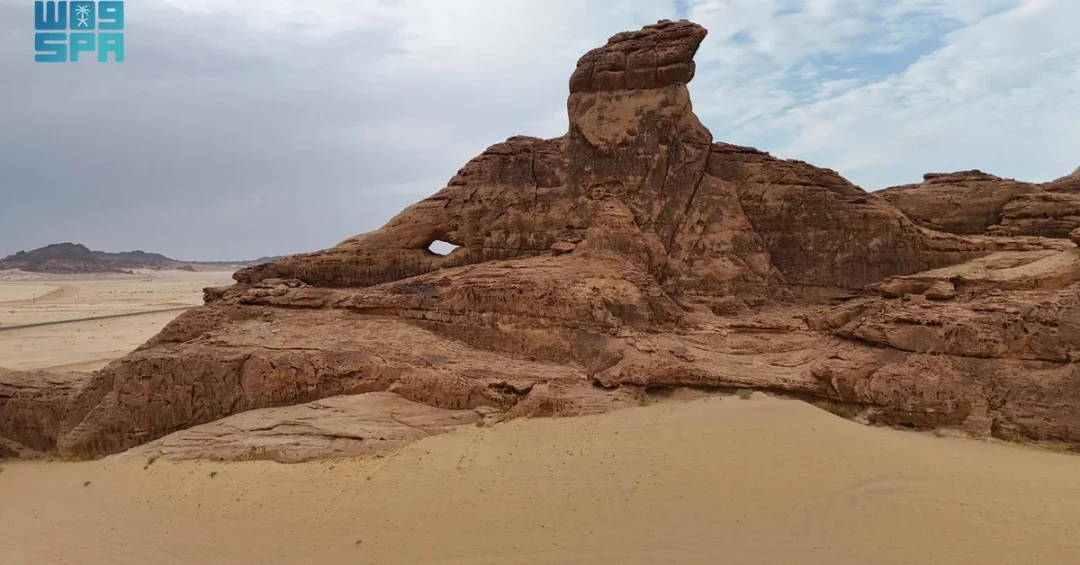
Abu Taqa Rock, a prominent geological landmark located approximately 10 kilometers from AlUla, has long served as a resting spot for locals and travellers and is now emerging as a must-visit destination for tourists exploring Saudi Arabia’s northwestern heritage region. The formation, announced by the Saudi Press Agency (SPA) on September 3, 2024, stands as a striking natural gateway for those arriving in AlUla from the north.
Context and Background
The desert surrounding AlUla is renowned for its extraordinary geological diversity, featuring rock formations sculpted over millions of years by wind, rainwater, and other natural forces. Abu Taqa Rock is one of the most recognisable of these formations, historically offering shade and shelter to travellers crossing the region. Its location along the northern approach to AlUla makes it a natural focal point for visitors entering the area.
AlUla itself has become a flagship destination under Saudi Arabia’s Vision 2030, which seeks to diversify the national economy and promote cultural tourism. The Royal Commission for AlUla (RCU) has been instrumental in developing the region’s infrastructure, preserving its heritage, and welcoming international visitors. Abu Taqa Rock complements these efforts by providing an accessible, open-air geological attraction that enriches the visitor experience.
Key Details
According to the Saudi Press Agency, Abu Taqa Rock is located roughly 10 kilometers from AlUla and has transitioned from a traditional resting point for locals and travellers into a modern tourist destination. The rock’s distinctive shape and desert setting make it an ideal stop for photography, sightseeing, and cultural reflection.
The formation is part of a wider landscape of geological wonders in AlUla, which includes sandstone outcrops, canyons, and natural arches. These features have been shaped by millennia of erosion, creating a unique environment that attracts geologists, nature enthusiasts, and casual visitors alike. The Saudi Press Agency highlighted the rock’s role as a landmark for those coming from the north, underscoring its geographical significance.
Implications and Impact
The growing recognition of Abu Taqa Rock as a tourist destination reflects Saudi Arabia’s broader efforts to showcase its natural and cultural assets to the world. As international tourism continues to expand, sites like Abu Taqa Rock offer accessible and compelling experiences that complement AlUla’s better-known attractions, such as Hegra and the Old Town.
For the local community, the rock’s rising profile brings opportunities for economic engagement, from guided tours to hospitality services. It also reinforces AlUla’s position as a year-round destination, appealing to travellers interested in geology, history, and outdoor adventure. The site’s inclusion in official SPA coverage signals its importance within the Kingdom’s tourism narrative.
Vision 2030 Alignment
Abu Taqa Rock embodies the Vision 2030 objective of transforming Saudi Arabia into a global tourism hub while preserving its natural heritage. By promoting sites like this, the Kingdom demonstrates its commitment to sustainable development, cultural exchange, and economic diversification. As AlUla continues to welcome visitors from around the world, Abu Taqa Rock stands as a testament to Saudi Arabia’s rich geological legacy and its forward-looking vision for the future.
20 Questions
Q1. Where is Abu Taqa Rock located?
A1. Abu Taqa Rock is situated approximately 10 kilometers from AlUla in northwestern Saudi Arabia. It lies on the northern route into the city, making it a prominent landmark for travellers approaching from that direction.
Q2. What historical role did Abu Taqa Rock play?
A2. Historically, Abu Taqa Rock served as a resting spot for locals and travellers journeying through the desert. It provided shade and shelter, offering respite from the harsh desert conditions along the route to AlUla.
Q3. Why is Abu Taqa Rock significant today?
A3. Today, Abu Taqa Rock has become a destination for tourists and visitors. Its striking geological formation and proximity to AlUla make it a popular stop for photography, sightseeing, and experiencing the region’s natural beauty.
Q4. How were the rock formations in AlUla created?
A4. The rock formations in AlUla, including Abu Taqa Rock, were shaped over millions of years by natural forces such as wind, rainwater, and erosion. These processes sculpted the sandstone into stunning and unique shapes.
Q5. What is the significance of AlUla’s geological diversity?
A5. AlUla’s geological diversity is significant because it offers a wide range of natural formations that attract geologists, nature lovers, and tourists. It enhances the region’s appeal as a cultural and natural heritage destination.
Q6. How does Abu Taqa Rock contribute to tourism in AlUla?
A6. Abu Taqa Rock contributes to tourism by providing an accessible and visually impressive site for visitors. It complements other attractions in AlUla, encouraging longer stays and repeat visits to the region.
Q7. What role does the Royal Commission for AlUla play?
A7. The Royal Commission for AlUla (RCU) is responsible for developing and promoting AlUla as a heritage and tourism destination. It preserves cultural sites, improves infrastructure, and welcomes international visitors.
Q8. How does Abu Taqa Rock align with Vision 2030?
A8. Abu Taqa Rock aligns with Vision 2030 by supporting the goal of diversifying the economy through tourism. It showcases Saudi Arabia’s natural heritage and helps attract international visitors to the Kingdom.
Q9. What can visitors expect to see at Abu Taqa Rock?
A9. Visitors can expect to see a striking natural rock formation set against the desert landscape. The site offers opportunities for photography, reflection, and appreciation of geological processes over millions of years.
Q10. Is Abu Taqa Rock easily accessible for tourists?
A10. Yes, Abu Taqa Rock is located about 10 kilometers from AlUla, making it relatively accessible by road. Its position on the northern route makes it a convenient stop for travellers arriving from that direction.
Q11. What other attractions are near Abu Taqa Rock?
A11. Near Abu Taqa Rock, visitors can explore AlUla’s many other attractions, including Hegra (Madain Salih), the Old Town, and various natural rock formations. These sites collectively offer a rich cultural and natural experience.
Q12. How does the Saudi Press Agency describe Abu Taqa Rock?
A12. The Saudi Press Agency describes Abu Taqa Rock as a prominent landmark for those coming to AlUla from the north, noting its transition from a resting spot to a tourist destination.
Q13. What makes AlUla’s desert landscape unique?
A13. AlUla’s desert landscape is unique due to its diverse geological formations shaped by wind and water over millions of years. This creates a visually stunning environment that is distinct from other desert regions.
Q14. How can local communities benefit from Abu Taqa Rock’s popularity?
A14. Local communities can benefit through increased tourism, which creates opportunities for jobs in hospitality, guiding, and local crafts. It also fosters pride in the region’s natural heritage.
Q15. What is the best time to visit Abu Taqa Rock?
A15. The best time to visit Abu Taqa Rock is during the cooler months, from October to April, when temperatures are more comfortable for outdoor activities. Visitors should plan accordingly to avoid extreme heat.
Q16. Are there guided tours available to Abu Taqa Rock?
A16. Yes, guided tours are available in AlUla that include visits to Abu Taqa Rock and other geological and historical sites. These tours provide valuable context and enhance the visitor experience.
Q17. How does Abu Taqa Rock reflect Saudi Arabia’s natural heritage?
A17. Abu Taqa Rock reflects Saudi Arabia’s natural heritage by showcasing the country’s geological history and desert beauty. It represents a tangible link to the natural forces that have shaped the Arabian Peninsula.
Q18. What conservation efforts are in place for sites like Abu Taqa Rock?
A18. Conservation efforts led by the Royal Commission for AlUla focus on preserving natural and cultural sites. These include responsible tourism practices, site management, and educational programs to protect the environment.
Q19. How does Abu Taqa Rock enhance the visitor experience in AlUla?
A19. Abu Taqa Rock enhances the visitor experience by offering a distinctive natural landmark that complements AlUla’s historical attractions. It provides a scenic and accessible spot for exploration and photography.
Q20. What does the future hold for Abu Taqa Rock?
A20. The future of Abu Taqa Rock lies in its continued development as a sustainable tourist destination. As part of AlUla’s growth, it will likely see improved facilities and greater international recognition.
Reader Feedback
We value your thoughts. Please share your feedback on this article.
Your feedback helps us improve our coverage.
Related articles
 Saudi Red Sea Authority Launches ‘More Than a Sea’ Campaign
 Riyadh to Host First Sirha Arabia in October
 Saudi Tourism Minister Chairs Workshop on Winter Program
 Aseer Tops Saudi Cultural Tourism Indicators
 Second Umrah and Tourism Exhibition Opens in Tunisia
 Saudi Red Sea Authority Issues First Yacht Regulations