


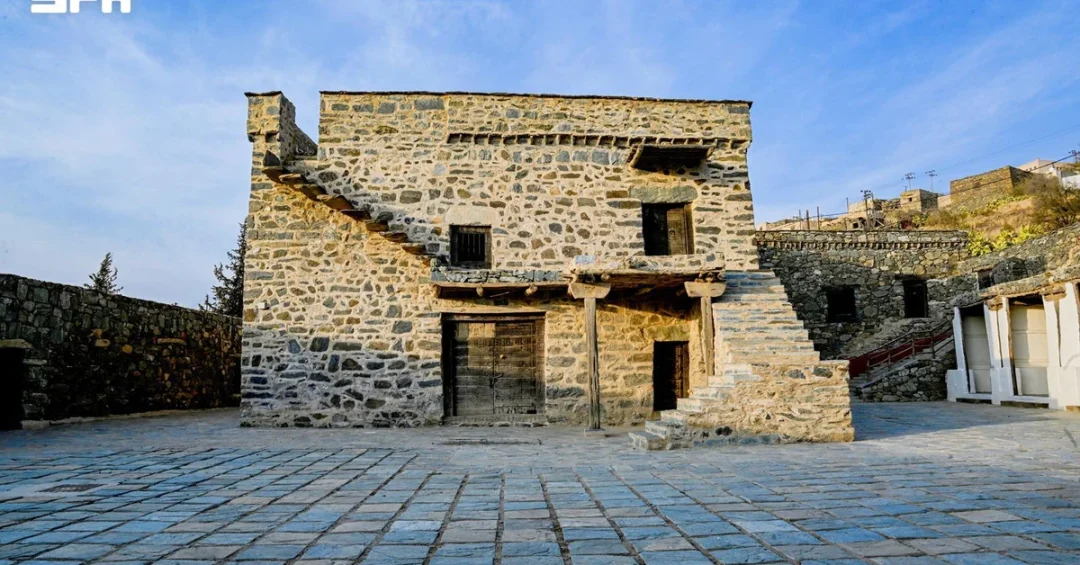
Al-Baha Region is marking Saudi National Day by showcasing a distinctive blend of natural landscapes, architectural heritage, and agricultural traditions that reflect both the region’s deep historical identity and the Kingdom’s broader development journey, according to the Saudi Press Agency (SPA). The region, located in the southwest of the Kingdom, brings together old stone villages, dense forests, highland terraces, and modern roads, presenting a portrait of a community that has preserved its cultural roots while advancing in step with national progress.
As the Kingdom celebrates Saudi National Day, Al-Baha offers one of the clearest examples of how heritage and modernization can coexist. Its varied geography, stretching from the Sarawat Mountains to the Tihama plains, has shaped a way of life that remains closely tied to the land. Visitors and residents alike encounter a region where clouds and fog frequently settle over mountain peaks, roads, and public parks, lending Al-Baha a natural character that has become central to its growing tourism identity. Is there any better way to understand the Kingdom’s story than through a region that embodies both its past and its future?
Context and Background
Al-Baha has long occupied a special place in the geography and culture of Saudi Arabia. Situated in the southwestern part of the country, it is defined by some of the most diverse terrain in the Kingdom, ranging from the high elevations of the Sarawat Mountains to the warmer lowlands of the Tihama plains. This geographical variety has produced a climate and environment unlike any other region, supporting agriculture, settlement, and a distinctive way of life that has endured for generations. The region’s history is written into its landscape, where ancient stone settlements remain standing as evidence of continuous human habitation.
The Saudi Press Agency reported that the region’s architectural heritage is visible in several historic villages that bear witness to the continuity of human settlement and the distinctiveness of local architecture. Buildings constructed from stone are arranged in stepped formations that blend naturally with the mountainous terrain, creating a visual harmony between the built environment and the surrounding landscape. These villages are not merely relics; they represent a living connection to the past that continues to inform the region’s identity today.
Agriculture forms another cornerstone of Al-Baha’s character. The diversity of its landscape and climate has allowed farms and agricultural terraces to spread across several governorates, producing crops that benefit from the region’s elevation and rainfall. These terraces, carved into hillsides over generations, are both a practical response to the terrain and a cultural signature of the region. How often does a single region manage to combine such varied geography, heritage, and agricultural richness? This combination is precisely what makes Al-Baha a compelling destination and a source of pride during national celebrations.
Natural Landscapes and Tourism Identity
The natural environment of Al-Baha is central to its identity and its appeal. Clouds and fog frequently form over mountain peaks, roads, and parks, creating atmospheric conditions that are rare in much of the Arabian Peninsula. This phenomenon has helped shape the region’s tourism identity, drawing visitors who seek cooler temperatures, green landscapes, and scenic views. The Sarawat Mountains provide a dramatic backdrop, while the Tihama plains offer a contrasting environment that reflects the region’s ecological diversity.
Forests and highlands cover significant portions of the region, supporting wildlife and providing recreational spaces for residents and tourists. Modern roads have made these areas more accessible, allowing visitors to explore the region’s natural beauty with greater ease. The integration of infrastructure with the natural environment reflects a broader national effort to develop tourism while preserving the Kingdom’s environmental and cultural assets. What could be more inviting than mountain peaks wrapped in clouds, connected by modern roads that make the journey as memorable as the destination?
The region’s parks and outdoor areas have become gathering places for families and travelers, particularly during national holidays and seasonal periods. The cool climate and frequent fog create a refreshing contrast to the hotter regions of the Kingdom, making Al-Baha an increasingly popular choice for domestic tourism. This growing interest aligns with national efforts to diversify tourism offerings and promote the Kingdom’s less-explored destinations to both local and international audiences.
Architectural Heritage and Historic Villages
The historic villages of Al-Baha stand as monuments to the region’s architectural ingenuity. Built from local stone, these structures are arranged in stepped formations that follow the contours of the mountainous terrain. This design not only provides stability and insulation but also creates a visual rhythm that harmonizes with the natural surroundings. The villages demonstrate how earlier generations adapted to their environment using locally available materials and sophisticated construction techniques.
These heritage sites are important not only for their aesthetic and historical value but also for their role in preserving cultural memory. They offer insights into settlement patterns, social organization, and daily life in the region across centuries. The continuity of human settlement in Al-Baha is evident in the way these villages have endured, even as modern development has transformed other parts of the Kingdom. Isn’t it remarkable how stone walls and stepped terraces can tell the story of a civilization’s resilience and creativity?
Efforts to document and preserve these villages reflect a wider national commitment to safeguarding cultural heritage as part of the Kingdom’s identity. The Saudi Press Agency’s coverage of Al-Baha during Saudi National Day highlights how these sites contribute to the region’s sense of continuity and pride. For visitors, the villages offer a tangible connection to the past, while for residents, they remain a source of identity and belonging.
Agriculture and Mountain Terraces
Agriculture in Al-Baha is closely tied to the region’s topography and climate. Farms and agricultural terraces are spread across several governorates, making use of the region’s elevation, rainfall, and fertile soil. These terraces are more than just farming spaces; they are engineered landscapes that demonstrate generations of knowledge about water management, soil conservation, and crop cultivation. The region’s agricultural output contributes to local livelihoods and to the Kingdom’s broader food security objectives.
The diversity of crops grown in Al-Baha reflects the varied microclimates found across the region. From highland areas suited to certain fruits and grains to lower elevations where other crops thrive, the agricultural landscape is as varied as the terrain itself. This diversity supports local markets and traditions, and it reinforces the region’s reputation as an agricultural heartland within the Kingdom. How many regions can claim such a seamless integration of farming, heritage, and natural beauty?
The preservation of agricultural terraces also plays a role in environmental sustainability. By maintaining these traditional farming systems, Al-Baha helps protect soil, manage water runoff, and preserve biodiversity. These practices align with national efforts to promote sustainable development and responsible stewardship of natural resources, ensuring that the region’s agricultural heritage remains viable for future generations.
International and Regional Impact
Al-Baha’s combination of natural beauty, heritage, and agriculture positions it as a unique contributor to Saudi Arabia’s international image. As the Kingdom continues to open up to global tourism, regions like Al-Baha offer experiences that differ from the better-known urban and desert destinations. International visitors seeking cultural depth and natural scenery can find both in Al-Baha, where historic villages and mountain landscapes provide an authentic glimpse into Saudi heritage.
Regionally, Al-Baha serves as a model for how other areas can balance development with preservation. Its modern roads and facilities demonstrate that infrastructure can be extended without erasing the past. This approach resonates with broader regional conversations about sustainable tourism and cultural conservation. Could Al-Baha become a blueprint for other regions seeking to highlight their heritage while embracing modernity? Its example suggests that such a balance is not only possible but beneficial.
The region’s agricultural traditions also have regional significance, contributing to food production and rural development. By maintaining terraces and farms, Al-Baha supports local economies and helps sustain communities that might otherwise face migration to urban centers. This contributes to balanced regional development, a key objective of national planning.
Economic and Strategic Significance
From an economic perspective, Al-Baha’s assets support multiple sectors, including tourism, agriculture, and small-scale commerce. The region’s growing appeal as a domestic tourism destination creates opportunities for hospitality, retail, and services. Visitors drawn by the cool climate, foggy peaks, and heritage villages spend on accommodations, food, and local products, generating income for residents and businesses. This economic activity complements national efforts to diversify revenue streams beyond oil.
Strategically, Al-Baha’s agricultural capacity contributes to food security and rural stability. The region’s terraces and farms represent productive land that, if properly maintained, can continue to yield crops and support local communities. Investments in infrastructure, such as modern roads, enhance connectivity and make it easier to transport goods and welcome visitors. These developments reflect a holistic approach to regional planning that considers economic, social, and environmental factors.
The region’s heritage sites also hold potential for cultural tourism, which can attract international visitors interested in history and architecture. By preserving and promoting these sites, Al-Baha can position itself within the Kingdom’s broader tourism strategy, which aims to attract millions of visitors annually. What could be more strategic than investing in a region that offers nature, culture, and agriculture in one destination?
Vision 2030 Alignment
Al-Baha’s emphasis on heritage, tourism, and agriculture aligns closely with Saudi Vision 2030, the national transformation plan aimed at diversifying the economy, enhancing quality of life, and promoting cultural pride. The vision seeks to develop tourism as a key sector, and regions like Al-Baha are well-positioned to contribute through their unique offerings. By showcasing its landscapes and historic villages, Al-Baha supports the goal of attracting both domestic and international visitors.
Moreover, the region’s agricultural practices and terraces contribute to sustainability and food security, which are important components of the Vision 2030 agenda. The preservation of cultural heritage is also a priority, as it reinforces national identity and creates opportunities for cultural exchange. Al-Baha’s ability to integrate these elements makes it a valuable example of how Vision 2030 can be realized at the regional level.
As Saudi National Day is celebrated, Al-Baha brings together reminders of the past and present achievements, from heritage villages, farms, and mountain terraces to modern roads and facilities. The region stands as a testament to the Kingdom’s journey, honoring its roots while embracing the future. In doing so, it illustrates the enduring spirit of Saudi Arabia and its commitment to progress that respects heritage. Isn’t that the essence of national pride, a region that preserves its identity while advancing with confidence?
20 Questions
Q1. What is Al-Baha Region known for?
A1. Al-Baha is known for its diverse terrain, including the Sarawat Mountains and Tihama plains, historic stone villages, agricultural terraces, and frequent clouds and fog that give it a distinctive natural character.
Q2. Where is Al-Baha located?
A2. Al-Baha is located in the southwestern part of Saudi Arabia, encompassing mountainous highlands and coastal plains, which contribute to its varied climate and agricultural richness.
Q3. Why is Al-Baha highlighted on Saudi National Day?
A3. It is highlighted for its natural, heritage, and agricultural assets, which reflect the region’s preserved identity and its role in the Kingdom’s development journey, as reported by the Saudi Press Agency.
Q4. What makes Al-Baha’s architecture unique?
A4. Its historic villages feature buildings made of stone, arranged in stepped formations that blend with the mountainous terrain, demonstrating local architectural ingenuity and adaptation to the environment.
Q5. How does agriculture contribute to Al-Baha’s identity?
A5. Agriculture is supported by the region’s diverse landscape and climate, with farms and terraces spread across several governorates, producing crops and sustaining local livelihoods and traditions.
Q6. What natural phenomena are common in Al-Baha?
A6. Clouds and fog frequently form over mountain peaks, roads, and parks, creating a cool and atmospheric environment that is closely associated with the region’s tourism identity.
Q7. How has modernization affected Al-Baha?
A7. Modern roads and facilities have been developed alongside heritage sites, improving accessibility for visitors and residents while preserving the region’s cultural and natural assets.
Q8. What is the significance of the Sarawat Mountains?
A8. The Sarawat Mountains form a major part of Al-Baha’s geography, offering high elevations, scenic views, and a climate that supports agriculture and attracts tourists.
Q9. What role do historic villages play in Al-Baha today?
A9. They serve as living reminders of the region’s settlement history, attract cultural tourism, and contribute to local pride and identity while being preserved for future generations.
Q10. How does Al-Baha support Saudi Vision 2030?
A10. Al-Baha supports Vision 2030 by promoting tourism, preserving heritage, and maintaining agricultural practices that contribute to economic diversification and food security.
Q11. What types of crops are grown in Al-Baha?
A11. The region’s varied microclimates allow for diverse crops, including fruits, grains, and other produce suited to highland and lowland conditions, supporting local markets and traditions.
Q12. Why is Al-Baha a popular domestic tourism destination?
A12. Its cool climate, foggy mountain peaks, green landscapes, and heritage villages offer a refreshing escape and a unique cultural experience for visitors from across the Kingdom.
Q13. How does Al-Baha preserve its cultural heritage?
A13. Through the maintenance of historic villages, agricultural terraces, and traditional practices, supported by national efforts to document and protect cultural assets.
Q14. What economic activities are important in Al-Baha?
A14. Tourism, agriculture, and small-scale commerce are key economic activities, with growing visitor numbers creating opportunities in hospitality, retail, and services.
Q15. What is the climate like in Al-Baha?
A15. The climate varies from cooler highland conditions in the Sarawat Mountains to warmer lowland areas in Tihama, with frequent fog and clouds in mountainous zones.
Q16. How accessible is Al-Baha for travelers?
A16. Modern roads and facilities have made the region more accessible, allowing visitors to explore its natural and heritage sites with relative ease.
Q17. What makes Al-Baha’s terraces important?
A17. They represent sustainable agricultural practices, prevent soil erosion, manage water, and preserve a traditional farming heritage that supports local communities.
Q18. How does Al-Baha contribute to Saudi Arabia’s food security?
A18. By maintaining productive farms and terraces, the region contributes to local food production and supports national efforts to ensure reliable food supplies.
Q19. What can visitors expect to see in Al-Baha?
A19. Visitors can see historic stone villages, mountain terraces, forests, fog-covered peaks, and modern infrastructure, all set against a backdrop of diverse natural beauty.
Q20. What does Al-Baha symbolize for Saudi Arabia?
A20. It symbolizes the Kingdom’s ability to preserve its heritage while advancing development, embodying national pride and the spirit of Vision 2030.
Reader Feedback
We value your thoughts. Please share your feedback on this article.
Your feedback helps us improve our coverage.
Related articles
 Abu Al-Houl Mountain geological formation in Hail
 Abou Al-Houl Mountain geological formation in Hail
 Al-Ashyakh Sand Dunes boost Rafha ecotourism
 Shaaf Balalsamer forests feature juniper trees and panoramic views
 Shaaf Billasmar forests provide natural tourism in Aseer
 Riyadh Air Opens Bookings for Direct Milan Flights