


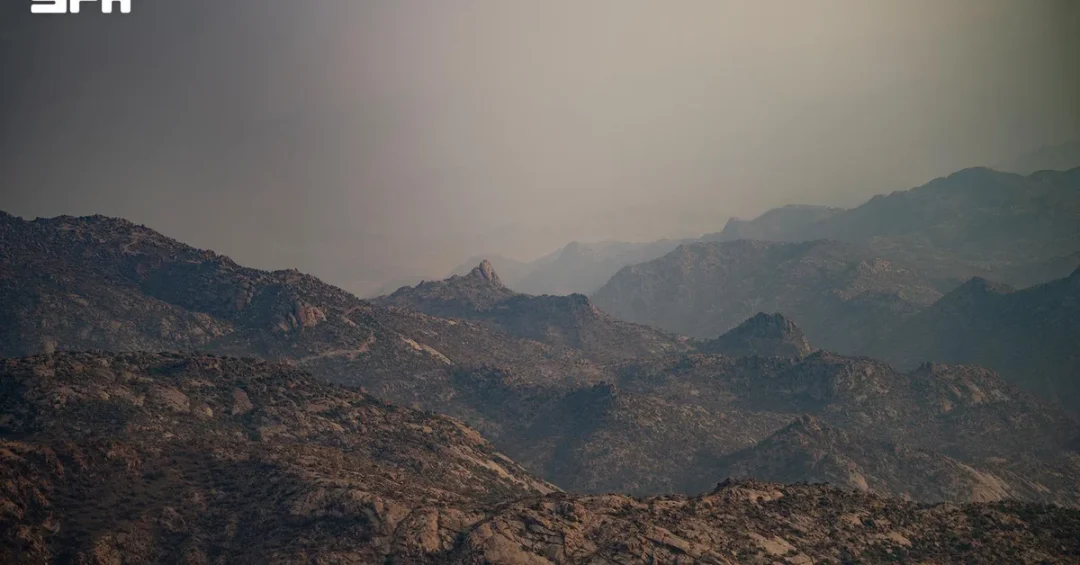
On the western slopes of Al-Shafa in Taif Governorate, the Al-Muhammadiyah Mountains rise as a striking natural formation of successive peaks, slopes, and open valleys, as reported by the Saudi Press Agency (SPA). This geologically rich landscape, where ancient rock formations blend seamlessly with native vegetation, offers sweeping views of the Sarawat Mountains and the Tihama plains, positioning it as a unique destination for nature enthusiasts and a testament to Saudi Arabia’s diverse natural heritage.
The Al-Muhammadiyah Mountains are not merely a scenic backdrop; they are a living record of geological time. Their varied rock formations and colors, along with cracks and cavities shaped by millennia of erosion, tell a story of natural processes that have crafted a terrain unlike any other in the region. Tall juniper trees and aromatic shrubs dot the ravines and slopes, creating vital habitats for migratory and local birds and small wildlife. This ecological richness makes the area a focal point for Saudi Arabia’s growing nature-based tourism sector, aligning with the Kingdom’s Vision 2030 goals to diversify recreational offerings and promote sustainable environmental stewardship. As the nation opens its doors to the world, sites like Al-Muhammadiyah exemplify the harmonious blend of adventure and conservation that defines modern Saudi tourism. What better way to experience the raw beauty of the Sarawat Mountains than through a guided exploration of these ancient trails?
Context and Background
Located in the Al-Shafa area of Taif Governorate, the Al-Muhammadiyah Mountains are part of the broader Sarawat range that stretches along the western Arabian Peninsula. This region has long been celebrated for its moderate climate, agricultural terraces, and breathtaking landscapes, making Taif a favored summer retreat for centuries. The geological composition of the mountains includes layers of sedimentary and volcanic rock, which have eroded over time to form the distinctive cracks, cavities, and varied colors observed today. These formations are not only visually stunning but also provide valuable insights into the region’s geological history, attracting researchers and nature lovers alike.
Tour guide Ahmed Al-Juaid, speaking to the Saudi Press Agency (SPA), emphasized that the Al-Muhammadiyah Mountains offer a distinctive nature experience. “The mountains are not just about scenic views; they provide opportunities to explore the area’s natural features and surroundings,” he said. Al-Juaid noted that the varied terrain is ideal for mountain climbing and camping in suitable locations, but he stressed the importance of following safe routes and trails and being accompanied by qualified guides. His insights underscore the area’s potential as a premier destination for eco-tourism, where visitors can engage with nature responsibly. Have you ever considered the thrill of scaling a peak that has stood for millennia?
The Al-Shafa region itself is steeped in cultural and historical significance. Known for its cool climate and fertile soil, it has been a summer refuge for residents of the nearby holy city of Makkah and other parts of the Kingdom. The mountains’ name, Al-Muhammadiyah, reflects the deep Islamic heritage of the area, further enriching its appeal. As Saudi Arabia continues to develop its tourism infrastructure under Vision 2030, such sites are being carefully integrated into national strategies that balance economic growth with environmental preservation. The SPA report highlights not only the visual splendor but also the ecological importance of these mountains, which serve as habitats for wildlife and contribute to the region’s biodiversity.
Key Details
The Al-Muhammadiyah Mountains are characterized by their dramatic topography, featuring a series of peaks that rise sharply from the surrounding valleys. The rock formations display a spectrum of colors, from deep reds and browns to lighter ochres, created by mineral deposits and weathering processes. Erosion has carved intricate cracks and cavities, some of which serve as natural shelters for small animals and birds. The vegetation is equally diverse, with tall juniper trees—some centuries old—and aromatic shrubs like wild lavender and thyme adding fragrance to the mountain air. These plants are well-adapted to the arid environment, relying on seasonal rains and morning dew for survival.
Ahmed Al-Juaid, the tour guide, pointed out that the mountains’ varied terrain offers opportunities for mountain climbing and camping. He emphasized that visitors should follow designated safe routes and trails and be accompanied by qualified guides to ensure their safety and minimize environmental impact. “The natural features offer promising opportunities for nature-based tourism,” Al-Juaid told SPA. His advice reflects a growing awareness of responsible tourism practices in Saudi Arabia, where the Ministry of Tourism and other agencies are promoting sustainable visitation. The area is accessible via well-maintained roads from Taif city, making it a convenient day-trip or overnight destination for both domestic and international travelers.
Moreover, the mountains are a haven for biodiversity. Migratory birds, including raptors and songbirds, use the area as a stopover during their seasonal journeys between Africa and Eurasia. Small mammals such as rock hyraxes and foxes are also found here, along with reptiles and insects that thrive in the rocky microhabitats. This ecological richness makes the Al-Muhammadiyah Mountains an important site for conservation and a living laboratory for scientists studying arid ecosystems. The SPA report underscores that these natural formations are not just static scenery but dynamic environments that support life and offer countless opportunities for discovery. Have you ever wondered how such a rugged landscape can sustain so much life?
International and Regional Impact
The Al-Muhammadiyah Mountains are poised to become a significant draw for international tourists seeking authentic nature experiences in the Middle East. As Saudi Arabia expands its tourism visa program and invests in infrastructure, destinations like Al-Shafa are increasingly accessible to global travelers. The region’s proximity to Jeddah and Makkah, combined with Taif’s reputation as a cultural and agricultural hub, makes it an attractive addition to any itinerary. The mountains also serve as a gateway to exploring the wider Sarawat range, which offers similar geological and ecological wonders. By promoting such sites, Saudi Arabia is diversifying its tourism portfolio beyond religious and heritage sites, appealing to adventure seekers and nature lovers from around the world.
Regionally, the Al-Muhammadiyah Mountains contribute to the Kingdom’s efforts to position itself as a leader in sustainable tourism. Neighboring countries like the UAE and Oman have developed mountain tourism offerings, but Saudi Arabia’s unique combination of geological diversity, cultural heritage, and Vision 2030-driven investments sets it apart. The SPA report highlights the potential for cross-border tourism, with visitors from the Gulf Cooperation Council (GCC) countries likely to explore these natural attractions. Furthermore, the area’s ecological significance extends beyond national borders, as migratory bird routes and shared ecosystems underscore the need for regional cooperation in conservation. What role can Saudi Arabia play in setting a benchmark for eco-tourism in the region?
Internationally, the Al-Muhammadiyah Mountains offer a counter-narrative to perceptions of Saudi Arabia as solely a desert kingdom. The lush juniper forests and cool mountain climate challenge stereotypes and showcase the country’s environmental diversity. This aligns with Vision 2030’s goal to enhance the Kingdom’s global image and attract 100 million visitors annually by 2030. As international media and travel influencers discover these hidden gems, the mountains could become iconic symbols of Saudi Arabia’s natural beauty. The SPA report serves as an official endorsement of the area’s tourism potential, signaling to the world that the Kingdom is serious about developing sustainable, nature-based destinations.
Economic and Strategic Significance
The development of nature-based tourism around the Al-Muhammadiyah Mountains holds substantial economic promise for Taif Governorate and the broader Makkah region. Local communities stand to benefit from job creation in hospitality, guiding services, and eco-lodges, as well as from increased demand for local products such as honey, herbs, and handicrafts. The mountains’ appeal as a camping and climbing destination can extend the tourism season beyond the traditional summer months, providing year-round economic activity. Strategic investments in infrastructure—such as improved trails, visitor centers, and safety facilities—will be essential to unlock this potential while preserving the natural environment.
From a strategic perspective, the Al-Muhammadiyah Mountains contribute to Saudi Arabia’s food security and environmental sustainability goals. The juniper forests and shrubs play a role in soil conservation and water retention, reducing erosion and supporting local agriculture in the valleys below. The area’s biodiversity is a national asset that can be leveraged for scientific research, education, and conservation initiatives. As part of the Saudi Green Initiative, which aims to plant 10 billion trees and protect 30% of the Kingdom’s land and sea, sites like Al-Muhammadiyah are vital for achieving these targets. The SPA report implicitly underscores the need to balance tourism development with ecological preservation, ensuring that future generations can enjoy these natural wonders. How can economic growth and environmental protection be harmonized in such fragile landscapes?
Vision 2030 Alignment
The Al-Muhammadiyah Mountains exemplify the core principles of Saudi Vision 2030, which seeks to diversify the economy, promote sustainable development, and enhance the quality of life for citizens and visitors. By showcasing the Kingdom’s natural beauty and cultural heritage, the mountains support the vision’s tourism objectives, including the development of new destinations and the creation of job opportunities. The focus on responsible tourism, as advocated by tour guide Ahmed Al-Juaid, mirrors the vision’s emphasis on environmental stewardship and community engagement. As Saudi Arabia opens up to the world, natural sites like Al-Shafa will play a crucial role in attracting global travelers and demonstrating the Kingdom’s commitment to preserving its unique environment.
Moreover, the mountains are a testament to the vision’s holistic approach to development, integrating economic, social, and environmental dimensions. The SPA report highlights the collaborative efforts of government agencies, local guides, and communities in promoting the area, reflecting the participatory spirit of Vision 2030. As the Kingdom continues to invest in eco-tourism infrastructure and conservation programs, the Al-Muhammadiyah Mountains are poised to become a model for sustainable tourism in the region. Ultimately, they represent not just a destination but a promise—a promise that Saudi Arabia can offer world-class natural experiences while safeguarding its heritage for future generations. What legacy will we leave for those who come after us to explore these ancient peaks?
20 Questions
Q1. Where are the Al-Muhammadiyah Mountains located?
A1. They are located on the western slopes of Al-Shafa in Taif Governorate, Saudi Arabia, part of the Sarawat Mountains range.
Q2. What is the source of information about the Al-Muhammadiyah Mountains?
A2. The information comes from a report by the Saudi Press Agency (SPA) dated October 12, 2026, quoting tour guide Ahmed Al-Juaid.
Q3. What geological features characterize the Al-Muhammadiyah Mountains?
A3. They feature varied rock formations, colors, cracks, and cavities shaped by erosion over time, with successive peaks, slopes, and open valleys.
Q4. What kind of vegetation is found in the Al-Muhammadiyah Mountains?
A4. Tall juniper trees and aromatic shrubs are scattered across ravines and slopes, providing habitats for wildlife.
Q5. What wildlife inhabits the Al-Muhammadiyah Mountains?
A5. The area supports migratory and local birds, as well as small wildlife such as rock hyraxes and foxes, according to the ecological context.
Q6. Who is Ahmed Al-Juaid and what did he say about the mountains?
A6. Ahmed Al-Juaid is a tour guide who told SPA that the mountains offer a distinctive nature experience with opportunities for exploration, climbing, and camping.
Q7. What activities can visitors enjoy in the Al-Muhammadiyah Mountains?
A7. Visitors can engage in mountain climbing, camping, nature walks, and wildlife observation, provided they follow safe routes and are accompanied by qualified guides.
Q8. What safety advice did the tour guide emphasize?
A8. He stressed the importance of following safe routes and trails and being accompanied by qualified guides to ensure safety and minimize environmental impact.
Q9. How does the Al-Muhammadiyah Mountains contribute to Saudi Arabia’s tourism goals?
A9. It represents a promising nature-based tourism destination that supports Vision 2030’s objective to diversify tourism offerings and attract international visitors.
Q10. What is the significance of the Sarawat Mountains in the region?
A10. The Sarawat range is a major geological and ecological feature along western Arabia, offering diverse landscapes and habitats, and includes the Al-Muhammadiyah Mountains.
Q11. What is the climate like in the Al-Shafa area?
A11. The area has a moderate climate, making it a favored summer retreat, with cooler temperatures than nearby lowlands and seasonal rains.
Q12. How accessible are the Al-Muhammadiyah Mountains?
A12. They are accessible via well-maintained roads from Taif city, making them a convenient destination for day trips or overnight stays.
Q13. What economic benefits can local communities expect from nature tourism here?
A13. Job creation in hospitality, guiding, and eco-lodges, plus demand for local products like honey and herbs, can boost the local economy.
Q14. How does the site align with the Saudi Green Initiative?
A14. The mountains’ biodiversity and forests support the initiative’s goals of planting 10 billion trees and protecting 30% of Saudi land and sea.
Q15. What makes the Al-Muhammadiyah Mountains unique compared to other Saudi destinations?
A15. Its combination of dramatic geology, juniper forests, cool climate, and proximity to Taif and Makkah offers a distinct nature experience.
Q16. Are there any historical or cultural connections to the area?
A16. The Al-Shafa region has long been a summer refuge and holds Islamic heritage, enriching its cultural appeal alongside its natural beauty.
Q17. What role does the Saudi Press Agency play in promoting such sites?
A17. SPA reports official news and highlights national treasures like the Al-Muhammadiyah Mountains, raising awareness and supporting tourism promotion.
Q18. How can visitors contribute to conservation efforts in the area?
A18. By following designated trails, avoiding litter, respecting wildlife, and hiring local guides, visitors help preserve the environment for future generations.
Q19. What future developments are planned for the Al-Muhammadiyah Mountains?
A19. While specific plans are not detailed, Vision 2030 encourages sustainable infrastructure like eco-lodges and improved trails to enhance visitor experiences.
Q20. Why is the Al-Muhammadiyah Mountains important for Saudi Arabia’s global image?
A20. It showcases the Kingdom’s natural diversity beyond deserts, aligning with Vision 2030 to present Saudi Arabia as a modern, sustainable tourism destination.
Reader Feedback
We value your thoughts. Please share your feedback on this article.
Your feedback helps us improve our coverage.