


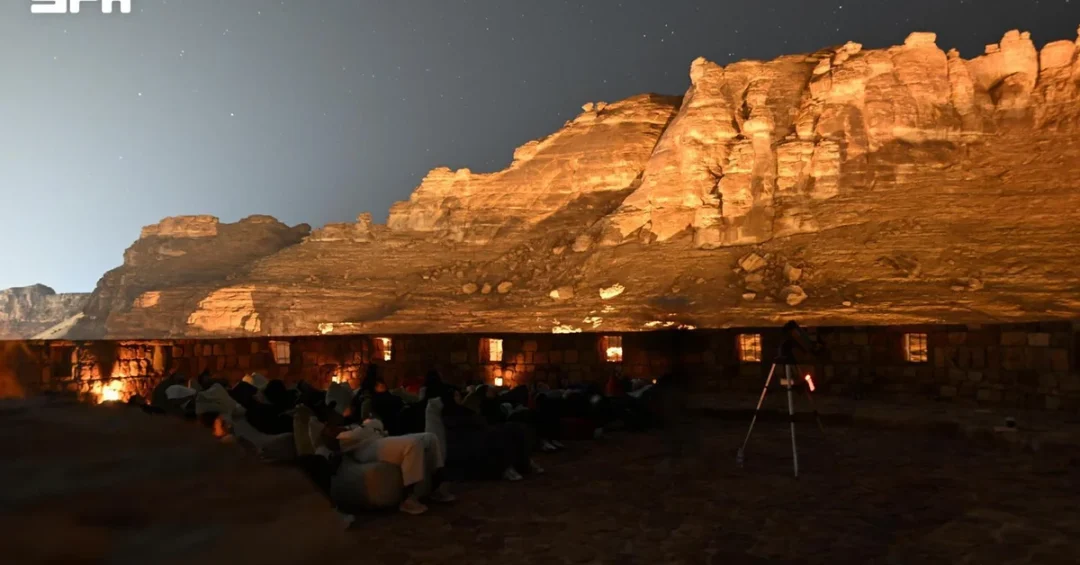
The AlUla Manara team, an initiative of the Royal Commission for AlUla (RCU), hosted a stargazing event at the historic AlUla Fort on November 9, 2026, offering visitors an immersive experience that combined astronomical observation with traditional Arab storytelling. The event, announced via the Saudi Press Agency (SPA), underscored AlUla’s growing reputation as a premier destination for astrotourism and highlighted the deep cultural connection between the night sky and Arab heritage. Set against the backdrop of AlUla Old Town, the gathering provided participants with an opportunity to explore the cosmos while learning how ancient civilizations used stars for navigation and seasonal tracking. Could this event signal a new chapter in Saudi Arabia’s tourism offerings, one that looks upward as much as it does outward?
The stargazing evening at AlUla Fort is part of a broader effort by the Royal Commission for AlUla to diversify tourism experiences in the region, aligning with Saudi Vision 2030’s goals to enrich cultural and heritage offerings. The fort, a historic citadel overlooking AlUla Old Town, served as an ideal vantage point for observing celestial bodies, merging the area’s architectural legacy with the natural wonder of the night sky. Participants were treated to guided tours of the constellations, led by experts who explained the science behind stars and planets, while storytellers wove tales of how ancient Arabs relied on the heavens for survival and navigation. Isn’t it fascinating how the same stars that guided caravans centuries ago can now inspire modern travelers?
Context and Background
AlUla, located in northwestern Saudi Arabia, has long been a crossroads of civilizations, home to the Nabataean kingdom and a key stop on ancient trade routes. In recent years, the Royal Commission for AlUla, established in 2017, has spearheaded a comprehensive regeneration plan to transform the region into a global hub for heritage, culture, and nature tourism. The AlUla Manara team, a specialized unit within RCU, focuses on creating engaging experiences that connect visitors with the region’s natural and cultural landscapes. This stargazing event is a continuation of RCU’s efforts to promote astrotourism, leveraging AlUla’s clear desert skies and low light pollution. Have you ever wondered what it would be like to gaze upon the same stars that ancient Nabataeans used to navigate the desert?
The historic AlUla Fort, also known as the Musa bin Nusayr Castle, dates back to the 10th century and stands as a testament to the region’s rich history. Perched atop a hill, it offers panoramic views of AlUla Old Town, a labyrinth of mud-brick houses and ancient markets. The fort’s strategic location made it a natural gathering point for the stargazing event, allowing participants to appreciate the seamless blend of human heritage and celestial beauty. The event also featured traditional storytelling, a practice deeply rooted in Arab culture, where oral narratives passed down through generations often centered on the stars and their significance. How often do we pause to consider the stories that ancient peoples told about the constellations above us?
The Royal Commission for AlUla has been actively developing astrotourism as a niche offering, recognizing the growing global interest in dark-sky tourism. AlUla’s remote location and arid climate result in minimal cloud cover and exceptional visibility, making it one of the best places in the world for stargazing. The event at AlUla Fort is part of a series of astronomical activities planned over the coming weeks, designed to attract both domestic and international visitors. By combining scientific education with cultural storytelling, RCU aims to create memorable experiences that resonate with a wide audience. Could this be the beginning of AlUla becoming a global hotspot for astronomy enthusiasts?
Key Details
The stargazing event at AlUla Fort was structured to offer a multi-sensory experience. Participants began the evening with an introduction to basic astronomy, learning to identify prominent stars, planets, and constellations visible in the night sky. Expert guides pointed out celestial features such as the North Star, Orion’s Belt, and the Pleiades, explaining their scientific properties and their historical significance in Arab culture. The storytelling component brought these celestial objects to life, with narrators recounting tales of how ancient Arabs used the stars to navigate across vast deserts, determine the changing seasons, and mark important agricultural cycles. Isn’t it remarkable how knowledge of the stars was once a matter of survival, and now it’s a source of wonder and education?
The event also highlighted the architectural heritage of AlUla Old Town, which was illuminated under the starlight. Participants had the chance to explore the ancient structures, gaining insight into how the inhabitants of AlUla once lived and how their daily lives were intertwined with the natural environment. The fort’s elevated position provided an unobstructed view of the sky, free from the light pollution that plagues modern cities. This combination of historical setting and astronomical observation created a unique atmosphere that resonated with visitors of all ages. How many of us have truly experienced the night sky in its full, unpolluted glory?
According to the Saudi Press Agency, the AlUla Manara team will continue hosting astronomical events over the coming weeks. These events are designed to offer accessible content that merges astronomy with traditional storytelling, ensuring that visitors not only learn about the cosmos but also appreciate the cultural heritage associated with the stars. The initiative reflects RCU’s commitment to sustainable tourism, as these events are low-impact and educational, aligning with the principles of environmental stewardship and cultural preservation. What better way to connect with the past than by looking up at the same sky that inspired our ancestors?
International and Regional Impact
The stargazing event at AlUla Fort is poised to enhance Saudi Arabia’s standing as a destination for experiential tourism. In recent years, the Kingdom has opened its doors to international tourists through initiatives like the tourist e-visa, and events like this showcase the unique offerings that set Saudi Arabia apart from other destinations. Astrotourism is a growing global trend, with travelers seeking out dark-sky locations for their beauty and tranquility. AlUla’s foray into this niche could attract astronomy enthusiasts from around the world, boosting visitor numbers and extending stays. Could AlUla become the Middle East’s answer to Chile’s Atacama Desert or New Zealand’s Aoraki Mackenzie Dark Sky Reserve?
Regionally, the event reinforces Saudi Arabia’s role as a leader in cultural preservation and innovation. By integrating traditional Arab storytelling with modern astronomical science, RCU is bridging the gap between heritage and contemporary education. This approach not only appeals to international audiences but also strengthens national pride and identity among Saudis. The event also aligns with the Kingdom’s efforts to promote moderate Islam and showcase the rich cultural tapestry of the region. Neighboring countries may look to AlUla as a model for sustainable tourism that honors both natural and cultural assets. Isn’t it inspiring to see how a historic site can be repurposed to educate and entertain in such a meaningful way?
Economic and Strategic Significance
From an economic perspective, the stargazing event contributes to the diversification of Saudi Arabia’s tourism sector, a key pillar of Vision 2030. The Kingdom aims to increase tourism’s contribution to GDP from 3% to 10% by 2030, and niche experiences like astrotourism can play a role in attracting high-value visitors. AlUla, in particular, is a flagship project within Vision 2030, with billions of dollars invested in infrastructure, hospitality, and cultural facilities. Events like this generate revenue through ticket sales, accommodations, and ancillary services, while also creating jobs for local guides, storytellers, and hospitality staff. How might such events ripple through the local economy, benefiting small businesses and entrepreneurs?
Strategically, AlUla’s development is part of Saudi Arabia’s broader goal to become a global hub for culture and tourism. The Royal Commission for AlUla has partnered with international organizations like UNESCO and experts from around the world to preserve and promote the region’s heritage. The stargazing event exemplifies how Saudi Arabia is leveraging its natural and cultural assets to position itself on the world stage. By offering unique experiences that cannot be replicated elsewhere, AlUla differentiates itself in a competitive tourism market. Could this be a blueprint for other regions in the Kingdom to follow, unlocking their own potential?
Vision 2030 Alignment
The stargazing event at AlUla Fort is a direct reflection of Saudi Vision 2030’s objectives to diversify the economy, promote cultural heritage, and enhance quality of life. Vision 2030 emphasizes the importance of developing tourism as a key sector, and AlUla has been designated as a cornerstone of that strategy. The event not only provides entertainment but also educates visitors about astronomy and Arab heritage, fostering a deeper appreciation for the Kingdom’s history and natural environment. By hosting such events, RCU is helping to position Saudi Arabia as a destination that offers meaningful, enriching experiences. Isn’t it clear that the stars are aligning for AlUla’s future?
Looking ahead, the AlUla Manara team’s continued efforts to host astronomical events will further cement AlUla’s reputation as a must-visit destination. As more travelers seek authentic and unique experiences, AlUla’s combination of ancient heritage and celestial wonders offers a compelling proposition. The event at AlUla Fort is just one of many initiatives that demonstrate Saudi Arabia’s commitment to preserving its past while embracing the future. With each stargazing gathering, the Kingdom shares its cultural legacy with the world, inviting everyone to look up and wonder. As Saudi Arabia continues its journey toward Vision 2030, can there be any doubt that the sky is no longer the limit?
20 Questions
Q1. What was the stargazing event hosted at AlUla Fort?
A1. The AlUla Manara team, part of the Royal Commission for AlUla, hosted a stargazing event at the historic AlUla Fort on November 9, 2026, combining astronomical observation with traditional Arab storytelling to highlight AlUla’s astrotourism potential.
Q2. Who organized the stargazing event at AlUla Fort?
A2. The event was organized by the AlUla Manara team, which operates under the Royal Commission for AlUla (RCU), the government body responsible for the development and promotion of AlUla region.
Q3. Where exactly did the stargazing event take place?
A3. The event was held at the historic AlUla Fort, also known as Musa bin Nusayr Castle, which overlooks AlUla Old Town and offers panoramic views of the ancient settlement and surrounding landscape.
Q4. What activities were included in the stargazing event?
A4. Participants engaged in guided astronomical observation, learning to identify stars and planets, and listened to expert storytellers share traditional Arab narratives about the night sky and its role in navigation and seasonal tracking.
Q5. Why is AlUla considered ideal for astrotourism?
A5. AlUla’s remote desert location, low light pollution, and clear skies create exceptional conditions for stargazing, making it one of the best places in the world to observe celestial objects and enjoy dark-sky tourism.
Q6. How does the event connect to Arab heritage?
A6. The event integrates traditional storytelling about the stars, reflecting how ancient Arabs used constellations for navigation, timekeeping, and seasonal agriculture, thus preserving and sharing this intangible cultural heritage with modern audiences.
Q7. What is the significance of AlUla Fort in this context?
A7. AlUla Fort, a 10th-century citadel, provides a historic and elevated vantage point that enhances the stargazing experience by combining architectural heritage with celestial observation, symbolizing the link between past and present.
Q8. Will there be more stargazing events in AlUla?
A8. Yes, the AlUla Manara team plans to host additional astronomical events over the coming weeks, continuing to offer visitors opportunities to explore AlUla’s night skies and cultural heritage through accessible programming.
Q9. How does this event support Saudi Vision 2030?
A9. The event aligns with Vision 2030 by promoting tourism, diversifying the economy, and showcasing Saudi Arabia’s cultural and natural assets, contributing to the goal of increasing tourism’s GDP share and enhancing quality of life.
Q10. What economic benefits could such events bring to AlUla?
A10. Stargazing events can attract domestic and international tourists, generating revenue for local businesses, creating jobs in hospitality and guiding, and supporting the sustainable development of AlUla’s tourism infrastructure.
Q11. How does the Royal Commission for AlUla contribute to heritage preservation?
A11. RCU oversees the restoration and promotion of AlUla’s archaeological and cultural sites, ensuring they are protected while being developed as sustainable tourism attractions that educate visitors about the region’s history.
Q12. What role does storytelling play in the event?
A12. Storytelling is central, as it conveys the historical and cultural significance of the stars in Arab tradition, making the astronomical experience more engaging and connecting participants to the region’s oral heritage.
Q13. Is the event accessible to international tourists?
A13. Yes, Saudi Arabia offers tourist visas to international visitors, and AlUla is well-connected by air and road, making the stargazing events accessible to a global audience interested in astronomy and culture.
Q14. How does astrotourism fit into global travel trends?
A14. Astrotourism is a growing niche, with travelers seeking dark-sky destinations for their beauty and tranquility. AlUla’s entry into this market positions it alongside renowned stargazing locations worldwide.
Q15. What makes AlUla’s night sky unique?
A15. AlUla’s arid climate and minimal artificial light allow for exceptional visibility of stars, planets, and the Milky Way, offering a pristine view of the cosmos that is increasingly rare in populated areas.
Q16. How does the event promote Saudi Arabia’s cultural diplomacy?
A16. By sharing Arab heritage and hospitality with international visitors, the event fosters cross-cultural understanding and showcases Saudi Arabia’s commitment to preserving and celebrating its history on a global stage.
Q17. What other astronomical activities does RCU plan?
A17. RCU plans a series of stargazing events over the coming weeks, each designed to combine astronomy education with traditional storytelling, further establishing AlUla as a hub for astrotourism.
Q18. How can visitors participate in future events?
A18. Visitors can check the Royal Commission for AlUla’s official website or contact local tour operators for schedules and bookings. Events are open to the public with prior registration.
Q19. What is the historical significance of AlUla Old Town?
A19. AlUla Old Town is a UNESCO World Heritage site, featuring hundreds of mud-brick houses and ancient markets that reflect the region’s rich history as a crossroads of civilizations and trade routes.
Q20. How does the stargazing event reflect Saudi Arabia’s modernization?
A20. The event exemplifies Saudi Arabia’s modernization by blending tradition with innovation, using astronomy to create unique tourism experiences that align with Vision 2030’s goals of economic diversification and cultural enrichment.
Reader Feedback
We value your thoughts. Please share your feedback on this article.
Your feedback helps us improve our coverage.
Related articles
 Al-Birk Beaches Prepare for Winter Tourism Season
 Arak Shrubs Complement Najran’s Mud-Brick Houses and Palm Groves
 Madinah’s Mountain Parks Draw Visitors with Scenic Views
 Makkah’s Scent Identity Enhances Pilgrim Experience
 Wadi Al-Ghar: Jazan’s New Nature Tourism Gem
 Fog and Rain Draw Visitors to Al-Baha Highlands