


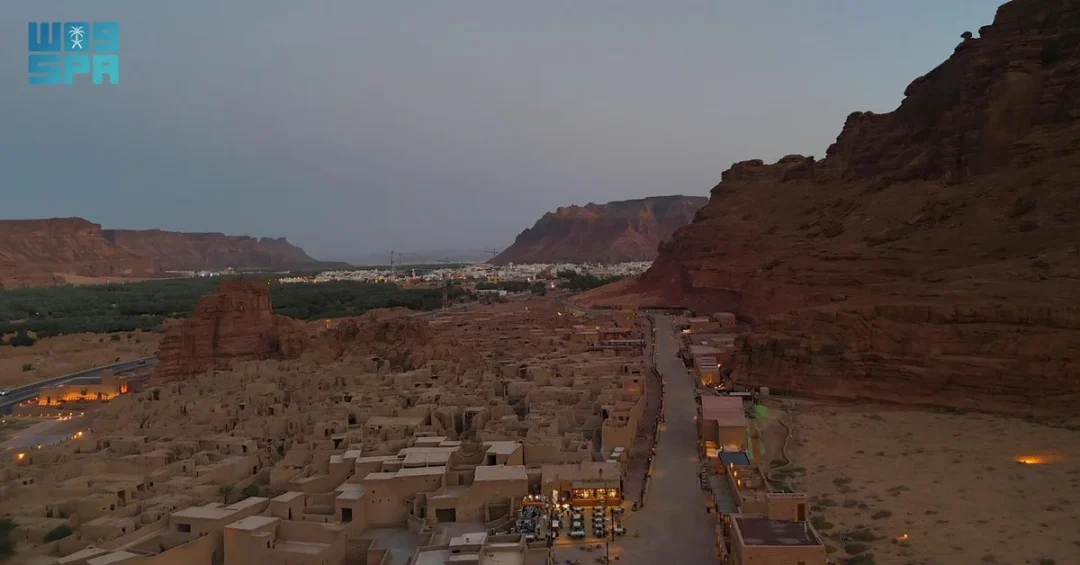
AlUla’s Old Town, the historic heart of northwestern Saudi Arabia, is being carefully revitalized by the Royal Commission for AlUla (RCU), preserving the memories of residents who grew up within its mud-brick walls while opening a new chapter as a global heritage and tourism destination. According to the Saudi Press Agency (SPA), locals like Mohammed Al-Imam recall a close-knit community where families shared palm groves, bustling markets, and Ramadan evenings that echoed with children’s laughter. “The old town was, and remains, AlUla’s beating heart,” Al-Imam told SPA. “We were born and raised here, among palm groves and family gatherings.” His words capture the essence of a place where history is not merely preserved but lived, and where the Royal Commission for AlUla is now undertaking projects to rehabilitate the old town, restoring old buildings, improving pathways, and providing modern services for visitors from around the world.
For international audiences, AlUla’s Old Town represents far more than a collection of ancient structures; it is a living testament to Saudi Arabia’s rich cultural heritage and its forward-looking Vision 2030. The RCU’s efforts are part of a broader strategy to transform AlUla into a world-class destination for heritage, culture, and nature, while ensuring that the stories of those who once called the old town home remain central to its identity. As the Kingdom opens its doors to global travelers, the voices of residents like Al-Imam serve as a bridge between the past and the future, offering authentic narratives that resonate with visitors seeking meaningful connections to place and people. How often does a nation get to honor its ancestors while building a future that welcomes the world? AlUla’s Old Town is answering that question in real time.
Context and Background
What makes AlUla’s Old Town so significant in the broader tapestry of Saudi heritage? Located in the heart of AlUla, a region renowned for its stunning desert landscapes and archaeological treasures such as Hegra, Saudi Arabia’s first UNESCO World Heritage site, the Old Town has served as a crossroads for civilizations for millennia. Its mud-brick structures, many dating back centuries, tell stories of trade caravans, pilgrimage routes, and agricultural communities that thrived in the oasis. The town was once a bustling hub where vendors from various regions gathered to sell traditional products like dates, perfumes, and AlUla’s famous handicrafts, as recounted by Al-Imam to SPA. These markets were not just economic exchanges but social and cultural lifelines, connecting AlUla to the wider Arabian Peninsula and beyond.
The Royal Commission for AlUla, established in 2017 by royal decree, has been entrusted with the comprehensive development of the region, balancing preservation with modernization. The RCU’s mandate includes safeguarding AlUla’s natural and cultural heritage while stimulating economic growth and community engagement. The rehabilitation of the Old Town is a flagship project within this framework, aiming to restore historic buildings using traditional methods and materials, enhance infrastructure for visitors, and create opportunities for local artisans and entrepreneurs. This approach aligns with the RCU’s vision of AlUla as a living museum where heritage is not frozen in time but dynamically integrated into contemporary life. For international observers, this model offers a compelling example of how ancient sites can be revitalized without losing their soul.
Al-Imam’s recollections provide a vivid window into the daily life that once animated these alleyways. He describes close-knit homes where residents shared a cooperative and cohesive existence, relying on one another for support and celebration. The palm groves that surrounded the town were not only a source of sustenance but also a gathering place for families, especially during harvest seasons. Ramadan, in particular, transformed the Old Town into a scene of communal warmth: children roamed the streets after iftar, and families exchanged visits and traditional dishes. These memories are not mere nostalgia; they are the living heritage that the RCU seeks to honor and transmit to future generations. By involving former residents in the revitalization process, the commission ensures that the town’s rebirth is rooted in authentic stories rather than abstract architectural plans.
Key Details of the Revitalization
What exactly does the rehabilitation of AlUla’s Old Town entail, and how will it benefit both locals and visitors? According to SPA, the Royal Commission for AlUla is undertaking projects that include restoring old buildings, improving pathways, and providing modern services for visitors from around the world. The restoration work employs traditional techniques and locally sourced materials, such as mud bricks and palm wood, to maintain the architectural integrity of the town. At the same time, modern amenities like visitor centers, signage, and accessible routes are being introduced to enhance the experience for tourists without compromising the site’s historic character. The RCU has also been careful to consult with former residents and local stakeholders, ensuring that the revitalization reflects the community’s aspirations and preserves its collective memory.
Mohammed Al-Imam’s testimony highlights the sensory richness of the Old Town: the scent of history lingering in the alleyways, the sounds of bustling markets, and the flavors of dates and traditional perfumes. These elements are being woven into the visitor experience through interpretive programs, cultural festivals, and artisan workshops. For instance, the RCU has supported the revival of traditional handicrafts, providing training and market access for local craftspeople. The Old Town is also becoming a venue for cultural events, including Ramadan gatherings that echo the past while welcoming guests from around the globe. By blending tangible heritage—buildings, pathways, and markets—with intangible heritage—stories, songs, and culinary traditions—the RCU is creating a holistic destination that appeals to diverse audiences.
The rehabilitation efforts are part of a larger master plan for AlUla that includes the development of luxury resorts, nature reserves, and archaeological trails. The Old Town serves as the cultural anchor of this plan, offering a counterpoint to the modern amenities of nearby developments like Sharaan Nature Reserve and the upcoming Journey Through Time masterplan. Visitors can explore the restored alleyways, learn about the town’s history from interpretive exhibits, and interact with local residents who share their personal stories. This integration of heritage and hospitality is designed to extend visitors’ stays and deepen their engagement with the region. For Saudi Arabia, it demonstrates how tourism can be a force for cultural preservation and economic diversification, a key pillar of Vision 2030.
International and Regional Impact
How does the revitalization of AlUla’s Old Town resonate beyond Saudi Arabia’s borders? In an era when many historic sites around the world face threats from over-tourism, neglect, or conflict, AlUla offers a model of sustainable, community-centered heritage management. The Royal Commission for AlUla has partnered with international organizations such as UNESCO and ICOMOS to ensure that its restoration practices meet global standards. These collaborations facilitate knowledge exchange and position AlUla as a leader in heritage conservation. For travelers from Europe, Asia, and the Americas, the Old Town provides an authentic Arabian experience that is both educational and immersive, challenging stereotypes and fostering cross-cultural understanding.
Regionally, AlUla’s development contributes to Saudi Arabia’s broader efforts to diversify its economy and attract international visitors. The Kingdom aims to increase tourism’s contribution to GDP and create jobs for its growing young population. AlUla, with its unique blend of natural and cultural attractions, is a flagship destination in this strategy. The Old Town’s rehabilitation also supports the preservation of Saudi Arabia’s national identity, reinforcing the connection between the people and their heritage. As neighboring countries in the Gulf region invest in cultural tourism, AlUla stands out for its scale, authenticity, and commitment to community involvement. The stories of residents like Al-Imam add a human dimension that distinguishes AlUla from purpose-built cultural districts elsewhere.
Economic and Strategic Significance
What economic and strategic benefits flow from the rehabilitation of AlUla’s Old Town? The project creates direct employment opportunities in construction, restoration, hospitality, and retail, with a focus on hiring and training local residents. The RCU has established training programs in traditional building crafts, tour guiding, and small business management, empowering AlUla’s community to participate in and benefit from the tourism economy. Indirectly, the influx of visitors supports local suppliers of food, handicrafts, and services, stimulating entrepreneurship and keeping money within the region. The Old Town’s revival also enhances AlUla’s appeal as a year-round destination, complementing seasonal events like the Winter at Tantora festival and the AlUla Arts Festival.
Strategically, AlUla’s success reinforces Saudi Arabia’s position as a cultural bridge between East and West. The Kingdom’s Vision 2030 includes goals to host 100 million visitors annually by 2030 and to increase the tourism sector’s GDP contribution to 10 percent. AlUla, with its UNESCO World Heritage site and growing hospitality infrastructure, is pivotal to achieving these targets. The Old Town, as the historic core, symbolizes the continuity between Saudi Arabia’s ancient past and its modern ambitions. By investing in heritage, the Kingdom signals its commitment to preserving cultural identity while embracing global engagement. For international investors and partners, AlUla represents a stable, government-backed opportunity in a growing market, with the RCU providing a clear regulatory and development framework.
Vision 2030 Alignment
How does the rehabilitation of AlUla’s Old Town embody the goals of Saudi Vision 2030? Vision 2030, launched in 2016 by Crown Prince Mohammed bin Salman, aims to diversify the economy, promote social development, and enhance the Kingdom’s global standing. Cultural heritage is a key pillar of this vision, recognized as a source of national pride and a driver of economic growth. The Royal Commission for AlUla’s work directly supports several Vision 2030 objectives: creating jobs, attracting foreign investment, boosting tourism, and preserving Saudi Arabia’s cultural legacy. The Old Town project also aligns with the Quality of Life program, which seeks to improve living standards and foster community cohesion. By restoring the physical fabric of the town and revitalizing its social traditions, the RCU is helping to build a vibrant, inclusive society that honors its roots.
Moreover, AlUla’s Old Town serves as a tangible expression of Saudi Arabia’s openness to the world. Under Vision 2030, the Kingdom has introduced tourist visas, relaxed dress codes for visitors, and invested in world-class infrastructure. AlUla welcomes travelers to experience not only its monuments but also its people and their stories. Mohammed Al-Imam’s memories are not confined to the past; they are part of a living narrative that continues to unfold. As the RCU completes its rehabilitation projects, the Old Town will stand as a testament to what can be achieved when tradition and innovation walk hand in hand. For Saudi Arabia, it is a shining example of how heritage can power a nation’s future, and for the world, an invitation to discover the timeless heart of AlUla.
20 Questions
Q1. What is AlUla’s Old Town?
A1. AlUla’s Old Town is a historic settlement in northwestern Saudi Arabia, known for its mud-brick buildings and ancient alleyways. It served as a bustling community and trade hub for centuries and is now being rehabilitated by the Royal Commission for AlUla.
Q2. Who is Mohammed Al-Imam?
A2. Mohammed Al-Imam is a local resident of AlUla who shared his memories of growing up in the Old Town with the Saudi Press Agency. He described the close-knit community, bustling markets, and Ramadan traditions that defined daily life.
Q3. What is the Royal Commission for AlUla?
A3. The Royal Commission for AlUla (RCU) is a Saudi government body established in 2017 to develop and preserve the AlUla region. It oversees heritage restoration, tourism infrastructure, and economic development in line with Vision 2030.
Q4. What projects are being undertaken in the Old Town?
A4. The RCU is restoring old buildings, improving pathways, and providing modern services for visitors. These projects aim to preserve the town’s heritage while enhancing its status as a tourist and cultural destination.
Q5. Why is AlUla’s Old Town important to Saudi Arabia?
A5. It represents the Kingdom’s rich cultural heritage and serves as a symbol of national identity. Its revitalization supports Vision 2030 goals of economic diversification, tourism growth, and cultural preservation.
Q6. How does the Old Town reflect Saudi history?
A6. The Old Town’s mud-brick structures and layout reveal centuries of trade, agriculture, and community life. It was a crossroads for caravans and pilgrims, connecting AlUla to broader regional networks.
Q7. What was daily life like in the Old Town?
A7. According to Al-Imam, residents lived cooperatively, sharing palm groves and family gatherings. Markets buzzed with vendors selling dates, perfumes, and handicrafts, and Ramadan evenings were filled with communal iftars and children playing.
Q8. What role does the Old Town play in tourism?
A8. It is a key attraction within AlUla’s growing tourism offer, providing visitors with an immersive heritage experience. The RCU’s improvements make it accessible and engaging for international travelers.
Q9. How is the RCU preserving the Old Town’s architecture?
A9. Restoration uses traditional materials and techniques, such as mud bricks and palm wood, to maintain authenticity. Modern interventions are carefully designed to be reversible and minimally invasive.
Q10. What economic benefits does the project bring?
A10. It creates jobs in restoration, hospitality, and retail, and supports local artisans and entrepreneurs. Increased tourism spending stimulates the local economy and helps diversify Saudi Arabia’s income sources.
Q11. How does the project involve the local community?
A11. The RCU consults former residents and hires locally, offering training in traditional crafts and tourism services. Community stories, like Al-Imam’s, are integrated into interpretive programs.
Q12. What is the significance of Ramadan in the Old Town’s memory?
A12. Ramadan was a time of heightened community bonding, with families gathering for iftar and children playing in the streets. These traditions are being revived through cultural events.
Q13. How does AlUla fit into Vision 2030?
A13. AlUla is a flagship destination for Vision 2030’s tourism and cultural goals. Its development showcases Saudi Arabia’s commitment to preserving heritage while opening to the world.
Q14. What international partnerships support the Old Town?
A14. The RCU collaborates with UNESCO, ICOMOS, and other global experts to ensure best practices in conservation and sustainable tourism. These partnerships enhance AlUla’s global standing.
Q15. What can visitors expect when they visit the Old Town?
A15. Visitors can explore restored alleyways, learn about local history through exhibits, shop for handicrafts, and interact with residents. The experience blends tangible and intangible heritage.
Q16. How does the Old Town compare to other heritage sites?
A16. Unlike many sites that are purely archaeological, AlUla’s Old Town is a living heritage project with community involvement. Its integration with luxury resorts and nature reserves makes it unique.
Q17. What challenges does the RCU face in rehabilitation?
A17. Balancing preservation with modern amenities, ensuring authentic restoration, and managing visitor impact are key challenges. The RCU addresses these through careful planning and community engagement.
Q18. How is technology used in the Old Town’s revival?
A18. The RCU employs digital documentation, 3D modeling, and smart signage to aid restoration and enhance visitor experiences. Technology supports but does not replace traditional methods.
Q19. What are the future plans for the Old Town?
A19. Future plans include expanding cultural programming, adding more artisan workshops, and integrating the Old Town with surrounding attractions. The goal is a sustainable, year-round destination.
Q20. Why should international audiences care about AlUla’s Old Town?
A20. It offers a rare glimpse into Arabian heritage and Saudi Arabia’s transformation. The stories of its people resonate universally, and its revival exemplifies how nations can honor the past while building the future.
Reader Feedback
We value your thoughts. Please share your feedback on this article.
Your feedback helps us improve our coverage.
Related articles
 Makkah’s Address Walkway: A New Era of Culture and Commerce
 Hail Falls on Al-Soudah Peaks for Second Consecutive Day
 Saudi Authority Designates Cart Locations for Umrah Pilgrims
 Diafat Al Madinah Ramadan Programs Benefit Over 200,000
 Najran’s Mud Houses: A Heritage Treasure of Saudi Arabia
 Two Holy Mosques Intensify Ramadan Final Friday Programs