


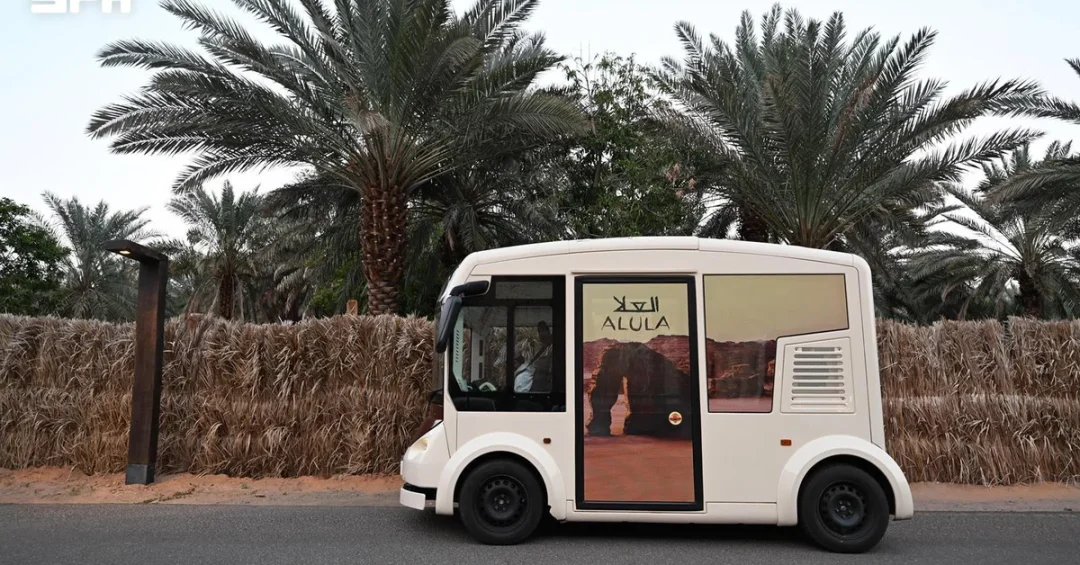
AlUla’s free public transportation services have carried more than one million passengers since the launch of its autonomous electric bus service in 2024, according to an announcement by the Royal Commission for AlUla (RCU) carried by the Saudi Press Agency (SPA). The milestone, confirmed on November 19, 2026, underscores the rapid adoption of sustainable mobility in one of Saudi Arabia’s most treasured heritage destinations. In total, 1,055,775 passengers have benefited from the service, which has completed over 305,000 operational trips covering a cumulative distance of 754,269 kilometers across more than 40 stations along dedicated routes and heritage sites. This achievement reflects the scale and reliability of public transportation operations in AlUla governorate and marks a significant step in the Kingdom’s broader efforts to enhance quality of life and visitor experiences.
The service, which is entirely free to use, has transformed how residents and visitors navigate AlUla’s expansive landscape, connecting neighborhoods, cultural landmarks, and natural wonders. The fleet includes 12 electric buses that have helped reduce carbon emissions, improve energy efficiency, and cut noise pollution, aligning with AlUla’s commitment to preserving its pristine environment. As part of RCU’s strategy to develop a world-class transportation system, the initiative also introduces autonomous vehicle technology in heritage areas such as AlUla Old Town and Dadan, offering a glimpse into the future of smart, sustainable tourism. How does such a seamless blend of ancient heritage and cutting-edge technology redefine the visitor experience in Saudi Arabia?
Context and Background
AlUla, located in northwestern Saudi Arabia, is a region of extraordinary historical and archaeological significance, home to Nabataean tombs, ancient rock formations, and the UNESCO World Heritage site of Hegra. In recent years, the Royal Commission for AlUla has embarked on an ambitious journey to transform the area into a global tourism and cultural destination, while carefully preserving its natural and historical integrity. Central to this vision is the development of a modern, sustainable transportation network that can accommodate growing numbers of visitors without compromising the environment or the authentic character of the region. The public transportation service, launched in 2024, was designed as a cornerstone of this effort, offering free, accessible mobility to all.
Since its inception, the service has expanded its reach to over 40 stations, linking key heritage sites, residential areas, and commercial hubs. The integration of autonomous electric buses represents a pioneering step in the Middle East, demonstrating how innovative technology can be harnessed to serve both residents and tourists. The RCU’s operations sector has been instrumental in this rollout, ensuring that the system is not only efficient but also aligned with the highest standards of sustainability. As AlUla continues to welcome record numbers of international and domestic visitors, the demand for reliable, eco-friendly transportation has never been greater. What does this milestone reveal about Saudi Arabia’s ability to lead in sustainable urban planning?
The broader context of this achievement is rooted in Saudi Vision 2030, the national blueprint for economic diversification and social transformation. Vision 2030 places a strong emphasis on enhancing the quality of life for citizens and residents, fostering environmental sustainability, and developing world-class infrastructure. AlUla’s public transportation project exemplifies these objectives by providing a tangible, daily benefit to the community while showcasing the Kingdom’s commitment to innovation. The success of the service also supports the growth of the tourism sector, a key pillar of Vision 2030, by making it easier for visitors to explore AlUla’s many attractions without relying on private vehicles. In doing so, it helps reduce traffic congestion and lowers the overall carbon footprint of tourism in the region.
Key Details of the Transportation Milestone
The figures released by the Royal Commission for AlUla paint a picture of a highly utilized and efficient service. With 1,055,775 passengers served and 305,000 trips completed, the average trip carries approximately 3.5 passengers, indicating consistent demand across both peak and off-peak periods. The total distance covered, 754,269 kilometers, is equivalent to nearly 19 trips around the Earth’s equator, highlighting the extensive reach of the network. The 12 electric buses have been pivotal in this operation, offering a smooth, quiet, and emissions-free ride. These buses are equipped with modern amenities and are designed to withstand the desert climate, ensuring reliability throughout the year.
Beyond the electric buses, the RCU has introduced autonomous vehicle technology in specific heritage areas, including AlUla Old Town and Dadan. These self-driving shuttles operate on predefined routes, providing a futuristic yet respectful way to explore ancient sites. The autonomous vehicles are part of a pilot program aimed at exploring innovative transportation solutions that suit AlUla’s unique character and development needs. The data collected from these operations will inform future expansions and potentially serve as a model for other regions in Saudi Arabia and beyond. The integration of such technology demonstrates the RCU’s forward-thinking approach and its willingness to embrace cutting-edge solutions to enhance accessibility.
The service is free of charge, a policy that has undoubtedly contributed to its widespread adoption. By removing financial barriers, the RCU ensures that transportation is accessible to all, regardless of income level. This inclusivity is a core principle of the project, reflecting the Kingdom’s commitment to social equity and equal access to public amenities. The 40+ stations are strategically located to serve both residential neighborhoods and key tourist attractions, making it convenient for users to reach their destinations. The network’s design also prioritizes safety, with well-lit stops, clear signage, and trained staff available to assist passengers. How often does a public transportation system manage to serve both locals and tourists so seamlessly while preserving a fragile heritage environment?
International and Regional Impact
The success of AlUla’s public transportation services has not gone unnoticed on the international stage. As a model of sustainable mobility, it offers valuable lessons for other regions in the Middle East and around the world that are grappling with the challenges of urbanization, pollution, and heritage preservation. The use of electric buses and autonomous vehicles positions Saudi Arabia as a leader in green technology adoption within the tourism sector. Countries with significant heritage sites, from Egypt to Italy, may look to AlUla as a case study in how to balance modernization with conservation. The RCU’s achievements also reinforce the Kingdom’s growing reputation as a hub for innovation and a responsible steward of cultural treasures.
Regionally, the project contributes to the broader goals of the Gulf Cooperation Council (GCC) to promote sustainable development and economic diversification. By reducing reliance on private cars, AlUla’s transportation network helps decrease traffic congestion and air pollution, creating a healthier environment for residents and visitors alike. The autonomous vehicle pilot, in particular, could have implications for smart city initiatives across the GCC, where governments are investing heavily in technology to improve urban services. Furthermore, the seamless integration of transportation with heritage tourism enhances the region’s appeal as a destination, attracting travelers who value both cultural authenticity and modern convenience. What might other ancient cities learn from AlUla’s approach to marrying tradition with technology?
Economic and Strategic Significance
From an economic standpoint, the public transportation service supports AlUla’s burgeoning tourism industry, which is a key driver of job creation and revenue generation in the region. By making it easier and more affordable for visitors to explore the area, the service encourages longer stays and higher spending at local businesses, from hotels and restaurants to artisan shops and tour operators. The free service is an investment in the visitor experience, ultimately boosting the destination’s competitiveness against other global heritage sites. Moreover, the operational efficiency of the network—evidenced by the high number of trips and passengers—demonstrates that sustainable transportation can be both cost-effective and popular, challenging the notion that green initiatives are prohibitively expensive.
Strategically, the project aligns with Saudi Vision 2030’s objectives to diversify the economy away from oil and to develop public service sectors such as tourism and entertainment. AlUla is one of the Kingdom’s flagship tourism projects, and the RCU’s efforts to create a world-class transportation system are integral to its success. The use of autonomous vehicles also positions Saudi Arabia at the forefront of the Fourth Industrial Revolution, showcasing the Kingdom’s ability to adopt and adapt emerging technologies. As the service continues to expand, it will likely generate valuable data and insights that can be applied to other smart city projects across the country, further enhancing the Kingdom’s global standing as an innovator. Could this milestone be a blueprint for how Saudi Arabia integrates advanced technology into its public services nationwide?
Vision 2030 Alignment
The Royal Commission for AlUla’s transportation strategy is a direct reflection of Saudi Vision 2030’s core themes: a vibrant society, a thriving economy, and an ambitious nation. By providing free, sustainable mobility, the RCU is enhancing the quality of life for residents and visitors, promoting environmental stewardship, and supporting the growth of the tourism sector. The project also contributes to the Vision’s goal of increasing the number of pilgrims and tourists, as AlUla is a key cultural destination. The emphasis on autonomous and electric vehicles underscores the Kingdom’s commitment to sustainability and technological leadership, which are essential for a diversified, knowledge-based economy.
Looking ahead, the RCU plans to further develop the transportation network, potentially adding more routes, stations, and vehicles to accommodate growing demand. The success of the first million passengers is a strong foundation upon which to build. As AlUla continues to evolve into a premier global destination, its transportation system will remain a vital artery, connecting people to the region’s wonders while preserving them for future generations. This milestone is not just a number; it is a testament to what can be achieved when innovation, sustainability, and heritage come together under a shared vision. How will this achievement inspire other Saudi cities to rethink their own public transportation systems?
20 Questions
Q1. What milestone did AlUla’s public transportation services recently achieve?
A1. AlUla’s free public transportation services surpassed one million passengers, with a total of 1,055,775 passengers served since the launch of the autonomous electric bus service in 2024.
Q2. How many operational trips have been completed by AlUla’s public transport fleet?
A2. The fleet has completed more than 305,000 operational trips, covering a total distance of 754,269 kilometers across AlUla’s dedicated routes and heritage sites.
Q3. How many stations are part of AlUla’s public transportation network?
A3. The network includes more than 40 stations, strategically located to serve residential neighborhoods, cultural landmarks, and heritage sites throughout AlUla governorate.
Q4. What type of buses are used in AlUla’s public transportation fleet?
A4. The fleet includes 12 electric buses, which help reduce carbon emissions, improve energy efficiency, and cut noise pollution, supporting AlUla’s environmental sustainability goals.
Q5. Is AlUla’s public transportation service free to use?
A5. Yes, the service is entirely free of charge, ensuring accessibility for all residents and visitors, regardless of income level, and encouraging widespread adoption.
Q6. Where has autonomous vehicle technology been introduced in AlUla?
A6. Autonomous vehicle technology has been introduced in heritage areas including AlUla Old Town and Dadan as part of a pilot program to explore innovative transportation solutions.
Q7. What is the Royal Commission for AlUla’s goal with this transportation project?
A7. The RCU aims to develop a world-class transportation system that improves access to neighborhoods and heritage sites, enhances quality of life, and enriches the visitor experience.
Q8. How does the transportation service support environmental sustainability?
A8. The use of electric buses reduces carbon emissions and noise pollution, while the promotion of shared mobility decreases reliance on private vehicles, helping preserve AlUla’s natural environment.
Q9. What impact has the service had on tourism in AlUla?
A9. By providing free, convenient transportation, the service makes it easier for visitors to explore AlUla’s attractions, encouraging longer stays and boosting local businesses in the tourism sector.
Q10. How does the project align with Saudi Vision 2030?
A10. It supports Vision 2030’s goals of enhancing quality of life, promoting environmental sustainability, diversifying the economy through tourism, and adopting advanced technologies.
Q11. What is the significance of the 754,269 kilometers covered?
A11. This distance, equivalent to nearly 19 trips around the Earth’s equator, demonstrates the extensive reach and high utilization of AlUla’s public transportation network.
Q12. Who operates the public transportation services in AlUla?
A12. The services are operated by the Royal Commission for AlUla (RCU) as part of its strategy to develop a connected and accessible transportation system.
Q13. How many passengers have benefited from the service in total?
A13. A total of 1,055,775 passengers have benefited from AlUla’s free public transportation services since the launch in 2024 through 2026.
Q14. What are the benefits of using electric buses in AlUla?
A14. Electric buses reduce carbon emissions, improve energy efficiency, cut noise pollution, and support the shift toward sustainable modes of transportation, aligning with AlUla’s preservation efforts.
Q15. How does the transportation service improve access to heritage sites?
A15. With over 40 stations along dedicated routes, the service connects key heritage sites like AlUla Old Town and Dadan, making them easily accessible to visitors without private vehicles.
Q16. What role does autonomous vehicle technology play in AlUla?
A16. Autonomous vehicles are being piloted in heritage areas to explore innovative transportation solutions suited to AlUla’s character, enhancing accessibility while preserving the site’s integrity.
Q17. How does the project contribute to Saudi Arabia’s economic diversification?
A17. By supporting tourism growth, the transportation service helps diversify the economy away from oil, in line with Vision 2030’s goal of developing public service sectors.
Q18. What is the average number of passengers per trip?
A18. With 1,055,775 passengers and over 305,000 trips, the average is approximately 3.5 passengers per trip, indicating consistent demand across the network.
Q19. How does the service enhance the visitor experience in AlUla?
A19. The free, reliable, and eco-friendly transportation allows visitors to easily reach multiple sites, reducing travel stress and enabling a more immersive exploration of AlUla’s cultural and natural wonders.
Q20. What future developments can be expected for AlUla’s transportation system?
A20. The RCU plans to further develop the network, potentially adding more routes, stations, and vehicles, building on the success of the first million passengers to accommodate growing demand.
Reader Feedback
We value your thoughts. Please share your feedback on this article.
Your feedback helps us improve our coverage.
Related articles
 Haql Parks Ready for Autumn Break Visitors
 South West Entertainment Town Opens in Jeddah
 Boulevard World Opens Four New Country-Themed Zones
 Al-Urumah Season 2026-2027 Launches in Saudi Reserve
 Northern Trail: 1,200 km Tourism Artery Connects 16 Destinations
 Big Bounce Arabia Opens in Jeddah with 18 Family Activities